Hundreds of thousands of students and their supporters across France protested for better school conditions, including more teachers, improved school buildings, and lighter schedules. The protests have led to clashes with police, causing injuries to students, teachers, and officers, and many arrests, mostly of minors.
Key Facts
The protests involve high school students blocking school entrances and marching in major cities.
They demand solutions for teacher shortages, overcrowded classrooms, poor school buildings, and heatwave impacts.
The French government described some protest actions as violent, including fires and assaults on staff.
Police used non-lethal weapons to break up protests, resulting in serious injuries to some students.
Since mid-September, over 5,000 people, mostly minors, have been arrested during the protests.
Trade unions have supported the students by forming protective human chains during demonstrations.
The movement is ongoing and is referred to as "Act III" by organizers, showing no signs of stopping.
Official reports list hundreds of injured students, teachers, and police officers due to the protest clashes.
Read the Original
Want the full story? Tap a source to open the original
article.
Around 250,000 people including students, teachers, and unions protested across France to demand better school conditions. The protests included clashes with police, and a policeman was charged for using tear gas against a 14-year-old student.
Key Facts
A large protest with about 250,000 participants took place across France.
The protesters were high school students, teachers, and union members.
They demanded improvements in learning and school conditions.
Clashes occurred between some protesters and security forces.
A French police officer was charged with violence for using tear gas on a teenage student.
The protests are ongoing with participants calling for real government action.
The events highlight tensions in the French education system and government response.
Read the Original
Want the full story? Tap a source to open the original
article.
Cornell University has hired Sally Yates, a former U.S. deputy attorney general, to lead an independent review of how the school handles sexual misconduct complaints. This comes after an alleged rape case at a fraternity in 2024 and concerns about a possible cover-up by fraternity members.
Key Facts
Sally Yates, who was the Department of Justice’s second-highest official from 2015 to 2017, will conduct the review.
The review will examine Cornell’s policies, practices, and support systems related to sexual harassment and assault.
The investigation follows claims that Chi Phi fraternity members may have tried to hide information about the alleged assault.
Seven fraternity members have been sued and all deny the sexual assault allegations.
Protests have occurred on campus, including property damage, in response to concerns about Cornell’s handling of the case.
The alleged assault reportedly involved pressure on the victim to drink and use drugs, and messages inviting others to participate.
Public figures, including Congresswoman Alexandria Ocasio-Cortez, have spoken out about the case.
Cornell wants the review done quickly and aims to improve its response to sexual violence on campus.
Read the Original
Want the full story? Tap a source to open the original
article.
Lawyers for David Hearn, a former U.S. Olympian, have asked federal watchdogs to review how the Justice Department handled a felony case against him. Hearn was cleared of damaging the Lincoln Memorial Reflecting Pool, but his lawyers want an investigation into the case before prosecutors found he was not responsible.
Key Facts
David Hearn is a former U.S. Olympic athlete.
He was accused of damaging the Lincoln Memorial Reflecting Pool.
Prosecutors ultimately decided Hearn was not responsible.
Hearn’s lawyers claim the Justice Department built a felony case against him prematurely.
Lawyers have asked inspectors general from the DOJ and Interior Departments to investigate.
The letter requesting the investigation was sent on a Tuesday.
The case concerns possible mishandling by federal prosecutors.
The Lincoln Memorial Reflecting Pool is a significant landmark in Washington, D.C.
Read the Original
Want the full story? Tap a source to open the original
article.
At the 2026 International Astronautical Congress in Turkiye, new countries that have not been major space players before are asking to be included more in space activities. The event shows growing interest in space from many nations around the world.
Key Facts
The International Astronautical Congress is held in Turkiye in 2026.
Traditionally, only a few countries have been leaders in space exploration.
Emerging nations are seeking greater participation in space programs.
The congress serves as a platform for discussing space cooperation.
This change reflects increasing global interest in space science and technology.
Read the Original
Want the full story? Tap a source to open the original
article.
President Donald Trump’s super PAC, MAGA, Inc., will not pay back the government for taxpayer money spent on ads that promote his administration. These ads, costing at least $11 million, were paid for by a government contract and have drawn criticism for being political in nature.
Key Facts
MAGA, Inc. is President Trump’s super PAC, a political action committee that raises money to support him.
The super PAC will not reimburse the government for millions spent on ads promoting Trump’s administration.
Taxpayers funded at least $11 million for these ads, which aired on TV, including during NFL games.
The ads were paid for through a $20 million contract with the Department of Homeland Security.
Critics call the ads government propaganda, while the White House says they are public service announcements and patriotic, not political.
One ad closely resembles a Trump 2024 campaign ad but was shortened and labeled as paid by the government.
President Trump wrote on Truth Social that he plans to pay for some patriotic ads himself with money raised by his super PAC.
Federal law prevents elected officials from directing spending decisions for super PACs.
Read the Original
Want the full story? Tap a source to open the original
article.
The article explains what a supercomputer is, how it works, and who uses it. It includes a tour of the UK's national supercomputer and interviews with scientists who use it for their research.
Key Facts
The article focuses on the UK’s national supercomputer.
It explains the purpose and functioning of supercomputers.
The article includes a rare behind-the-scenes look inside a supercomputer.
Scientists who use the supercomputer share how it helps their work.
The piece is produced and presented by Imran Rahman-Jones.
The content is part of the Tech Life program on the World Service.
The supercomputer contains circuit boards, processors, and memory sticks.
The program lasts about 26 minutes and has been available for over a year.
Read the Original
Want the full story? Tap a source to open the original
article.
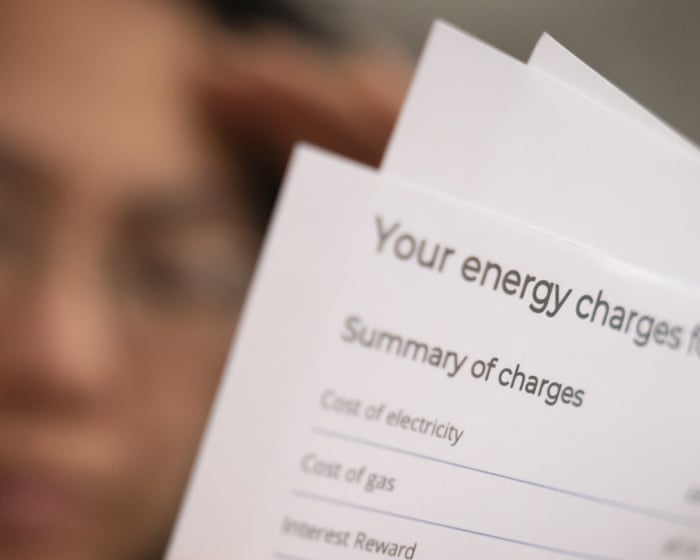
The UK Chancellor, John Healey, is planning to spend over £1 billion to help poorer households with rising energy bills. He may increase the current £150 energy discount for certain benefit recipients by an extra £100, funded by taxpayers, while more costly options like removing levies from all bills are still being debated.
Key Facts
Energy bills in the UK are forecast to rise by around £442 in January, worsening costs for many households.
The planned intervention focuses on increasing the warm homes discount for poorer households receiving benefits.
The warm homes discount currently offers £150 and may increase by £100 funded by taxpayers, not energy bill payers.
The energy secretary proposed removing levies from all energy bills to reduce costs for everyone by up to £120, shifting their funding to taxes.
Removing levies, which support renewable energy and efficiency programs, could cost the government around £3.2 billion.
The Chancellor aims to balance helping households with a government cash crunch caused by defense spending and borrowing costs.
Officials are considering longer-term reforms, including a “social tariff” that would charge poorer households less per unit of energy.
Creating a social tariff would require extensive data sharing and likely take a long time to implement.
Read the Original
Want the full story? Tap a source to open the original
article.
A new poll shows New Hampshire Representative Chris Pappas, a Democrat, is ahead by 7 points against Republican John E. Sununu in the race for the U.S. Senate. The poll was done by the New Hampshire Institute of Politics and commissioned by AARP, focusing on likely voters.
Key Facts
Chris Pappas is a Democratic U.S. Representative from New Hampshire.
John E. Sununu is the Republican nominee for the U.S. Senate seat in New Hampshire.
The Senate race is for an open seat, meaning no current senator is running.
The poll shows Pappas leads by 7 points over Sununu.
The poll was conducted by the New Hampshire Institute of Politics (NHIP).
AARP commissioned the survey, which usually represents older Americans.
The poll focused on voters likely to vote in the election.
The poll results were released on a Tuesday (date not specified).
Read the Original
Want the full story? Tap a source to open the original
article.
Disney’s ABC asked a federal judge to stop the Federal Communications Commission (FCC) from reviewing its broadcast licenses earlier than scheduled. ABC says the FCC’s action is a form of retaliation tied to content that upset President Donald Trump and the FCC Chair, while the FCC argues it started the review because ABC did not respond properly to a diversity investigation.
Key Facts
The FCC ordered ABC and its parent company to renew eight broadcast licenses early, originally set between 2028 and 2031.
ABC claims this review is retaliation for content that displeased President Donald Trump and FCC Chair Brendan Carr.
ABC's attorney compared the FCC’s action to a “guillotine,” saying it threatens the network’s First Amendment rights to free speech.
President Trump previously called for ABC and NBC licenses to be revoked for not airing his speech.
The Justice Department says the FCC’s early review is due to ABC’s failure to respond to an investigation into diversity and inclusion practices.
The legal fight focuses on whether ABC can challenge the FCC’s decision in district court or must appeal within the FCC and then the appellate court.
ABC says the retaliation falls outside normal regulatory procedures, so they need immediate court relief.
ABC has already changed some political coverage and programming decisions due to the FCC action.
Read the Original
Want the full story? Tap a source to open the original
article.
A laboratory worker in Russia died from a suspected case of pneumonic plague, but Russian authorities said they have not found any other plague cases or taken special plague measures. Health officials reported no dangerous infections among people who were in contact with the worker and confirmed some cases of COVID-19 and rhinovirus instead.
Key Facts
A 28-year-old woman working at a Russian anti-plague research institute died with suspected pneumonic plague.
Russian health officials said no new plague cases were found among people exposed to her.
About 200 people were quarantined as a precaution, with most now released.
Testing of the woman’s body did not find plague bacteria but did find COVID-19 and rhinovirus infections.
Local hospitals near the woman’s location were placed under quarantine.
Russia notified the World Health Organization that no plague cases were confirmed in that area.
Pneumonic plague is a serious lung infection that spreads through breathing and can be deadly if untreated.
US officials urged Russia to share clear information about the case and lab safety.
Read the Original
Want the full story? Tap a source to open the original
article.
Police arrested three people in London linked to a criminal group accused of helping migrants pretend to be gay to win asylum. The group allegedly charged up to £4,500 for fake documents and staged photos to support false claims, mostly involving Bangladeshi men.
Key Facts
Three people were arrested in London for suspected fraud and immigration crimes related to fake asylum claims.
The accused group reportedly provided fake evidence, like letters and photos, to help migrants claim they were gay.
The group linked to these fake claims is called Apanjon, a Bangladeshi community LGBT organization.
More than 100 asylum cases connected to this network are being reviewed by the Home Office.
Some false claims using this fake evidence had already been approved for asylum.
Immigration judges found evidence from Apanjon in some cases to be unreliable or staged.
A BBC investigation revealed other advisers and groups also helped migrants create false gay asylum claims.
Fake medical reports and phony news websites were also used to support these fraudulent claims.
Read the Original
Want the full story? Tap a source to open the original
article.
David Rush, a former CIA official, pleaded guilty to wire fraud for stealing nearly $200 million in government money by creating fake classified programs. He used the stolen funds to buy Florida mansions, gold bars, luxury watches, and cars, and now faces up to 20 years in prison.
Key Facts
David Rush pleaded guilty to one count of wire fraud.
He stole about $194 million in government money through fake classified programs.
Rush used the money to buy four homes in Florida, 298 gold bars, luxury cars, and watches.
The FBI found gold bars, $2 million in cash, and watches at Rush’s home during a search.
Rush created false project claims to get contractors to transfer government funds to companies he controlled.
He was arrested in May and remained in custody due to concerns he might flee.
Prosecutors said Rush lied about his background and used his government access to carry out the fraud.
He agreed to forfeit the stolen assets as part of his plea deal.
Read the Original
Want the full story? Tap a source to open the original
article.
Cornell University has hired Sally Yates, a former acting U.S. attorney general and deputy attorney general, to lead an investigation. Yates has extensive experience as a federal prosecutor.
Key Facts
Sally Yates previously served as acting U.S. attorney general.
She also worked as deputy attorney general.
Yates is known for her work as a federal prosecutor.
Cornell University has retained her to lead an investigation.
The investigation details or focus were not specified.
Yates brings legal and law enforcement expertise to the role.
Her role at Cornell is separate from her government service.
Read the Original
Want the full story? Tap a source to open the original
article.
Defense Secretary Pete Hegseth will go to San Diego to greet the crew of the USS Abraham Lincoln on Wednesday. The aircraft carrier returned after a longer time in the Middle East.
Key Facts
The USS Abraham Lincoln is an aircraft carrier in the U.S. Navy.
Its deployment to the Middle East was extended beyond the original schedule.
Defense Secretary Pete Hegseth will visit San Diego on Tuesday.
Hegseth will welcome the ship’s crew home on Wednesday.
He plans to talk with the crew, exercise with them, and have lunch together.
The Pentagon provided information about the Secretary’s visit.
Read the Original
Want the full story? Tap a source to open the original
article.
Hackers took control of three country-level internet domains and used this to create fake security certificates for Google and other big companies. Google updated its Chrome browser to block these fake certificates and is working to remove them from the system.
Key Facts
Attackers hijacked the .gh, .sl, and .as country code top-level domains.
They changed important DNS records to prove control of certain domains.
This allowed them to get fake TLS certificates for Google and other top brands.
TLS certificates help prove a website is real and secure by using secret keys.
Google blocked the unauthorized certificates in Chrome and asked the certificate issuers to cancel them.
Google warned domain owners not to depend only on browsers to protect users.
The hackers did not compromise the servers of the affected companies, only the domain controls.
Certificate revocation is a slow process; browsers block certificates faster to reduce risks.
Read the Original
Want the full story? Tap a source to open the original
article.
Asos app users in the UK received a pop-up message from hackers claiming to have accessed company data. Asos said it blocked the hackers’ access, is investigating the issue, and advises users not to click on any links in the message to protect themselves.
Key Facts
On Tuesday, many Asos app users saw a pop-up threatening to leak company data.
The message claimed the hackers took control of Asos’s Snowflake data storage, but Snowflake said their platform was not compromised.
Asos said some basic personal info like names and contact details might be involved, but passwords and payment details likely were not affected.
Customers were advised not to click the link in the hacker’s message, which led to a Telegram account.
It is recommended to change passwords, especially if reused on other sites, and use strong password rules.
Turning on two-step verification (a security step requiring a second confirmation) is strongly advised.
Users should watch their online accounts for unusual activity and be cautious of suspicious messages or calls claiming to be from Asos.
Asos’s website and app continue to work normally while the investigation continues.
Read the Original
Want the full story? Tap a source to open the original
article.
France is experiencing widespread student protests over poor school conditions like crowded classrooms, teacher shortages, and old buildings. These protests have lasted for several weeks and have involved both students and civil servants, leading to clashes and violence amid political tensions before upcoming elections.
Key Facts
Hundreds of thousands of students and civil servants are protesting across France about education problems.
The main complaints include overcrowded classrooms, not enough teachers, and rundown school buildings.
Protests have continued for three weeks, with some demonstrations turning violent.
Students are organizing protests using social media platforms like Snapchat.
The French government is unable to quickly fix the problem due to high public debt and lack of extra funds.
The protests come at a sensitive time just before national elections in spring 2027.
Different political groups blame each other over the violence and protests.
Past government strategies to calm protests by quickly releasing funds are not possible this time.
Read the Original
Want the full story? Tap a source to open the original
article.
Cornell University has asked Sally Yates, a former top Justice Department official, to review how the school handles sexual misconduct complaints. This comes after protests and a lawsuit involving an alleged 2024 gang rape at a fraternity, with questions raised about how the university and campus police responded.
Key Facts
Sally Yates, who served as deputy attorney general in the Obama administration, will lead the review.
The review will cover how Cornell investigates sexual assault and harassment, its disciplinary process, and campus police responses.
The controversy began with a woman known as Jane Doe reporting a sexual assault by members of the Chi Phi fraternity in late 2024.
Cornell closed the Chi Phi chapter, expelled or suspended some students, but no criminal charges have been filed yet.
Jane Doe sued Cornell, seven former students, the fraternity, and others. Some accused say the encounter was consensual.
New York’s attorney general is investigating, and the state governor called for an independent review.
Students and faculty protested, demanding better accountability, transparency, and changes to the university’s disciplinary system.
Yates has experience leading independent investigations, including a major 2022 inquiry into the National Women’s Soccer League.
Read the Original
Want the full story? Tap a source to open the original
article.
Russian authorities told the World Health Organization (WHO) that no plague cases have been recorded in Irkutsk, despite earlier reports of a woman's death from suspected pneumonic plague there. Experts question the large response by Russian officials, suggesting they may be investigating a different infectious agent, but there is no public proof of a biological weapon.
Key Facts
Russian officials informed WHO that no plague cases were found in Irkutsk.
A woman working at a research lab in Irkutsk reportedly died from suspected pneumonic plague.
Nearly 200 people who had contact with the woman were monitored and tested.
WHO requested more information from Russia about the cause of the woman's pneumonia-like illness.
Experts say Russia’s strong reaction to the case is unusual for plague and may indicate a different disease.
Russia had a biological weapons program during Soviet times, and some labs still work with dangerous agents.
There is no evidence that a biological weapon was used or that such an investigation is happening.
Experts believe plague is treatable today and that safety measures usually prevent serious cases in labs.
Read the Original
Want the full story? Tap a source to open the original
article.