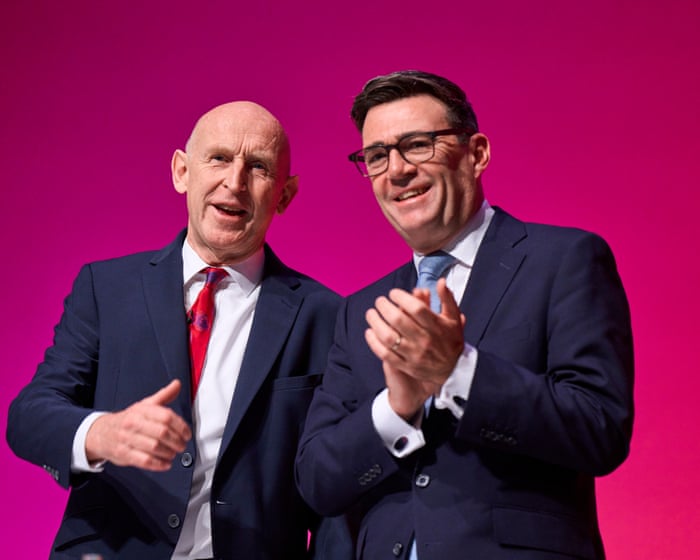
The Budget is set to provide more than £1bn for social and affordable housing in England, bringing funding for the government’s 10-year homes programme above £40bn. It will also give regional leaders access to £285m in initial funding and plans for a £1.5bn borrowing facility from 2028, while the article reports other expected Budget measures and disputes over defence spending and support for start-ups.
Key Facts
The Budget is expected to allocate more than £1bn to social and affordable housing in England.
The additional funding would take the government’s 10-year homes programme above £40bn.
The government plans to allocate £285m in transitional funding next year to mayors and local leaders, including areas without strategic authorities.
The Treasury will work with mayors on a £1.5bn borrowing facility expected to begin in 2028.
The borrowing facility could support housing, high-street projects and transport links.
The Treasury says the Budget will include more support for small breweries.
The Sunday Times reported that the Budget may include billions of pounds in new defence spending, with details set out at next year’s spending review.
Treasury entrepreneurship adviser Alex Depledge announced she would resign, saying start-ups were being treated as a sideshow in economic policy.
Read the Original
Want the full story? Tap a source to open the original
article.
Rosebank is a large North Sea oil and gas field, 80 miles northwest of Shetland, where a floating vessel is waiting for a UK government decision on production. A BBC reporter visited the vessel and described the work and living conditions of its 122-person crew, as well as the challenging weather offshore.
Key Facts
The Petrojarl Rosebank is a floating production, storage and offloading vessel, known as an FPSO.
The vessel is moored in the North Atlantic, 80 miles northwest of Shetland.
Rosebank's owners are Adura and Ithaca, and they have chartered the vessel from Aberdeen-based Altera.
The UK government had granted consent for gas production at the Jackdaw field shortly before the reporter visited Rosebank.
Energy Secretary Miatta Fahnbulleh faces the next major government decision on Rosebank.
The vessel had 122 people on board during the visit.
Workers typically spend two weeks offshore followed by three weeks of leave, and the vessel has cabins, a gym, recreation rooms, a sauna and a cinema.
Workers described severe winter conditions, including a 30-metre swell the previous week.
Read the Original
Want the full story? Tap a source to open the original
article.
Older songs make up a large share of music streaming in 2026, while a small fraction of artists account for most streams. The trend makes it harder for new and grassroots musicians to build audiences, even when a song becomes popular.
Key Facts
Luminate reported that about 60% of music played in the first half of 2026 was released at least five years earlier.
In the UK, 18 of the 20 bestselling songs of the year had been released at least a year earlier.
Zara Larsson’s “Lush Life,” first released in 2015, was the UK’s eighth biggest hit of the year.
In the US, about 60% of streams in R&B and hip-hop were for older catalogue music.
Sam Fender and Olivia Dean’s “Rein Me In” spent 23 non-consecutive weeks at number one in the UK singles chart.
The UK Competition and Markets Authority said nearly two thirds of streams were for music recorded by the top 0.4% of artists.
Spotify said it removed 75 million tracks it described as spammy; Deezer said AI music accounted for 0.5% of streams on its platform.
Read the Original
Want the full story? Tap a source to open the original
article.
Some small businesses say high inflation and President Donald Trump’s tariff policies are putting pressure on them ahead of the midterm elections. Restaurants report particular challenges, while some other businesses say they are expanding.
Key Facts
The report was published about two weeks before Election Day.
Some small businesses say they are struggling with high inflation.
Business owners cited the Trump administration’s tariff policies as a concern.
Restaurants say they have been hit especially hard.
Some businesses say they are expanding despite the difficulties.
A Chamber of Commerce survey found that 71% of small businesses described their health as good.
Read the Original
Want the full story? Tap a source to open the original
article.
Chancellor John Healey plans to announce a devolution package in next week’s budget to give English regional leaders more control over spending and projects intended to support growth. It includes borrowing capacity, initial funding for local priorities and support to help local authorities manage larger budgets.
Key Facts
The plan includes a £1.5bn borrowing facility to be developed with mayors over the next two years.
Local leaders are set to receive £285m in “good growth” funding next year for priorities such as housing, transport and high street regeneration.
The government will provide £150m to help local authorities build the skills and capacity to manage larger budgets.
The £285m is intended as interim funding before a system planned for 2028 that would give some income tax revenue directly to local areas.
The government is expected to provide more details at the budget about how local areas could retain some extra revenue generated by economic growth.
New guidance will let officials assess related projects together, such as housing and transport schemes, when considering public funding.
A government white paper on “rewiring the state” is due after the budget and will describe plans to reshape the civil service as more powers move from central government.
Read the Original
Want the full story? Tap a source to open the original
article.
Six Flags plans to add seatbelts to the Goliath rollercoaster at its Georgia park before it reopens. The move follows the death of 42-year-old Hassan Jihad Ibn Kariem, who fell from the ride; state authorities are investigating.
Key Facts
Kariem was thrown from his seat and struck the ride’s other cars as he fell.
The Goliath descends 165 feet, followed by a second drop of 180 feet.
Six Flags temporarily closed Goliath and eight rides at five other parks after the incident.
CEO John Reilly said seatbelts will also be added to coasters with similar restraints, but Six Flags has not listed which rides are affected.
Six Flags commissioned an independent review of safety procedures for all its attractions.
Six Flags faces a lawsuit over alleged injuries on its X2 ride at Magic Mountain.
Six Flags permanently closed X2 in September.
Read the Original
Want the full story? Tap a source to open the original
article.
Chinese officials urged the U.S. Treasury on Saturday to reconsider a proposed rule that would further limit U.S. investment in China’s technology industry. They said the proposed restrictions could disrupt trade relations between the two countries.
Key Facts
The Treasury Department proposed the rule on Thursday.
The proposal would expand existing restrictions under the Outbound Investment Security Program.
The existing program covers U.S. investments in certain technology areas, including hypersonic systems and quantum technology.
Chinese officials said the proposed rule could disrupt trade relations between China and the United States.
Read the Original
Want the full story? Tap a source to open the original
article.
Six Flags will add seat belts to the Goliath roller coaster in Georgia after a rider died from falling off. The company is also upgrading safety on other similar rides and has closed several roller coasters in the U.S. and Canada for review.
Key Facts
A 42-year-old rider, Hassan Jihad Ibn Kariem, died after falling from the Goliath coaster at Six Flags Over Georgia on October 12.
Six Flags CEO John Reilly announced seat belts will be added to Goliath and other similar coasters.
Eight other roller coasters have been temporarily closed at five parks in the U.S. and Canada due to similar safety concerns.
The affected coasters are made by Swiss manufacturer Bolliger & Mabillard and use clamshell restraints that lock over riders' laps.
Independent engineers and inspectors have been hired to review all Six Flags rides' safety procedures.
The cause of the accident is still under investigation by state and local officials.
Other parks like SeaWorld Orlando and La Ronde in Montreal also closed rides with the same restraint system but SeaWorld has since reopened its coaster.
Six Flags has not given a reopening date for the closed coasters or specified all rides receiving seat belts.
Read the Original
Want the full story? Tap a source to open the original
article.
Chef Ayesha Nurdjaja, a New York City chef, is sharing her favorite Mediterranean recipes in a new cookbook called "Mediterranean All the Way." She is the executive chef and partner at the Mediterranean restaurants Shuka and Shukette in Brooklyn.
Key Facts
Ayesha Nurdjaja is a chef based in Brooklyn, New York City.
She is the executive chef and partner at two restaurants: Shuka and Shukette.
Both restaurants serve Mediterranean food.
She has published a cookbook titled "Mediterranean All the Way."
The cookbook features family-style Mediterranean recipes.
The focus of her work is sharing flavorful, zesty Mediterranean dishes.
Her role involves both cooking and guiding the restaurants.
Read the Original
Want the full story? Tap a source to open the original
article.
Aston Martin has faced several challenges in recent years, including financial issues, production delays, and leadership changes. The new CEO, Adrian Hallmark, is working to stabilize the company by cutting costs and setting new sales targets to ensure the business becomes profitable by 2027.
Key Facts
Aston Martin has changed CEOs three times since 2020.
Adrian Hallmark became CEO in September 2024 after leading Bentley Motors.
The company invested nearly $3 billion over six years, expecting to sell 10,000 cars yearly.
Hallmark aims to make the business profitable with just 6,000 to 6,500 cars sold per year.
Significant layoffs and restructuring have taken place to reduce costs.
Aston Martin expects to be profitable and generating cash in the second half of 2024 and fully profitable by 2027.
New products include the powerful Valen supercar, AMB 002 motorcycle (made with Brough Superior), and updated DBX GT SUV.
The company launched a new bespoke customization center in London called Aston Martin Q.
Read the Original
Want the full story? Tap a source to open the original
article.
Sam Fender announced his 2027 Proper Massive Stadium Tour and said he will lower ticket prices after seeing reports that tickets were too expensive. He also decided not to divide standing areas into front and back sections, saying he does not agree with the practice.
Key Facts
Sam Fender’s 2027 tour will visit Newcastle, Cardiff, London, Edinburgh, Dublin, and Manchester.
Tickets go on pre-sale Wednesday at 9:30 a.m. GMT, with general sale Friday at the same time.
Fender said ticket prices were higher than he expected and will be lowered.
The price increase should only relate to the cost of putting on the show.
Standing areas will not be split into separate price tiers for front and back standing spots.
Fender criticized the common practice of charging more for closer standing spots.
Other musicians, like Zara Larsson, have also raised concerns about high ticket prices.
Read the Original
Want the full story? Tap a source to open the original
article.
The UK government will spend £7 million on a study to see if northern England could host the Olympic Games in the 2040s. The study will check the costs, benefits, and how the event could be organized across several northern cities.
Key Facts
Chancellor John Healey will announce a £7 million fund for a full study on hosting the Olympics in northern England.
The study aims to explore a possible bid for the "Northern Games" in the 2040s.
The last UK Olympics was in London in 2012, which reportedly boosted the economy by about £9.9 billion.
The study will look at venues, transport, costs, and how different cities could share hosting duties.
The idea is supported by northern mayors, former Olympians, and sports organizations.
The government asked UK Sport to begin initial assessments in May before funding the full study.
The study will be done in partnership with UK Sport, the British Olympic and Paralympic associations, and northern city leaders.
Officials say hosting the games could bring long-term benefits to northern communities and the UK economy.
Read the Original
Want the full story? Tap a source to open the original
article.
The article promotes exclusive discount deals available through CBS Mornings Deals on the website cbsdeals.com. It highlights items that may improve everyday life and mentions CBS earns commissions from purchases made through the site.
Key Facts
CBS Mornings Deals offers discounted products to improve daily living.
Deals can be accessed at the website cbsdeals.com.
CBS receives a commission when people buy items through their deals website.
The article is part of a broader CBS Mornings segment covering various news topics.
This content focuses on shopping and saving money through special offers.
It is aimed at viewers looking for bargains during their routine shopping.
The deals are updated regularly as part of the CBS Mornings program.
No specific products or prices are detailed in this article.
Read the Original
Want the full story? Tap a source to open the original
article.
A banking lobby group, UK Finance, claims London is the most-taxed major financial city, based on a PwC report they commission. However, critics say UK Finance left out Paris, a key rival, which may actually have higher bank taxes, raising questions about the accuracy of the group's data.
Key Facts
UK Finance represents big banks like Lloyds, JP Morgan, and Revolut.
Their report shows London’s total tax rate on banks at 46.2%, higher than Amsterdam, Frankfurt, Dublin, and New York.
Paris is not included in the comparison, despite being a major financial center.
Independent calculations suggest banks in Paris face tax rates between 51.6% and 57.3%, higher than London.
UK Finance said it could not create a fair comparison for Paris using the report’s bank model.
Campaign groups criticize UK Finance for possibly excluding Paris to make London appear more heavily taxed.
Trades Union Congress (TUC) and Positive Money support raising bank taxes in the UK to address windfall profits.
The bank-specific tax surcharge in the UK could be increased from 3% to 8%, potentially raising £2.25 billion per year.
Read the Original
Want the full story? Tap a source to open the original
article.
Some of London’s top chefs are opening new restaurants in Gulf states like Dubai and Abu Dhabi due to high taxes and business challenges in the UK. These areas offer lower taxes and business-friendly environments, but human rights groups warn about poor worker protections in the Gulf.
Key Facts
London restaurants like Fallow, Scott’s, Gymkhana, and Park Chinois have opened branches in Dubai and Abu Dhabi.
UK hospitality faces a 20% VAT tax, which is higher than the European average of about 12%.
Chefs say high taxes and rising costs in the UK make it harder to run profitable businesses.
Dubai and other Gulf states offer lower taxes and business support but have been criticized for poor workers’ rights.
Migrant workers in the UAE often face job restrictions and cannot form trade unions to protect themselves.
Some London chefs spend significant time managing their Gulf outposts because of better profits.
Human rights groups call on UK businesses to ensure fair treatment and good working conditions for employees in the Gulf.
Despite regional conflicts, Gulf hospitality sectors continue to attract international businesses and investors.
Read the Original
Want the full story? Tap a source to open the original
article.
Alyce Collins shares her experience of leaving a high-paying corporate job at age 39 and the changes she faced afterward. Her perspective shifted after the sudden death of her father, which made her value time and happiness more than career achievements.
Key Facts
Alyce Collins had an 18-year career in media, advertising, technology, and business development.
She worked with some of the world’s biggest tech companies and earned promotions to senior roles.
Despite career success, she found the job increasingly focused on targets rather than what she enjoyed.
Her father passed away suddenly in May 2023, which deeply affected her view on life and work.
The loss made her realize time is precious and encouraged her to rethink her career and happiness.
Earlier in 2024, she joined a new company in a senior position but left soon because it was not a good fit.
Alyce had saved a financial cushion from her six-figure salary, initially for retirement plans.
She now questions the balance between preparing for the future and enjoying the present.
Read the Original
Want the full story? Tap a source to open the original
article.
The UK state pension uses a system called the triple lock, which raises pensions by the highest of 2.5%, inflation, or earnings growth each year. Compared to other rich countries, the UK state pension is lower relative to average wages, but many UK workers also invest in private workplace pensions, which helps narrow that gap. The UK government spends a lot on state pensions, but less than some other wealthy countries when looking at total retirement benefits compared to the size of the economy.
Key Facts
The triple lock has increased UK state pensions faster than worker earnings since 2011.
Pensioner poverty in the UK has slightly increased in the last decade, partly due to rising housing costs.
Pensioners in the UK are less likely to be in relative poverty than families with children or working-age people.
The UK state pension replacement rate (the share of average earnings people receive in pension) is about 54.2%, below the 63.2% average in other wealthy countries.
Many UK workers have private workplace pensions, which raises total income in retirement beyond just the state pension.
The UK spends over £150 billion a year on state pensions, making it the most expensive benefit to fund.
UK pension spending as a share of the economy is lower than the average for other rich countries.
Aging populations may increase pension costs by 2060, causing financial pressure in many countries, including the UK.
Read the Original
Want the full story? Tap a source to open the original
article.
Arian Simone created the Fearless Fund, a venture capital fund that helps women of color start and grow businesses. She shares details about her legal fight to keep the fund running and discusses her book about building wealth and equality.
Key Facts
The Fearless Fund provides money and support to women of color entrepreneurs.
Arian Simone is the founder of the Fearless Fund.
Simone is involved in a legal battle to ensure the fund continues operating.
She wrote a book called "Fearless Freedom: A Manifesto for Unlocking Wealth and Equality for All."
The fund aims to increase financial opportunities and fairness for women of color in business.
Read the Original
Want the full story? Tap a source to open the original
article.
The article discusses how banks and insurance companies use artificial intelligence (AI) to automate some financial decisions like claims and underwriting. Experts say it is important to balance AI tools with human review and clear rules to ensure decisions remain accurate and trustworthy.
Key Facts
AI can automate parts of financial work, such as reading documents and checking customer information.
Using AI alone for all decisions is risky, so companies combine AI agents, fixed rules, and human checks.
Fixed rules handle clear yes/no decisions, like excluding customers from certain countries.
AI agents help interpret complex data, like scattered financial information or foreign invoices.
Companies start using AI automation on simple cases first and add more as accuracy improves.
Increasing automation too fast can cause problems, like approving bad loans or wrong claims.
Businesses watch approval and decline rates carefully to keep quality decisions.
Making AI work well depends on matching tools to actual work processes and industry rules.
Read the Original
Want the full story? Tap a source to open the original
article.
Barclays, a major bank, plans to cut 5,000 jobs by the end of 2026 as it uses artificial intelligence (AI) to reduce costs. Some workers and unions say the bank is using AI as a reason to fire people, raising concerns about how AI will affect jobs in the UK.
Key Facts
Barclays will cut 5,000 jobs by the end of 2026.
The bank’s CEO called AI the “icing on the cake” for cost-cutting.
Unions accuse Barclays of using AI to justify workforce reductions.
Companies are adopting AI to improve productivity.
There is growing concern about how AI will change employment.
Experts and commentators are discussing if the UK is ready for these changes.
The topic was covered in a discussion hosted by presenter James Bays with guests including editors and an author on AI.
Read the Original
Want the full story? Tap a source to open the original
article.