The article argues that several risks could combine into wider disruption before 2028, including cyberattacks, a downturn in AI investment, rapid advances in AI, and an expanded Iran war. It presents these outcomes as possibilities, citing concerns from business and technology leaders, rather than as certain events.
Key Facts
The author says interacting shocks could spread faster than governments, companies, and markets can respond.
The article reports that AI-detected flaws in PHP, a programming language used by many websites, disrupted government sites and led the National Security Agency to urge organizations to install fixes.
It says some major banks found unauthorized AI agents in customer accounts.
The article cites Goldman Sachs’ estimate that debt could fund about one-third of Big Tech’s AI spending this year.
It reports that Meta’s earnings disclosure about funding AI investment unsettled investors, despite strong earnings.
The article warns that rapid AI improvement could disrupt industries and jobs and prompt calls for limits on AI development.
It says U.S. embassies in the Middle East reduced staffing amid increased threats and describes a possible expansion of the Iran war as a risk to oil supplies and prices.
Read the Original
Want the full story? Tap a source to open the original
article.
Researchers warn that AI tools used to predict crime hotspots can reinforce discrimination when they rely on police data shaped by past bias. They call for stronger human oversight and checks on the data, while one AI researcher says modern systems can account for historical bias but still need meaningful human control.
Key Facts
The article describes an essay by British science writer Adrian Dredge that won the 2026 Young Science Writer Award.
Researchers say biased historical police data can skew predictions about where crime will occur.
More patrols in predicted hotspots can lead police to record more crime there, reinforcing future predictions.
Dr Carolyn McKay of the University of Sydney Law School calls for human oversight and scrutiny of policing systems and their data.
Sarah Brayne’s research on the Los Angeles Police Department found that crime data favored incidents in public places and reflected disproportionate police attention to Black neighbourhoods.
Brayne says predictive systems can help shape the events they forecast, creating a feedback loop.
Dr Dimitrios Kollias of Queen Mary University of London says modern AI can combine information in new ways, but its decisions still need to remain safe, reliable, and under human control.
Read the Original
Want the full story? Tap a source to open the original
article.
The U.S. Space Force has granted SpaceX access to a restricted, high-accuracy catalogue used to track possible collisions in space. The move comes as the Trump administration and Congress debate funding for the government’s space traffic program, Traccs, and has raised concerns about competition and national security.
Key Facts
SpaceX and the Space Force signed a contract allowing the company to access parts of the military’s controlled, unclassified tracking catalogue.
The Space Force said it is working with several companies to exchange commercial data for access to catalogue sections when that benefits the government.
Traccs tracks satellites, debris and spacecraft and helps manage as many as 50,000 potential close encounters a day.
The Trump administration proposed sharply cutting Traccs funding in fiscal years 2026 and 2027; Congress restored funding in both budget processes described in the article.
Industry observers have warned that growing government reliance on SpaceX could limit competition and create a vendor lock-in risk.
A former NOAA official said SpaceX has responded to space safety concerns, while criticizing the government for not establishing a clear space governance framework.
Read the Original
Want the full story? Tap a source to open the original
article.
The article marks 30 years of Tomb Raider and reviews controversies and setbacks in Lara Croft’s history. It describes the franchise’s commercial success, product endorsements, the effort to continue the series after Lara’s apparent death, and the troubled 2003 game Tomb Raider: The Angel of Darkness.
Key Facts
The article says Tomb Raider games have sold more than 100 million copies.
Lara Croft appeared in promotions for products including Lucozade and other consumer goods.
Core Design released a Tomb Raider game every year after publisher Eidos pushed to capitalize on the series’ success.
The Last Revelation ended with Lara buried under a collapsing pyramid.
Tomb Raider: Chronicles followed Lara’s apparent death with a memorial service and flashbacks.
Tomb Raider: The Angel of Darkness was released in 2003 as Lara’s first PlayStation 2 game.
The article says The Angel of Darkness had bugs, difficult controls, and a new strength mechanic.
Read the Original
Want the full story? Tap a source to open the original
article.
Elon Musk said SpaceX restricted Ukraine’s Starlink service last week because, he alleged, Ukraine used the civilian network for offensive drone strikes. Ukrainian officials said the connection had stabilized, but Kyiv had not officially responded to Musk’s claim; a Ukrainian presidential adviser disputed it. The article links the service disruption to a broader dispute between Washington and Kyiv over Ukrainian strikes on Russian oil infrastructure.
Key Facts
Musk said SpaceX closed what he described as a loophole that let Ukraine use Starlink for offensive drone strikes.
Musk denied responsibility for a simultaneous issue with Starshield, which he said is controlled by the U.S. government.
Ukrainian presidential adviser Serhiy Beskrestnov said Ukraine could not use commercial Starlink for long- and medium-range drone strikes.
Ukraine’s defense minister said the military was recording a stable connection, and President Volodymyr Zelensky said service speeds had returned to the needed level.
Ukraine uses Starlink for battlefield coordination and Starshield for some military communications and drone operations.
Ukraine previously said the connection cut out when drones exceeded 161 km/h; officials said speeds were now above 400 km/h.
The connectivity problems began amid a dispute between Washington and Kyiv over Ukrainian attacks on Russian oil infrastructure.
Trump said he had told Musk to restore the service, while also denying that he had instructed Musk to restrict it.
Read the Original
Want the full story? Tap a source to open the original
article.
Cookie theft occurs when malware steals active session cookies from a device, letting fraudsters access accounts without entering a password or triggering some login checks. Logging out, limiting downloads, clearing cookies, and using a password manager can help reduce the risk; suspected victims should scan devices, end active sessions, and change passwords.
Key Facts
A session cookie keeps a person logged into a website as they move between pages.
An active stolen cookie can let a fraudster use an account and may bypass multifactor authentication.
The article says malware, often hidden in downloaded software or browser extensions, can steal cookies from a browser’s database.
Fraudsters may use hijacked sessions to access bank accounts, redirect purchases, or scam a victim’s contacts.
Signs of possible malware include unusual slowdowns, fast battery drain, crashes, browser redirects, pop-ups, or a changed homepage.
Closing a browser tab does not necessarily end a session; manually logging out invalidates the session cookie.
The article recommends careful downloading, using a dedicated password manager, and clearing cookies regularly.
If an account may be compromised, run an antivirus scan, log out of accounts on all devices, and change passwords.
Read the Original
Want the full story? Tap a source to open the original
article.
Ukrainian leaders said Saturday that access to SpaceX’s Starlink and Starshield systems in Ukraine had returned to full speed. The report said the confirmation came shortly after Elon Musk acknowledged slowing Starlink down.
Key Facts
Ukrainian leaders confirmed that access to SpaceX services had been restored to full speed.
The systems named were Starlink and Starshield.
The services are used in Ukraine, according to the report.
Elon Musk acknowledged slowing Starlink down.
The restoration confirmation came shortly after Musk’s acknowledgment.
Read the Original
Want the full story? Tap a source to open the original
article.
Ukraine relies on SpaceX’s Starlink and Starshield satellite services for battlefield communications and military operations, including drone warfare. A recent slowdown highlighted the risks of depending on a network controlled by a U.S. company, while European alternatives cannot yet match its speed, coverage, or suitability for military use.
Key Facts
Starlink has more than 10,000 satellites, while Eutelsat’s OneWeb has about 600 active satellites.
Ukraine uses Starlink for battlefield communications and Starshield for military purposes such as drone warfare.
A recent Starlink slowdown in Ukraine was later restored and affected the country’s ability to defend against Russian attacks.
Ukraine’s military personnel told the BBC that fast, reliable connectivity helps troops pass commands and data quickly.
OneWeb terminals are larger and about five times more expensive than Starlink terminals, according to Eutelsat’s former CEO.
The EU’s Iris² satellite network is not expected to be operational until 2029.
The EU’s Govsatcom satellite-sharing network is an option for Ukraine, but it cannot support military warfare tasks such as controlling drones.
It remains unclear who authorised the recent Starlink restrictions. The article describes conflicting claims involving the Pentagon, Donald Trump, and Elon Musk.
Read the Original
Want the full story? Tap a source to open the original
article.
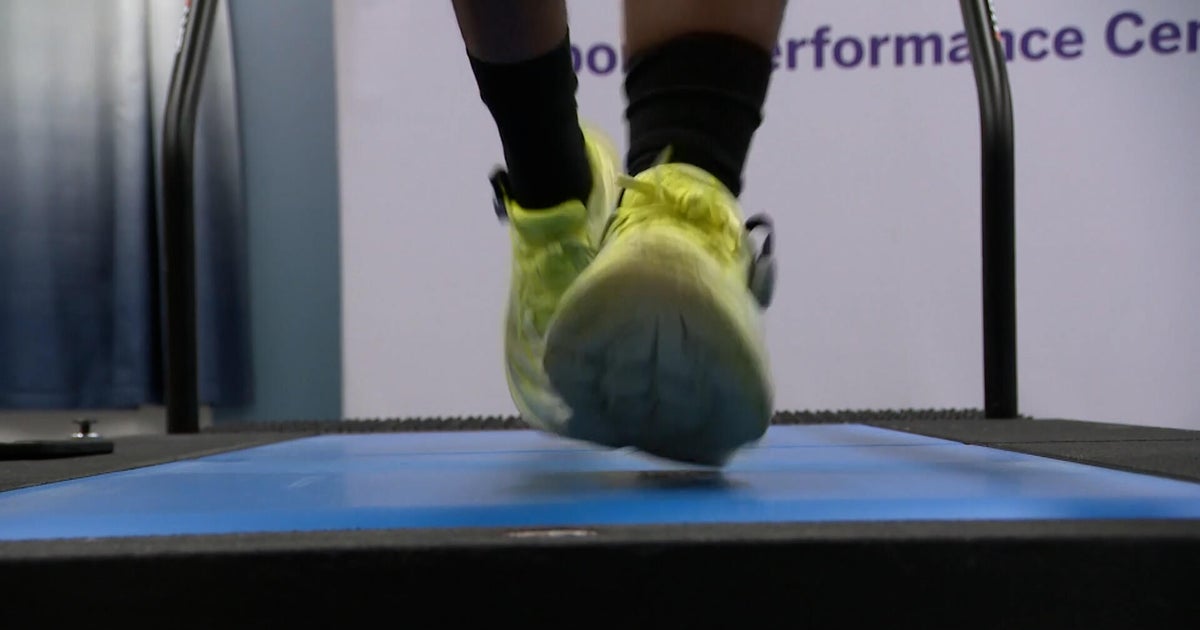
A company is pairing sensor-equipped insoles with an AI coach that gives runners feedback through an earpiece. CBS News reports on how the system works and its potential to help avid runners avoid injuries.
Key Facts
The insoles contain sensors.
The system links the insoles to an AI coach.
The coach provides guidance through an earpiece.
The system aims to help avid runners avoid injuries.
CBS News reporter Jarred Hill examined how the system works.
Read the Original
Want the full story? Tap a source to open the original
article.
Elon Musk said Ukraine violated Starlink’s terms by using the commercial satellite service for offensive drone strikes, which he said led SpaceX to close a loophole. Ukrainian President Volodymyr Zelensky said Starlink and Starshield had returned to the speeds Ukraine needed after restrictions disrupted communications; reports said Starlink terminals were initially limited to 100 mph while moving.
Key Facts
Musk said Starlink’s commercial service is for civilian or defensive use and bars use in offensive weapons operations.
SpaceX imposed restrictions on Starlink terminals in Ukraine earlier in the month, according to Ukrainian officials.
Serhii Beskrestnov, an adviser to Zelensky, said communications outages were fixed but a 100-mph speed cap remained.
Reuters reported that Starlink receivers could work while moving again, but only at speeds up to 100 mph.
Zelensky said Starlink and SpaceX’s military-grade Starshield were operating at the speeds Ukraine needed.
Ukraine has struck Russian oil and gas facilities, while Russia has continued attacking Ukrainian energy infrastructure.
The article says President Donald Trump has pressured Ukraine to stop strikes on Russian oil facilities, citing high U.S. diesel prices ahead of midterm elections.
Read the Original
Want the full story? Tap a source to open the original
article.
Advances in artificial intelligence (AI) and mobile technology are making America’s gambling problem worse. These new technologies allow gambling platforms to take advantage of people’s mental weaknesses more easily.
Key Facts
AI means machines can learn and make decisions, improving how gambling platforms work.
Mobile devices let people gamble anytime and anywhere.
New technology helps gambling companies target users based on their behavior.
This targeting can lead to more people gambling excessively.
Gambling addiction can harm mental health and cause financial problems.
Experts warn that technology-driven gambling increases the risk of addiction.
Regulating these tech-driven platforms is challenging for authorities.
The combination of AI and mobile tech creates new risks for vulnerable individuals.
Read the Original
Want the full story? Tap a source to open the original
article.
Axios is planning big changes to journalism using artificial intelligence (AI). They believe AI will change how people get news, with more personal and expert-verified content becoming important as simple news fades away.
Key Facts
Media is changing fast due to AI, with traditional ways of getting news becoming less effective.
Axios expects AI to provide very smart, personalized news on any topic for everyone.
Many people may rely on AI for basic news, making general news less popular.
Serious news readers will want human-checked and verified information more than ever.
Axios plans to use AI to support local journalism, helping reporters track community news more easily.
They will create special news products for different jobs, like CEOs and CFOs, to match changing work needs.
Axios is starting a new business to sell clean, real-time news feeds for companies building their own AI systems.
They want to improve the quality and trustworthiness of news in the age of AI.
Read the Original
Want the full story? Tap a source to open the original
article.
Australian footballer Cristian Volpato has licensed his AI-generated likeness to California-based Callandor, which plans to earn money from brand deals and help limit unapproved uses. The deal is part of an emerging market for athletes’ digital likenesses, as sports leagues’ contracts and government rules have yet to fully address AI-generated content.
Key Facts
Volpato is 22 and plays for Italian Serie A club Sassuolo.
He agreed to the Callandor deal in mid-September.
Callandor received exclusive rights to use Volpato’s digital likeness, voice, biometric profiles and performance data.
The company plans to seek brand deals using Volpato’s AI image and take a share of the revenue.
Callandor was founded in February and also represents Brazilian footballer Jorginho and American sailor Chris Poole.
The company says its athlete campaigns are still in the pilot phase.
Callandor is exploring AI-generated book voiceovers, fan apps and tools that could give users football instructions through an athlete’s digital clone.
Brazilian footballer Neymar licensed his AI likeness to a Chinese-owned entertainment platform in June.
Read the Original
Want the full story? Tap a source to open the original
article.
Just Eat said sorry after pictures made by artificial intelligence (AI) did not look like the real food on their menu. They were testing this AI tool to show food without real photos but have stopped the test until the AI improves.
Key Facts
Just Eat used AI to create pictures of its food items.
The AI-generated images did not accurately show what the food looked like.
These images became widely shared on the internet.
Just Eat apologized for the wrong images.
The company was testing AI to illustrate dishes without real photos.
The AI trial is now paused to give time for better development.
Read the Original
Want the full story? Tap a source to open the original
article.
A large datacentre has been built next to a small neighborhood in South Wales, causing concern among local residents about noise, pollution, and loss of sunlight. These types of datacentres are growing rapidly across Britain to support big tech companies and the rise of AI, using large amounts of electricity and land.
Key Facts
A hyperscale datacentre 23 meters high is located near 27 houses in Newport, South Wales.
Residents report noise from cooling equipment and diesel generators, and worry about pollution and quality of life.
Britain has 315 planned hyperscale datacentres requiring 73 gigawatts of power, much more than current peak demand.
Wales has the largest datacentre capacity outside London and is a main area for new developments on former industrial sites.
The UK government supports these datacentres to boost AI growth and economic benefits through faster planning and grid connections.
Local groups oppose datacentres, citing environmental harm and little local benefit despite large profits for big tech firms.
Hyperscale datacentres are needed to meet rising data storage and processing demands from cloud computing and AI services.
Global investment in new datacentres may reach billions of dollars due to expectations about AI-driven economic changes.
Read the Original
Want the full story? Tap a source to open the original
article.
Apple’s first foldable iPhone, called the iPhone Duo, went on sale nationwide on Friday. The report examines its features and high price as Apple enters a market where Samsung, Google and Motorola already sell folding phones.
Key Facts
The iPhone Duo is Apple’s first foldable iPhone.
The phone went on sale in stores nationwide on Friday.
Samsung, Google and Motorola have sold folding phones for years.
CBS reporter Evyn Moon reported from Apple’s flagship store in New York City.
The report raises questions about the iPhone Duo’s features and price.
Read the Original
Want the full story? Tap a source to open the original
article.
Washington government officials from both parties are frustrated with AI company leaders. Lawmakers say these executives mix messages about AI’s benefits and dangers, creating confusion and public fear. Some also criticize AI leaders for political ties and unclear communication about safety issues.
Key Facts
AI leaders are seen as a political problem by White House and Congress sources.
Lawmakers want AI executives to focus on building safe products rather than alarming the public.
AI leaders discuss both economic benefits and existential risks, causing mixed messages.
Some senators criticize AI executives for being out of touch with regular Americans.
Democrats are concerned about AI companies’ political connections, especially with President Trump.
Anthropic CEO Dario Amodei met with President Trump but did not immediately report safety incidents affecting government websites.
Anthropic caused confusion by supporting federal rules that override state AI laws, which it previously opposed.
The AI industry’s communication style, including late news announcements, frustrates regulators and lawmakers.
Read the Original
Want the full story? Tap a source to open the original
article.
The Australian indie rock band Vacations performed the song "I See Myself In You" on CBS News. Their album "Pursuit of Anything" is available now, and the band has sold out tours worldwide and gained billions of streams.
Key Facts
Vacations is an indie rock band from Australia.
They performed the song "I See Myself In You" on CBS News.
Their album "Pursuit of Anything" has been released recently.
The band has completed world tours that sold out.
Vacations' music has been streamed billions of times online.
The performance was part of the CBS News Saturday Sessions segment.
Read the Original
Want the full story? Tap a source to open the original
article.
The article features the Australian indie rock band Vacations performing their song "Holy Grail." It mentions that Vacations has sold out world tours and has billions of streams, and their album "Pursuit of Anything" is currently available.
Key Facts
Vacations is an Australian indie rock band.
The band performed the song "Holy Grail."
Vacations has sold out tours around the world.
Their music has been streamed billions of times.
Their album "Pursuit of Anything" is out now.
The article is part of CBS News' music feature called "Saturday Sessions."
The content includes other news highlights unrelated to the band.
Read the Original
Want the full story? Tap a source to open the original
article.
Gray Malin is a photographer known for colorful photos and aerial views. He published a new book called "Snow" that features winter pictures taken over 15 years in places like Aspen and Antarctica.
Key Facts
Gray Malin is a fine art and conceptual photographer.
He takes vibrant and aerial photographs.
His new book is titled "Snow."
The photos were taken over 15 years.
Locations include Aspen and Antarctica.
The book focuses on wintry landscapes.
Malin's work is recognized for its natural beauty.
Read the Original
Want the full story? Tap a source to open the original
article.