The Australian indie rock band Vacations performed the song "I See Myself In You" on CBS News. Their album "Pursuit of Anything" is available now, and the band has sold out tours worldwide and gained billions of streams.
Key Facts
Vacations is an indie rock band from Australia.
They performed the song "I See Myself In You" on CBS News.
Their album "Pursuit of Anything" has been released recently.
The band has completed world tours that sold out.
Vacations' music has been streamed billions of times online.
The performance was part of the CBS News Saturday Sessions segment.
Read the Original
Want the full story? Tap a source to open the original
article.
The article features the Australian indie rock band Vacations performing their song "Holy Grail." It mentions that Vacations has sold out world tours and has billions of streams, and their album "Pursuit of Anything" is currently available.
Key Facts
Vacations is an Australian indie rock band.
The band performed the song "Holy Grail."
Vacations has sold out tours around the world.
Their music has been streamed billions of times.
Their album "Pursuit of Anything" is out now.
The article is part of CBS News' music feature called "Saturday Sessions."
The content includes other news highlights unrelated to the band.
Read the Original
Want the full story? Tap a source to open the original
article.
Gray Malin is a photographer known for colorful photos and aerial views. He published a new book called "Snow" that features winter pictures taken over 15 years in places like Aspen and Antarctica.
Key Facts
Gray Malin is a fine art and conceptual photographer.
He takes vibrant and aerial photographs.
His new book is titled "Snow."
The photos were taken over 15 years.
Locations include Aspen and Antarctica.
The book focuses on wintry landscapes.
Malin's work is recognized for its natural beauty.
Read the Original
Want the full story? Tap a source to open the original
article.
NASA Administrator Jared Isaacman said the United States is in a new space race with China. NASA aims to speed up its moon missions and use lessons from the Apollo program to return astronauts to the moon before China.
Key Facts
China launched its first astronaut in 2003 and plans a crewed moon landing before 2030.
NASA plans to send astronauts back to the moon with Artemis III and Artemis IV missions by 2028.
Artemis III will test spacecraft systems in Earth's orbit but will not land on the moon.
NASA will use spacecraft from private companies SpaceX and Blue Origin for these missions.
The Artemis missions aim to create a permanent human presence on the moon, beyond just short visits.
NASA is working to reduce delays and speed up development while prioritizing safety.
NASA compares this effort to the quick progress made during the Apollo program in the 1960s.
NASA warns it will not let foreign competitors like China surpass U.S. achievements in space.
Read the Original
Want the full story? Tap a source to open the original
article.
"The Kindness Mob" is a group that stops online bullying by sending lots of positive messages to people being bullied. The group secretly supports victims to make the internet a kinder place, helping hundreds of people since it started in 2023.
Key Facts
Kahri Salyars posted a video about her weight loss on TikTok and received many hateful comments.
After a month of bullying, a wave of positive comments appeared, overwhelming the negative ones.
Tyler Brickley from Kansas City leads "The Kindness Mob," which has about 500,000 members.
The Kindness Mob chooses bullying victims and sends them many compliments without revealing themselves.
The group's goal is to make the internet feel more positive and kind.
Since 2023, the group has helped around 400 people who were targeted by online bullies.
Kahri Salyars regained confidence after the group's support changed the comment atmosphere.
The effort is kept secret to protect the victims and make the kindness more powerful.
Read the Original
Want the full story? Tap a source to open the original
article.
The UK government will spend £100 million to create a new AI Biosecurity Lab to protect against biological threats using artificial intelligence. This lab will work with top AI companies and experts to improve the country’s defenses against cyber and biological risks. Additional funding will be given to other AI and cybersecurity projects to strengthen national security.
Key Facts
The UK will invest £100 million to establish the AI Biosecurity Lab, described as a "world first" institute.
Leading AI companies like OpenAI and Anthropic will provide £200 million in AI model credits to support the lab.
The lab aims to protect the UK from biological threats and cyber attacks by using advanced AI technology.
An extra £120 million will be spent on the UK’s AI Security Institute, which tests AI models for potential risks.
The government will also invest £60 million in a "National Cyber Shield" to improve cyber defenses using AI.
£70 million will be given to the National Exposure and Real-Time Vulnerability (NERV) Centre to find weaknesses in critical infrastructure.
Recent AI-assisted discoveries of software vulnerabilities, like the php2shell flaw, highlight the need for better cyber protections.
The UK government sees AI as a way to boost national security, create skilled jobs, and strengthen industry.
Read the Original
Want the full story? Tap a source to open the original
article.
NASA has updated its plans for returning astronauts to the Moon as part of the Artemis Program. The changes include new ways for NASA’s Orion spacecraft to connect with SpaceX’s Starship and Blue Origin’s landers before heading to the lunar surface. NASA aims to carry out a test mission in 2027 and send astronauts to the Moon by 2028.
Key Facts
NASA plans to return astronauts to the Moon by 2028 under the Artemis Program.
Orion spacecraft will dock with SpaceX’s Starship lunar lander in high-Earth orbit before going to the Moon.
SpaceX’s Starship will be refueled multiple times in orbit; estimates of refueling launches range from 6 to about 22 launches.
Blue Origin’s plan involves four launches of the New Glenn rocket without needing spacecraft-to-spacecraft refueling initially.
Blue Origin’s Blue Moon lander might meet Orion in low-lunar orbit instead of requiring refueling in space.
Artemis III mission is planned for summer 2027 as a test docking mission near Earth.
NASA canceled the Lunar Gateway project earlier this year, changing docking plans for SpaceX.
NASA officials say the current plans are achievable with the resources and support they have.
Read the Original
Want the full story? Tap a source to open the original
article.
National Geographic's show "Moment on the Earth" features special snorkel cameras that capture 360-degree underwater videos of sea animals. The camera was created by explorer Anand Varma and shows detailed views of ocean life.
Key Facts
The show uses the Wonderlab Snorkel Cam to film underwater.
The camera can capture full 360-degree views around it.
Underwater creatures shown include barnacle-covered mussels and sea urchins.
Anand Varma, an explorer, developed the snorkel camera.
The footage gives viewers a close look at ocean wildlife in their natural habitat.
This technology helps people learn more about the ocean environment.
Read the Original
Want the full story? Tap a source to open the original
article.
Elon Musk has spent more than $442 million on the U.S. midterm elections so far. In the last month, he added $76.8 million to his super PAC, America PAC, to support his preferred candidates.
Key Facts
Elon Musk is a tech business leader often called a tech mogul.
He has spent over $442 million on the 2024 U.S. midterm elections.
In the last month alone, he contributed $76.8 million more.
Musk’s money goes to America PAC, a political action committee he started.
A super PAC is a group that raises and spends money to influence elections but cannot coordinate directly with candidates.
Musk’s spending aims to support candidates he favors in the midterm elections.
Campaign finance filings publicly show these spending details.
The midterm elections are held halfway through the President’s term to elect members of Congress.
Read the Original
Want the full story? Tap a source to open the original
article.
Texas Attorney General Ken Paxton sued OpenAI and its CEO, Sam Altman, claiming they did not warn people in Texas about risks from their AI tool ChatGPT. The lawsuit says OpenAI broke Texas laws that protect consumers and children's safety online.
Key Facts
Texas Attorney General Ken Paxton filed the lawsuit against OpenAI and CEO Sam Altman.
The suit accuses OpenAI of not informing Texans about possible dangers from ChatGPT.
It claims OpenAI violated a Texas consumer protection law.
It also cites a Texas law aimed at protecting children's safety on the internet.
The lawsuit focuses on the need for warnings about AI risks.
ChatGPT is an AI model developed by OpenAI that interacts through text.
The case highlights growing legal concerns about AI technologies and user safety.
Read the Original
Want the full story? Tap a source to open the original
article.
Google updated its privacy policy to clarify that data from apps like Gmail and Photos might be used for personalized ads when shared with other Google services through a feature called Personal Intelligence. This change means that using Google’s AI tools with your data could influence the ads you see, although Google says it does not directly use your personal content or share it with advertisers.
Key Facts
Google changed its privacy policy on October 16, 2024, regarding ad personalization.
Previously, Google said it would not use data from Gmail, Drive, or Photos for personalized ads.
The update allows data from these apps to influence ads if shared via Google’s Personal Intelligence feature.
Personal Intelligence lets users share data across Google apps to improve AI responses.
Ads shown in AI search tools may include sponsored content influenced by this shared data.
Google states ads won’t be directly based on personal content in Gmail or Photos.
Google does not share this personal data with third-party advertisers.
Using more Google services together increases how much your data can be connected in ads and AI features.
Read the Original
Want the full story? Tap a source to open the original
article.
The U.S. Space Force wants to build a new spaceport by 2030 to handle heavy rocket launches and reduce pressure on existing sites in Florida and California. However, officials have not yet chosen a location or made plans for acquiring land, and they are exploring options involving government and private partnerships.
Key Facts
The Space Force aims to open a third heavy-lift launch site within four years (by 2030).
Current main launch sites are Cape Canaveral in Florida and Vandenberg in California.
There were 175 orbital launches last year from these two locations.
Launch demand is expected to rise to 700 launches per year by 2036.
The new spaceport would help make launch operations more resilient to natural disasters or attacks.
The federal government also runs a smaller spaceport in Virginia (Wallops Flight Facility) for lighter launches.
The Space Force is considering multiple options for the new site, including government-owned land, state land, or private spaceports.
No final decisions or timelines have been made yet for land acquisition or construction.
Read the Original
Want the full story? Tap a source to open the original
article.
Spotify has started requiring users of Family and Duo subscription plans to scan a QR code in person with the plan manager’s device to prove they live at the same address. If users do not scan the code within seven days, their accounts will be downgraded to the free version, and they cannot join another Family or Duo plan for 12 months.
Key Facts
Spotify enforces its rule that Family and Duo plan members must live at the same address.
Users must scan a QR code on the plan manager’s device within seven days to verify their address.
Failure to verify leads to losing paid plan access and a 12-month ban from similar plans.
This policy might affect real families who live apart, such as college students or traveling spouses.
Analysts say many users share family plans with friends to save money, not actual family members.
Streaming services like Netflix have used similar enforcement and saw increased subscriptions and profits.
The stricter rules aim to help services like Spotify earn more money by limiting account sharing.
Users unable to verify may need to find other ways to stream music or switch services.
Read the Original
Want the full story? Tap a source to open the original
article.
Newsweek and Statista ranked the world's smartest hospitals for 2027, recognizing 410 hospitals that use advanced technology. The Mayo Clinic ranked first, and the study showed hospitals are progressing steadily in basic digital tools, but adoption of artificial intelligence (AI) varies widely by region and hospital.
Key Facts
The Mayo Clinic is ranked the smartest hospital globally for 2027.
410 hospitals worldwide were recognized for their use of advanced technology.
Statista’s survey now includes over 200 hospitals and shows steady progress in building hospital digital foundations like infrastructure and governance.
Adoption of AI varies significantly, with hospitals in the Americas and Asia-Pacific leading in AI use.
Different hospitals use AI for different reasons, like communicating with patients or monitoring health remotely.
Cedars-Sinai simplified AI-generated patient messages after doctors said the original messages were too long.
Apollo Health Axis in India uses AI and wearable devices to monitor about 300,000 patients outside of intensive care units.
Statista and ARC Global plan to create a global smart hospital database by 2027 to help hospitals track and improve their digital progress.
Read the Original
Want the full story? Tap a source to open the original
article.
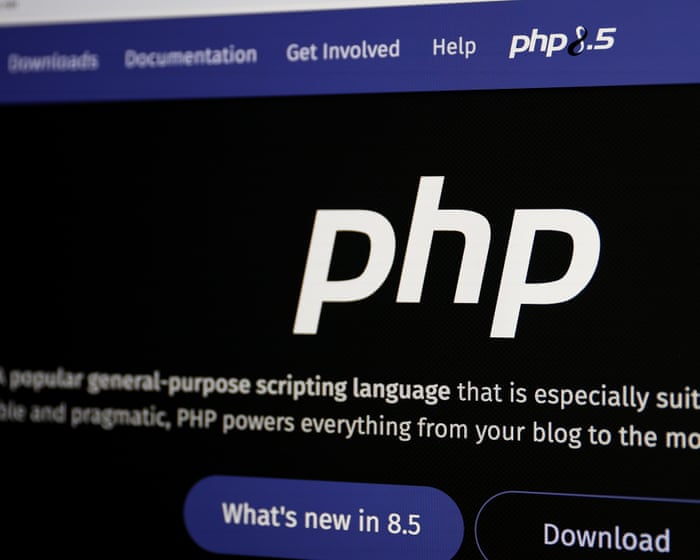
Cybersecurity experts have discovered a major security flaw in PHP, a programming language used by millions of websites, which has put many sites at risk of hacking. They warn that artificial intelligence (AI) will help find and exploit more security weaknesses faster than before, making it hard to fix all vulnerabilities in time.
Key Facts
A major flaw was found in PHP, which runs about 70% of all websites on the internet.
AI helped researchers find these complex bugs that might have existed for years.
Experts predict a “vulnerability tsunami,” meaning many new security weaknesses will be exposed rapidly.
Hackers have already started trying to exploit the PHP flaw since it became public.
The U.S. National Security Agency (NSA) urged all PHP websites to update their systems immediately.
Thousands of hacking attempts were recorded shortly before the flaw was publicly announced, rising to millions soon after.
Security leaders say fixing all bugs quickly will be impossible because AI finds vulnerabilities much faster than humans.
This situation marks one of the most serious software vulnerabilities ever discovered.
Read the Original
Want the full story? Tap a source to open the original
article.
Netflix and eBay are cutting about 1,000 jobs each, reducing their workforces to control costs and focus on key projects. These layoffs add to a larger trend of many tech companies cutting jobs this year while overall job cuts in the U.S. have decreased.
Key Facts
Netflix is laying off around 1,000 employees, about 6% of its global workforce.
eBay is cutting about 1,000 jobs now, after cutting 800 earlier in 2026, totaling around 1,800 layoffs this year.
These layoffs mainly affect product, technology, legal, and human resources teams.
From January to September 2026, tech companies announced 165,925 job cuts, 54% more than the same period in 2025.
Tech accounted for 29% of all U.S. job cuts announced in that time, more than any other industry.
Overall U.S. job cuts declined 39% in 2026 compared to 2025.
Netflix said its business is strong and growing despite the layoffs.
eBay stated the cuts were made to align with its main priorities and operate from a position of strength.
Read the Original
Want the full story? Tap a source to open the original
article.
Scientists at Weill Cornell Medicine are testing a new male birth control pill that works by temporarily blocking a key enzyme in sperm, preventing them from moving to fertilize an egg. The pill is designed to be taken 30 minutes before sex and provide about six to eight hours of protection, after which fertility returns to normal.
Key Facts
The pill targets an enzyme called soluble adenylyl cyclase (sAC), which sperm need to swim and mature after ejaculation.
Inhibiting this enzyme temporarily stops sperm from traveling inside a woman’s reproductive tract, preventing fertilization.
The pill is designed for short-term use, with contraception lasting six to eight hours after a single dose.
The research team received a multimillion dollar grant from the National Institute of Child Health and Human Development (NICHD) to test the pill’s safety in humans.
This is the third grant Dr. Jochen Buck and Dr. Lonny Levin have received since 2020 for developing this male contraceptive.
Currently, male contraception options are limited to condoms and vasectomies.
Around 40 percent of pregnancies in the U.S. are unplanned, partly due to the side effects and challenges women face with hormonal birth control methods.
The new pill aims to provide men with an option that does not involve continuous hormone use but shares responsibility for birth control.
Read the Original
Want the full story? Tap a source to open the original
article.
A serious bug was found in the PHP programming language, which is used by many websites. Experts say this flaw could put about 70% of the websites on the internet at risk of being attacked.
Key Facts
PHP is a programming language used to build websites.
A security vulnerability has been discovered in PHP.
This bug could affect up to 70% of websites worldwide.
The flaw could allow hackers to exploit many sites.
Cybersecurity reporter Raphael Satter shared information about this risk.
The bug is described as very serious and dangerous.
Immediate attention from website owners and developers is needed to fix the issue.
Read the Original
Want the full story? Tap a source to open the original
article.
Intel asked the US government for permission to keep using some foreign-made robotic vehicles in its US chip factories, due to confusion about a new government ban. The Federal Communications Commission (FCC) granted Intel a one-year waiver to continue using these robots, which are important for moving materials in semiconductor production.
Key Facts
The US FCC banned certain foreign-made robots but allowed Intel a waiver to keep using some in its chip factories.
Intel’s robots are automated guided vehicles that move materials on factory floors, made mostly by Japanese companies.
Intel said it was unclear if these robots were covered by the ban but requested the waiver to avoid production problems.
The FCC allowed Intel to also make some hardware and software updates to maintain the robots.
Intel has no US-made robot alternatives that meet its needs for factory work.
The FCC approved Intel’s waiver quickly, within a week of the request.
The US owns a significant $8.9 billion stake in Intel and is aiming to boost domestic chip manufacturing.
The wider US robotics industry faces challenges from the ban since China is a leading supplier of robots and parts.
Read the Original
Want the full story? Tap a source to open the original
article.
The UK’s online safety rules for social media have not reduced the number of children seeing harmful content like violence, bullying, or suicide material. A report by the UK regulator Ofcom found no big change in children’s exposure to harmful posts in the first nine months after new laws were introduced in July 2025.
Key Facts
The Online Safety Act began applying new rules for social media platforms like TikTok and Instagram in July 2025.
These rules require platforms to protect children from harmful content including pornography, violence, racism, suicide material, and bullying.
Ofcom’s review showed no significant drop in children seeing harmful content during the first nine months after the rules started.
Harmful content included graphic videos and posts that frightened children or made them feel unsafe.
Algorithms that recommend content to users were a major cause of children being exposed to harmful material.
The report was shared with UK government digital and media officials.
Child protection groups said children are still exposed to harmful content at high levels and called for stronger tech company action.
Social media companies like Meta, TikTok, and X are legally challenging Ofcom’s powers to enforce these rules.
Read the Original
Want the full story? Tap a source to open the original
article.