The U.S. Treasury Department announced new rules to limit big investors from buying single-family homes. Starting January 7, 2027, large institutional investors generally will not be able to buy these homes, following a law passed by Congress.
Key Facts
The Treasury is putting into action parts of a housing law passed by Congress this summer.
The law bans large investors, like big companies, from buying single-family homes to keep houses more accessible for regular buyers.
This rule will start on January 7, 2027.
Some exceptions will allow certain large investors to buy homes despite the ban.
The move aims to make it easier for individuals and families to purchase homes rather than compete with large institutions.
The law is bipartisan, meaning it was supported by members of both political parties.
These changes come before the upcoming midterm elections later this year.
Read the Original
Want the full story? Tap a source to open the original
article.
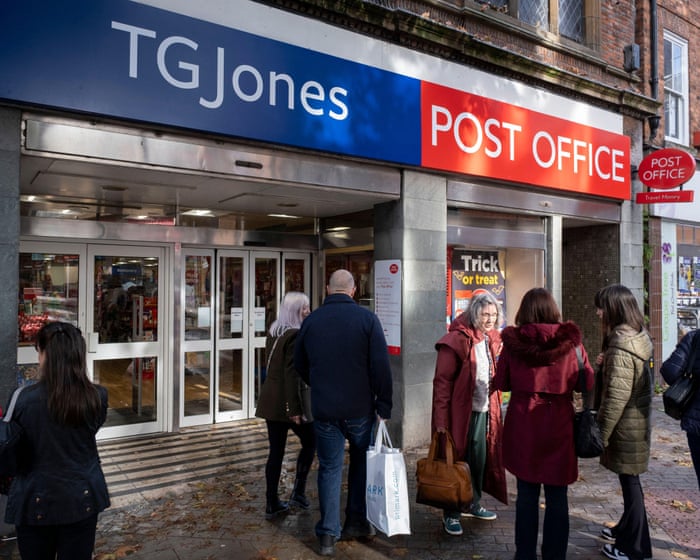
More than one-third of post offices inside TG Jones stores are planned to close by early 2027. This comes after many closures this year and is part of a larger pattern of post office branch reductions affecting several towns and cities in the UK.
Key Facts
TG Jones used to be part of WH Smith and now operates about 180 post offices after restructuring under new ownership by Modella.
So far in 2024, 36 TG Jones post office branches have closed, and 34 more will close by early 2027.
Modella plans to close around 150 of the 450 stores it acquired, including 70 with post offices.
Morrisons is also closing 52 post offices this year within its convenience stores as part of a plan to shut 100 small, unprofitable stores.
Several towns and smaller cities, including Stevenage, Bracknell, Orpington, Hull, York, and Telford, will lose multiple post offices in a short time.
Many of the closed TG Jones sites replaced former large “crown” post offices that offered more services.
Regions such as Essex, West Midlands, Wales, Suffolk, and Hertfordshire are especially affected by post office closures.
The Post Office is trying to open new branches or temporary sites but has had limited success so far.
Post offices remain important for small and medium businesses, with many relying on them weekly or monthly.
The CWU union warns that closures risk turning some areas into “postal deserts,” where people have no local post office access.
Read the Original
Want the full story? Tap a source to open the original
article.
Most "levelling up" projects in the UK have not been completed years after money was given to local councils. Data shows that 821 out of 1,347 projects were still unfinished by May 2024, delaying promised improvements to towns and regions.
Key Facts
821 out of 1,347 levelling up projects are unfinished as of May 2024.
73 UK council areas with approved projects have not completed any.
Wales, Scotland, and Northern Ireland have slower project delivery despite fewer projects overall.
The Future High Streets Fund, Town Deals, and Levelling Up Fund are the main sources of levelling up money.
Initial deadlines for these funds ranged from March 2024 to March 2026 but were extended to March 2028.
Inflation has caused councils to reduce or pause projects because costs increased.
Labour’s new Pride in Place program offers longer-term funding with local decision-making.
Some areas like Blackburn with Darwen and Leeds have no completed levelling up projects yet.
Read the Original
Want the full story? Tap a source to open the original
article.
John Healey, the UK chancellor, plans to use the upcoming budget to invest heavily in artificial intelligence (AI) to improve Britain's security and economy. The budget includes funding for AI research, cybersecurity, and supporting British businesses while protecting jobs and national interests.
Key Facts
The budget will include hundreds of millions of pounds for a “distinctively British” AI strategy.
Investments will support the AI Security Institute and other important organizations.
New funding will go toward AI chip design in Edinburgh and an AI Centre of Excellence in Manchester.
The government plans to spend £10 million yearly to study how AI will change jobs and industries.
These moves aim to reduce the UK’s reliance on other countries for AI technology.
The budget arrives amid global economic challenges, including higher energy prices caused by the war in the Middle East.
AI investment has helped the UK have the strongest economic growth in the G7 group during the first half of the year.
Concerns exist about AI risks such as cyberattacks and job losses, prompting protective measures.
Read the Original
Want the full story? Tap a source to open the original
article.
The IRS and Treasury Department have introduced new procedures to help people and employers fix mistakes in retirement accounts more easily. These changes update existing rules for employer-sponsored plans and create a new system specifically for individual retirement accounts (IRAs).
Key Facts
The IRS updated the Employee Plans Compliance Resolution System (EPCRS) to help employers fix errors in retirement plans like 401(k)s and SIMPLE IRAs.
EPCRS now offers expanded ways to correct mistakes without heavy paperwork, based on the SECURE 2.0 Act of 2022.
A new system called the IRA Compliance Resolution System (ICRS) allows IRA owners and account custodians to correct certain errors directly with the IRS.
About 54% of U.S. households had money in an IRA or employer retirement plan in 2022.
The goal is to simplify the process and reduce the burden on taxpayers and plan sponsors.
The changes aim to prevent costly tax problems caused by errors in retirement accounts.
These updates help both employers and individuals avoid complicated procedures when fixing account mistakes.
The IRS CEO described these updates as part of making tax compliance easier for Americans.
Read the Original
Want the full story? Tap a source to open the original
article.
The Chrysler Building in New York City will undergo a major restoration after Tishman Speyer signed a new 150-year lease and plans to invest $235 million. The project will restore the building’s exterior and add new indoor and outdoor spaces for offices as the Manhattan office market shows signs of improvement.
Key Facts
The Chrysler Building is a 77-story historic skyscraper built in 1930.
Tishman Speyer secured a 150-year ground lease and will invest $235 million in its restoration.
The restoration will focus on the building’s façade, crown, and adding new amenity spaces.
The building faced vacancies and deterioration partly due to the COVID-19 pandemic.
Older buildings like the Chrysler need constant maintenance because of aging materials and weather effects.
Modern buildings typically have a 50-year service life, while historic buildings require specialized repairs.
The Manhattan office market is improving, with declining office vacancies and lower sublease availability.
The project team has not yet shared detailed plans or challenges as the lease was recently finalized.
Read the Original
Want the full story? Tap a source to open the original
article.
Porridge, a traditional oat-based breakfast, is becoming more popular in the UK as people look for high-fiber foods. New varieties with different grains and toppings are making porridge more appealing, and sales of oats have increased significantly.
Key Facts
Porridge is traditionally made with oats, water, and a little salt or sugar.
Interest in porridge is rising, partly due to a focus on eating more fiber.
Social media shows many creative porridge recipes, including unusual toppings and mixes.
In London, restaurants are offering porridge with diverse ingredients like fig jam, whipped cream, tahini, and pesto.
Sales of organic jumbo oats at the UK online store Ocado have almost doubled in one year.
Porridge blends with added flavors like cinnamon and apple are becoming popular.
The NHS recommends adults eat 30 grams of fiber per day, but most consume much less.
Porridge is seen as good for digestion and cholesterol, making it a healthy breakfast choice.
Read the Original
Want the full story? Tap a source to open the original
article.
Glenn Dubin, a billionaire hedge fund manager linked to Jeffrey Epstein, stepped down from the board of Mount Sinai hospital earlier this year. The hospital is reviewing its connections to Epstein after files showed involvement with him, and Dubin and his wife, who is also connected to Epstein, both left their hospital board roles.
Key Facts
Glenn Dubin is a hedge fund billionaire and co-founder of Highbridge Capital Management.
Dubin had financial ties and a long-term relationship with Jeffrey Epstein, calling him a friend.
Dubin served on Mount Sinai hospital’s board from 2007 until stepping down in spring 2026.
His wife, Dr. Eva Andersson-Dubin, who dated Epstein before marriage, also left her board role at Mount Sinai’s medical school.
The hospital formed a committee to review its past relationship with Epstein following released DOJ files.
The files show a Mount Sinai doctor treated a young woman at Epstein’s townhouse.
Dubin’s and his wife’s departures from the boards were said to be because their terms ended and they did not seek re-election.
A congressman recently called for investigation of Epstein associates including Dubin and Leon Black, another Wallace Street billionaire linked to Epstein and Mount Sinai.
Read the Original
Want the full story? Tap a source to open the original
article.
Major U.S. banks have found that some customers are allowing third-party AI programs, called AI agents, to access and take actions in their bank accounts without the banks’ approval. These AI agents act based on the customers’ instructions but may violate bank rules. Banks are working to stop unauthorized AI access and warn customers about the risks.
Key Facts
Customers sometimes give their bank usernames and passwords to AI agents not approved by banks.
These AI agents can perform actions in accounts without specific permission from banks.
No cases were reported of AI agents stealing money or hacking accounts.
Banks say this activity breaks their terms of service since humans must log in personally.
The White House AI czar said there is a difference between customer-authorized AI and true cyberattacks.
Some banks, like JPMorgan Chase and Charles Schwab, are blocking unauthorized AI agents.
Chase encourages secure data sharing through official services, not password sharing.
Bank of America and Wells Fargo have not commented on this issue yet.
Read the Original
Want the full story? Tap a source to open the original
article.
Many families in China are buying a lot of gold, but not mostly for making jewelry. A reporter visited China’s largest gold market to see why this is happening.
Key Facts
Chinese families are increasing their gold purchases.
Most of the gold bought is not for jewelry use.
The trend is significant enough to be called a "gold rush."
The report was made by Katrina Yu from Al Jazeera.
The focus is on China’s biggest gold market.
Read the Original
Want the full story? Tap a source to open the original
article.
Barclays, a large bank, announced it will cut 5,000 jobs worldwide as it increases the use of artificial intelligence (AI) in its operations. The company expects AI to help lower costs and improve productivity but says not all job cuts are only because of AI.
Key Facts
Barclays plans to reduce its workforce by about 5 percent, cutting 5,000 jobs globally.
About 1,000 of these job cuts have already happened.
The bank expects to save around £1.1 billion ($1.5 billion) in costs next year due to these changes.
Sixty percent of the job reductions will be in support roles like developers, where AI will make employees more productive.
Barclays has invested heavily in modernizing its systems to better use AI.
The bank also invests in employee training, pledging £150 million ($201 million) to develop skills by 2030.
The union for banking workers criticized Barclays for using AI as a reason for job cuts and urged focus on retraining staff.
Experts say AI will greatly affect banking jobs but cost cuts and tech updates are also factors in the job reductions.
Read the Original
Want the full story? Tap a source to open the original
article.
The article discusses an investment opportunity that financial expert Martin Lewis wants people to know about. It aims to explain this option clearly so readers can understand its potential.
Key Facts
Martin Lewis is a well-known financial expert.
He highlights a particular investment that is not widely known.
The article includes a video and a full episode on BBC Sounds for more details.
The investment is presented as something people should understand better.
No specific investment details are provided in the text shown.
The content is focused on helping people make informed money decisions.
Read the Original
Want the full story? Tap a source to open the original
article.
A study from Australia shows that parents often want to treat their children equally when helping them buy their first home. Parents are more likely to help one child if they have helped or plan to help the sibling, and factors like need and closeness to the parent also affect support.
Key Facts
The study used data from 3,039 Australian parents about 5,895 children, focusing on families with two children.
About 79% of children who had not yet bought a home were expected to get some help from their parents.
Help included living rent-free (46%), financial gifts (44%), or parents acting as guarantors (26%).
If a sibling bought a home without parental help, the other child was much less likely to receive support.
Parents are motivated to treat their children equally to keep family harmony or a sense of fairness.
Children seen as less financially well-off were more likely to get help from parents.
Children who were very close to their parents were more likely to receive support than those less close.
Gender and birth order mostly did not affect the likelihood of receiving help.
Read the Original
Want the full story? Tap a source to open the original
article.
Brian Kelly, known as The Points Guy, shares tips on how people can save money using customer loyalty programs. Some of these programs give shoppers up to 25% back on what they spend.
Key Facts
Brian Kelly is also called The Points Guy.
He provides advice on getting more value from money and purchases.
Certain customer loyalty programs offer rewards of up to 25% back on buying items.
These programs help consumers save or earn back a portion of their spending.
The tips aim to help people stretch their money further in daily shopping.
The article is part of a CBS News segment focused on financial advice.
Read the Original
Want the full story? Tap a source to open the original
article.
The California High-Speed Rail Authority awarded a $24 million consulting contract to KPMG, despite knowing KPMG’s plan to charge much higher rates than their initially low bid. KPMG billed taxpayers about $2 million more in four months than their bid indicated, leading to questions about bid manipulation and consultant spending.
Key Facts
KPMG’s winning bid proposed average hourly rates around $200 but billed more than double that after winning the contract.
The contract totaled $24 million over four years; nearly half was spent in the first year.
KPMG lowered hourly rates for higher-level employees in its bid but charged much higher rates for lower-level staff on actual bills.
A competing bidder protested, accusing the rail authority of allowing KPMG to manipulate the bid to win.
No single KPMG invoice reviewed showed billing at the low $35 hourly rate promised for certain positions.
The rail project has faced delays and lost $4 billion in federal funding partly due to missed deadlines.
KPMG executives and the rail authority have not fully responded to requests for comment.
The project is expected to run out of money by 2027 while continuing to spend large amounts on consultants.
Read the Original
Want the full story? Tap a source to open the original
article.
Newsweek publishes a yearly ranking called America’s Greatest Workplaces that highlights companies in the U.S. who create positive work environments. The 2027 rankings combine anonymous employee feedback with research to evaluate company culture, leadership, benefits, and opportunities for growth.
Key Facts
Newsweek has ranked America’s Greatest Workplaces for four years in a row.
The rankings focus on employee experience, organizational culture, leadership, and career opportunities.
The study uses anonymous employee surveys and additional research to assess workplaces.
Companies can join the 2027 rankings by registering with Plant-A Insights Group to collect employee feedback.
Employee responses are kept anonymous and contribute to the nationwide evaluation.
All organizations are judged by the same criteria, whether or not they participate directly.
The survey for the 2027 rankings closes on November 1, 2026.
The rankings help job seekers choose potential employers by providing data on workplace quality.
Read the Original
Want the full story? Tap a source to open the original
article.
The UK government plans to take unusual steps to control water bills and guide how water companies invest money. Environment Secretary Angela Eagle wants companies to reduce costs, fix leaks and sewage problems, and give local communities more say before the next price review ends in 2029.
Key Facts
Ministers will intervene directly in water bills and company investment decisions for the first time.
Angela Eagle sent letters to water companies and regulators to focus on better value and affordable bills.
The water regulator Ofwat usually handles price reviews without government interference.
The government wants companies to invest in new technology and fix leaks and sewage early.
There will be more power for local leaders to influence water services.
A new 10-year water industry plan will give the government stronger control over prices and investments.
The government is also considering ways to support Thames Water, which is in financial trouble.
Thames Water recently asked its lenders for an extra £2.4 billion and faces possible nationalization or court battles.
Read the Original
Want the full story? Tap a source to open the original
article.
The article discusses how Congress should take a stronger role in making trade policy following the midterm elections. It notes that higher oil prices from the war in Iran and President Trump's tariffs are unpopular with voters.
Key Facts
Congress currently plays a limited role in trade policy decisions.
The article suggests Congress should have more influence after the midterms.
Higher oil prices are linked to the ongoing war in Iran.
President Trump's tariffs have caused concern among voters.
Trade policy affects prices and economic relations with other countries.
Public opinion is important in shaping trade decisions.
The midterm elections may change political priorities in trade policy.
Read the Original
Want the full story? Tap a source to open the original
article.
The inflation rate in Jersey increased to 3% in September, up from 2.8% in June. Higher prices for household services, alcohol, food, and fuels like heating oil and petrol were the main reasons for this rise.
Key Facts
Jersey’s annual inflation rate reached 3% in September.
This is an increase of 0.2 percentage points since June, when inflation was 2.8%.
Household services, alcoholic drinks, and food saw the biggest price increases.
Prices for heating oil and other fuels rose by 47.7% over the year.
Petrol and oil prices increased by 22.7%.
Food prices went up by 3.5%, and housing costs rose by 0.2%.
Jersey’s inflation rate is 0.6 percentage points lower than the UK’s CPIH rate of 3.6%.
Global energy markets are affected by the ongoing conflict in the Middle East, influencing fuel prices.
Read the Original
Want the full story? Tap a source to open the original
article.
Oil prices have reached their highest point in over five months due to fears of renewed conflict between the US and Iran. The rise follows threats from Iran to attack key facilities if the US and Israel carry out military strikes after the US elections in November.
Key Facts
Brent crude oil rose 1% to $114.72 per barrel, the highest since May.
Iran threatened to hit oil facilities, undersea cables, and AI centers if attacked by the US or Israel.
The US may consider military strikes on Iran after the midterm elections on November 3.
Oil prices were about $72 per barrel in February before the Iran conflict and peaked at $126 by April.
Iran's forces claimed to attack four commercial ships near the Strait of Hormuz recently.
The US ordered some diplomats and families to leave Saudi Arabia after increased attacks by Houthi rebels from Yemen.
The Strait of Hormuz remains dangerous due to ongoing missile attacks affecting shipping routes.
Ukraine’s attacks on Russian diesel refineries are also causing worry about fuel supply.
Read the Original
Want the full story? Tap a source to open the original
article.