A recent poll by the health research group KFF found that many voters worry about paying for health care. The poll also showed that voters trust Democrats more than Republicans to handle health care costs.
Key Facts
Health care costs are a big concern for many voters.
About 60% of voters are worried about affording health care and insurance.
The poll was conducted by the Kaiser Family Foundation (KFF), a health research group.
Voters trust Democrats nearly twice as much as Republicans on health care cost issues.
The poll included a wide group of voters to measure their opinions on affordability and political trust.
The concern over health care costs affects voters' views on political parties.
This poll reflects ongoing debates about health care policy in the U.S.
Read the Original
Want the full story? Tap a source to open the original
article.
President Donald Trump’s administration has reported strong economic growth, rising stock markets, and a stable job market. However, most Americans feel the economy is not improving for them, especially due to higher gas and food prices, leading to low approval of Trump’s economic handling.
Key Facts
The U.S. economy grew at a 2.2% annual rate in the second quarter and is expected to grow more in the third quarter.
The stock market indexes S&P 500 and Nasdaq have risen significantly this year.
Only 26% of Americans approve of President Trump’s overall handling of the economy.
Approval drops to 17% for Trump’s handling of the cost of living, the lowest in his presidency.
Gasoline prices are about $4.47 per gallon, significantly higher than last year.
Food prices have risen, with grocery prices up 2.2% and restaurant prices up 3.4% compared to last year.
Trump promised a $5,000 payment to every adult if Republicans keep control of Congress, funded by tariff revenue, costing about $1.2 trillion.
Trump and his advisers say the economy is doing well and claim polls understate this, but many Americans feel otherwise.
Read the Original
Want the full story? Tap a source to open the original
article.
Tucker Carlson questioned whether Britain was better off fighting Nazi Germany in World War II, suggesting the war may not have been worth the costs. His comments sparked debate about the value of Britain’s role in defeating Hitler and the meaning of “speaking German” as a threat.
Key Facts
Pillboxes are old concrete bunkers built along Britain’s coast during World War II to defend against a potential German invasion.
Britain, with help from its empire and Allied forces, was key in resisting Nazi Germany after the fall of France in 1940.
Tucker Carlson asked if Britain was better off after fighting Hitler, implying the war caused long-term problems for Britain.
Former British lawmaker Jacob Rees-Mogg said the war was a fight between good and evil and necessary to prevent Britain from being controlled by Nazis.
Carlson said it might be better to speak any European language than English, referring to debates about immigration and language in Britain.
Less than 2% of people in England and Wales said in the 2021 census that they cannot speak English well or at all.
The common American idea is that without U.S. intervention, Nazi Germany would have ruled Europe and people would be “speaking German.”
The Soviet Union and Britain played major roles in defeating Nazi Germany alongside the United States.
Read the Original
Want the full story? Tap a source to open the original
article.
Republican Mike Rogers is running again for the U.S. Senate seat in Michigan but currently trails Democrat Abdul El-Sayed in polls. This race is seen as important because the seat is open after Democratic Senator Gary Peters retired, and both parties want to control the Senate.
Key Facts
Mike Rogers narrowly lost a Senate race in Michigan two years ago by less than 20,000 votes.
He is currently running against Abdul El-Sayed, who won the Democratic nomination unexpectedly.
Recent polls show El-Sayed leading Rogers by about 4 points.
The seat is open because Democratic Senator Gary Peters is retiring.
Rogers was the chair of the House Intelligence Committee before leaving Congress in 2015.
Rogers' previous close race was against Democrat Elissa Slotkin, who won by a very small margin.
The political environment has changed since 2024, with a Republican president in the White House, which usually makes midterms harder for that party.
El-Sayed won his primary by a narrow margin, which suggests some uncertainty in his support.
Read the Original
Want the full story? Tap a source to open the original
article.
A former German domestic intelligence chief, August Hanning, was arrested on Tuesday over spying allegations. Another man, a former aide named Manfred D, was also arrested in southern Germany.
Key Facts
August Hanning was head of Germany’s Federal Intelligence Service from 1998 to 2005.
Hanning was arrested in the Bad Toelz-Wolfratshausen area in southern Germany.
A former aide of Hanning, called Manfred D, was arrested on the same day.
Both men face allegations of espionage, which means spying.
The German prosecutor’s office has not said who they are suspected of spying for.
The investigation is still ongoing, and more information is expected.
Read the Original
Want the full story? Tap a source to open the original
article.
South Korea is considering ways to make North Korea apologize for planting landmines in the Demilitarized Zone (DMZ), which injured three South Korean soldiers. A joint investigation found the mines were placed by North Korea about a year ago, but North Korea denies responsibility and refuses to apologize.
Key Facts
Two landmines exploded on September 21 in the DMZ, injuring three South Korean soldiers.
A joint South Korean-UN investigation concluded North Korea planted the mines around a year ago.
South Korea demands an official apology and the removal of any other mines planted near the border.
North Korea denies planting the mines and calls South Korea’s demand “despicable.”
South Korea conducted mine-clearing operations south of the military demarcation line (MDL).
The United States-led UN Command confirmed the mine placement violates the 1953 armistice agreement.
South Korea’s Defence Minister said the military will respond decisively to threats against national security.
North Korea rejected proposals for negotiating border points and stated it will define its boundary by force if needed.
Read the Original
Want the full story? Tap a source to open the original
article.
Jim Bakker, a US televangelist who became famous in the 1980s before being convicted of fraud and involved in a sex scandal, has died at age 86. He spent years in prison for cheating followers, later restarted his television ministry, and supported President Donald Trump.
Key Facts
Jim Bakker was a televangelist known for the TV show The PTL Club in the 1980s.
PTL stood for "Praise the Lord" and "People That Love."
He was convicted in 1989 for defrauding followers out of $158 million through a fake vacation scheme.
Bakker was sentenced to 45 years in prison, later reduced, and served about 4.5 years.
The scandal included paying $265,000 to a woman to keep silent about a sexual encounter.
Bakker’s ministry once earned $129 million a year and had 13 million TV viewers.
After prison, he restarted his TV ministry in 2003 and became a supporter of President Trump.
He died at 86, but the cause of death was not shared.
Read the Original
Want the full story? Tap a source to open the original
article.
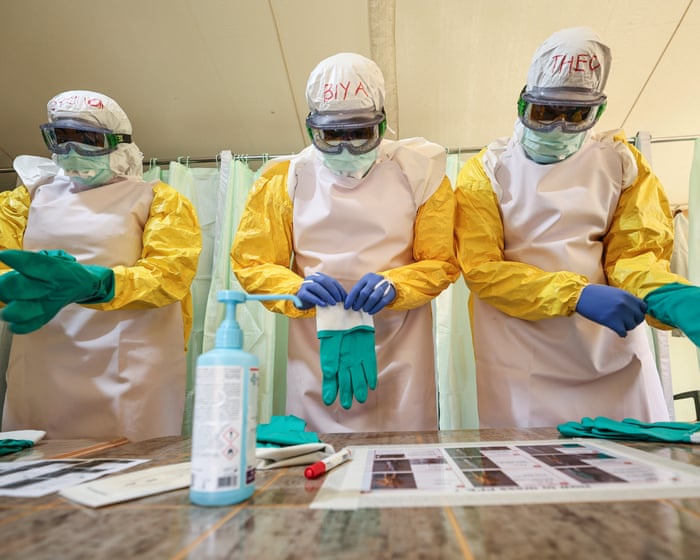
Kenya has reported its first Ebola death, involving a Kenyan citizen who had been living in the Democratic Republic of Congo (DRC). The patient became sick a month ago, traveled to Nairobi, and died shortly after arriving, with tests confirming the Ebola Bundibugyo virus.
Key Facts
The first Ebola case in Kenya is a Kenyan citizen living in DRC for seven years.
The patient fell ill about a month ago and was treated in hospitals in DRC.
The patient flew to Nairobi and passed through routine airport health screening.
Shortly after arrival, the patient was taken to a hospital in Nairobi and died soon after.
Tests confirmed infection with the Ebola Bundibugyo virus strain.
More than 4,000 people have died from Ebola in DRC this year.
This outbreak is the second deadliest Ebola outbreak on record.
Kenyan health officials are closely monitoring the situation.
Read the Original
Want the full story? Tap a source to open the original
article.
Kenya has confirmed its first Ebola case in a citizen who recently returned from the Democratic Republic of the Congo (DRC). The patient died, and 28 people who had contact with them, including family and healthcare workers, have been identified for monitoring.
Key Facts
The Ebola patient was a Kenyan living in the DRC and arrived in Nairobi on Saturday.
The patient has died from the disease.
28 contacts of the patient have been identified, including family members and health workers.
The DRC is experiencing its largest Ebola outbreak caused by the Bundibugyo virus species.
The outbreak began in mid-May but may have started earlier, with over 8,000 cases and 4,000 deaths reported.
The Ebola outbreak spread to Uganda, which had 20 cases and 2 deaths but was declared free of Ebola in August by the World Health Organization (WHO).
Ebola spreads through direct contact with body fluids of infected people or bodies.
Symptoms of Ebola include fever, vomiting, diarrhea, and severe cases can cause bleeding inside and outside the body.
Read the Original
Want the full story? Tap a source to open the original
article.
Malaysia has returned about 10,000 people to Myanmar since January, despite concerns from human rights groups and the United Nations about their safety. Malaysian Prime Minister Anwar Ibrahim said Myanmar promised to treat the returnees fairly, and Myanmar’s leader will visit Malaysia soon to discuss the situation.
Key Facts
Nearly 10,000 people deported from Malaysia to Myanmar since January 2026.
Around 1,500 were returned by sea last week as part of a Malaysia-Myanmar agreement.
Malaysian officials say Myanmar promised no harm would come to the returnees.
Most deported refugees belong to the Rohingya Muslim minority, who face persecution in Myanmar.
The UN refugee agency has not been allowed to check if people returned voluntarily.
Malaysia is holding over 50,000 refugees after increased immigration raids in 2026.
Malaysia hosts about 193,000 Myanmar refugees but is not a signatory to the UN Refugee Convention.
Myanmar is in a civil war since a military takeover in 2021, with over 100,000 deaths reported.
Read the Original
Want the full story? Tap a source to open the original
article.
Niveen Al-Gharabli in Gaza is saving books from damaged buildings to help keep education going. She fixes and sells these books cheaply or gives them to students who cannot pay.
Key Facts
Gaza's schools and universities have been damaged or destroyed.
Niveen collects books from rubble and damaged homes.
She repairs the books to make them usable again.
Niveen sells the books at low prices to make them affordable.
She also gives books for free to students who cannot pay.
Her work helps support education despite the difficult conditions.
The book stall is a temporary setup made from salvaged materials.
Read the Original
Want the full story? Tap a source to open the original
article.
More than 2.2 million children under five in Yemen suffer from acute malnutrition, with over half a million severely affected, according to the United Nations. The ongoing war, now in its twelfth year, has caused food shortages and displacement for millions, but Yemen has received only a small part of the humanitarian aid it needs to help its people.
Key Facts
Over 2.2 million Yemeni children under five are acutely malnourished; more than 500,000 are severely malnourished.
The war in Yemen started about 12 years ago and has caused widespread hunger and displacement.
22 million people in Yemen need humanitarian help, and 18.3 million face serious food shortages.
Yemen has received only about 20% of the $2.2 billion aid it needs for 2026.
Cases of severe malnutrition among children under five have increased in 2026 compared to 2025.
Malnutrition is widespread across many provinces, including Taiz, Aden, Dhale, Abyan, and Lahj.
Children with severe malnutrition often need hospital care, while moderate cases are treated with nutritional supplements at clinics.
Aid agencies like UNICEF and the World Food Programme provide treatment supplies, but challenges remain due to war, poverty, and displacement.
Read the Original
Want the full story? Tap a source to open the original
article.
The Saudi-backed Yemeni government forces have launched an offensive to regain areas controlled by the Iran-backed Houthi group, especially around the strategic Bab el-Mandeb Strait and the port city of Mocha. Fighting is intense along Yemen’s western coast, with both sides claiming control of key locations and conducting attacks on military and infrastructure targets.
Key Facts
Yemeni government forces, supported by Saudi air strikes, claim to have captured Mocha, Dhubab, and areas near the Bab el-Mandeb Strait.
The Houthis control the capital, Sanaa, and have held the port city of Hodeidah since 2014.
The Bab el-Mandeb Strait is a crucial global shipping route near where the fighting is focused.
Yemen’s Presidential Leadership Council announced a new military operation called Dawn of Yemen to retake all Houthi-held territory.
The Saudi-led coalition has targeted Houthi naval and military facilities to prevent attacks on Red Sea waterways.
Houthi forces say they remain in control of their positions and have carried out strikes against enemy reinforcements.
The battle for Mocha is seen as key for controlling the region and influencing future phases of the conflict.
Independent verification of the latest territorial changes has not been confirmed by news outlets.
Read the Original
Want the full story? Tap a source to open the original
article.
Kemi Badenoch, the Conservative leader, denied saying the new UK air defence system called “Britannia Shield” is like Israel’s “Iron Dome,” even though she used the phrase in a press release and article. She said the British system will be different and tailored to protect against threats specific to the UK.
Key Facts
The Conservative Party wants to spend £1 billion each year for 10 years to build the Britannia Shield air defence system.
Israel’s Iron Dome is designed mainly to stop short-range attacks like rockets and artillery.
Kemi Badenoch said the Britannia Shield will be a unique UK system, not a copy of Israel’s Iron Dome.
The phrase “British Iron Dome” was used in a Conservative press release and Badenoch’s article but she now calls it a “semantic argument.”
The opposition’s shadow defence secretary compared the term “Iron Dome” to a brand name used to mean any missile defence system.
The Britannia Shield aims to protect critical parts of the UK, such as important infrastructure.
Funding and development will focus on advanced radar and missile technology to stop aerial threats.
Badenoch said the party is working to improve its popularity after previous unpopularity linked to the former government.
Read the Original
Want the full story? Tap a source to open the original
article.
A man has been charged after a protest against migrant arrivals in Gosport, Hampshire. The protest involved around 150 people, some of whom clashed with police during the arrival of 149 migrants rescued mid-channel.
Key Facts
149 migrants were rescued on Sunday by the RNLI and a French vessel and brought to Gosport.
About 150 anti-migrant protesters gathered and some set off flares.
Jamie Bennett, 38, was charged for not following a banned assembly order and will appear in court on 26 November.
Police arrested 12 people, including 11 men and 1 woman, for suspected offences like assault, affray (fighting in public), and racially aggravated public disorder.
Ten men and one woman were released on bail while investigations continue.
Some police officers were hurt but none seriously during the protest.
Protesters blocked police vans and chanted slogans against migrants.
The protest took place on Haslar Road in Gosport, Hampshire.
Read the Original
Want the full story? Tap a source to open the original
article.
Informa, a large London-based events company, has bought Clarion, another events organiser, for £2.24 billion. Clarion hosts many types of events, including arms fairs, comic conventions, and travel shows. Informa plans to grow its event business and separate its academic publishing division, Taylor & Francis.
Key Facts
Informa purchased Clarion from Blackstone for £2.24 billion.
Clarion runs events like the DSEI arms fair in London and AwesomeCon in Washington.
DSEI takes place every two years and has faced protests against some exhibitors.
Clarion also organises travel shows, classic car events, and gaming and tech industry gatherings.
Informa, headquartered in London, employs 14,000 people and hosts global events like London Tech Week.
Informa plans to spin off its academic publishing unit, Taylor & Francis, which made about £760 million last year.
To pay for Clarion, Informa will raise £940 million by selling new shares.
Informa expects the deal to speed up its growth and increase profits by 2027.
Read the Original
Want the full story? Tap a source to open the original
article.
Ukraine sent nearly 700 drones toward Moscow in one of its largest attacks on the Russian capital in recent years. The strike killed two people and injured nine others, according to Russian officials.
Key Facts
Ukraine launched about 700 drones targeting Moscow overnight.
The attack happened between 8:30 p.m. Monday and 5 a.m. Tuesday local time.
Moscow's mayor said over 650 drones were detected heading for the city.
Another 68 drones were reportedly destroyed before reaching Moscow.
Two people died: a 71-year-old man in southern Moscow and a 20-year-old man northwest of the city.
Nine others were injured during the attack.
Russian officials provided the casualty and damage information.
Read the Original
Want the full story? Tap a source to open the original
article.
President Donald Trump suggested at a rally that Iran could "take out" the cities of Los Angeles and San Diego, referring to the ongoing conflict and high gas prices. California leaders, including the governor and mayors, strongly criticized his remarks, saying they put large U.S. cities and residents at risk.
Key Facts
President Trump spoke in Nebraska and linked high gas prices to the war with Iran, calling them a "small price to pay."
He suggested Iran could attack Los Angeles and San Diego, two major cities in California.
California Governor Gavin Newsom called Trump’s comments “deranged and dangerous.”
Los Angeles Mayor Karen Bass said the president’s words were irresponsible and could harm the city’s safety.
San Diego Mayor Todd Gloria said his city is “not expendable” and criticized Trump’s war talk.
San Diego hosts important U.S. military bases.
Some people debated if Trump was joking or revealing sensitive information about Iranian targets.
U.S. defense officials say Iran currently cannot hit the U.S. mainland with missiles.
Read the Original
Want the full story? Tap a source to open the original
article.
A baby named Renley was born healthy, but three days later his skin developed blisters. After tests, he was diagnosed with epidermolysis bullosa (EB), a rare genetic disorder that makes the skin very fragile and causes painful blisters and wounds.
Key Facts
Renley was born on May 5 and seemed healthy at first.
Three days after birth, blisters appeared on his feet.
Doctors initially thought the blisters were due to friction from towels.
A standard newborn blood test led to further hospital care and specialists' involvement.
Renley was diagnosed with epidermolysis bullosa simplex (EB), a rare inherited skin disorder.
EB makes the skin and nails fragile and can cause blistering, scarring, and skin tears from minor friction.
Renley’s case of EB happened due to a new genetic mutation, not inherited from his parents.
There is no cure for EB, only wound management; Renley faces ongoing care challenges and may need a wheelchair in the future.
Read the Original
Want the full story? Tap a source to open the original
article.
Russia has commented on the death of a woman who was reportedly connected to a laboratory studying the plague. The details about her death and the laboratory's role are part of ongoing discussions in Russia.
Key Facts
A woman linked to a plague research lab in Russia has died.
Russian authorities or sources have made statements about the case.
The laboratory studies the plague, a serious infectious disease.
Information about the death is being closely followed and discussed.
The story has attracted attention from news organizations focusing on Russia and infectious diseases.
Read the Original
Want the full story? Tap a source to open the original
article.