The number of satellites orbiting Earth has grown from about 1,000 in 2013 to roughly 17,000 today, largely due to companies like SpaceX and Amazon launching large constellations. A recent European Space Agency report highlights growing concerns about space debris, which could lead to dangerous collisions in orbit and make some areas unusable.
Key Facts
In 2013, there were about 1,000 active satellites in orbit; today there are about 17,000.
SpaceX’s Starlink network accounts for approximately 11,000 of the satellites currently in orbit.
Amazon and China are also launching large satellite constellations for internet service.
The increase in satellites raises the risk of collisions and space debris buildup, known as the Kessler syndrome.
The European Space Agency recently released a report warning about rising space debris and its impact on orbital safety.
Some experts predict that space debris could cause accidents involving spacecraft or even objects falling to Earth in the next decade.
Elon Musk, SpaceX founder, believes that space is vast and can handle more satellites without serious problems.
The European report aims to track global space activities and encourage efforts to keep space use sustainable.
Read the Original
Want the full story? Tap a source to open the original
article.
President Donald Trump will meet Chinese leader Xi Jinping this week in Washington. The meeting is important for the relationship between the two countries, which are major global powers.
Key Facts
President Trump is hosting Xi Jinping in the United States.
The meeting takes place in Washington.
The two leaders represent the US and China, two of the world's biggest powers.
This visit aims to address key issues between the US and China.
Both countries have a complex relationship involving trade, security, and diplomacy.
The meeting is closely watched by governments and experts around the world.
It could affect global political and economic dynamics.
Read the Original
Want the full story? Tap a source to open the original
article.
Terrorists are now using artificial intelligence (AI) to improve their actions. AI helps them reach more people, find weaknesses, and plan attacks more quickly with fewer people involved.
Key Facts
Terrorists use AI to spread their message and recruit members.
AI tools help identify weaknesses or possible targets.
Attack planning becomes faster with AI assistance.
Fewer human workers are needed because of AI.
The use of AI by terrorists marks a new phase in terrorism after 9/11.
Read the Original
Want the full story? Tap a source to open the original
article.
Most American women will experience weak bones called osteopenia or osteoporosis in their lifetime, especially during and after menopause. Doctors recommend getting a bone density test called a DEXA scan around age 50 to catch problems early and suggest exercise and good nutrition to keep bones strong.
Key Facts
About 7 out of 10 American women will develop osteopenia or osteoporosis.
These bone conditions affect women more than men, particularly around menopause.
Osteopenia means bones are weak but not broken; osteoporosis is more severe and increases fracture risk.
The DEXA scan measures bone density by comparing it to a healthy 30-year-old’s bones.
A T-score from the DEXA test shows bone strength: normal (0 to -1), osteopenia (-1 to -2.5), osteoporosis (below -2.5).
Women usually get DEXA scans after age 65, but experts suggest beginning around menopause (age 50 or 51).
Exercises like strength training and impact workouts help bones get stronger by building denser tissue.
Calcium, vitamin D, and other nutrients are important for maintaining healthy bones.
Read the Original
Want the full story? Tap a source to open the original
article.
The Guardian investigated links between some authors of the Intergovernmental Panel on Climate Change (IPCC) and Saudi Arabia’s oil industry, including Saudi Aramco. This raises questions about potential conflicts of interest and how they might affect trusted climate science and decisions on how to fight climate change.
Key Facts
The investigation found 20 IPCC authors with potential conflicts of interest.
Among these, 11 have connections to Saudi Aramco or Saudi state institutions.
These links raise concerns about transparency and the credibility of climate reports.
The IPCC is known for its independence, which gives it scientific authority.
Concerns focus especially on carbon capture and carbon dioxide removal technologies.
The debate is about the size of the role these technologies should play in reducing emissions.
There is worry that these technologies might be used to delay cutting fossil fuel use.
The story highlights who influences decisions on climate solutions and how to protect science from political and economic pressures.
Read the Original
Want the full story? Tap a source to open the original
article.
The bus fare cap in England will be lowered to £2 from January, but Herefordshire's main bus companies have not yet agreed to join the scheme. Local leaders and campaigners worry that without their participation, people in Herefordshire will not get the benefits of cheaper bus fares.
Key Facts
The bus fare cap in England will change from £3 to £2 starting in January.
Herefordshire's two largest bus operators, Yeomans Travel and Sargeants Brothers, have not confirmed if they will join the new £2 fare cap.
Yeomans Travel is waiting for more information from the government before deciding.
Bromyard-based DRM bus company plans to join the scheme.
Local officials and groups say not joining the scheme would mean higher costs for Herefordshire bus riders compared to the rest of England.
A local campaign group said the price difference could add up to about £1,200 a year for regular commuters in Herefordshire.
Yeomans Travel and Sargeants Brothers operate most of the bus routes in Herefordshire, serving towns and villages around Hereford and other areas.
The government’s final proposal to the bus companies is expected by late November.
Read the Original
Want the full story? Tap a source to open the original
article.
A government adviser, Sir Charlie Mayfield, says workers who are sick should keep in phone contact with their bosses. His report highlights that better communication can help people return to work and reduce economic losses caused by long-term sickness.
Key Facts
Sir Charlie Mayfield leads the Keep Britain Working taskforce.
Health-related work absences cost Britain about £212 million each year in lost benefits and output.
He recommends bosses and workers talk by phone, especially for long-term illnesses, instead of only exchanging emails or sick notes.
Around 300,000 people leave work yearly due to health conditions, many of which can be prevented.
Both employees and employers often fear discussing health issues, which causes gaps in understanding.
Better sickness management could add billions to the economy and improve people’s incomes.
The report suggests more workplace support, including access to treatments like physiotherapy and therapy sessions.
A new Workplace Health System alongside the NHS is proposed to help people stay at work.
Read the Original
Want the full story? Tap a source to open the original
article.
Hurricane Polo has grown into a very strong storm in the Pacific Ocean, with winds reaching 165 miles per hour. It is expected to move near Mexico’s southwestern coast as a Category 5 hurricane, which means it is extremely dangerous.
Key Facts
Hurricane Polo is one of the most powerful Pacific cyclones in decades.
The storm has maximum sustained winds of 165 miles per hour.
It is classified as a Category 5 hurricane, the highest level on the scale.
The hurricane is moving near the southwestern coast of Mexico.
The National Hurricane Center in Miami issued the warning about this storm.
Category 5 means the hurricane can cause catastrophic damage.
The hurricane’s path and strength make it a serious natural disaster risk.
The news source is France 24, reporting on September 23, 2026.
Read the Original
Want the full story? Tap a source to open the original
article.
Russia launched missile and drone attacks on at least four regions in Ukraine overnight, killing at least five people. At the same time, Ukrainian forces damaged a Russian oil refinery in a long-range strike. These events happened while Ukrainian President Volodymyr Zelensky met with U.S. President Donald Trump in New York during the UN General Assembly.
Key Facts
Russia attacked four different regions in Ukraine using missiles and drones overnight.
At least five people were reported killed in these attacks.
Ukrainian forces struck and damaged a Russian oil refinery in a long-range attack.
The attacks occurred during talks between President Zelensky and President Trump.
The meeting took place on the sidelines of the United Nations General Assembly in New York.
The conflict continues amid international diplomatic efforts.
The article mentions ongoing updates about the war and related political events.
Read the Original
Want the full story? Tap a source to open the original
article.
President Donald Trump warned Iran of possible severe consequences but said talks with Iranian representatives went very well. He also met with Ukrainian President Volodymyr Zelensky to discuss efforts to end the war in Ukraine before winter. Both Iran and Ukraine leaders are expected to speak at the ongoing UN General Assembly.
Key Facts
President Trump started the day by warning Iran of possible "annihilation."
Later, Trump had a three-hour meeting with Iranian mediators, which he called “very good.”
Trump also held a meeting with Ukrainian President Volodymyr Zelensky.
Both Trump and Zelensky expressed a desire to end the Ukraine war before winter.
Iranian President Masoud Pezeshkian and Zelensky are scheduled to speak at the UN General Assembly.
The UN General Assembly is focused on finding solutions to international conflicts, especially the wars in Ukraine and the Middle East.
This news reflects ongoing diplomatic efforts alongside strong warnings and international discussions.
Read the Original
Want the full story? Tap a source to open the original
article.
Scientists predict that a strong El Nino event could cause over 450,000 extra deaths from heat globally by February 2027. The event is expected to raise land temperatures and heatwaves, hitting poorer, hotter regions like parts of Africa and Asia the hardest.
Key Facts
More than 450,000 additional deaths are expected worldwide due to heat caused by El Nino over the next six months.
Global land temperatures may rise about 1.2 degrees Celsius (2.1 degrees Fahrenheit) during this period.
Extremely hot days could be 44% more frequent than in a normal year.
The Sahel region in Africa is expected to see about 66,800 extra deaths, with Nigeria projected to have the highest toll at 31,400.
Other countries with significant projected deaths include Indonesia (19,300), Sudan (17,600), India (15,800), Brazil (13,300), and parts of Southeast Asia (19,400 combined).
Poorer, hotter places are at greater risk because they often lack air conditioning, reliable water, and healthcare.
The heat dangers may last beyond the El Nino event, affecting temperatures into the summer of 2027.
Experts say better preparedness and action are needed to reduce preventable heat-related deaths.
Read the Original
Want the full story? Tap a source to open the original
article.
Iran and the United States held three-hour talks in New York, mediated by Qatar, to discuss reopening the Strait of Hormuz, a key oil shipping route. Iran denied changing its demands, while President Trump called the talks productive and suggested more discussions soon.
Key Facts
The talks involved Iran’s foreign minister Abbas Araghchi and U.S. envoys Steve Witkoff and Jared Kushner.
Iran confirmed the talks but said its preconditions, including ending war and ending U.S. economic and naval pressure, remain.
The Strait of Hormuz is crucial for oil shipments and has been blocked, causing oil prices to rise.
Iran said the strait could reopen within seven days if its conditions are met.
The U.S. wants to reduce oil prices before November’s midterm elections.
The Houthis, supported by Iran, control another key shipping point, Bab al-Mandab strait.
Iran faces heavy sanctions and a near-total naval blockade, blocking oil exports.
President Masoud Pezeshkian of Iran supports negotiations and will address the UN after arriving in New York.
Read the Original
Want the full story? Tap a source to open the original
article.
There are no ads, so there is no reason to bait you. Readers who chip in keep it that way. Most choose $3.99/month, and get the daily digest every morning.
Archaeologists found a 65-foot ancient wall under a Paris hotel on the Ile de la Cite, near Notre Dame. This wall could prove that the original city of Lutetia, now Paris, was located there, as the wall dates back to the time of the Gallic Parisii tribe.
Key Facts
The wall dates from 10-200 B.C., during the Gallo-Roman period.
It was discovered beneath the Hotel-Dieu on the Ile de la Cite in central Paris.
The wall may be part of the ramparts (defensive walls) of Lutetia, the ancient name for Paris.
The wall shows signs of fire, matching historical accounts that the Gauls burned their town before a battle with the Romans.
Lutetia was mentioned by Julius Caesar as located on an island in the Seine River.
The discovery supports the theory that Lutetia’s center was on the Ile de la Cite, not in the nearby suburb of Nanterre.
The Ile de la Cite is also where Notre Dame Cathedral stands and has yielded other archaeological finds.
French culture officials called the finding a major breakthrough for understanding Paris’s origins.
Read the Original
Want the full story? Tap a source to open the original
article.
French President Emmanuel Macron criticized President Donald Trump’s approach to diplomacy on the Gaza conflict during his final speech at the United Nations General Assembly. Macron called the current situation a "shameful spectacle" and urged efforts to reopen humanitarian aid routes in Gaza.
Key Facts
President Macron spoke at the UN General Assembly in September 2026.
He criticized President Trump’s Gaza diplomacy as inadequate.
Macron described the handling of the Gaza crisis as a "shameful spectacle."
He called for reopening humanitarian routes to help people in Gaza.
The speech was Macron’s final address at the UN General Assembly.
The article mentioned related international topics, including Ukraine, Iran, and US news media.
The diplomatic tensions are part of ongoing global discussions at the UN.
Read the Original
Want the full story? Tap a source to open the original
article.
U.S. President Donald Trump is preparing to host Chinese leader Xi Jinping in Washington, where they plan to discuss artificial intelligence and other issues. Meanwhile, researchers want to drill in Egypt’s Valley of the Kings to search for Queen Nefertiti’s tomb, which may be connected to Pharaoh Tutankhamun’s burial site.
Key Facts
President Trump will host Chinese President Xi Jinping for a state visit to Washington.
The visit will include a five-jet flyover as part of the ceremony.
Artificial intelligence (AI) is a major topic on the agenda for U.S.-China talks.
There are plans to create a direct hotline between the two presidents for urgent AI issues, called an "AI red telephone."
Haitian-born author Thélyson Orélien is involved in a controversy over AI use in his novel.
Researchers have asked for permission to drill in the Valley of the Kings in Egypt.
They hope to find Queen Nefertiti’s final resting place near Pharaoh Tutankhamun’s tomb.
New surveys suggest hidden corridors and chambers might exist in the burial complex.
Read the Original
Want the full story? Tap a source to open the original
article.
The Pentagon has reported the 19th U.S. military death linked to the Iran war after a female officer died during a medical emergency on a military flight. The number of fatalities has caused questions about how the Trump administration records and reports war deaths.
Key Facts
A female U.S. military officer over 35 died on a flight to Saudi Arabia during a medical emergency.
This death is considered the 19th linked to the Iran war, as listed in the Pentagon’s Defense Casualty Analysis System (DCAS).
Some reports say more U.S. military deaths connected to the Iran war have occurred, with at least 22 or 23 deaths mentioned by officials.
Over 820 U.S. personnel have been wounded in the conflict so far.
Deaths include those from hostile actions like attacks on air bases, and non-hostile incidents such as helicopter and aircraft crashes.
The Pentagon previously reduced its official death count from 18 to 14 due to data issues, leading to controversy.
Defense Secretary Pete Hegseth denied any attempts to hide war deaths, stating accurate reporting is maintained.
The article refers to the Trump administration as currently handling war casualty data.
Read the Original
Want the full story? Tap a source to open the original
article.
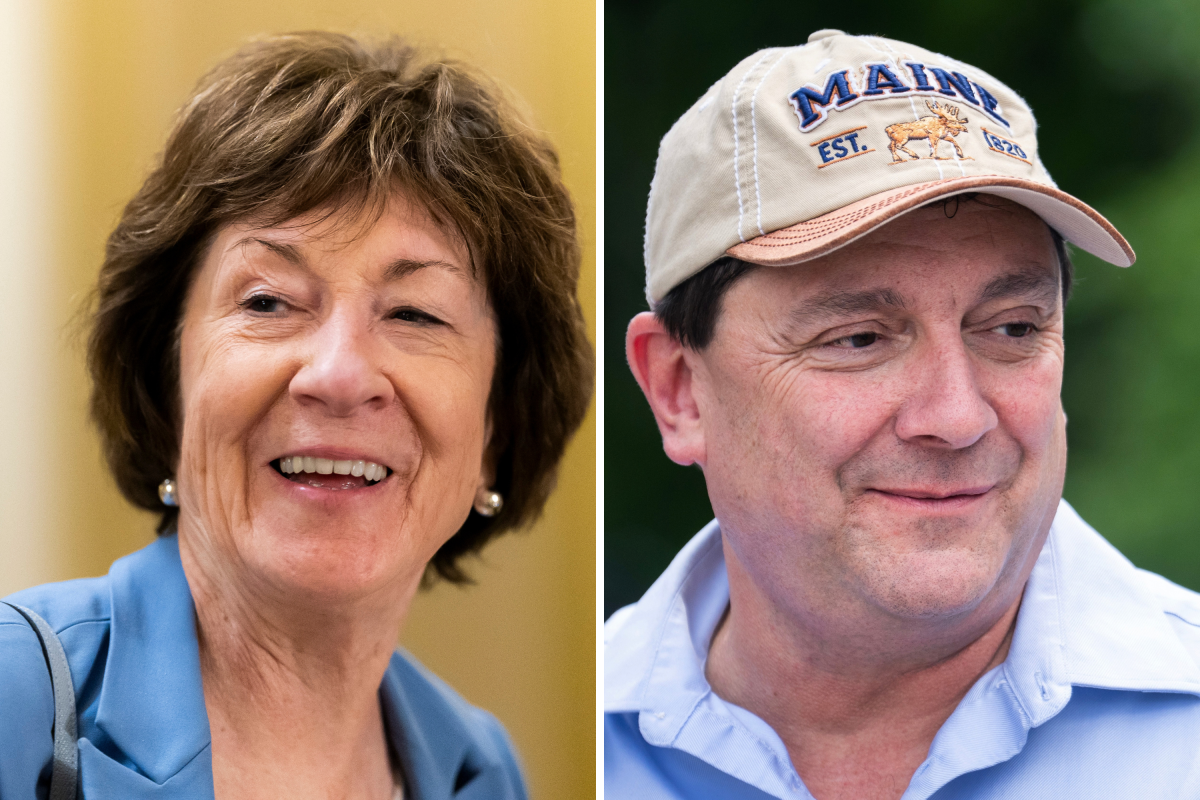
Senator Susan Collins faces allegations of awarding government funds to a company in exchange for political donations, leading to an FBI probe that ended without charges. The controversy has affected her close Senate race against Democrat Troy Jackson in Maine ahead of the 2026 midterm elections.
Key Facts
Senator Susan Collins is accused of steering federal contracts to Navatek, a company that donated $150,000 to her super PAC through a shell company.
ProPublica reported the allegations based on interviews and official records.
An FBI investigation started but was reportedly dropped after President Donald Trump took office again in January 2024.
The FBI said their probe ended years ago with no evidence of wrongdoing by Collins or her campaign.
Collins denies the allegations and says the claims are "categorically false."
The Maine Senate race is very close, with polls showing Collins and her Democratic rival Troy Jackson nearly tied.
Jackson said Collins is involved in "corruption" but his campaign has not gained a clear lead in polls yet.
Betting markets show a slight increase in Jackson’s chances of winning following the report.
Read the Original
Want the full story? Tap a source to open the original
article.
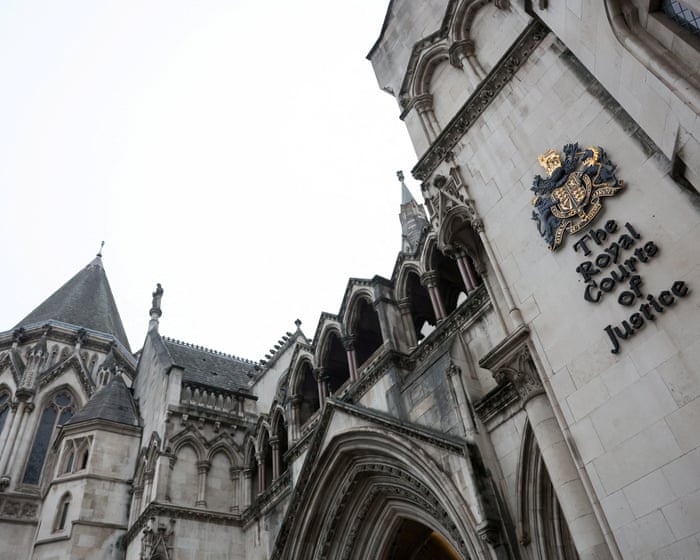
A judge named Richard Clayton heard a legal appeal from his bed using video while recovering from surgery. The court of appeal said it was wrong for him to do this, even though it did not affect the case outcome.
Key Facts
Judge Richard Clayton KC heard an appeal from bed the day after surgery for a ruptured Achilles tendon.
The case involved Suleman Patel appealing a nine-month suspension by the General Optical Council.
The court of appeal rejected Patel’s appeal but said the judge should not have heard the case from bed.
The court praised the judge’s effort but said judges should only hear cases in this way in urgent or exceptional situations.
Clayton admitted it was difficult to work from bed and had trouble taking notes.
He was advised he could not stand for eight days after surgery and was taking medication.
The hearing caused no unfairness or injustice for the parties involved.
The court recommended better arrangements be made in the future instead of hearings from bed.
Read the Original
Want the full story? Tap a source to open the original
article.
Each summary links back to the original reporting, so you can check the work. Support that, and get the daily digest every morning. Most choose $3.99/month.
Industry leaders have called for a global slowdown in artificial intelligence (AI) development to reduce risks to humanity. However, the United States and China, the two top countries in AI technology, have rejected these calls and continue advancing their AI work, showing little interest in slowing down or working closely together on safety measures.
Key Facts
The US and China lead most AI research and development worldwide.
AI experts warn of serious, even existential risks if AI advances too quickly without controls.
President Donald Trump denies significant AI risks and opposes global controls on AI development.
China has introduced AI security rules but also dismisses calls to slow AI progress as fearmongering.
Both countries have mistrust and different views on AI risks, making cooperation difficult.
Chinese officials mostly focus on AI’s impact on cybersecurity and political control.
So far, the US and China have only discussed dialogue and reporting systems to address AI threats.
Experts say stronger agreements on what AI actions to avoid are needed to prevent major dangers.
Read the Original
Want the full story? Tap a source to open the original
article.
The International Criminal Court (ICC) convicted Mahamat Said Abdel Kani, a former rebel leader in the Central African Republic, of crimes against humanity including torture and unlawful imprisonment. Said was in charge of a prison where prisoners faced brutal conditions during the country's civil war that began in 2013.
Key Facts
Mahamat Said Abdel Kani was convicted on four counts of crimes against humanity by the ICC.
He led the Central Office for the Repression of Banditry (OCRB) detention centre in Bangui, the capital.
Prisoners were subjected to torture methods such as tight bindings and beatings with ropes and whips.
Some detainees were kept in cramped, dark, and unsanitary underground cells without toilets.
Said was also acquitted of three counts of war crimes.
The Central African Republic experienced a violent sectarian civil war starting in 2013 after the Seleka rebel group ousted President François Bozizé.
Anti-Balaka militias, fighting against Seleka, were also involved in conflict and have faced ICC convictions.
The ICC will announce Said’s sentencing at a later date.
Read the Original
Want the full story? Tap a source to open the original
article.