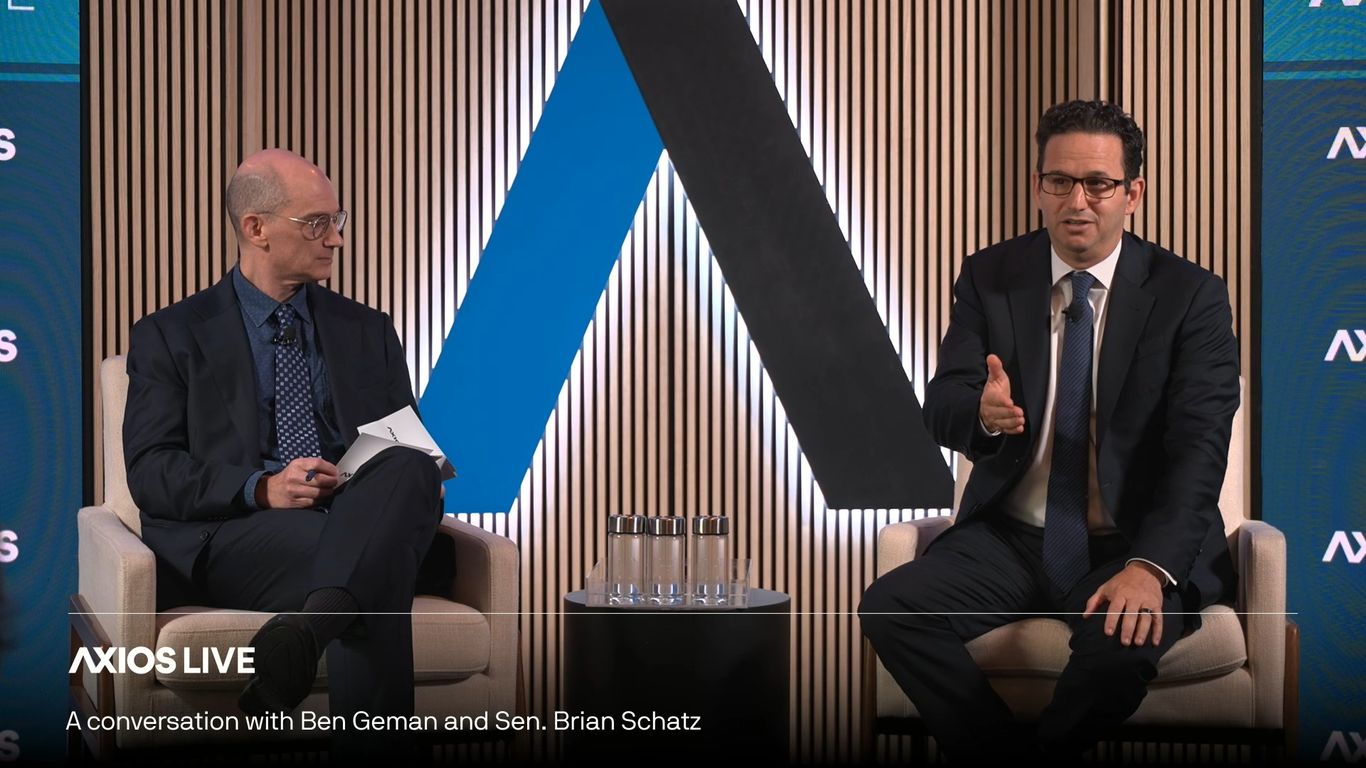
Senator Brian Schatz of Hawaii says many Americans now see a clear connection between climate change and the rising costs of daily life, like gas and utility bills. While affordability is the main concern for voters, Schatz believes climate issues should be discussed as part of these financial challenges.
Key Facts
Senator Brian Schatz spoke about climate and affordability during Climate Week and the UN General Assembly.
He noted that people face high costs for insurance, gas, and utilities, which relate to climate problems.
Schatz argues that addressing climate change can also help reduce expenses, so they should be tackled together.
He criticizes the federal government for slowing down renewable energy progress.
Hawaii, which Schatz represents, depends a lot on petroleum but aims for 100% renewable energy by 2035 on some islands.
President Trump signed a budget last year that ended some support for wind, solar, and electric vehicles.
The Trump administration has rolled back some Biden-era climate policies and slowed renewable energy projects, especially wind power.
Despite this, growth in artificial intelligence (AI) is expected to increase demand for clean energy.
Read the Original
Want the full story? Tap a source to open the original
article.
United Nations Secretary-General Antonio Guterres talks about the current problems in the Middle East and how they affect the world. He also discusses whether the UN can still solve global issues and says the UN Security Council needs changes.
Key Facts
Antonio Guterres is the Secretary-General of the United Nations.
He will step down from his role in December 2026.
The interview took place before his last UN General Assembly meeting.
Guterres discussed the crisis in the Middle East.
He explained how these problems impact the rest of the world.
Guterres questioned if the UN is still effective in solving global problems.
He said the UN Security Council needs to be reformed to work better.
Read the Original
Want the full story? Tap a source to open the original
article.
Three news organizations—CNN, MSNBC, and Politico—are suing President Donald Trump and his advisers after they were blocked from White House events. Some major news outlets are considering boycotting White House briefings to protest the restrictions on press access.
Key Facts
CNN, MSNBC, and Politico were banned from the White House, leading to a lawsuit against President Trump and top advisers.
The lawsuit argues that blocking these outlets is a violation of the First Amendment, which protects freedom of the press.
The ban is seen by legal experts as “viewpoint discrimination,” meaning access was removed because of negative coverage.
The major TV networks have decided to suspend shared ("pool") coverage of presidential events in support of the banned outlets.
Some news organizations are being urged to report on the White House from outside the premises as a form of protest.
President Trump has frequently criticized and limited access to news organizations he disagrees with.
Despite tensions, Trump still attends major press events like the White House Correspondents’ Dinner and invites certain reporters to briefings.
Experts say this type of action against the press is serious and part of a pattern seen in authoritarian regimes.
Read the Original
Want the full story? Tap a source to open the original
article.
The United States is planning to stop Iranian airlines from flying internationally starting Wednesday. The US Treasury warns foreign companies that help these airlines could face sanctions, which means restrictions or penalties if they continue to support Iran’s air carriers.
Key Facts
On September 23, Iranian airlines will be banned from flying worldwide.
The US targets not only airlines but also airports, fuel suppliers, ticket sellers, and other service providers.
Companies helping Iranian airlines risk being cut off from the global dollar financial system.
These actions are part of the Trump administration’s increasing economic pressure on Iran.
US sanctions already made it hard for Iranian airlines to buy planes and parts.
Foreign companies can face “secondary sanctions” if they work with Iran’s aviation sector or other areas like energy and technology.
China, a key partner of Iran, is involved in talks with the US about enforcing these sanctions.
US officials described discussions with Chinese financial leaders as positive in supporting the sanctions.
Read the Original
Want the full story? Tap a source to open the original
article.
Several explosions have occurred at Syrian military weapons and ammunition sites this month, causing deaths and injuries. These blasts highlight challenges Syria faces in safely storing ammunition as its armed forces reorganize after years of war.
Key Facts
Explosions happened at multiple Syrian arms depots, including near Aleppo and Deir Az Zor, killing and injuring soldiers and others.
At least 16 similar blasts have occurred since the fall of President Bashar al-Assad in December 2024 after an opposition offensive.
Causes include poor storage conditions and aging infrastructure, as many facilities are old and do not meet safety standards.
Syria’s military is undergoing reorganization, integrating former opposition fighters and Kurdish-led forces, which strains storage and logistics.
Handling and storing ammunition requires careful conditions because poor environments like heat and humidity can cause them to become unstable.
Some experts mention the possibility of sabotage but no solid evidence has been found yet.
The Syrian Defence Ministry is investigating to find the cause and prevent future explosions.
These explosions are not expected to have a major impact on Syria’s overall military strength.
Read the Original
Want the full story? Tap a source to open the original
article.
Elizabeth Lynch, a 28-year-old artist from Melbourne, Australia, lives with Ehlers-Danlos syndrome (EDS), a genetic condition causing joint pain. She was later diagnosed with Thoracic Outlet Syndrome (TOS), where nerves and arteries in her neck and arm are compressed, making her daily work and life very painful. After major surgery, her symptoms improved but she still faces ongoing challenges and more operations.
Key Facts
Elizabeth Lynch is 28 and works as an artist, photographer, and graphic designer.
She has Ehlers-Danlos syndrome, a genetic disorder affecting connective tissue causing pain and joint problems.
She developed worsening symptoms like numbness, weakness, pain, and dropping objects in her hand.
Lynch was diagnosed with vascular and neurogenic Thoracic Outlet Syndrome, a rare condition compressing nerves and arteries between neck and arm.
TOS symptoms can include pain, tingling, weakness, and worsen with arm movements.
Initial treatments like physiotherapy often help but in Lynch’s case they worsened her symptoms.
She had major surgery in December 2025 to remove a rib and decompress nerves, improving her condition.
Despite surgery, she continues to suffer nerve pain and weakness and expects more surgeries in future.
Read the Original
Want the full story? Tap a source to open the original
article.
A close aide to President Donald Trump, Natalie Harp, showed him media coverage that led to the White House banning CNN, MSNBC, and Politico from access. The three news companies are now suing the White House to get their access back.
Key Facts
Natalie Harp, an aide to President Trump, showed him a Politico graphic and TV clips that upset him.
President Trump decided to ban CNN, MSNBC, and Politico from the White House last week.
Key advisers like Chief of Staff Susie Wiles and Vice President JD Vance were not present when Trump made this decision.
The three banned news outlets have filed a lawsuit claiming their First Amendment rights are violated.
President Trump stated on Truth Social that the ban is against "fake news," not free press.
Fox News announced it will stop covering events where it has to share coverage with the banned outlets.
Democratic Senator Jon Ossoff mentioned Natalie Harp in a speech criticizing President Trump.
The White House has not yet responded to requests for comment from Newsweek.
Read the Original
Want the full story? Tap a source to open the original
article.
Illinois Governor JB Pritzker shared that he has been using a GLP-1 medication for two years to help lose weight, resulting in an 80-pound loss. He said he started the treatment after being diagnosed with diabetes and that Illinois is covering the medication for state employees.
Key Facts
JB Pritzker has been using GLP-1 medication for weight loss for two years.
He has lost 80 pounds so far.
Pritzker was diagnosed with diabetes two years ago.
His family history includes his father dying of a heart attack at age 39.
The governor walks about 4 miles nearly every morning for exercise.
Illinois state insurance covers GLP-1 medication for 55,000 employees.
Pritzker said covering the medication will save money by reducing diabetes and related diseases.
He is focused on being Illinois governor and running for reelection, making no decisions about a presidential run.
Read the Original
Want the full story? Tap a source to open the original
article.
The author shares her experience of being diagnosed with cancer twice, first with thyroid cancer and later with another treatable cancer. She reflects on the challenges, treatments, and emotional impact, and discusses changing views on how to approach cancer beyond the idea of fighting a war against it.
Key Facts
The author was first diagnosed with early-stage thyroid cancer in 2004.
Treatment included surgery to remove the thyroid, hormone replacement, radioactive iodine, and isolation for one week.
Seventeen years later, she faced a second, slow-growing cancer that was also treated with surgery.
She lost two organs: her thyroid and uterus, and now depends on medications for health.
The author questions the traditional "war on cancer" metaphor and considers a more compassionate approach suggested by her sister.
Oncologists are typically taught to see cancer as an enemy to be hated, which contrasts with the author's reflection on love as a possible response.
The article references Susan Sontag's critique of using illness metaphors that stigmatize patients.
Read the Original
Want the full story? Tap a source to open the original
article.
Three news organizations that President Trump recently stopped from reporting at the White House have filed a lawsuit. They claim that blocking them breaks the First Amendment, which protects freedom of speech and the press.
Key Facts
President Trump banned three news outlets from covering the White House last week.
The banned outlets have filed a lawsuit against the Trump administration.
The lawsuit was filed in federal court in Washington, D.C.
The news outlets say banning them stops them from sharing government news with the public.
They argue this action violates their First Amendment rights.
The First Amendment protects freedom of speech and freedom of the press in the U.S.
The lawsuit demands that the ban be lifted so the news outlets can resume coverage.
Read the Original
Want the full story? Tap a source to open the original
article.
Australia's Prime Minister Anthony Albanese spoke at the United Nations in New York about the urgent need to fight climate change. He said Australia has faced severe natural disasters and is committed to reducing emissions and helping Pacific countries affected by the climate crisis.
Key Facts
Anthony Albanese gave a speech at the United Nations during Climate Week.
Australia has experienced severe bushfires and floods due to climate change.
The Australian government aims to cut emissions by 62–70% by 2035 compared to 2005 levels.
Australia plans to use renewable energy combined with gas to reach emission targets.
Australians installed over half a million home batteries in the past year.
Australia contributes A$100 million to the Pacific Resilience Facility to help Pacific countries.
The REnew Pacific Program supports climate-resilient classrooms and clean energy in Pacific islands like Vanuatu, Fiji, and Kiribati.
The program has improved the lives of about 300,000 people in the Pacific region.
Read the Original
Want the full story? Tap a source to open the original
article.
On the biggest stories we show what the outlets agree on and where they differ. Readers keep that going, and get the daily digest by email every morning. Most choose $3.99/month.
Converse removed an online ad featuring K-pop singer Karina after people said the image reminded them of racist symbols like the Ku Klux Klan and lynching. The company apologized and promised to do better, while also working to take the ad down completely.
Key Facts
Converse shared an Instagram ad with Karina holding Chuck 70 sneakers while wearing a long white skirt.
Critics said the skirt looked like a Ku Klux Klan hood, and the way she held the shoes suggested a lynching victim.
Converse is owned by Nike and immediately apologized for the ad.
The company said it is removing the ad from all platforms.
Civil rights attorney Lee Merritt said Converse’s apology was not enough.
Converse was founded in 1908 and is famous for Chuck Taylor sneakers introduced in 1917.
Karina and her management did not comment on the controversy.
Target also recently stopped selling a Halloween costume accused of racist imagery and apologized.
Read the Original
Want the full story? Tap a source to open the original
article.
CNN, MSNBC, and Politico have sued the Trump administration after they lost access to report from the White House. President Donald Trump criticized these news outlets for what he thinks is negative reporting about his administration.
Key Facts
CNN, MSNBC, and Politico are involved in a legal case against the Trump administration.
The dispute started because these news organizations were denied White House access.
They are suing to regain the ability to cover events inside the White House.
President Donald Trump publicly criticized these outlets for unfavorable coverage.
The news organizations claim their First Amendment rights to press access are being violated.
The lawsuit reflects ongoing tensions between the Trump administration and some media groups.
White House press access is important for journalists to report directly on government actions.
Read the Original
Want the full story? Tap a source to open the original
article.
Senator Gary Peters from Michigan, who is retiring after his current term, will become a professor at the University of Southern California (USC). He will also co-direct USC’s Center for the Political Future with Republican strategist Mike Murphy.
Key Facts
Senator Gary Peters represents Michigan and is a member of the Democratic Party.
Peters is retiring from the U.S. Senate at the end of his current term.
He will join USC as a professor.
Peters will co-lead the Center for the Political Future (CPF) at USC.
His co-director at CPF will be Mike Murphy, a Republican political strategist.
The Center for the Political Future focuses on politics and public affairs education.
Read the Original
Want the full story? Tap a source to open the original
article.
The European Union fined Google €403 million for improperly using users' location data from May 2018 to February 2020. The fine was issued by Ireland's data protection authority after an eight-year delay following complaints from European consumer groups.
Key Facts
Google was fined €403 million (about $462 million) for misuse of location data.
The fine was imposed by Ireland’s Data Protection Commission (DPC), acting for the EU.
The violation occurred between May 2018 and February 2020.
The fine is the fourth largest ever imposed by the DPC.
Google’s policies on location data use have since been updated, according to the company.
Google must comply with the EU’s General Data Protection Regulation (GDPR) within six months.
European consumer groups had complained about this issue starting in 2018.
The DPC is also investigating Google on other privacy-related matters, including how it uses data to train artificial intelligence.
Read the Original
Want the full story? Tap a source to open the original
article.
An inquest is underway into the deaths of three British aid workers killed in Gaza by an airstrike on their convoy. The inquiry may include testimony from Israeli and UK military leaders and investigate whether UK-made weapons were used.
Key Facts
Three British aid workers—John Chapman, Jim Henderson, and James Kirby—were killed by an airstrikes in Gaza in April 2024.
The inquest may call Israeli military commanders, including Colonel Nochi Mendel, to provide evidence.
The coroner is considering expanding the investigation beyond the aid group and its security firm to include Israeli authorities’ roles.
The weaponry used in the attack may be examined to see if it was produced in the UK.
Israeli military says it will not open a criminal investigation into the strike; UK, Australian, and Canadian governments criticized this decision.
The British Royal Air Force flew a surveillance plane over Gaza for hours on the day of the attack, raising questions about what it observed and shared with Israel.
Families of the victims want UK officials to apply diplomatic pressure if Israel does not cooperate with the inquest.
A further review of the case will happen in March 2025, with no date yet set for the final hearing.
Read the Original
Want the full story? Tap a source to open the original
article.
Germany’s ruling party, the CDU, suffered its worst regional election loss since World War II in Mecklenburg-Western Pomerania. Chancellor Friedrich Merz described the election results as a disaster after the party failed to pass the 5% vote threshold needed to enter the state parliament.
Key Facts
The CDU lost in the Mecklenburg-Western Pomerania regional election.
The party did not reach the 5% minimum needed to win seats in the state parliament.
Chancellor Friedrich Merz called the election result a “disaster.”
This loss is the worst regional election defeat for the CDU in postwar Germany.
The far-right AfD party made gains in the region.
The event reflects challenges facing Germany’s ruling party ahead of future elections.
The election result has attracted attention from political analysts and the media.
Read the Original
Want the full story? Tap a source to open the original
article.
Major U.S. TV networks have decided to stop sharing White House coverage among themselves after President Trump banned three news outlets from the White House. The networks said they are doing this to support the banned outlets and to stand for public access to information.
Key Facts
President Trump banned three media outlets from the White House last week.
Major TV networks involved are Fox News Media, ABC News, CBS News, NBC News, and CNN.
These networks usually take turns covering the president and share that coverage.
After the ban, the networks said they will no longer share their White House coverage.
The networks released a joint statement expressing their reaction to the ban.
They said they are acting to support the banned media outlets.
The networks emphasized the importance of public access to news from the White House.
Read the Original
Want the full story? Tap a source to open the original
article.
Neel Kashkari, president of the Minneapolis branch of the Federal Reserve, said inflation remains too high despite recent interest rate increases. He noted that inflation is elevated across many parts of the economy, not just due to volatile energy and food prices.
Key Facts
Neel Kashkari leads the Minneapolis Federal Reserve branch.
The Federal Reserve raised interest rates recently to combat inflation.
Kashkari said inflation is still too high in all parts of the economy.
Energy and food prices are volatile and affect inflation measures.
Even without energy and food prices, inflation remains a concern.
The Federal Reserve uses interest rates to try to control inflation.
High inflation means prices for goods and services are rising faster than usual.
Read the Original
Want the full story? Tap a source to open the original
article.