Local councils in England are increasing financial support for rural bus services, including new on-demand bus options that passengers can book when needed. Wiltshire Connect is one such service using minibuses that adapt routes based on passenger needs, helping people in rural areas travel more flexibly and affordably.
Key Facts
Council support for local buses in England, excluding London, is 17% of bus miles traveled, higher than the 13% pre-pandemic low in 2019-20.
Bus journeys per person have decreased from 88 trips in 2010 to 63 trips in 2024-25.
Rural areas provide more council support for buses than urban areas.
Demand responsive transport (DRT) lets passengers book flexible bus routes that change according to travel requests.
The UK government gave £20 million in 2021 to 15 local councils to try DRT through the Rural Mobility Fund.
Wiltshire Connect started in 2023 with 13 minibuses over three zones and has made 250,000 journeys so far.
People book the service via app or phone, paying the same fare as regular buses.
DRT users include both older people and more younger users, aiming to encourage public transport habits long-term.
Read the Original
Want the full story? Tap a source to open the original
article.
Iran’s military says it has information that the United States is planning to restart attacks on Iran. Iran warned it would respond if the US or its regional allies launched new strikes. President Donald Trump said he is deciding how to deal with Iran and is open to meeting Iranian leaders during the United Nations General Assembly.
Key Facts
Iran's military command issued a warning about possible new US attacks on Iran.
Iran threatened to retaliate against US bases and interests in the Middle East if attacks resume.
Countries allowing US attacks from their land or bases could be seen as helping the attacks and face Iranian responses.
President Trump said military action, economic pressure, or a deal with Iran are options he is considering.
Iran's foreign minister is traveling to the UN General Assembly in New York, with a stop in Qatar.
Iran wants the US to stop military actions, release frozen Iranian funds, and lift a naval blockade as conditions for talks.
The Strait of Hormuz, a key shipping route, has seen fewer vessels crossing due to the conflict tensions.
Qatar is acting as a mediator, trying to restart negotiations between the US and Iran.
Read the Original
Want the full story? Tap a source to open the original
article.
A study found that viewers watching the 2026 FIFA World Cup saw over 65,000 ads for junk food and sugary drinks during matches. These ads appeared mostly on pitchside boards and were visible for a large portion of match time across all international broadcasts.
Key Facts
Researchers from the University of Bristol and University of Oxford used AI to count junk food ads during 104 World Cup matches.
Junk food ads appeared 65,722 times and were visible for about 28.1 hours in total during matches.
Junk food ads made up more than 16% of the total match playing time on screen.
Coca-Cola had the most ads (21,893), followed by McDonald’s (13,915), Powerade (12,777), and Lay’s (12,087).
All these brands are official FIFA partners and appeared on international feeds, seen by viewers worldwide.
Junk food advertising was far more common than ads for alcohol, gambling, or cryptocurrency.
UK TV bans junk food ads before 9pm but these in-stadium ads are not covered by that law, sparking calls for global restrictions.
FIFA stated that most of its revenue from sponsors goes back into football and health campaigns.
Read the Original
Want the full story? Tap a source to open the original
article.
Briony May Williams, a former semi-finalist on The Great British Bake Off, has been sober for nearly three years and says it has improved her life. She celebrated reaching 1,000 days without alcohol and now feels better able to handle life's challenges.
Key Facts
Briony May Williams was a semi-finalist on The Great British Bake Off in 2018.
She decided to stop drinking alcohol near the end of 2023 after a hospital stay following her 39th birthday.
Williams marked 1,000 days (almost three years) of sobriety in July 2026.
She says quitting drinking was hard but made her life better and easier to manage.
Williams is not addicted but was a social drinker who liked having several glasses of wine on nights out.
She now prefers non-alcoholic activities like drinking tea and spending time with her daughter.
Williams has a tattoo related to Bake Off and remains a fan of the show.
The 17th series of The Great British Bake Off started on 22 September 2026, featuring Nigella Lawson joining Paul Hollywood as judges.
Read the Original
Want the full story? Tap a source to open the original
article.
Charlotte Nott, an 18-year-old quadruple amputee from Oxford, joined the latest Big Brother TV show. She lost parts of her arms and legs to meningitis at age two and has been determined to take part in the show for many years.
Key Facts
Charlotte lost the lower parts of her arms and legs due to meningitis when she was two years old.
She is competing in Big Brother for the first time after applying as soon as she was old enough.
Charlotte’s prosthetic legs each cost about £25,000.
During the show’s launch, her shoe broke, and she entered the house without her prosthetic legs.
Her father was initially worried but supported her decision.
Charlotte handles daily tasks in her own way and expects people to be surprised by her normal life.
The Meningitis Research Foundation highlights that many people do not fully understand the long-term effects of meningitis.
Charlotte plans to save some of any prize money and spend some on a holiday.
Read the Original
Want the full story? Tap a source to open the original
article.
Since January 2025, the Trump administration has deported over 25,000 people to countries that are not their home countries, often without ties to those places. These deportations are part of a wider immigration policy involving secret agreements with at least 28 countries across six continents.
Key Facts
More than 25,000 people have been deported to third countries since January 2025.
Around 20,000 of these deportations were to Mexico.
At least 5,447 people were deported to various other countries worldwide by August 31, 2026.
Deportees often have no connection to the countries where they are sent.
The Trump administration has made deportation agreements with at least 28 countries on six continents.
The government provides little official information about these deportations.
NGOs and media groups use flight data and legal sources to track and document these deportations.
The deportations are a key part of the Trump administration’s stricter immigration policies.
Read the Original
Want the full story? Tap a source to open the original
article.
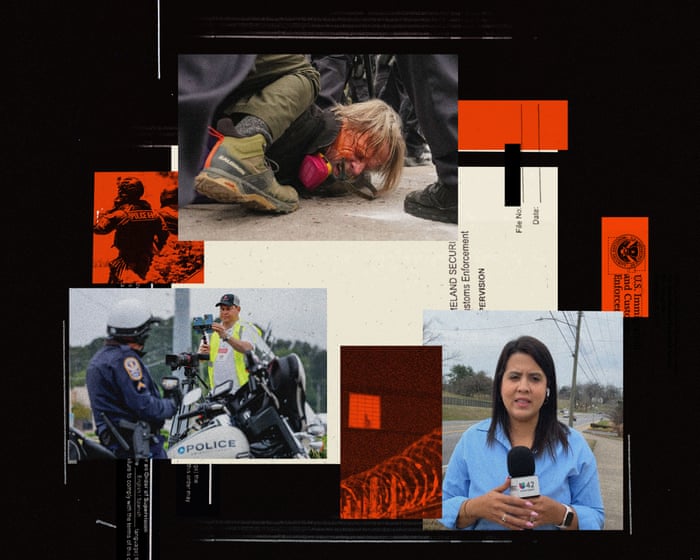
Under President Trump’s immigration crackdown, federal agents have aggressively targeted immigrants and those supporting them, including journalists. Several reporters, some immigrants themselves, have been arrested or detained by Immigration and Customs Enforcement (ICE) while covering protests or immigration enforcement.
Key Facts
In 2025, US Press Freedom Tracker reported 32 arrests and 170 assaults on journalists, mostly during protests.
John Abernathy, an independent photographer, was pepper-sprayed and tackled by ICE agents while documenting protests in Minneapolis.
Estefany Rodríguez, a Colombian reporter in Tennessee, was arrested by ICE and held for two weeks before a judge ordered her release.
Mario Guevara, an Emmy-winning journalist from El Salvador living in Atlanta, was arrested while covering a protest and spent over 100 days in detention before being deported.
Guevara believes he was targeted by ICE due to his journalism, but the Department of Homeland Security denies these claims, stating his arrest was for breaking local laws and deportation followed a legal order.
The Trump administration secretly arranged for third countries, mainly in Africa and Latin America, to accept deported individuals the US could not return directly to their home countries.
Journalists face difficulties reporting on these policies due to hostility from US authorities and restrictive press environments abroad.
Read the Original
Want the full story? Tap a source to open the original
article.
The Trump administration deported over 25,000 migrants to countries where they have no ties, including places in Africa, Latin America, and other regions. Some deportees, like Nika from Iran, were sent to dangerous or unfamiliar countries without clear explanation, raising legal and human rights concerns.
Key Facts
More than 25,000 people were deported under President Trump's administration to countries they were not connected to.
Around 20,000 migrants were bused to Mexico.
Over 5,000 people were flown to third countries in Africa, Latin America, the Caribbean, and Central Asia.
Many deportees were sent back to countries where US judges had recognized risks to their safety.
Some deportees were not told their exact destination before being deported.
The US government had secret agreements with foreign countries to accept these migrants.
The deportation flights increased in number, with a record 16 flights in August.
A US court recently ruled that deporting migrants to third countries without proper process is unlawful.
Read the Original
Want the full story? Tap a source to open the original
article.
The Trump administration has made secret agreements with some African countries to deport immigrants from the United States to those countries. Many of these immigrants have lived in the U.S. for years but are sent to places like Ghana and Eswatini, where they have no connections and face difficult conditions.
Key Facts
The U.S. government, under President Trump, deported immigrants to African countries called "third countries."
Many deported individuals had lived and worked in the U.S. for decades and paid taxes.
These deportees often have no family, income, or legal status in the countries they are sent to.
Ghana, Cameroon, and Eswatini are some of the countries receiving deported immigrants.
Secret deals between the U.S. and these African countries involve political and financial agreements.
The deported people face uncertain futures and sometimes risk being sent back to dangerous places they originally fled.
The information comes from a six-month investigation by multiple media organizations coordinated by Forbidden Stories.
The system shows the use of deportation as part of U.S. negotiations with other countries.
Read the Original
Want the full story? Tap a source to open the original
article.
Since returning to office in 2025, President Trump’s administration has deported over 25,000 migrants, refugees, and asylum seekers to countries other than their own. The administration has made at least 35 deals with foreign countries to send people to these third countries, often where the migrants have no ties and where they may face further deportation.
Key Facts
The deportation policy targets migrants and asylum seekers by sending them to third countries, not their home country.
Over 25,000 people have been deported under this policy since 2025.
The US has made 35 agreements with foreign countries to accept these migrants.
Around one-third of these agreements involve African countries.
The government states the focus is on removing people with criminal records, but many deported report no criminal history.
The deportations are managed by the new Office of Remigration within the State Department.
The US has spent over $410 million to fund these agreements and aid organizations supporting migrants in third countries.
Some deported individuals include vulnerable people such as refugees fleeing persecution or violence.
Read the Original
Want the full story? Tap a source to open the original
article.
Survivors of a grooming gang in Oxford say many of the men who abused them are still free and can be seen around the city. Several men have been convicted and jailed, but survivors and some experts believe hundreds of abusers remain at large.
Key Facts
Survivors describe seeing their abusers in everyday places like shops, petrol stations, and restaurants.
One survivor, Sarah, was abused from age 11 and testified in court leading to convictions in 2020.
Three men were jailed for 5 to 24 years for abusing Sarah.
Chloe, another survivor, did not take her case to the police and still sees her abusers locally.
Rachel, abused from ages 12 to 15, was a key witness in the first Oxford grooming gang trial in 2013.
The 2013 trial convicted seven men and revealed an eight-year period of grooming and abuse.
It was estimated in 2015 that over 370 children were affected by grooming gangs in Oxford.
Thames Valley Police say they continue to investigate and encourage victims to come forward.
The UK government has launched a national inquiry into why children were not protected, examining possible failings in response, including whether ethnicity or victim blaming played a role.
Read the Original
Want the full story? Tap a source to open the original
article.
The US government under President Donald Trump deported dozens of African migrants to Cameroon, a country many of them had never visited. These migrants had legal protections that should have prevented deportation to their home countries but were sent to Cameroon under agreements with “third countries,” leaving them in uncertain and difficult situations.
Key Facts
At least 44 African migrants have been deported from the US to Cameroon.
Many deportees had legal protections like “withholding of removal” that normally stop deportation to dangerous home countries.
These migrants were sent to Cameroon, where they have no family or connection and face language and cultural barriers.
The deportations were carried out quietly through deals with “third countries” in Africa and Latin America.
One deportee, Barbara from Ethiopia’s Tigray region, fled war and persecution but was sent to Cameroon despite US legal protections.
Another deportee, Soraya from Ghana, fled due to her sexual orientation but was still deported without warning.
“Withholding of removal” protects migrants from being sent back to places where they face persecution but does not prevent deportation to other safe countries.
The Trump administration used this legal loophole to deport migrants to countries like Cameroon.
Read the Original
Want the full story? Tap a source to open the original
article.
Staying informed here is free for everyone. If it's worth something to you, pay what you want. Supporters also get the daily digest by email every morning.
A joint investigation by international journalists uncovered secret agreements made by President Donald Trump’s administration with several African countries to deport undocumented migrants from the US. These migrants were sent to countries they had no previous connection to, often despite having legal protection from deportation to their home countries.
Key Facts
Over 25,400 migrants have been deported from the US to “third countries” since January 2025.
Many deported migrants had legal protections preventing their return to their home countries due to danger or persecution.
The Trump administration made secret deals with 35 countries, including 12 in Africa, to accept these deported migrants.
These deportations involve migrants who often lived in the US for many years, paid taxes, and had families there.
Media investigation was conducted by 72 journalists from 26 outlets across 15 countries over six months.
The deals were largely secret, and what the “third countries” received in return is unclear.
Many deportees face risks such as detention, poor treatment, or forced return to dangerous home countries.
The investigation included interviews with deported migrants and eyewitnesses in countries like Ghana, Cameroon, and Eswatini.
Read the Original
Want the full story? Tap a source to open the original
article.
A baby bank in Birmingham, run by Kavita and Karvinder Dhillon, is helping more families in full-time work who struggle to afford daily essentials for their children. The bank provides free items like nappies, baby formula, clothes, and toys, and demand has increased due to rising living costs.
Key Facts
The Handsworth Baby and Family Bank operates inside the Dhillons Boutique store on Soho Road, Birmingham.
It offers free essential items such as nappies, baby formula, clothes, wipes, toiletries, and toys to families in need.
More working families, not just low-income households, are now seeking help due to higher daily living expenses.
The bank has a current urgent need for baby formula, with only a few tubs left in stock.
Operating within a shop helps reduce stigma because visitors appear to be customers rather than seeking charity.
The bank started helping families in 2024 and has seen demand grow since then.
Kavita encourages anyone struggling with basic needs to ask for help without shame.
The Dhillons find supporting families rewarding and aim to create a welcoming space for those seeking assistance.
Read the Original
Want the full story? Tap a source to open the original
article.
Patrick Clancy, whose ex-wife Lindsay Clancy is accused of killing their three children, said he forgave her because of her severe mental illness. Lindsay's trial ended in a mistrial after the jury couldn't agree on her guilt, and Patrick spoke about the pain he and his family have faced since the tragedy.
Key Facts
Lindsay Clancy is accused of murdering their three children in January 2023.
The children were Cora (5 years old), Dawson (3 years old), and Callan (8 months old).
Lindsay’s defense said she was suffering from postpartum psychosis, a mental illness affecting some mothers after birth.
A mistrial was declared because the jury could not decide unanimously if Lindsay was guilty.
Patrick Clancy forgave Lindsay to avoid being overwhelmed by anger and grief.
Patrick experienced suicidal thoughts after the deaths of his children.
He faced public criticism and false accusations online during the trial.
Patrick has since moved to New York City and is starting a new family with his wife Rachel Danis.
Read the Original
Want the full story? Tap a source to open the original
article.
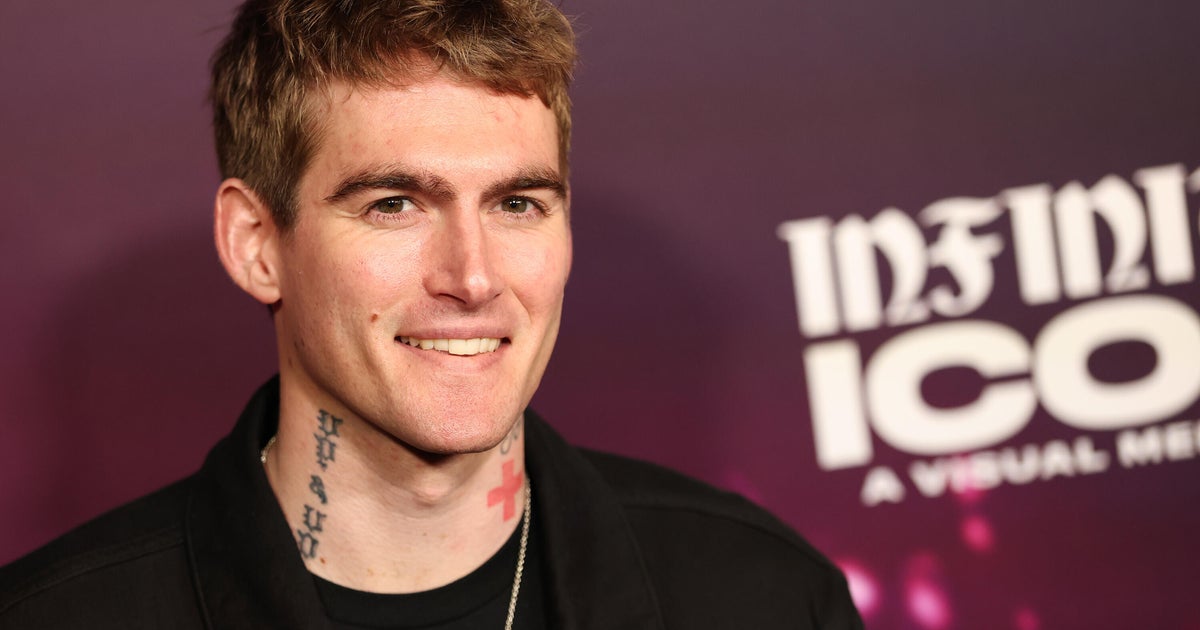
Presley Gerber, son of Cindy Crawford and Rande Gerber, died at age 27 at a rehab facility. The family has not shared the cause of death and has asked for privacy.
Key Facts
Presley Gerber was 27 years old at the time of his death.
He died on Sunday at a rehab center, according to the Los Angeles County Medical Examiner's Office.
The cause of death has not been released.
Presley was a model like his mother, Cindy Crawford, and his sister, Kaia Gerber.
His father, Rande Gerber, is a businessman who co-founded Casamigos tequila with George Clooney.
In 2018, Presley and Cindy Crawford re-created her famous 1992 Pepsi commercial for the Super Bowl.
The family has requested privacy during this difficult time.
This news story is still developing and more information may come later.
Read the Original
Want the full story? Tap a source to open the original
article.
A Syrian army weapons depot near Aleppo exploded, causing large blasts and injuring at least four people. The explosions made it hard for rescuers to work, and nearby roads were closed for safety.
Key Facts
The explosions happened at a Syrian army ammunition depot south of Aleppo.
At least four people were injured in the blasts.
Missiles and ammunition kept exploding after the initial blast.
These continuing explosions made rescue efforts difficult.
Authorities closed roads near the site to keep people safe.
Aleppo is a major city in Syria affected by ongoing conflict.
The exact cause of the explosions was not reported.
Read the Original
Want the full story? Tap a source to open the original
article.
Canada’s Finance Minister François-Philippe Champagne has suggested that the UK should join a new economic alliance that Canada is building with the European Union (EU). This idea comes during rising trade tensions between Canada and the United States, and after EU leaders proposed giving Canada a new kind of membership with the EU.
Key Facts
Canada wants to build a new economic alliance with the EU, and invites the UK to join it.
The EU has suggested creating an associate membership for Canada, a new and unusual status.
The UK and Canada share similar values and could benefit from working together.
Canada is involved in a trade dispute with the US, which included both sides imposing tariffs (taxes on imports).
Canadian officials say their tariff responses protect their own economy and workers without seeking to escalate conflict.
The US, under President Trump, has also imposed tariffs on the UK and EU, and has criticized Canada’s trade relations.
The idea of this alliance may influence the UK’s trade position after Brexit and relations with both the EU and the US.
Canadian Prime Minister Mark Carney, who has experience in UK financial roles, is active in promoting closer ties between Canada and the EU.
Read the Original
Want the full story? Tap a source to open the original
article.
There are no ads, so there is no reason to bait you. Readers who chip in keep it that way. Most choose $3.99/month, and get the daily digest every morning.
Labour’s apprenticeship scheme has enrolled only 160 young people in its first eight months, far below its goal of 30,000 starts by the end of the current parliament. A report by the Fabian Society warns that apprenticeship programs for young people are fragmented and need reform to improve youth employment in the UK.
Key Facts
Labour’s “foundation apprenticeship” scheme had only 160 starts from August 2025 to April 2026.
The government aims to reach 30,000 apprenticeship starts by the end of the parliament.
Nearly 1 million young people aged 16-24 are not in work, education, or training, known as Neet.
About 308,000 people started apprenticeships of any kind this academic year, a 9% increase from last year.
Over half of apprentices are over 25 years old; only about 20% are under 19.
Apprenticeships for people under 25 are 40% lower than they were ten years ago.
Employers have low awareness of newer technical qualifications like T-levels and V-levels.
The report suggests a £311 million per year regional apprenticeship fund and redesigning apprenticeships to reduce costs for employers.
Read the Original
Want the full story? Tap a source to open the original
article.
Various groups including unions and environmental organizations want the UK government to increase the funding and power of the national wealth fund (NWF) to invest more in UK industries and infrastructure. The NWF was created in 2024 to attract private money for big projects, but supporters say it should be expanded to better support clean energy, regional growth, and job creation.
Key Facts
The national wealth fund (NWF) was launched in July 2024 to attract private investment for UK infrastructure.
It aims to get about £3 of private money for every £1 of government money to invest in projects like ports, clean energy, and factories.
The NWF is different from sovereign wealth funds that use government earnings from natural resources; it shares investment risks to encourage private investors.
Groups like the TUC, Greenpeace, and WWF want the government to expand the NWF into a national development bank with more financial power.
The NWF currently has about £5.5 billion available for investment each year for the next five years.
By comparison, Germany’s public investment bank lends much more—€62 billion in 2025 alone.
Proposed benefits of a bigger NWF include upgrading homes to be more energy efficient, creating green industries in areas affected by factory closures, and supporting small businesses through local banks.
The government says the NWF has invested £3.9 billion so far, including in nuclear power and factories, and improved flood defenses.
Read the Original
Want the full story? Tap a source to open the original
article.