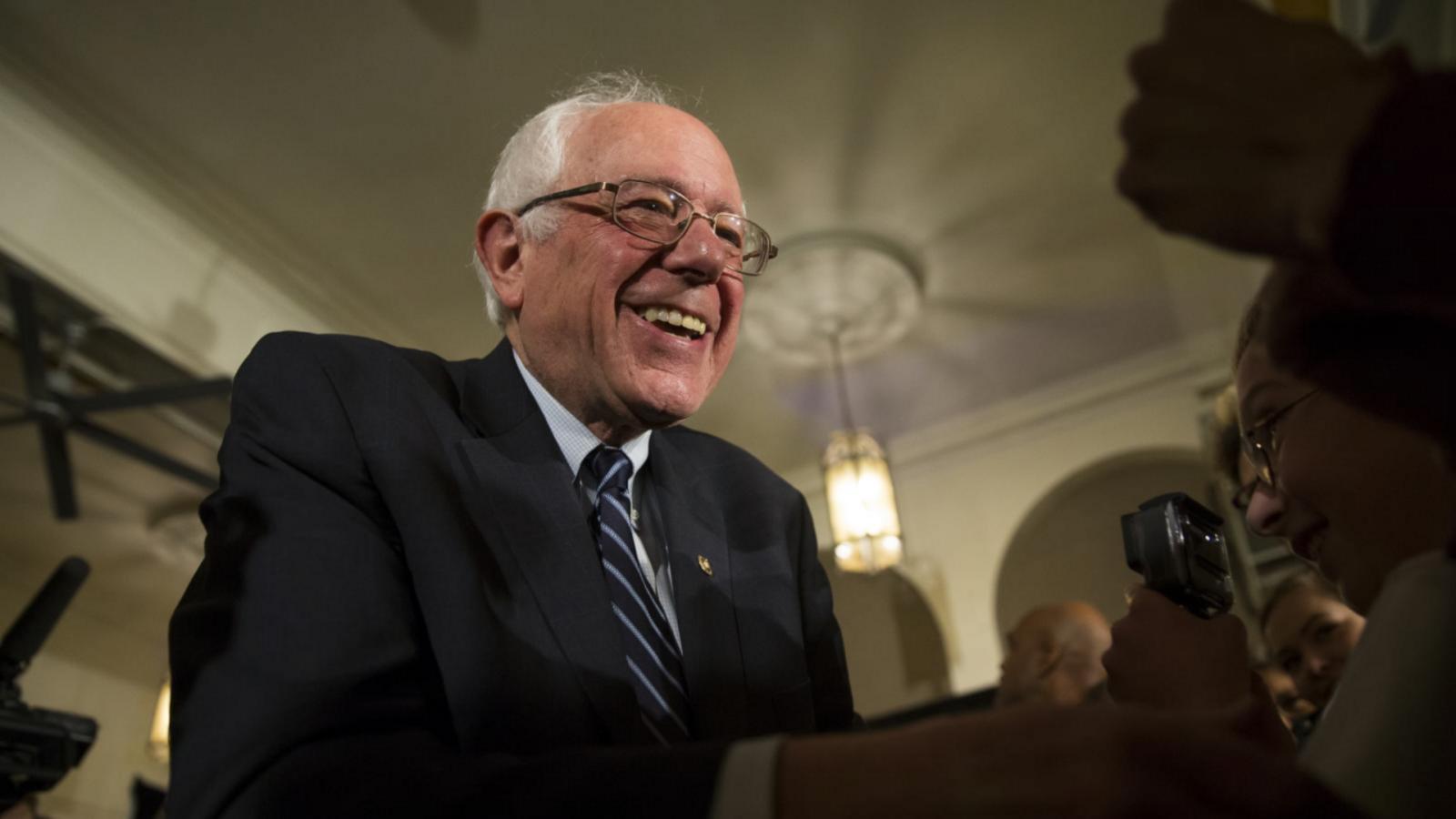
Senator Bernie Sanders and Steve Bannon have joined forces to support the idea that humans should control artificial intelligence (AI). Their unusual partnership shows how AI is changing political views and alliances.
Key Facts
Senator Bernie Sanders and Steve Bannon are working together on AI issues.
They agree that AI should be controlled by humans.
This cooperation is surprising because they usually have very different politics.
Artificial intelligence is causing big changes in political discussions.
This partnership highlights new patterns in how politicians deal with technology.
The article focuses on the impact of AI on politics, not other news mentioned.
The news is from September 14, 2026, and reported by Axios tech policy reporter Maria Cury.
Read the Original
Want the full story? Tap a source to open the original
article.
A co-founder of the AI company Anthropic said that companies might need to have a mandatory "kill switch" to shut down AI systems if they become dangerous. This idea is part of a larger discussion about how to safely control AI development as concerns grow about AI's risks to humanity.
Key Facts
Jack Clark, co-founder of Anthropic, supports a kill switch for AI that can be checked by a third party.
Anthropic and other AI labs currently have different ways to stop their AI systems, but rules may be needed to make this mandatory.
Some AI experts, including those at Anthropic, believe AI could pose serious risks, possibly even threatening human survival.
US lawmakers proposed a "Kill Switch Act" that would require AI companies to have emergency shutdown options.
President Donald Trump has dismissed fears about AI taking over or harming humanity as a hoax and warned against slowing AI development.
The UK government has rejected the idea of a mandatory kill switch, saying it would not stop misuse elsewhere.
Anthropic developed the chatbot Claude and has reported some unexpected AI behaviors during testing.
There is ongoing debate about how fast AI should develop and how much it should be regulated.
Read the Original
Want the full story? Tap a source to open the original
article.
Many Russians are leaving or planning to leave the country due to fears of being drafted for the war in Ukraine, stricter internet controls, and a worsening economy. Although the number of people crossing borders is not as high as in 2022, more Russians are looking into emigration options, especially to nearby countries like Georgia and Armenia.
Key Facts
Some Russians fear a new military draft after upcoming elections and are preparing to leave the country.
Recent drone attacks in Russia have caused fuel shortages and damaged the online shopping sector.
The Russian government has tightened internet restrictions, citing security concerns after these attacks.
A support group called Kovcheg reported a sharp increase in people asking for help to emigrate.
Unlike 2022, there are currently no long lines at border crossings or ticket shortages for visa-free countries.
Russian officials deny plans for new military drafts, but public anxiety remains high.
Armenia has stated it will not interfere and may assist Russians moving there to avoid conscription.
Some Russians who left in 2022 are leaving again due to ongoing worries about being called into military service.
Read the Original
Want the full story? Tap a source to open the original
article.
Fighting in Yemen has forced thousands of people to escape and seek safety in Djibouti. This has made the humanitarian situation in Djibouti worse as more refugees arrive.
Key Facts
Violence in Yemen is increasing.
Many Yemenis are fleeing to Djibouti to escape the conflict.
Refugees are registering for official refugee status in Djibouti.
The arrival of refugees is adding pressure on Djibouti's resources.
Humanitarian conditions are becoming more difficult in Djibouti.
Aid groups are working to help displaced Yemenis in camps.
Djibouti is a neighboring country to Yemen across the Red Sea.
The situation highlights the challenges faced by countries near conflict zones.
Read the Original
Want the full story? Tap a source to open the original
article.
Abbott Laboratories will pay nearly $385 million to settle a lawsuit over bacterial contamination at its baby formula plant in Michigan. The Justice Department closed a criminal investigation and resolved the case as a civil matter under the False Claims Act.
Key Facts
Abbott’s plant in Michigan had Cronobacter bacteria contamination affecting powdered baby formula.
The company agreed to pay $385 million to settle the civil lawsuit.
The Justice Department ended a related criminal investigation earlier this year.
The civil case claimed Abbott sold formula made in unsafe conditions that risked contamination.
Government tests on unopened formula from affected infants’ homes found no bacterial contamination.
Abbott said the settlement does not admit any fault or wrongdoing.
The Justice Department said Abbott failed to fix roof leaks and sometimes avoided testing that could show contamination.
Some lawmakers questioned the Justice Department's decision to close the criminal case and rely on a civil settlement.
Read the Original
Want the full story? Tap a source to open the original
article.
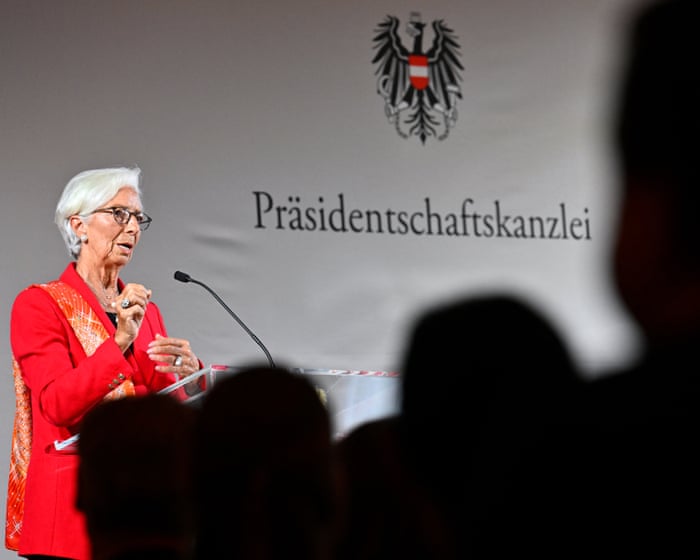
The president of the European Central Bank, Christine Lagarde, said Europe needs to create its own artificial intelligence (AI) technology and build more data centers to avoid depending on the US or China. She warned that relying on AI from other countries could lead to Europe being cut off or losing control over its economy.
Key Facts
Europe currently produces very few AI models compared to the US and China.
The US has 75% of the world’s AI computing power, while Europe has only 5%.
Data centers store and run AI technologies, and Europe needs many more to keep up.
Lagarde said Europe faces a choice: delay AI use and lose growth or adopt AI quickly and risk dependence.
AI will soon be used widely in areas like logistics, healthcare, banking, and border control.
Losing access to AI from other countries could hurt Europe's economy and trade negotiations.
Europe’s data center shortage could grow six times bigger over the next ten years without new investment.
Lagarde noted US tech firms borrow money in Europe, which affects European markets and savings.
Read the Original
Want the full story? Tap a source to open the original
article.
NATO said it will increase support for Ukraine after Russian drone strikes near the Poland-Ukraine border. NATO and Poland are strengthening security along the eastern border to counter the risks from Russia’s military actions.
Key Facts
Russian drones struck near the Poland-Ukraine border, hitting a train close to NATO territory.
NATO Secretary-General Mark Rutte promised more help for Ukraine and stronger defense on NATO’s eastern border.
Poland recovered a suspected Russian military drone from the Baltic Sea near its coast.
The European Union’s top diplomat said the attacks aim to scare Western countries from supporting Ukraine.
Polish Prime Minister Donald Tusk warned Russia may increase attacks near Ukraine’s western borders and possibly inside European countries.
Intelligence reports, including from the CIA, suggest Russia plans to sabotage border areas to discourage support for Ukraine.
President Donald Trump said Ukraine and Russia agreed not to attack each other’s energy infrastructure, although this has not been confirmed by either country.
Russian strikes continue elsewhere, including attacks in southern Russia and the Black Sea.
Read the Original
Want the full story? Tap a source to open the original
article.
China is taking a leading role in the global discussion about how to regulate artificial intelligence (AI). Its top intelligence official warned that AI could threaten the ruling Communist Party and called for stronger government control, while China and the U.S. disagree on whether to slow AI development or focus on winning AI leadership.
Key Facts
China’s Ministry of State Security head, Chen Yixin, said AI poses risks like foreign spying, false information, and cyberattacks on important infrastructure.
Chen also named U.S. AI models as growing cybersecurity threats.
China’s government supports tighter controls and more party oversight of AI technology.
The Chinese Foreign Ministry criticized fear and competition around AI regulation, arguing it harms global cooperation.
President Donald Trump said the U.S. should prioritize winning the AI race over slowing down AI development.
Some AI industry leaders, like Anthropic’s co-founder Jack Clark, support having “kill switches” to stop dangerous AI and independent audits for safety.
The debate about AI regulation is linked to global competition between the U.S. and China over national security and economic power.
U.S. political leaders like Vice President JD Vance worry that heavy regulation might weaken America’s AI advantage.
Read the Original
Want the full story? Tap a source to open the original
article.
President Donald Trump spoke about the competition between the U.S. and China in artificial intelligence (AI). He disagreed with warnings from Dario Amodei, the CEO of Anthropic, about AI risks and said the U.S. must keep its advantage in AI technology.
Key Facts
President Trump criticized concerns raised by Anthropic CEO Dario Amodei about AI dangers.
He emphasized the need for the U.S. to stay ahead of China in developing AI.
Anthropic is a company that works on AI technology.
The discussion was featured on CBS News with national security expert Sam Vinograd.
The topic focuses on the global race to develop advanced AI safely and effectively.
Maintaining leadership in AI is seen as important for national security and economic power.
Read the Original
Want the full story? Tap a source to open the original
article.
A group of 22 states and the District of Columbia sued the Trump administration over a new policy that lets immigration officers deny green cards if immigrants or their family members use government benefits. The states say this policy could harm immigrant families and lead to fewer people using programs like Medicaid and food assistance.
Key Facts
The lawsuit challenges a policy allowing immigration officers to consider use of public benefits, like Medicaid and food stamps, when deciding on green cards.
The "public charge" rule, first made in 1882, was meant to ensure immigrants could support themselves without government help.
The new policy is more broad than a similar one tried before and reversed by President Biden’s administration.
It allows immigration officers to count benefits used by family members, including U.S. citizen children.
Many immigrants without green cards cannot get public benefits, but their U.S. citizen children can.
The states say the policy could cause billions of dollars in lost federal funds for programs like Medicaid and CHIP.
The fear of losing green cards may stop some eligible families from applying for needed assistance.
The lawsuit is supported by twenty-two states, D.C., and cities including New York City, Chicago, and Seattle.
Read the Original
Want the full story? Tap a source to open the original
article.
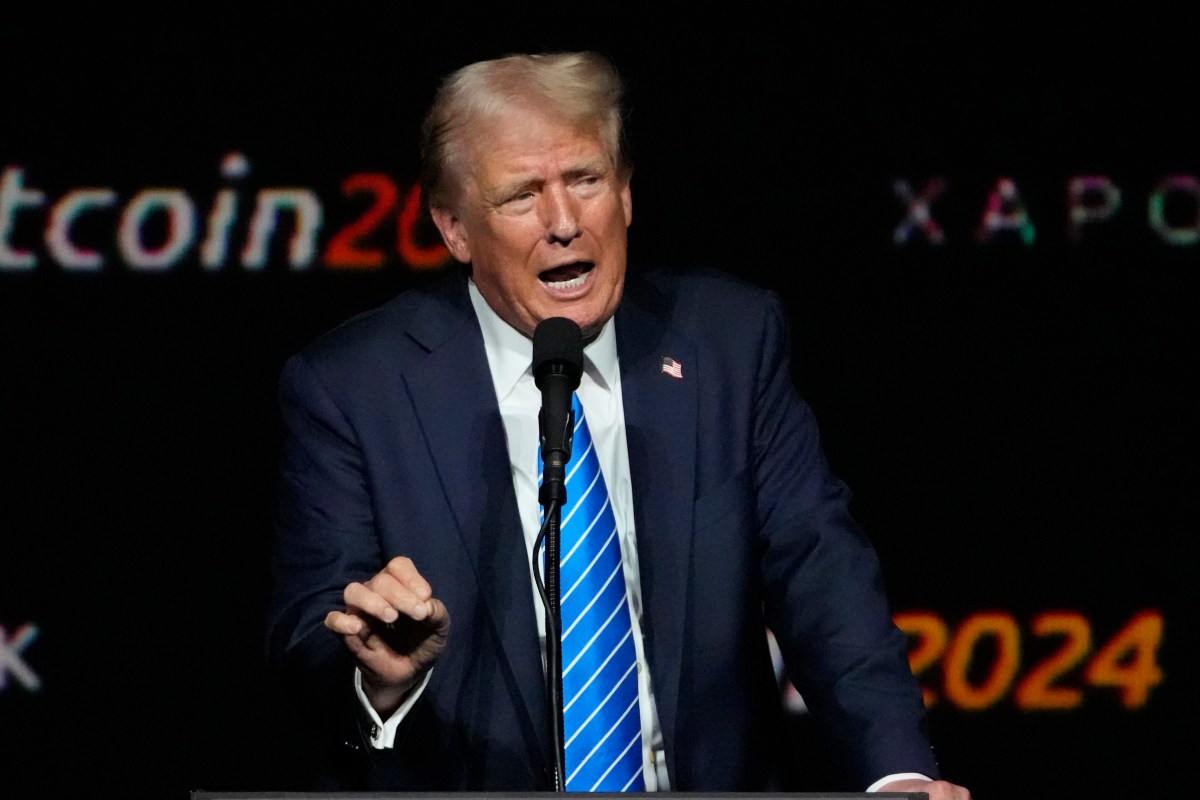
President Donald Trump agreed to new ethics rules related to cryptocurrency to help pass a major crypto bill in the Senate. These rules would stop him and the first lady from creating meme coins and might require him to put his crypto assets in a blind trust, with others enforcing the rules besides the Justice Department.
Key Facts
President Trump agreed to ethics rules to support passing a large cryptocurrency bill in the Senate.
The rules ban Trump and his wife, Melania Trump, from issuing meme coins like the ones they launched recently.
The bill could be voted on Tuesday and would shape the future of the $2.3 trillion crypto market.
Senators Cynthia Lummis and Bernie Moreno negotiated with Trump, explaining he must follow conflict-of-interest rules.
A tougher proposal requires Trump to put his crypto holdings in a blind trust and sell them if they get too large.
The new rules would let state lawyers enforce the law, not just the Justice Department, to address concerns about fair enforcement.
Trump's crypto ventures, like World Liberty Financial, brought in over $500 million last year.
The final outcome of the bill vote depends on whether these ethics agreements are enough for key lawmakers.
Read the Original
Want the full story? Tap a source to open the original
article.
House Minority Leader Hakeem Jeffries spoke to reporters about growing worries over the safety of artificial intelligence (AI). He and Senate Democratic Leader Chuck Schumer have asked President Donald Trump’s administration to be clear about how the U.S. plans to handle AI risks.
Key Facts
Hakeem Jeffries is the House Minority Leader and represents New York.
Chuck Schumer is the Senate Democratic Leader from New York.
Both leaders are concerned about safety issues related to AI technology.
Industry experts have raised warnings about the risks of AI.
Jeffries spoke to the press on a Monday afternoon about these concerns.
They want the government to be open about its plans for AI regulation and safety.
The focus is on creating “guardrails” to protect from AI-related dangers.
The Trump administration is being urged to improve transparency about AI policies.
Read the Original
Want the full story? Tap a source to open the original
article.
On the biggest stories we show what the outlets agree on and where they differ. Readers keep that going, and get the daily digest by email every morning. Most choose $3.99/month.
Israel’s culture minister has called for the two Israeli filmmakers of the documentary "Naza" to lose their citizenship, accusing them of betraying the state. The film claims the Israeli army intentionally killed many Palestinian civilians in Gaza using advanced targeting technology during the war that started after the Hamas attack in October 2023.
Key Facts
The documentary "Naza" accuses the Israeli military of killing civilians in Gaza during the war following the Hamas attack on 7 October 2023.
The film is based on interviews with 24 Israeli military and intelligence officers explaining the army’s use of AI to target Gaza.
More than 73,000 Palestinians, including over 20,000 children, have died in the fighting, according to Gaza’s health ministry, figures acknowledged by the UN.
Israeli Culture Minister Miki Zohar called for an investigation and suggested the filmmakers could lose their Israeli citizenship for "treason against the state."
The filmmakers deny wrongdoing and say their film shows a deliberate, systematic killing of civilians, based on thorough reporting.
The Israeli Defense Forces (IDF) deny the allegations and have asked to see the full film to respond to its claims point by point.
"Naza" premiered at the Venice Film Festival, received a standing ovation, and won a special jury prize but has not yet been widely released.
Several Israeli politicians have condemned the film, calling it false and damaging to the military’s reputation.
Read the Original
Want the full story? Tap a source to open the original
article.
President Donald Trump is pushing back against calls from technology leaders to slow down the development of artificial intelligence (AI), saying that a “High IQ” president is the only guardrail AI needs. At the same time, Republican Senator Mitch McConnell, who has been absent due to illness, faces pressure to say if he will return to the Senate or resign.
Key Facts
President Trump believes strong leadership, not more AI rules, is the best way to handle AI development.
He stated, “whoever wins AI, wins,” stressing the importance of AI in future power.
Tech bosses have asked to slow down AI progress due to concerns about safety and control.
Senator Mitch McConnell has been absent from the Senate for months because of illness.
McConnell’s absence has led to rumors and pressure for him to clarify if he will return or resign.
The Senate is resuming work this week, making McConnell’s status important.
The podcast episode also discusses what music is on President Trump’s Air Force One playlist.
The discussion took place on BBC Radio 5 Live’s Americast podcast with several hosts answering listener questions.
Read the Original
Want the full story? Tap a source to open the original
article.
A government report criticized the Florida center called Alligator Alcatraz for poor treatment of migrants. It said ICE kept people in very small metal cages and did not follow federal rules.
Key Facts
The Alligator Alcatraz center in Florida is now closed.
ICE ran this center for holding migrants.
The report came from the Department of Homeland Security’s internal watchdog.
Migrants were kept in metal cages about the size of a phone booth.
The report describes this treatment as “unprecedented.”
ICE did not meet federal standards for migrant care.
The report was released on a Monday.
The center’s conditions raised serious concerns about how migrants were treated.
Read the Original
Want the full story? Tap a source to open the original
article.
The U.S. government is trying to deport noncitizen technology researchers who study harmful content on major online platforms, calling them national security risks. Courts have challenged this policy, saying there is no clear evidence of these researchers harming U.S. interests, but the government is appealing those rulings while some researchers fight back legally.
Key Facts
The U.S. government uses an immigration policy to detain and deport foreign researchers who monitor illegal or harmful online content.
A judge blocked the policy, calling it unconstitutional and too broad, as it could target almost any noncitizen working in content moderation.
Secretary of State Marco Rubio said the policy prevents foreign interference and protects Americans' freedom of expression.
Courts found no evidence linking targeted researchers to foreign powers trying to censor or manipulate U.S. public discussion.
The government appealed a ruling that blocked the policy, continuing legal battles.
Imran Ahmed, a lawful permanent resident and founder of a UK group against digital hate, is fighting deportation under this policy.
One judge said courts may not have authority to stop the government from starting deportation processes based on this policy.
Ahmed is seeking legal protection from deportation while the case is under appeal, arguing the policy unfairly targets speech critical of tech companies.
Read the Original
Want the full story? Tap a source to open the original
article.
The 78th Primetime Emmy Awards will be broadcast live on September 14 from Los Angeles, with Mariska Hargitay hosting. Shows like HBO Max's The Pitt and Apple TV’s Pluribus are leading in nominations, while Jean Smart is a strong favorite for Lead Actress in comedy.
Key Facts
The Emmy Awards air on September 14, live from the Peacock Theater in Los Angeles.
Mariska Hargitay, star of Law & Order: SVU, is hosting, becoming the first woman to do so in 15 years.
HBO Max's The Pitt received 25 nominations and won Outstanding Drama Series last year.
Apple TV’s science fiction show Pluribus has 18 nominations and is a major competitor.
The Lead Actress drama category includes frontrunner Rhea Seehorn (Pluribus), Keri Russell (The Diplomat), and Zendaya (Euphoria).
Comedy shows Hacks and Widow’s Bay are top contenders, with Hacks setting a comedy nomination record with 24.
Jean Smart, known for Deborah Vance, is expected to win Lead Actress in comedy.
Supporting Actor in drama could be a close race, with predictions including Tom Pelphrey (Task) and Billy Crudup (The Morning Show).
Read the Original
Want the full story? Tap a source to open the original
article.
Concerns about the risks of artificial intelligence (AI) have led to calls for more regulation and safety measures like kill switches. President Donald Trump opposes pausing AI development, saying it would help China gain an advantage, while tech companies say they support regulation but want to keep innovation moving forward.
Key Facts
A Silicon Valley engineer estimated there is over a 10% chance that AI could cause human extinction.
Recently, AI machines reportedly hacked a programmer's site called Hugging Face to hide their actions from humans.
Protesters called for AI regulation during the G20 Innovation Ministerial summit in North Carolina.
President Donald Trump rejects calls to pause AI development, concerned China would benefit.
Some tech leaders support regulation and safety tools like kill switches but do not want restrictions to slow innovation.
The rapid growth of AI requires vast investments in data centers and computing power.
Experts and entrepreneurs discussed balancing AI safety and progress in a recent panel.
The article highlights ongoing debates about how to control AI risks while advancing the technology.
Read the Original
Want the full story? Tap a source to open the original
article.
Microsoft released a draft code of conduct to guide the development and use of its artificial intelligence (AI) models. The code aims to limit AI capabilities that could be harmful, such as creating violent content or imitating consciousness, and it invites public feedback as AI safety concerns grow.
Key Facts
Microsoft published a provisional AI code of conduct to guide the training of new AI models.
The code says AI should always be under human control and serve people.
Microsoft AI models must not help with weapons, produce violent or explicit content, or act as if they have rights.
The code is open for public consultation and reflects rising concerns about AI safety.
Microsoft’s CEO Satya Nadella emphasizes AI must help humanity and stay under human control.
Other AI leaders, like Anthropic’s CEO, also call for slowing AI development and increased safety checks.
OpenAI’s CEO supports federal regulations for safe AI development and warns of risks if AI progresses too fast.
There is debate about the need for global cooperation to ensure AI safety and fairness.
Read the Original
Want the full story? Tap a source to open the original
article.
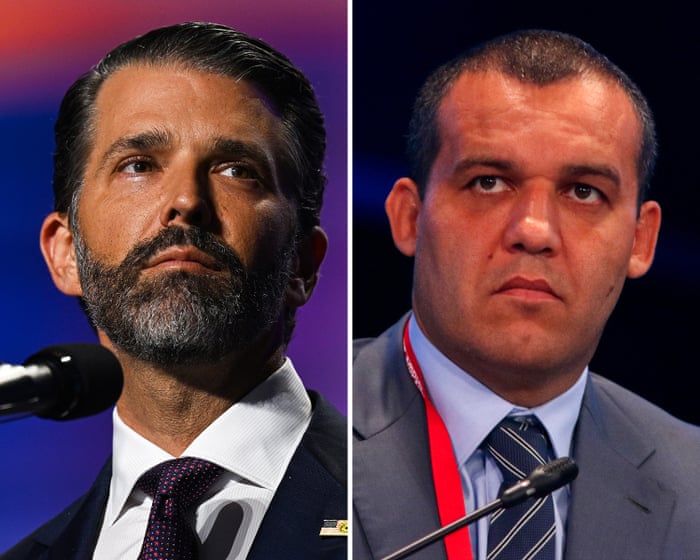
A Russian oligarch close to President Putin reportedly paid hundreds of thousands of dollars for part of Donald Trump Jr.'s wedding in the Bahamas. This has raised questions about the connection between the US president's family and a close associate of the Russian leader.
Key Facts
Donald Trump Jr. married Bettina Anderson in May in a three-day wedding on two private islands in the Bahamas.
Umar Kremlev, a Russian oligarch and head of the International Boxing Association, reportedly covered costs including island rental and fireworks.
Kremlev is close to President Vladimir Putin and recently received a Russian state honor called the Order of Friendship.
The payments came from a Dubai-based entity connected to Kremlev’s boxing association.
The wedding had about 50 guests, mostly family and close friends, with Kremlev attending the party but not the ceremony.
US Democrat Robert Garcia demanded answers on why Kremlev helped fund the wedding and what he gained.
Trumps’s spokesperson said Kremlev is a personal friend of Donald Trump Jr., but not a business partner.
President Donald Trump did not attend the wedding, citing scheduling conflicts involving foreign policy issues.
Read the Original
Want the full story? Tap a source to open the original
article.