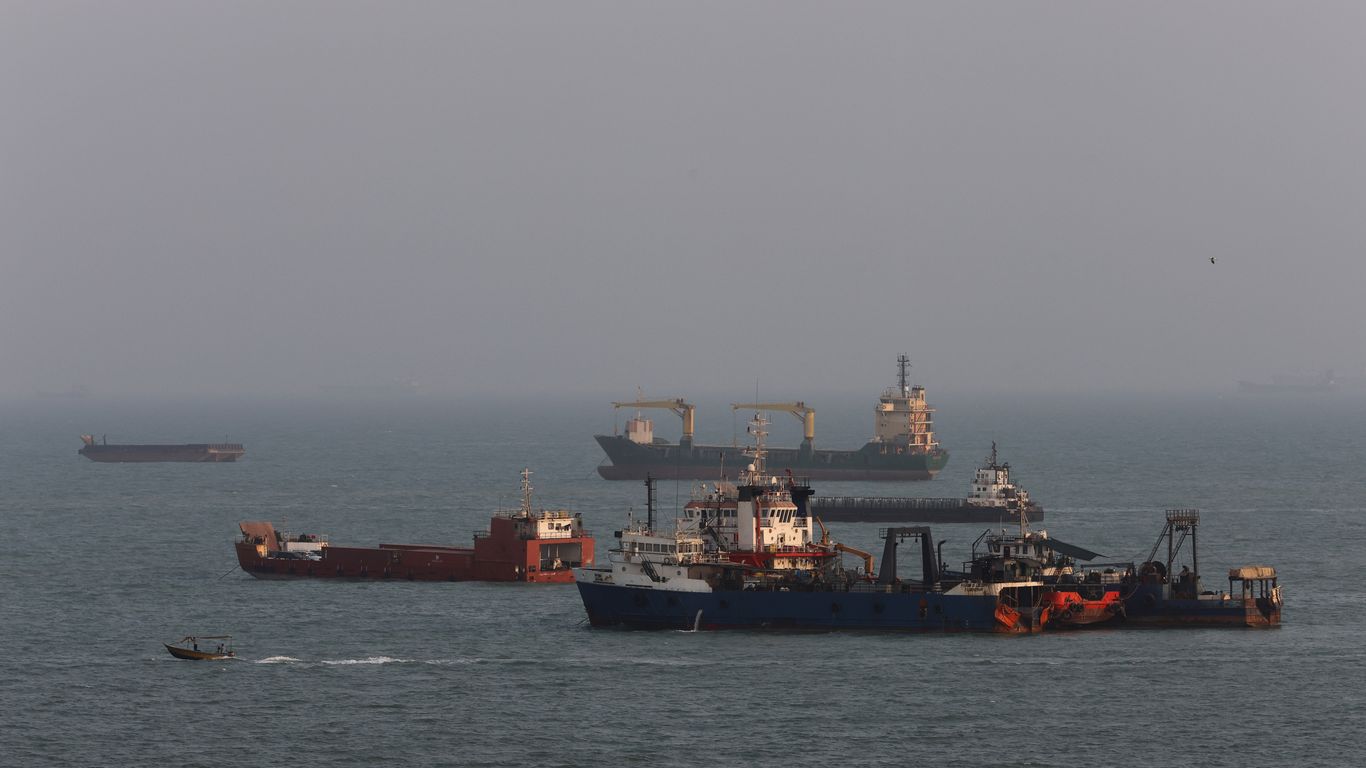
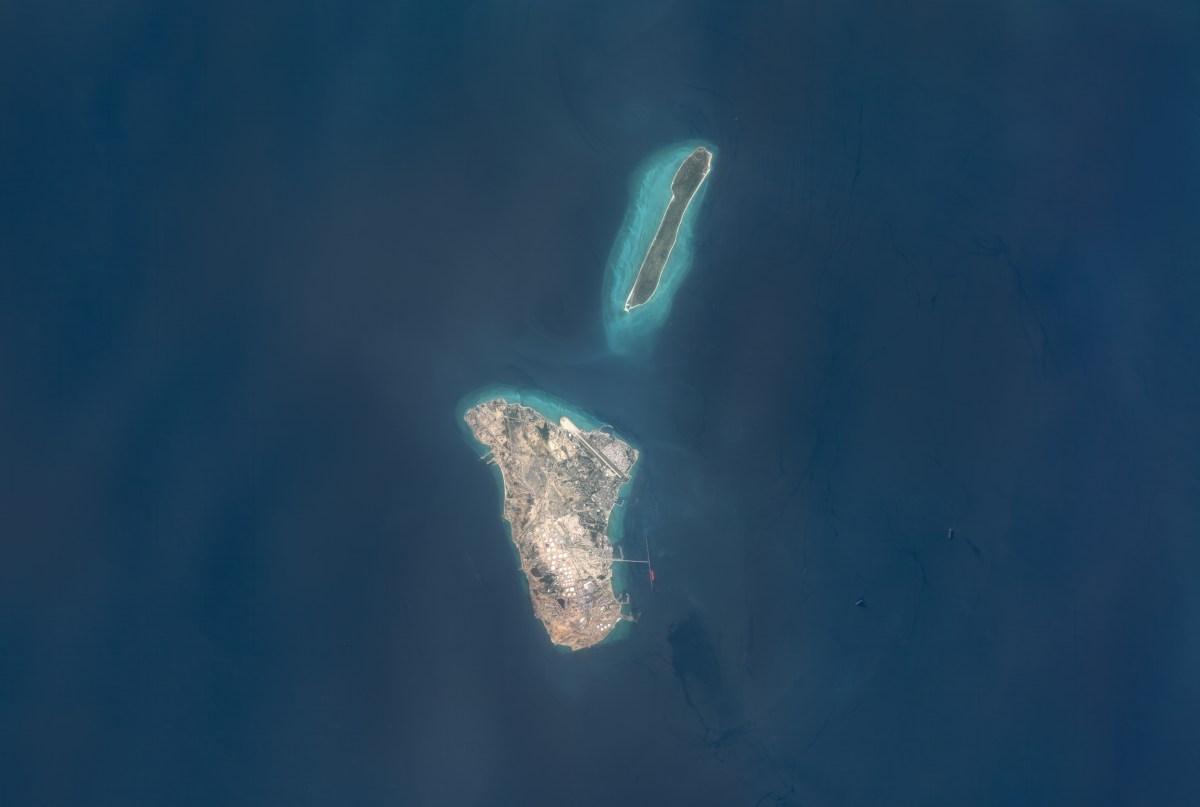
The US military struck three oil tankers linked to Iran after ballistic missiles were fired at two American warships. The US said it avoided damage and no soldiers were hurt during the attacks near the Strait of Hormuz and the Gulf of Oman.
Key Facts
The US hit three Iran-linked oil tankers: one near Kharg Island, one near the Strait of Hormuz, and a third in the Gulf of Oman.
The US Central Command said the tanker near Kharg Island and the one near the Strait of Hormuz were "permanently disabled."
A third tanker was "completely destroyed" by the US military.
The missile attacks targeted a US aircraft carrier and a guided-missile destroyer but caused no American injuries.
The US military commander warned Iran it would raise the cost if they attack US ships again.
The strikes occurred after a recent increase in hostilities following a period of calm.
Previous attacks involved the US and Israel striking Iran and Iran responding by attacking US allies and blocking the Strait of Hormuz.
Read the Original
Want the full story? Tap a source to open the original
article.
More than 1,200 people died and nearly 5,000 went missing after severe flash floods in Nepal on August 26. Families of the missing are holding symbolic cremation ceremonies without bodies, using grass effigies, while authorities face challenges identifying and storing the many recovered bodies.
Key Facts
Flash floods in northern and central Nepal on August 26 killed over 1,200 people and left about 5,000 missing.
Relatives perform symbolic last rites with effigies made of sacred grass because many bodies are unrecovered.
Bodies recovered are often decomposed or damaged, making identification and preservation difficult.
Authorities have temporarily buried 1,030 unidentified bodies while waiting for DNA matching.
Only 96 bodies have been identified and handed over to families so far.
DNA samples are taken from all recovered bodies before burial to help identify them later.
Temporary graves are located in multiple regions, including Kathmandu, Chitwan, and Pokhara.
Some families express distress over mass temporary burials, as they conflict with Hindu religious customs.
Read the Original
Want the full story? Tap a source to open the original
article.
Representative Ashley Hinson is leading by five points in a new poll for the Iowa Senate race against Democrat Josh Turek. She disagrees with President Trump’s decision to allow more ground beef imports with lower tariffs, a move that upset cattle producers in Iowa.
Key Facts
Ashley Hinson is a Trump-endorsed Republican running for an open Senate seat in Iowa.
A recent poll shows Hinson leading Democrat Josh Turek by 50% to 45%.
President Trump allowed up to 300,000 metric tons of ground beef to enter the U.S. with reduced tariffs for 90 days.
The beef import policy faces strong opposition from U.S. cattle producers who fear it will lower prices and hurt local ranchers.
Hinson publicly called the beef import decision a “bad idea” during the Iowa State Fair.
Iowa is an important battleground state with a significant cattle industry.
Independent voters currently lean slightly toward the Democrat, Josh Turek.
President Trump’s approval rating in Iowa is 44%, lower among rural voters who are important in the race.
Read the Original
Want the full story? Tap a source to open the original
article.
The Pentagon gave lie detector tests in August to many top U.S. military leaders and workers. This was part of an investigation to find out who was sharing secret information with reporters about low weapons supplies related to the conflict with Iran.
Key Facts
The Pentagon used polygraph tests to check for possible leaks of secret information.
About 50 members of the Joint Staff, high-ranking military officials, were tested.
The investigation focused on leaks about weapons stockpiles during the Iran war.
Both military personnel and civilian employees were part of the testing.
The goal was to stop unauthorized sharing of sensitive military information.
The testing happened in August.
The leaks involved details about shrinking weapons supplies.
The investigation was led by the Pentagon.
Read the Original
Want the full story? Tap a source to open the original
article.
France will hold a presidential election on April 18th and May 2nd, 2027, to choose a new leader to replace President Emmanuel Macron. Current polls show Marine Le Pen, leader of the far-right National Rally, as the favorite to win, and many candidates have already announced their plans to run.
Key Facts
France’s presidential election dates are April 18 and May 2, 2027.
The election will decide who replaces President Emmanuel Macron.
Marine Le Pen, from the far-right National Rally party, is leading in recent opinion polls.
Several candidates have announced they want to run for president.
France experienced its hottest summer on record, causing damage to farmers’ crops.
The French government has set up a relief fund of over one billion euros to help farmers affected by heat and wildfires.
Some experts believe this relief money may not be enough to cover all the damage.
The article features Eleanor Beardsley, a reporter from National Public Radio, discussing the election.
Read the Original
Want the full story? Tap a source to open the original
article.
The U.S. military launched strikes to disable three Iranian oil tankers after Iran’s forces attacked two U.S. Navy ships. The strikes took place near Kharg Island in the Persian Gulf as a response to these attacks.
Key Facts
U.S. Central Command carried out military strikes on Iranian crude oil carriers.
Three oil tankers belonging to Iran’s Islamic Revolutionary Guard Corps were permanently disabled.
The strikes happened near Kharg Island, located in the Persian Gulf.
The military action was in response to multiple attacks by Iran on two U.S. Navy warships.
U.S. officials described Iran’s attacks as unprovoked.
The crude oil carriers are used by the IRGC to transport oil.
This response aims to protect U.S. naval forces operating in the region.
Read the Original
Want the full story? Tap a source to open the original
article.
Nigel Farage said he was not paying attention during a talk about a plan to get foreign money for his party, Reform UK. His former staff members involved in the talk have left their jobs, and the party is investigating what happened.
Key Facts
Nigel Farage said he wasn't listening during a conversation about foreign money donations to Reform UK.
His former chief of staff Dan Jukes and ex-head of policy James Orr have been removed from their roles.
The conversation involved a plan for an American donor to give £500,000 through his UK-based son.
UK law says political party donors must be UK voters or UK-registered companies, so foreign money cannot be given this way.
No money was actually donated; the plan was shown in an undercover investigation.
Farage denied that Reform UK ever took money from foreign sources.
The police are considering investigating the claims.
Farage said his family wants him to quit politics, but he has not decided to step down.
Read the Original
Want the full story? Tap a source to open the original
article.
The U.S. military attacked three Iranian oil tankers after Iran fired missiles at two U.S. Navy ships. The strikes were part of ongoing attacks between the two countries that have lasted more than six months.
Key Facts
U.S. forces struck three Iranian tankers in response to missile attacks on a U.S. aircraft carrier and a destroyer.
The strikes disabled two oil tankers and completely destroyed a third in the Gulf of Oman.
The U.S. warned the tanker crews before destroying the ships.
The attacks follow a new U.S. "tanker-for-tanker" policy approved by President Trump.
The conflict between the U.S. and Iran has been ongoing for over six months.
President Trump previously said the conflict could end quickly or last longer but it is still continuing.
A recent poll showed 65% of Americans want a deal to end the conflict soon.
Read the Original
Want the full story? Tap a source to open the original
article.
President Donald Trump has promised a strong economic boom during his second term but is frustrated by a recent good jobs report. He blames inflation and high interest rates on the Federal Reserve and trade partners, arguing these issues hurt economic growth despite the positive job numbers.
Key Facts
In August, the U.S. added 162,000 jobs, more than expected after months of slow hiring.
President Trump expressed frustration after the job report, focusing on inflation and interest rates.
Trump criticized the Federal Reserve and U.S. trade partners for causing high inflation and borrowing costs.
The national debt recently passed $40 trillion, with the 10-year U.S. Treasury interest rate near 4.79%.
Inflation and higher interest rates have slowed economic growth to about 2% per year, less than during the Biden administration.
Trump claims that lower interest rates would lead to GDP growth of 12-15%, though economists warn this could worsen inflation.
Public trust in Trump’s economic leadership has declined, with only 32% approval on the economy in recent polls.
Trump's own policies, including tariffs and handling of oil shortages, have contributed to inflation and economic challenges.
Read the Original
Want the full story? Tap a source to open the original
article.
The U.S. military attacked three Iranian oil tankers after U.S. Navy ships were targeted by missiles near the Strait of Hormuz. The strikes disabled two tankers and destroyed a third, aiming to block funds flowing to Iran’s Revolutionary Guard and its allies.
Key Facts
U.S. Navy warships were targeted with missiles but avoided damage or casualties.
The U.S. military struck three Iranian oil tankers, disabling two and destroying one.
The tankers were reportedly part of a network funding Iran’s Revolutionary Guard and its armed proxies.
The strikes happened near key locations, including Kharg Island and the Gulf of Oman.
The conflict resumed recently after a period of relative calm.
At least five people died in a recent U.S. strike on southern Iran.
President Donald Trump described the conflict as “small potatoes” while military actions were escalating.
The Strait of Hormuz is a vital waterway for global energy supplies and is claimed by both the U.S. and Iran.
Read the Original
Want the full story? Tap a source to open the original
article.
The U.S. job market improved in August with employers adding 162,000 jobs, more than twice the expected number. However, inflation remains a problem, with higher prices for fuel and other goods affecting households and businesses.
Key Facts
Employers added 162,000 jobs in August, exceeding economists’ expectations of 65,000.
Average hourly wages rose by 3.1% compared to last year, the smallest increase since May 2021.
Job openings in July increased slightly to 7.27 million from 7.18 million in June.
Fewer people quit their jobs in July, suggesting less confidence in finding new work.
Diesel prices reached a record high of $5.85 per gallon, affecting transportation costs.
Gasoline prices remain above $4 per gallon, hitting travelers during the Labor Day weekend.
Higher fuel costs have led some businesses to add extra fees for shipping and delivery.
Inflation and higher costs are causing financial strain for many American families.
Read the Original
Want the full story? Tap a source to open the original
article.
US envoys Steve Witkoff and Jared Kushner have arrived in Moscow to try to restart peace talks to end Russia’s invasion of Ukraine. Both Ukraine and Russia agreed to pause airstrikes during the visit, while the envoys plan to meet leaders in Moscow and Kyiv to discuss possible solutions.
Key Facts
Steve Witkoff and Jared Kushner are US envoys sent by President Donald Trump to Moscow to help end the war between Russia and Ukraine.
Russia agreed to a 72-hour pause in airstrikes on Kyiv during the envoys’ visit.
Ukraine also paused its airstrikes and asked Russia to do the same.
The envoys are expected to meet Russian President Vladimir Putin and then visit Kyiv, the Ukrainian capital.
Key issues remain unresolved, including Russia’s demand that Ukraine cede four regions and not join NATO, which Ukraine rejects.
The warfront has seen little movement recently, with intense air strikes on both sides.
Russian attacks have hit Ukrainian infrastructure, including airports and a factory, causing casualties.
President Trump stated he made ending the war a priority and believes the envoys might succeed.
Read the Original
Want the full story? Tap a source to open the original
article.
Each summary links back to the original reporting, so you can check the work. Support that, and get the daily digest every morning. Most choose $3.99/month.
The U.S. military struck three Iranian oil tankers near key Iranian ports after Iran fired missiles at two U.S. Navy ships in the Strait of Hormuz. The U.S. said the strikes targeted vessels linked to Iran’s Revolutionary Guard and aimed to impose economic costs on Iran’s oil network.
Key Facts
The U.S. Central Command (CENTCOM) confirmed strikes on three Iranian oil tankers on Saturday.
One tanker was disabled near Kharg Island, another destroyed near Jask, and a third made inoperable in the Gulf of Oman.
The strikes followed Iran’s Islamic Revolutionary Guard Corps firing ballistic missiles at two U.S. Navy warships.
No American personnel were hurt in the missile attacks, and U.S. ships avoided damage.
The tankers were part of a “shadow network” that funds Iran’s Revolutionary Guard and regional allies.
These actions are linked to ongoing U.S.-Israeli efforts called Operation Epic Fury targeting Iran’s petroleum and shipping networks.
The U.S. has increased sanctions and military pressure in a campaign Washington calls “Economic D-Day” to isolate Iran economically.
CENTCOM warned Iran that attacks on U.S. ships would lead to greater damage to Iran’s oil fleet.
Read the Original
Want the full story? Tap a source to open the original
article.
Prime Minister Andy Burnham faces challenges managing his big policy plans alongside economic limits. Chancellor John Healey must balance fiscal caution with Burnham’s goals amid rising costs and less budget space than before.
Key Facts
Andy Burnham became prime minister just over six weeks ago.
Early signs showed some economic improvement despite global issues like the Iran conflict.
Global concerns, including oil price rises, have increased government borrowing costs.
Chancellor John Healey’s budget space has shrunk by about half due to inflation and interest rates.
Healey stresses sticking to fiscal responsibility and existing budget rules.
Burnham aims for major changes, including public control of utilities and social care reform.
There is tension between Burnham’s ambitious plans and Healey’s cautious approach.
A report suggests England could gain up to £80 billion by replicating Manchester’s economic success.
Read the Original
Want the full story? Tap a source to open the original
article.
Many Americans from both political parties are opposing surveillance cameras made by Flock Safety, which automatically read car license plates. These cameras raise privacy concerns because police and other agencies, including immigration authorities, have misused them in some cases, leading to protests and new laws being proposed.
Key Facts
Flock Safety makes automated license plate readers that scan about 2 billion license plates each month across the US.
Police officers in several states used these cameras to stalk people or track abortion seekers.
Immigration and Customs Enforcement (ICE) also uses data from Flock’s cameras.
Around 46% of Americans now oppose these cameras being used in their communities, up 13% from last year.
Politicians from both parties, like Texas Governor Greg Abbott and Senator Bernie Sanders, are opposing Flock cameras.
Over 100 local governments have canceled contracts with Flock in response to public pressure.
Groups like DeFlock are tracking camera locations and organizing opposition.
This bipartisan backlash is unusual because surveillance issues often divide political parties.
Read the Original
Want the full story? Tap a source to open the original
article.
A new study shows that memory decline may begin in middle age, with people in their 50s showing noticeable drops in memory accuracy compared to younger adults. Researchers tested memory and brain activity involving face-object associations and found changes in how the brain’s memory area works during these errors.
Key Facts
The study involved about 60 adults aged 18 to 74.
Participants memorized pairs of faces and objects or scenes, then took tests after a short break.
Memory decline was clear from young adults (20s-30s) to people in their 50s.
The hippocampus, a brain area important for memory, changes how it works starting in middle age.
Middle-aged adults often recognized faces but struggled to remember the exact paired object or scene.
Older adults’ brains sometimes showed strong memory activity even when they made mistakes.
Researchers do not yet know why strong brain activity correlates with more errors in older adults.
The study suggests middle age might be an important time to understand and possibly intervene in memory changes.
Read the Original
Want the full story? Tap a source to open the original
article.
The article references the movie "12 Angry Men" and imagines a situation where a real court could remove a stubborn juror like Ford to change a verdict. It suggests that if such legal actions were possible in 1957, it could have improved the court decision.
Key Facts
The article discusses the film "12 Angry Men" from 1957.
It focuses on a character named Ford, described as stubborn or unyielding.
It imagines a scenario where Ford could be questioned in court for his behavior.
The possibility of removing a juror to change a verdict is considered.
The idea is about improving justice by addressing juror biases or mistakes.
The article does not mention any real court cases or current events.
Read the Original
Want the full story? Tap a source to open the original
article.
A mother shared her experience giving her daughter elaborate Disney-themed birthday parties and gifts because she wanted to create a magical childhood. Over time, she realized the importance of setting limits and saying no to avoid fostering entitlement, especially after her daughter reacted badly when plans changed due to the mother's illness.
Key Facts
The mother initially indulged her daughter with Disney princess dresses, themed parties, and trips to Disney World.
She spent a lot of money and effort on birthday celebrations with characters and special effects like fake snow.
At age 7, the mother got seriously ill and had to cancel a planned trip, causing her daughter to react negatively.
This reaction made the mother reconsider how much she was giving and whether she was encouraging unrealistic expectations.
She started saying no to some requests, like a Halloween party, to teach her daughter about limits and handling disappointment.
The mother emphasizes that saying no does not require negotiation and that children can be allowed to feel upset without changing the decision.
She reflects on the challenge of balancing giving with teaching responsibility and gratitude.
Read the Original
Want the full story? Tap a source to open the original
article.
That's the point of this site, and readers keep it that way. Support for any amount and the daily digest lands in your inbox every morning at 7am Eastern.
A judge in Argentina ordered that a 17th-century Italian painting stolen by Nazis be returned to the heir of its original Jewish owner. The painting was found in the home of the daughter of a former Nazi official in Argentina, and she agreed to give it up to avoid trial.
Key Facts
The painting, called "Portrait of a Lady," was taken by Nazis from Jewish art collector Jacques Goudstikker during World War II.
The judge approved a deal where the Nazi official’s daughter gave up her claim to the painting.
Goudstikker’s collection had about 1,100 paintings, many taken under pressure by Nazis.
The painting was spotted in 2025 in an Argentinian house for sale.
The Nazi official’s family fled Europe and settled in Argentina after the war.
Experts confirmed the painting was part of Goudstikker’s collection and valued it at about $290,000.
The family who had the painting agreed to return it and avoid criminal charges by paying fines and remaining under court supervision.
Authorities are still investigating other artworks found in the home for signs they may also have been stolen during the war.
Read the Original
Want the full story? Tap a source to open the original
article.
The Trump administration has ordered dozens of Pentagon officials to take polygraph, or lie-detector, tests. This is part of an investigation into leaks about U.S. weapons shortages in the Middle East, amid concerns over sensitive military information being shared with the media.
Key Facts
Around 50 military and civilian Pentagon officials were given polygraph tests in August.
The tests focused on whether officials leaked classified details about U.S. weapons supplies.
Reports had emerged that the U.S. was running low on some missile and interceptor stocks in the Middle East.
The Trump administration denies weapons shortages and says it has large reserves.
No officials reportedly failed the key questions about leaking information.
The investigation involves the Department of Justice and the FBI.
The polygraph tests also serve to discourage others from leaking information in the future.
General Dan Caine and other senior officials were not tested.
Read the Original
Want the full story? Tap a source to open the original
article.