A group of masked men blocked the entrance to the Port of Dover, Britain’s busiest ferry port, causing traffic jams and delays. Police are talking with the protesters, but it is unclear what they want. Dover has faced past protests about migrants crossing the Channel from France.
Key Facts
Masked protesters stopped all traffic in and out of the Port of Dover on Saturday.
The blockage caused a traffic jam stretching about 4 miles and delays up to 45 minutes.
P&O Ferries said its boats continued running on time despite the protest.
The group’s demands were not immediately known.
Dover has seen previous protests related to migrants crossing the Channel in small boats.
Politician Nigel Farage called asylum seekers “an invasion” in a recent speech.
The UK government said better cooperation with France reduced crossings by over 40% compared to 2025.
Local MP Mike Tapp criticized the protesters for causing disruption and urged them to leave.
Read the Original
Want the full story? Tap a source to open the original
article.
Russian attacks killed four people in Ukraine amid ongoing conflict as U.S. envoys prepare to visit for peace talks. Both Russia and Ukraine continue aerial strikes despite calls for a temporary ceasefire during the diplomatic visit.
Key Facts
Four people were killed in Russian strikes in Ukraine's Dnipropetrovsk region.
The attacks damaged homes, an apartment building, and a shopping center.
Russia used ballistic missiles and 167 attack drones in recent attacks.
Ukraine shot down or suppressed 128 drones with air defenses.
Ukrainian President Zelenskyy pledged to stop air attacks during the U.S. envoys’ visit.
U.S. envoys Steve Witkoff and Jared Kushner are visiting to encourage peace talks.
The conflict has lasted over four and a half years with a long front line of about 1,250 kilometers.
Emergency teams faced repeated interruptions while responding to attacks due to ongoing drone threats.
Read the Original
Want the full story? Tap a source to open the original
article.
Children displaced by flash floods in Nepal are attending temporary education centers in Nuwakot. The floods caused major damage, with buildings worth $158 million destroyed, and Nepal warns that rebuilding may cost billions of dollars.
Key Facts
Flash floods in Nepal have displaced many children from their homes.
Temporary education centers have been set up to continue their schooling.
The floods damaged buildings valued at about $158 million according to the UN.
Nepal has stated that the cost of rebuilding could reach billions of dollars.
Aid organizations are working in affected communities to provide support.
The temporary schools help children keep learning despite the disaster.
The event took place in the Nuwakot district of Nepal.
Floods and their aftermath have created urgent humanitarian and reconstruction needs.
Read the Original
Want the full story? Tap a source to open the original
article.
Since Brexit, Sweden has deported or forcibly removed 458 British citizens who did not secure legal residency. This includes people who lived in Sweden for many years, elderly individuals, and those facing health issues. The Swedish Migration Agency confirmed these numbers and stated that deportation follows only some rejected residency applications.
Key Facts
Sweden has publicly confirmed 458 deportations or forced removals of British citizens since Brexit.
Some deported individuals lived in Sweden for more than 25 years.
Elderly British citizens, including those with dementia, have been affected.
The Swedish Migration Agency says not all rejected residency applications lead to deportation; only about 400 cases resulted in deportation decisions.
There were 14,233 applications for residency from British citizens after Brexit, with nearly 4,000 rejections.
The rejection rate for British applicants is three times higher than in any other EU country.
Deportations continue, including cases like a man detained in Stockholm after five years fighting the decision.
Activist groups call for clearer and more complete data on deportations and residency applications.
Read the Original
Want the full story? Tap a source to open the original
article.
President Donald Trump announced he is sending envoys Steve Witkoff and Jared Kushner to Moscow and Kyiv. Their mission is to present a new plan aimed at ending the war in Ukraine, which has lasted more than four years.
Key Facts
President Trump named Steve Witkoff and Jared Kushner as his envoys.
The envoys are traveling to Moscow, Russia, and Kyiv, Ukraine.
The goal of their visit is to propose a plan to end the war in Ukraine.
The war in Ukraine has been ongoing for over four years.
This is a diplomatic effort led by the United States to seek peace.
The announcement was made on September 5, 2026.
The plan details were not shared in the article.
The visit follows recent attacks and ongoing conflict in the region.
Read the Original
Want the full story? Tap a source to open the original
article.
President Donald Trump has signed an order to remove endangered species protection from grey wolves and Mexican wolves in the US. This could allow farmers to kill wolves to protect their livestock, but conservation groups warn it might hurt efforts to bring wolf populations back.
Key Facts
The order ends endangered species protection for grey wolves and Mexican wolves.
Ranchers are recognized in the order for their role in food production and American culture.
There were 319 Mexican wolves in the wild in 2025, up from 4 in 1998.
About 18,000 grey wolves live in the US, but they are still mostly endangered due to habitat loss.
The order gives 90 days for officials to decide if wolf populations have recovered enough to remove protections.
Environmental groups say wolf attacks on livestock are rare and have little effect on ranchers’ income.
Ranchers currently can receive full payment if wolves kill their livestock, and states fund programs to prevent attacks.
The order follows high beef prices and aims to support farmers facing challenges like drought and parasite outbreaks.
Read the Original
Want the full story? Tap a source to open the original
article.
Lindsay Clancy's murder trial for strangling her three children ended in a mistrial because jurors could not agree on a verdict. In some other Western countries, there are special laws called infanticide laws that handle cases where mothers kill very young babies, which might have led to a different outcome.
Key Facts
Lindsay Clancy was on trial for killing her three children by strangulation.
The trial ended in a mistrial due to no unanimous jury decision.
Infanticide laws exist in some countries to address cases where mothers kill babies under one year old.
These laws treat such cases differently from other murder charges.
The article compares how Clancy’s case might have been handled under infanticide laws in other countries.
The case took place in the United States, specifically Massachusetts.
The topic relates to legal and criminal justice issues involving mothers and child deaths.
Read the Original
Want the full story? Tap a source to open the original
article.
The United States special forces captured Venezuelan President Nicolas Maduro in early 2026, leading to a new government under interim President Delcy Rodriguez seeking to open Venezuela’s oil industry to US companies. Recently, the US and Venezuela agreed on a 100-year deal allowing US companies to access 65 billion barrels of Venezuelan oil, marking a major shift in control of the country’s oil resources.
Key Facts
Venezuela’s oil industry was nationalised for about 27 years under Maduro’s party.
President Maduro was captured by US forces on January 3, 2026, and taken to the US for trial.
Delcy Rodriguez became interim president and started reforms to privatize the oil sector.
Venezuela’s General Hydrocarbons Law was reformed to allow US and some foreign companies to operate oil fields, except companies from China, Russia, Iran, and North Korea.
The US-Venezuela deal grants US companies access to 65 billion barrels of oil for the next 100 years.
The deal involves 17 major oil fields previously controlled by Chinese and Russian companies.
A private company, North American Blue Energy Partners (NABEP), will run the fields with a 35% stake for the US Department of Defense’s Office of Strategic Capital.
The US government can buy 20% of the oil from these fields at production cost, not market price.
Read the Original
Want the full story? Tap a source to open the original
article.
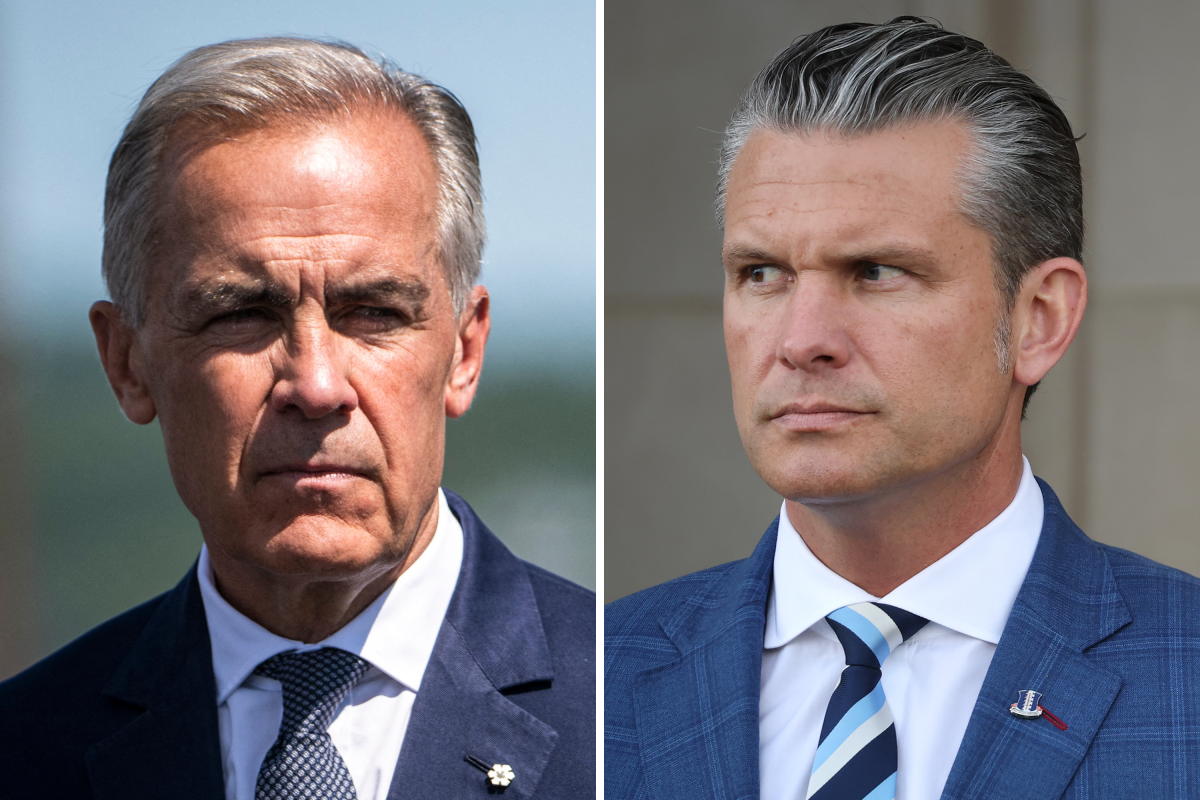
U.S. Defense Secretary Pete Hegseth shared a Canadian Coast Guard post about their participation in a Pride event, adding only a Canadian flag emoji shortly after Canadian Prime Minister Mark Carney criticized U.S. officials for using social media mockery during trade talks. Carney urged the U.S. to stop the insults and take trade discussions with Canada seriously.
Key Facts
Pete Hegseth quoted a Canadian Coast Guard message about joining a Pride celebration and added just a Canadian flag emoji.
Canadian Prime Minister Mark Carney publicly criticized U.S. officials for using memes and insults in online exchanges with Canada.
Carney said such insults from U.S. Cabinet-level officials were “beneath their office.”
Carney linked progress in trade talks to a more serious and respectful approach from Washington.
Hegseth’s emoji post was unclear in meaning, leading to mixed reactions from social media users.
Earlier, Hegseth made a more critical post about a Canadian cadet program, which drew stronger reactions from Canadian officials.
The Canadian Coast Guard is part of Canada’s Department of National Defence and participates in public community events like Pride.
Trade talks between the U.S. and Canada have stalled partly due to tensions created by these online messages.
Read the Original
Want the full story? Tap a source to open the original
article.
Abdul El-Sayed, a progressive candidate in Michigan, rejects the label "socialist" even though he supports many ideas linked to the Democratic Socialists of America (DSA). The DSA is a growing left-wing group whose members and endorsed candidates have recently won many elections, stirring debate within and outside the Democratic Party.
Key Facts
Abdul El-Sayed won the Democratic primary for US Senate in Michigan.
El-Sayed says he is a capitalist, not a socialist, despite being linked to the DSA.
The Democratic Socialists of America has grown to about 120,000 members.
Some candidates supported by or linked to the DSA have won elections in mostly Democratic states.
There is confusion and debate over which politicians are actually DSA members or endorsed by the group.
The DSA supports policies like universal healthcare, taxing the rich, and stronger labor rights.
Some Democrats and Republicans are pushing back against the DSA, including a recent congressional resolution condemning socialism.
High-profile progressive politicians like Alexandria Ocasio-Cortez have close ties to the DSA.
Read the Original
Want the full story? Tap a source to open the original
article.
Local elected officials in several U.S. communities are facing attempts to remove them from office because they supported data center projects. These efforts focus on concerns about the environmental impact and public input, while supporters say data centers bring investment and help build America’s AI infrastructure.
Key Facts
Voters in different states are trying to recall mayors, council members, and other officials who approved data center developments or incentives.
Ballotpedia reported 329 officials faced recall efforts in early 2026, the highest midyear number since 2014.
Concerns include high electricity and water use, noise, environmental effects, property values, and lack of public influence.
Supporters argue data centers create investment, tax revenue, and support AI infrastructure.
John Perkins, a councilman in Independence, Missouri, was removed from office after supporting a data center with a 90% property tax break.
In Festus, Missouri, voters ousted council members after backing a large $6 billion data center, but recall attempts against others were blocked due to legal standards.
Oklahoma Mayor Brian Pillmore faces a recall vote for supporting land sales to a data center company after dropping an unpopular amphitheater plan.
Some recall drives failed to reach votes due to legal technicalities or insufficient grounds besides political disagreement.
Read the Original
Want the full story? Tap a source to open the original
article.
A recent survey shows that many Americans do not want AI data centers near them because these centers use a lot of electricity, water, and land. The article compares data centers to modern American lifestyles by showing how people, like data centers, depend heavily on electricity, water, and constant connectivity.
Key Facts
Seven out of 10 Americans oppose having AI data centers in their local areas.
Data centers need a large amount of electricity and water, and require cool temperatures to operate.
Nine in 10 U.S. adults use the internet daily, with 41% online almost all the time.
Data centers might use about 11.8% of all U.S. electricity by 2030.
Average American homes use many electrical devices that consume power continuously.
Americans use about 82 gallons of water daily at home, similar to the water used in cooling data centers.
Both people and data centers depend on stable and narrow temperature ranges, with air conditioning using about 20% of home electricity.
The infrastructure supporting digital services, like the internet and water supply, is mostly invisible until problems occur.
Read the Original
Want the full story? Tap a source to open the original
article.
On the biggest stories we show what the outlets agree on and where they differ. Readers keep that going, and get the daily digest by email every morning. Most choose $3.99/month.
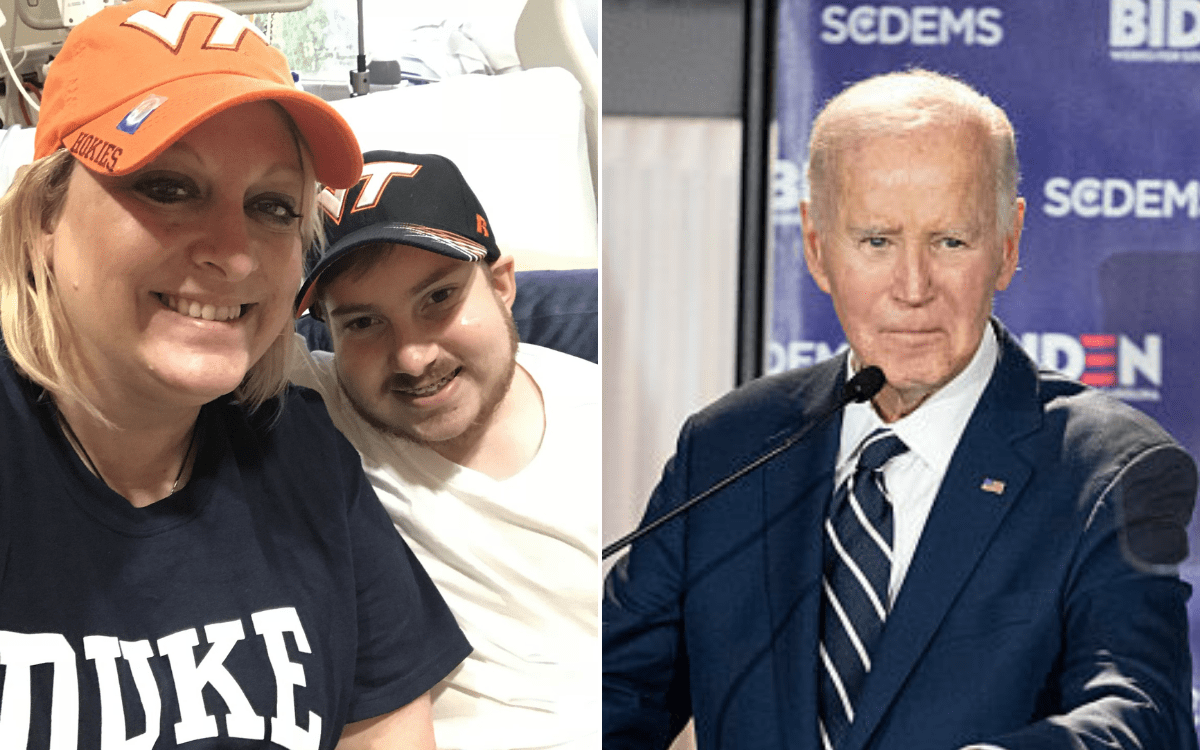
A mother named Melina Newcomb, who lost her son Levi to cancer, wrote to President Joe Biden after learning of his own cancer diagnosis. President Biden replied personally, offering condolences and words of comfort about shared grief and hope.
Key Facts
Melina Newcomb’s son Levi died from cancer in 2019 at age 19.
Levi had a brain tumor diagnosed at age 4 and later developed a second cancer caused by radiation treatment.
President Joe Biden lost his son Beau to brain cancer in 2015.
In May 2025, President Biden was diagnosed with advanced prostate cancer that had spread to his bones.
Newcomb sent a supportive message to Biden in August 2025 after hearing people could email him well wishes.
Biden responded personally, expressing sympathy and encouragement about sharing love and hope despite grief.
Newcomb described her experience of grief and how Biden’s reply gave her comfort.
Read the Original
Want the full story? Tap a source to open the original
article.
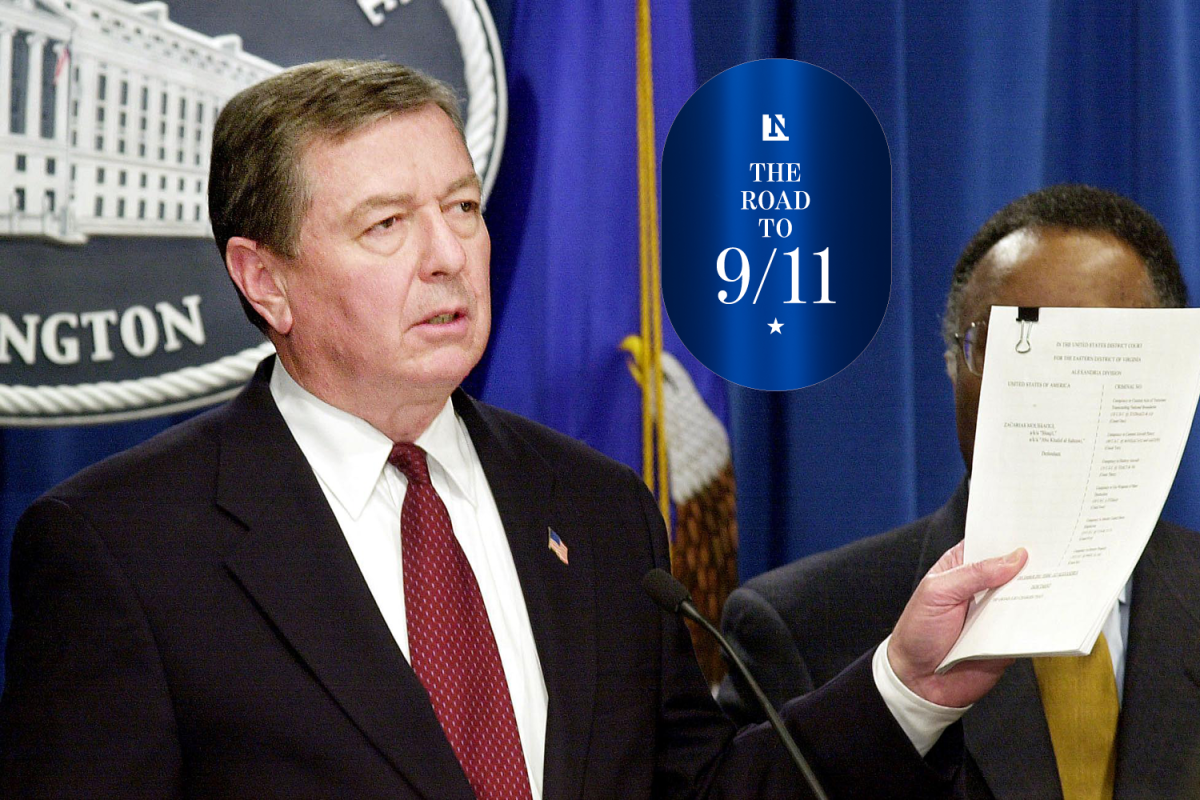
In early September 2001, the FBI gathered information about Zacarias Moussaoui, who was suspected of having ties to Islamic extremists and seeking unusual flight training. Despite these concerns, the FBI planned to deport him, and just 12 minutes before the first plane hit the World Trade Center on September 11, the FBI sent an email finalizing the deportation plans.
Key Facts
On September 5, 2001, the FBI warned the FAA in Minneapolis about a possible hijacking threat involving large airplanes.
FBI lawyers sent a detailed report about Moussaoui to multiple U.S. agencies and international FBI offices.
Moussaoui had no prior flight experience and sought flight training not typically given to pilots.
French authorities described Moussaoui as a radical Islamic fundamentalist and potentially dangerous.
Moussaoui traveled to Pakistan before arriving in the U.S., a common route for extremists training in Afghanistan.
The FBI report did not clearly say Moussaoui or others planned to hijack a plane.
Minneapolis agents worried Moussaoui might be released before deportation.
On September 11, at 8:34 a.m., the FBI headquarters emailed Minneapolis to finalize Moussaoui's deportation plan, just 12 minutes before Flight 11 hit the North Tower.
Read the Original
Want the full story? Tap a source to open the original
article.
Militant groups linked to Al-Qaeda and ISIS are growing stronger in Africa's Sahel region, which has become a major center of global terrorism. U.S. Africa Command now sees this area as a serious threat, with militants aiming to attack the United States and its interests.
Key Facts
Over 59,700 people have died in the Sahel region due to Islamist militant violence in the last 10 years.
The Sahel accounted for more than half of the world’s terrorism deaths last year.
U.S. Africa Command calls Africa the "epicenter of global terrorism" because of active Al-Qaeda and ISIS groups.
Jama’at Nusrat al-Islam wal-Muslimin (JNIM), an Al-Qaeda affiliate, is especially dangerous and active in Burkina Faso, Mali, and Niger.
JNIM uses tactics like sieges and economic blockades to gain control in the region.
Al-Qaeda has historical roots in Africa dating back to the 1990s, with previous attacks such as the 1998 U.S. embassy bombings in Kenya and Tanzania.
JNIM coordinates with local groups like the Tuareg separatists and other Islamist factions to strengthen its influence.
Other related groups include Al-Qaeda in the Islamic Maghreb and Al-Shabaab, active in parts of North and West Africa.
Read the Original
Want the full story? Tap a source to open the original
article.
A young woman struggled with extreme tiredness and falling asleep during the day, despite getting enough rest at night. After many doctor visits, she was diagnosed with idiopathic hypersomnia, a rare sleep disorder, which later developed into narcolepsy. Medication now helps manage her symptoms, allowing her to enjoy activities like cheerleading again.
Key Facts
The woman experienced severe daytime sleepiness from ages 13 to 17.
Initial doctors did not find a clear cause and suggested psychological reasons.
A sleep study diagnosed her with idiopathic hypersomnia, causing uncontrollable sleepiness.
Her condition progressed to narcolepsy, which involves sudden sleep attacks and muscle weakness called cataplexy.
Cataplexy episodes were often triggered by strong emotions like relief.
She had to stop competitive cheerleading due to unpredictable sleep episodes.
In 2023, she started medication that helps regulate her sleep.
With treatment, she found a new cheerleading team where she became a two-time world champion.
Read the Original
Want the full story? Tap a source to open the original
article.
A recent study shows fewer Americans are moving within the country compared to the pandemic years. High housing costs and expensive mortgages are making many people stay put, especially in larger cities.
Key Facts
Domestic moves in the U.S. dropped significantly in the second quarter of 2026.
Longer-distance moves fell more sharply than moves within the same city.
High housing prices and mortgage costs are major reasons people are staying in their homes.
Many homeowners have low-interest mortgages, making it costly to sell and move.
Young adults find homeownership harder due to a lack of affordable homes.
Some people are moving to smaller Midwestern cities with cheaper housing.
Remote work increased moves during the pandemic but this trend slowed in 2023-2024.
43.5 million U.S. households spent more than 30% of their income on housing in 2024.
Read the Original
Want the full story? Tap a source to open the original
article.
This article explains that the United States is a global superpower mainly because of its economic strength, not just its military power. It highlights how President Donald Trump uses trade deals, tariffs, and economic partnerships to boost U.S. influence worldwide.
Key Facts
The U.S. is often seen as a superpower due to its economic and military strength.
Military power is important, but the article says economic power is more crucial for America’s global influence.
President Donald Trump focuses on trade deals and economic transactions as key tools in foreign policy.
Economic methods like tariffs, sanctions, and tax cuts help the U.S. influence other countries.
The 2026 FIFA World Cup in the U.S. created billions in regional economic activity and supported thousands of jobs.
Investment deals with countries like Qatar, the UAE, and Venezuela help strengthen U.S. industries and infrastructure.
Events like Expo 2027 in Belgrade are used by the U.S. to promote American technology and innovation internationally.
Economic strength supports America’s role as a global marketplace and builds international partnerships.
Read the Original
Want the full story? Tap a source to open the original
article.
President Donald Trump’s approval rating among adults aged 30 to 44 has hit a new low of negative 43 points, according to a recent Economist/YouGov poll. This age group shows much stronger disapproval compared to the overall U.S. adult population, signaling challenges for Trump ahead of the 2026 midterm elections.
Key Facts
Only 27% of adults aged 30 to 44 approve of President Trump’s job performance, while 70% disapprove.
The negative net approval rating among this group is -43 points, the lowest since January 2025.
Among all U.S. adults, Trump has a -24 point net approval rating (36% approve, 60% disapprove).
The 30-44 age group’s approval has dropped by 42 points since January 2025, when it was nearly even.
The poll surveyed 1,592 U.S. adults from August 28 to 31, 2026, with a margin of error of 3.5 points.
Approval ratings among younger adults have declined steadily throughout 2025 and 2026.
The White House says election results, not polls, are the true measure of public opinion.
Poll data reflects opinions at the time of survey and may not predict future votes.
Read the Original
Want the full story? Tap a source to open the original
article.
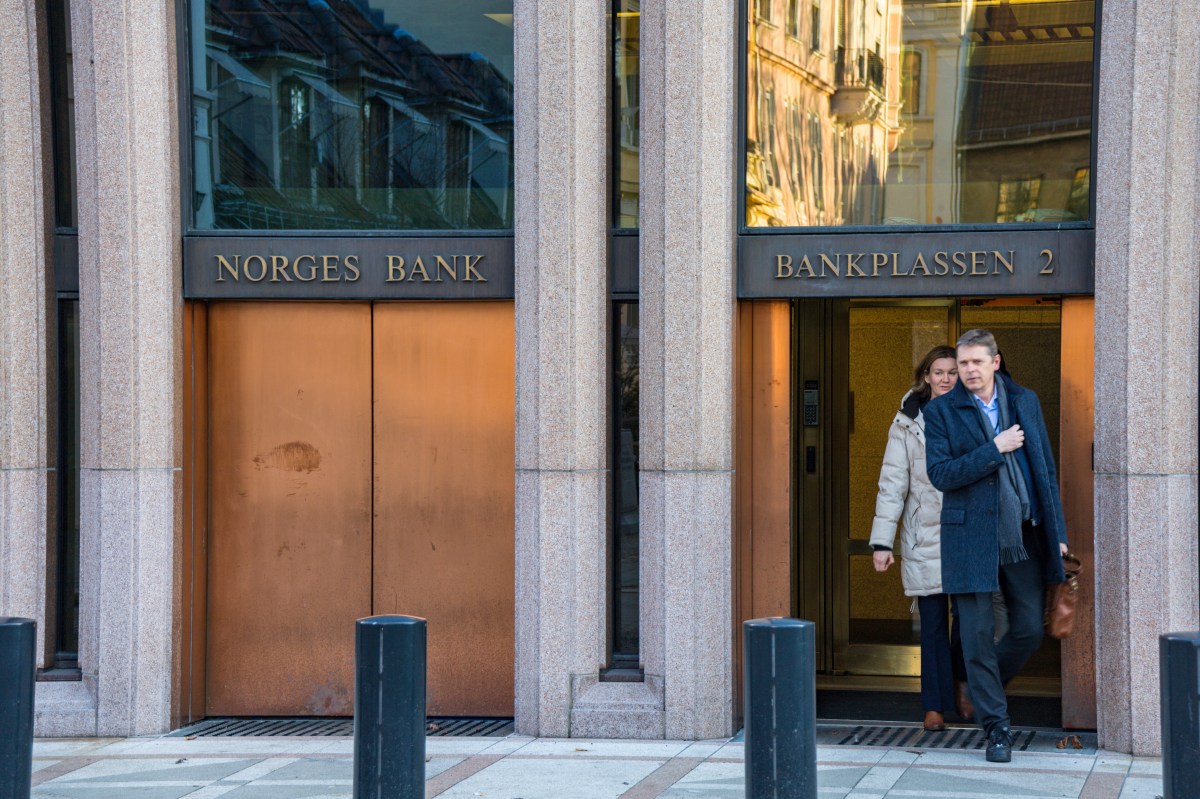
Norway's sovereign wealth fund plans to reduce its holdings of U.S. Treasury bonds by about $80 billion as part of a broader change in its investments. Several other countries, including China, Brazil, India, and Japan, have also decreased their U.S. Treasury holdings over the past year, while others like Belgium and the U.K. have increased theirs.
Key Facts
Norway’s Government Pension Fund Global wants to lower its U.S. Treasury bond holdings from 34.1% to 21.9% of its bond portfolio.
The proposed reduction by Norway equals about $80 billion from its $215 billion U.S. Treasury holdings at the end of June.
Norges Bank said it will balance this by buying other U.S. bonds, so total U.S. investments will not drop as much.
China decreased its U.S. Treasury holdings by $98 billion in one year, from $731.4 billion to $633.4 billion.
China’s Treasury holdings have fallen by over half since their peak of about $1.3 trillion in 2011.
Brazil reduced its holdings by $47 billion, India by $41 billion, and Japan by $38.1 billion over the past year.
Despite reductions, Japan remains the largest foreign holder of U.S. Treasuries with about $1.12 trillion.
Total foreign holdings of U.S. Treasuries actually rose by about 2.3% from June 2025 to June 2026, as some countries increased their holdings.
Read the Original
Want the full story? Tap a source to open the original
article.