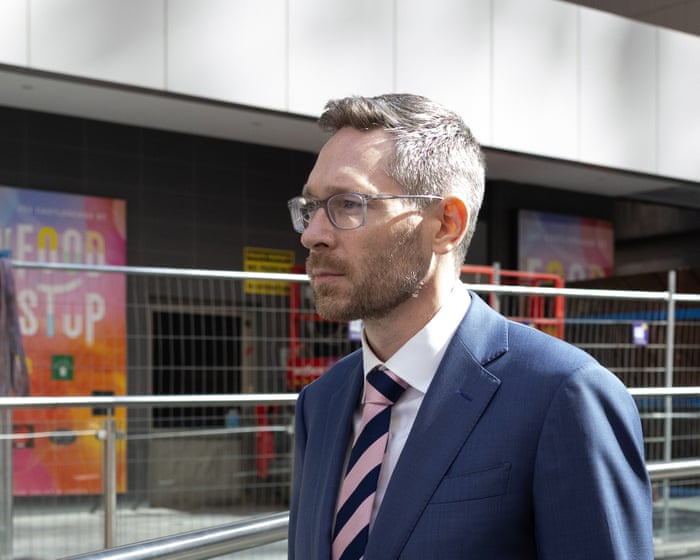
Charles Perrottet told a corruption investigation that he did not ask his brother, Dominic Perrottet, the Premier of New South Wales (NSW), to appoint a cabinet minister for a property developer’s benefit. The inquiry is examining claims that Charles Perrottet and others received illegal donations in exchange for political favors related to property development disputes.
Key Facts
Charles Perrottet denies requesting his brother, NSW Premier Dominic Perrottet, to appoint a minister to help a property developer.
The Independent Commission Against Corruption (ICAC) is investigating alleged corruption involving NSW Liberal Party members and donations from developer Jean Nassif or his company.
Jean Nassif said in intercepted calls that Dominic Perrottet was “my boy” and that certain ministers would be removed to favor Nassif’s interests.
Dominic Perrottet is not a suspect and is not accused of wrongdoing in this inquiry.
The investigation includes claims that $2 million in prohibited donations were linked to efforts to harm former minister David Elliott’s career and remove building commissioner David Chandler.
Charles Perrottet said he did not discuss cabinet picks with his brother after he became premier, except once about increasing women in the cabinet.
Former minister Eleni Petinos, who was involved in related events, is not accused of wrongdoing but testified she may have been used by others.
David Chandler resigned amid concerns related to Petinos but later reversed his resignation; neither is a focus of ICAC allegations.
Read the Original
Want the full story? Tap a source to open the original
article.
Israeli forces continue military operations in southern Lebanon, targeting areas near the Qantara mountains and causing destruction. Despite a ceasefire announced by President Donald Trump in April and a framework agreement for pilot zones to reduce conflict, Israeli demolitions and occupation remain active, complicating peace efforts.
Key Facts
Israeli military operations have caused explosions and visible damage in southern Lebanon near the Qantara mountains.
Villages close to Israeli-controlled areas report frequent detonations from Israeli forces, often causing sleepless nights.
Israel invaded Lebanon twice within two years, maintaining a military presence in parts of southern Lebanon.
President Donald Trump announced a ceasefire in April, but Israeli attacks on Hezbollah targets have continued.
Lebanon and Israel agreed in June on a framework for “pilot zones” to test disarmament and troop withdrawal.
The first pilot zones include the villages of Froun, Srifa, and Zawtar al-Gharbiyeh, though locals dispute whether some were ever occupied.
Hezbollah opposes the pilot zones, wanting Iran to pressure the US for Israeli withdrawal instead.
Analysts say Israel has expanded its occupation recently, casting doubt on the success of the pilot zone plan.
Read the Original
Want the full story? Tap a source to open the original
article.
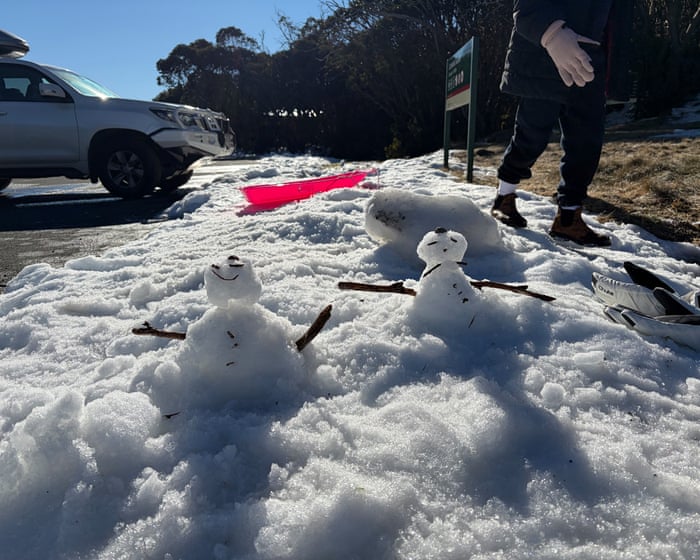
Australian ski resorts are closing their ski seasons up to a month early due to unusually warm winter weather, low snowfall, and heavy rain. Scientists say a strong El Niño and climate change have caused higher temperatures, making snow melt faster and reducing skiing conditions.
Key Facts
Seven major Australian ski resorts have closed early or will close this weekend, including Mount Buller, Mount Hotham, Falls Creek, and Charlotte Pass.
Ski resorts usually stay open until early October but are closing earlier because of warm weather and little snow.
El Niño, a Pacific Ocean weather pattern, is causing hotter and drier conditions in southeast Australia this winter.
Climate scientists report that alpine winter temperatures in Australia have risen about 2°C since the 1960s.
Higher temperatures caused precipitation to fall as rain instead of snow, which melts snowpacks quickly.
Data show some resorts experienced their warmest and wettest winters on record, with rain washing away snow.
The current El Niño is forecast to be the strongest on record and has been made more likely by climate change.
New South Wales, Tasmania, and Victoria had their hottest winters ever recorded in 2024.
Read the Original
Want the full story? Tap a source to open the original
article.
Myanmar’s leader Min Aung Hlaing is visiting Vietnam to improve relations with ASEAN countries and attract foreign investment. This visit is part of his efforts to reengage with Southeast Asian nations after years of diplomatic isolation since his military takeover in 2021.
Key Facts
Min Aung Hlaing became Myanmar’s president in April 2026 after an election criticized as favoring military control.
He is visiting Vietnam to meet with leaders and attend a business forum.
Vietnam and Myanmar have long-standing military connections, including telecom cooperation.
Economic ties between Myanmar and Vietnam have weakened, with trade dropping from $853 million in 2020 to $335 million in early 2026.
Since 2026, Min Aung Hlaing traveled to several countries including India, China, Laos, Thailand, Kazakhstan, Belarus, and Russia to seek investment.
He was isolated by ASEAN after his 2021 coup but is now making efforts to restore his position in the 11-member group.
Min Aung Hlaing was previously barred from top ASEAN meetings for not following a peace plan agreed in April 2021.
Western governments have imposed sanctions and avoided engagement with him after the military takeover.
Read the Original
Want the full story? Tap a source to open the original
article.
Fighting between Yemen’s Houthi rebels and government forces has intensified in the Taiz region, causing many families to flee their homes again. The Houthis attacked areas including Maqbanah and Jabal Habashi, leading to heavy clashes and new displacement of people who had previously escaped the conflict.
Key Facts
Abdullah Saeed and about 300 families fled fighting in 2022 and lived in al-Rahabah camp, 90 km south of Taiz.
In early June 2024, Houthi rebels launched a new offensive using missiles, drones, and ground attacks.
The Houthis advanced in Maqbanah, Mawzaa, and Jabal Habashi districts, forcing many displaced families to flee again.
Fighting between Houthis and government forces is the fiercest since 2022, with many casualties on both sides.
The conflict began in 2014 when Houthis took over much of northwest Yemen including the capital, Sanaa.
Houthis have targeted several governorates and the strategic al-Makha port to gain control of the southern Red Sea coast.
Government forces, backed by Saudi Arabia, have responded with drone strikes and counterattacks.
Rising violence may lead Saudi Arabia to renew military involvement in Yemen after four years.
Read the Original
Want the full story? Tap a source to open the original
article.
In several Indian states, young children in government schools have staged protests demanding repairs and new buildings after many schools became unsafe. These student protests follow earlier youth protests by Gen Z demanding education reforms and accountability for exam leaks.
Key Facts
In a village in Uttar Pradesh, 122 school children refused to enter classrooms until promised a new school building.
The current school building is unsafe, with parts damaged and a student seriously injured after a wall collapsed.
Similar protests have taken place in at least 10 Indian states with crumbling government school infrastructure.
These school protests follow large demonstrations earlier in the year led by Gen Z students in New Delhi.
Earlier protests focused on exam paper leaks and youth unemployment, leading to the resignation of the Education Minister.
The youth movement, called Cockroach Janata Party (CJP), uses satire to highlight education and employment issues.
The current protests show younger children (Gen Alpha) now publicly questioning authorities and demanding better education facilities.
The protests pose a challenge to Prime Minister Narendra Modi’s government in addressing youth concerns.
Read the Original
Want the full story? Tap a source to open the original
article.
Gloria Steinem, a well-known activist and writer who supported women's rights, has died at the age of 92. She was recognized for her long career advocating for gender equality.
Key Facts
Gloria Steinem was a leading figure in the women's rights movement.
She worked as a journalist and activist.
She passed away at 92 years old.
Steinem helped bring attention to issues affecting women.
Her work spanned several decades.
The news of her death was reported on September 4, 2026.
She is remembered for inspiring words and efforts promoting feminism.
Read the Original
Want the full story? Tap a source to open the original
article.
The UK government has not done enough to prepare the country's food supply for potential shocks like climate change, disease, or cyber-attacks, says the National Audit Office (NAO). The NAO urges the Department for Food, the Environment and Rural Affairs (Defra) to improve cooperation with communities and businesses to make the food system stronger and better ready for emergencies.
Key Facts
The UK's food supply faces risks from climate change, disease, and cyber-attacks.
Over one-third of the UK's food is imported, mostly through four key ports (Dover, Felixstowe, Southampton, London Gateway).
Defra has taken some steps but hasn’t done enough to help citizens and businesses prepare for food supply emergencies.
The food supply chain held up during Covid-19 and after Russia’s invasion of Ukraine, but future shocks may be harder to handle without more government support.
Food businesses say Defra’s communication has decreased since the pandemic, limiting their input on emergency plans.
Food is considered critical national infrastructure, but cold storage and food transport hubs are not yet included in this list.
The last big national test of Defra’s emergency plans was in 2023, but most supply chain businesses were not involved.
Local groups that manage emergencies say they don’t have clear guidance from the government on their roles during a food supply disruption.
Read the Original
Want the full story? Tap a source to open the original
article.
Businesses in England use large amounts of public water, with some industries consuming more than the daily water needs of 10 million people. Regulators face challenges tracking water use due to limited data access and commercial secrecy, which affects water planning during a drought affecting much of the country.
Key Facts
Businesses use about 2.6 billion litres of public water daily, around 30% of total public water supply.
Two-thirds of the water business use occurs in areas experiencing water stress or drought.
A very small number of companies use water equivalent to the daily needs of 10 million people.
Large water users include oil refineries, chemical plants, and paper mills.
ExxonMobil’s Esso refinery at Fawley, Southampton, is reported as the largest single user of public water.
Some industries are not required to reduce water use despite drought conditions.
About 10% of businesses are not metered for water use, and only 11% of meters are smart meters that provide detailed data.
Data sharing between water operators and government agencies is limited due to commercial confidentiality rules.
Regulators call for mandatory water use reporting to improve water management and security.
Read the Original
Want the full story? Tap a source to open the original
article.
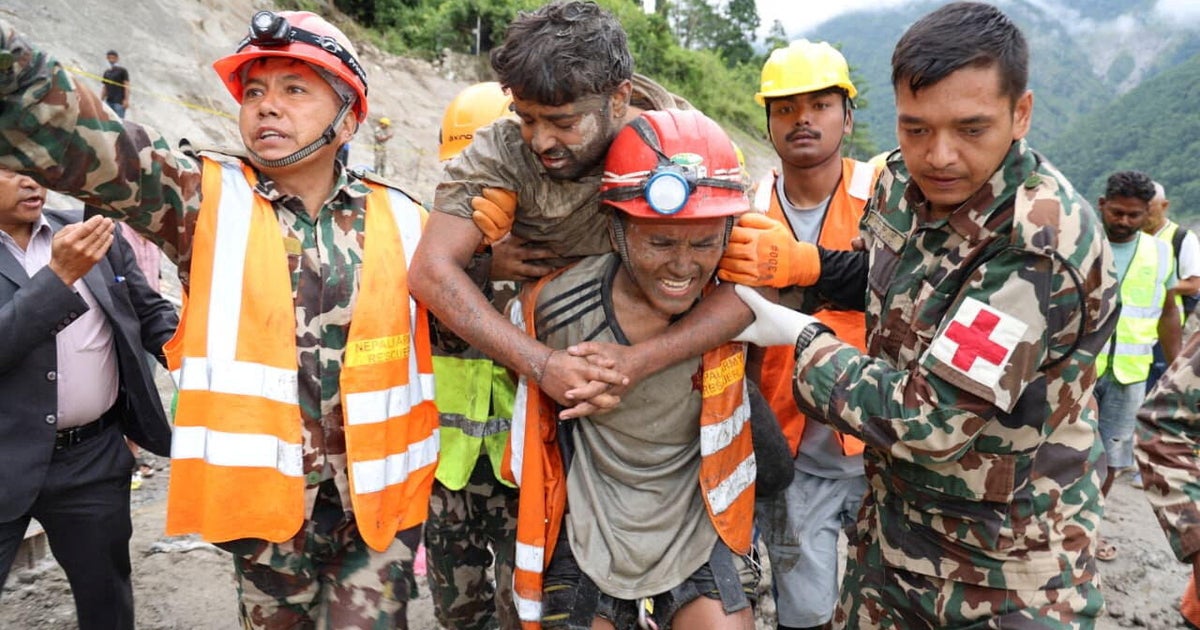
Rescuers in Nepal saved two workers from a hydropower tunnel nine days after floods caused by a glacier collapse hit the area. Around 115 workers are still believed to be trapped in the tunnel, and rescue teams continue their efforts.
Key Facts
Two workers were rescued alive from the Trishuli 3A hydropower tunnel on September 4, 2026.
The rescue happened nine days after floods and mudslides struck Nepal on August 26, likely caused by a glacier collapse.
The rescued men were a mechanical foreman and a mechanical supervisor.
At least 557 workers are missing from the Trishuli 3A hydropower project, with about 115 believed trapped inside the main tunnel.
Rescue teams heard voices inside the tunnel, confirming survivors.
Around 1,259 people were killed by the floods in Nepal, and more than 5,000 remain missing.
On the Tibetan side of the border, 21 people died, and 541 are missing.
About 900 workers are missing across 12 hydropower projects in Nepal, with roughly 500 trapped in tunnels.
Read the Original
Want the full story? Tap a source to open the original
article.
The article discusses whether people would lie about their birthday to get free gifts or deals from companies. It also highlights some common birthday freebies people can receive from businesses.
Key Facts
Some companies offer free items or discounts when it is a customer’s birthday.
People sometimes consider lying about their birthday to get these freebies.
Birthday freebies can include things like food, drinks, or small gifts.
The article explores the idea of honesty versus the temptation to get free things.
It encourages readers to think about whether it’s right to lie for a small reward.
The topic relates to personal finance and how people manage money or savings.
Read the Original
Want the full story? Tap a source to open the original
article.
Liz Masding and Mike Markham-Lee chose a dragon boat, instead of a traditional wedding car, to travel to their wedding reception on the River Deben in Woodbridge, Suffolk. After their wedding ceremony, the couple enjoyed a picnic on the boat while being paddled by Liz’s dragon boat crew.
Key Facts
Liz Masding and Mike Markham-Lee married at Shire Hall in Woodbridge, Suffolk.
They used a dragon boat to travel to their wedding reception instead of a car or carriage.
Liz Masding has been a dragon boat paddler for some time and involved her crew in the wedding plans.
The boat trip included a picnic with champagne, sandwiches, and sausage rolls.
The couple paddled along the River Deben towards Waldringfield.
Mike Markham-Lee is a metal detector enthusiast and proposed with a ring he found buried in mud.
Their honeymoon plans include taking part in a boat race on Loch Ness with an 18-person crew.
The boat ride gave them an hour of calm during an otherwise busy wedding day.
Read the Original
Want the full story? Tap a source to open the original
article.
Visitors left human waste, rotting food, and abandoned camping gear at Bannau Brycheiniog National Park in south Wales over a recent holiday weekend. The park authorities said this kind of illegal dumping, called fly-tipping, has been increasing and harms the environment.
Key Facts
Human poo, maggot-infested leftover food, and a tent with camping equipment were found dumped near Llyn y Fan Fawr in the park.
Bannau Brycheiniog National Park officials described the incident as one of the worst they have seen.
Fly-tipping means illegally dumping rubbish or waste in the countryside.
The park authority said many visitors now leave litter behind instead of taking it home, which damages the natural area.
Wildfires have recently occurred in the area, and discarded BBQs still pose a fire risk.
The Countryside Code is a set of rules encouraging people to respect nature, including not dropping litter.
Fly-tipping and littering are criminal offenses under UK law.
Park wardens have been busy cleaning up abandoned camps and rubbish during the summer.
Read the Original
Want the full story? Tap a source to open the original
article.
Dame Prue Leith, at 86, says that growing old can be freeing and less stressful than youth. She will join other authors to talk about positive aspects of aging at the Cheltenham Literature Festival on 15 October 2026.
Key Facts
Dame Prue Leith describes old age as a time when people care less about others’ opinions and feel free to be themselves.
She will be part of a discussion called "Growing Old Disgracefully" with Gyles Brandreth and Kathy Lette.
The event will take place at The Times and Sunday Times Forum during the Cheltenham Literature Festival.
Dame Prue reflects that her teenage years were stressful with family conflicts and self-doubt.
She lives happily in the Cotswolds in a house with a large garden surrounded by fields.
Dame Prue is known for her work in cooking and television, including appearing on "Bake Off."
This will not be her first appearance at the festival; she last attended in 2018.
The discussion aims to change the view that ageing is something to fear.
Read the Original
Want the full story? Tap a source to open the original
article.
Jordan, a close ally of the United States in the Middle East, has faced repeated missile and drone attacks from Iran targeting its military bases. Despite economic challenges and regional instability, Jordan remains committed to its strong security partnership with the U.S. to help protect itself against threats from Iran.
Key Facts
Jordan hosts American military forces and maintains strong security ties with the U.S.
Iran has launched hundreds of drone and missile strikes at Jordanian military bases.
Jordan’s economy is struggling due to regional conflicts, a refugee influx, high energy prices, and inflation.
Violence by Israeli settlers in the nearby West Bank is increasing tensions and causing concern in Jordan.
King Abdullah II supports maintaining close relations with the U.S. to help stabilize Jordan and the region.
Jordan is surrounded by Iraq, Saudi Arabia, Syria, Israel, and the West Bank and has over 11 million residents.
King Abdullah has built relationships with U.S. leaders from both political parties since 1999.
Regional conflicts like COVID-19 effects, the war in Ukraine, and Israeli military actions threaten wider instability.
Read the Original
Want the full story? Tap a source to open the original
article.
Spain’s Prime Minister Pedro Sánchez is trying to avoid more conflict with Morocco after a sudden increase in migrants crossing into the Spanish city of Ceuta. The situation is seen both as a domestic and international issue, with political opponents in Spain using migration as a critical topic, while outside groups spread information that makes the crisis worse.
Key Facts
A large number of migrants crossed into Ceuta, a Spanish city in North Africa, quickly and unexpectedly.
The crossings are thought to result from Morocco allowing people to pass, called "deliberate permissiveness."
Prime Minister Sánchez’s cautious reaction aims to manage relations between Spain and Morocco carefully.
Inside Spain, some political groups use the migration issue to argue it threatens the country.
Right-wing parties describe the migration as an "invasion."
Foreign groups and hostile media spread information that increases tensions and confusion.
The border situation affects both Spain’s international standing and its internal politics.
Experts see the crisis as a mixture of political strategy, international diplomacy, and media influence.
Read the Original
Want the full story? Tap a source to open the original
article.
People are going back to their villages in southern Lebanon after damage caused by Israel’s military action. Many of their homes are destroyed, and they face problems finding shelter and clean water as winter starts.
Key Facts
Residents are returning to villages in southern Lebanon.
The villages were damaged during an invasion by Israel.
Many homes in these villages are destroyed.
People have trouble finding affordable places to live.
Access to clean water is limited for these residents.
The situation worsens as winter approaches.
Read the Original
Want the full story? Tap a source to open the original
article.
Two workers trapped in a mud-blocked tunnel in Nepal after severe flooding were rescued more than a week later. Rescuers continue to search for hundreds of other missing workers in tunnels linked to hydropower projects in the Himalayan region.
Key Facts
Two hydropower workers, Sanjay Shah and Kabir Maharjan, were rescued from a tunnel blocked by mud and debris on September 4, 2026.
The tunnel was part of the Trishuli 3A hydropower project in Nepal’s Rasuwa district.
The workers were trapped during catastrophic floods caused by a rock and ice avalanche on August 26, 2026.
Kabir Maharjan cannot move his hands and legs, while Shah's injuries are not serious.
Hundreds of other hydropower workers remain missing in various tunnels in the remote Himalayan region.
Rescue teams have recovered over 1,250 bodies from the floods, with more than 5,000 people still missing.
Australian rescue expert Arnold Dix has been advising the operation and traveled to Nepal to assist on site.
Rescuers heard faint responses from inside the tunnel before the two men were saved.
Read the Original
Want the full story? Tap a source to open the original
article.
On the biggest stories we show what the outlets agree on and where they differ. Readers keep that going, and get the daily digest by email every morning. Most choose $3.99/month.
India's avocado market has grown significantly from being nearly nonexistent 15 years ago to now importing 15,000 tonnes annually, while domestic production is around 8,000–9,000 tonnes. Farmers and businesses in India are now adopting new growing techniques and international varieties to meet rising demand and reduce imports.
Key Facts
Fifteen years ago, avocados were mostly ignored in India and called "dog fruit" because fallen ripe fruit was eaten by dogs.
Indian plantations initially grew avocados as shade trees for coffee, not as a main crop.
Demand for avocados increased notably after Bollywood star Shilpa Shetty recommended them for skin care around 2011.
Cottanad Plantations in Kerala now grows avocados on 40 acres and plans to increase harvest to 40-50 tonnes in the next 3 to 4 years.
India imports about 15,000 tonnes of avocados each year, but domestic production is only 8,000–9,000 tonnes, creating a supply gap.
Changing climate has hurt traditional crops like coffee and pepper, encouraging farmers to diversify with crops like avocados.
Indian growers have learned new methods from South African experts to protect avocado roots and improve yields.
Entrepreneurs like Harshit Godha in Madhya Pradesh are introducing international avocado varieties and advanced growing technology from Israel.
Read the Original
Want the full story? Tap a source to open the original
article.
Many families in the UK are moving out of new houses that have serious problems like damp, mould, and structural faults. Complaints about these issues to the New Homes Ombudsman Service have tripled in one year, highlighting widespread concerns about the quality of new-build homes.
Key Facts
A couple, Elissa and Johnnie, had to leave their new four-bedroom home due to about 150 faults including crooked walls and poorly fitted kitchens.
Many new home buyers, renters, and social housing residents in the UK reported problems like mould, damp, and collapsing ceilings.
Complaints to the New Homes Ombudsman Service increased from fewer than 600 to over 1,800 in 2025-26.
The ombudsman service covers new homes bought outright but not shared-ownership properties.
About one-third of new homes are outside the ombudsman's voluntary scheme, including Elissa and Johnnie’s home.
The UK government plans to make the ombudsman service mandatory to ensure homes are safe and well-built.
The increase in complaints partly comes from more homeowners being eligible to use the ombudsman and greater awareness of the service.
The Building Safety Act 2022 includes plans to improve home safety and regulatory standards after past building disasters.
Read the Original
Want the full story? Tap a source to open the original
article.