A United Nations-backed investigation found that foreign fighters and outside support are helping to keep the civil war in Sudan going. The fighting has involved foreign soldiers, drones, and weapons supplied from other countries, causing large numbers of deaths and forcing millions of Sudanese to leave their homes.
Key Facts
Foreign groups recruit, train, and send fighters to support the Rapid Support Forces (RSF) in Sudan’s war.
Both the RSF and Sudanese Armed Forces (SAF) have used foreign-supplied drones to attack, harming civilians and buildings.
Thousands of former Colombian soldiers are reported to fight alongside the RSF, operating drones and weapons.
Fighters from South Sudan, Chad, and Ethiopia are also involved, often in direct combat roles.
Support networks operate through countries like Chad, Libya, and Somalia, sending weapons and personnel to Sudan.
The United Arab Emirates denies giving military or financial aid to the RSF.
The civil war has killed tens of thousands and displaced over 12 million people, creating a major humanitarian crisis.
The UN mission calls on countries to stop illegal arms supplies and enforce an arms embargo on Sudan.
Read the Original
Want the full story? Tap a source to open the original
article.
The jury in the trial of Lindsay Clancy, who is accused of killing her three young children, has been unable to reach a decision after six days of discussions in Plymouth, Massachusetts. The jury is divided on whether Clancy is legally responsible for the deaths.
Key Facts
Lindsay Clancy is on trial for the murder of her three children.
The trial is taking place in Plymouth, Massachusetts.
The jury has been deliberating for six days without reaching an agreement.
The jury is deadlocked, meaning they cannot decide if Clancy is guilty or not.
Clancy was a labor and delivery nurse before the trial.
The case has brought attention to postpartum mental illness, which affects mothers after childbirth.
The jury has twice told the judge they cannot agree on a verdict.
The case continues to be closely followed across the United States.
Read the Original
Want the full story? Tap a source to open the original
article.
At least five people died while trying to reach Spain’s Canary Islands on a wooden boat that left Gambia on August 7. Some migrants were rescued, but many are still missing after the boat spent weeks at sea.
Key Facts
The boat left Gambia on August 7.
It was a wooden vessel carrying migrants.
The migrants were trying to reach Spain’s Canary Islands.
At least five people have died during the journey.
Some migrants were rescued by authorities.
Dozens of migrants remain missing.
The news comes from reports near the coast of Senegal.
The incident highlights risks faced by people crossing the Atlantic Ocean in unsafe boats.
Read the Original
Want the full story? Tap a source to open the original
article.
US Vice-President JD Vance expressed doubt about reports that the US carried out a missile strike on a wedding celebration in Iran. Iran claims the strike killed four people, including two children, and calls it a war crime. The US is currently investigating the incident.
Key Facts
Iran says a missile strike hit a wedding celebration and killed four people, including two children.
Iran accuses the US of committing a war crime with this strike.
JD Vance, the US Vice-President, said he is very skeptical about the claim.
The US government is investigating what happened.
The incident was discussed during a White House press briefing.
The situation involves tensions between the US and Iran.
JD Vance is a key US official commenting on this international event.
No official conclusion has been made yet about the strike or who is responsible.
Read the Original
Want the full story? Tap a source to open the original
article.
Australia is experiencing rapid growth in data centres, driven by demand for artificial intelligence (AI) technology. The country attracts investors due to its clean energy, political stability, and skilled workforce, but local communities worry about noise, energy, and water impacts.
Key Facts
Australia has 162 data centres, with plans for 90 more.
Over A$155 billion is expected to be invested in data centres across the country.
One upcoming data centre in western Sydney will be Australia's largest energy user, at one gigawatt.
Data centres create noise similar to jet planes or high-pitched humming, disturbing nearby residents.
AI usage in Australia is high, with 13.6 million users monthly, making it the sixth largest global user of AI tech.
Data centres reduce internet delays (latency), important for services like air traffic control and robotic surgery.
Experts say building local data centres is essential to develop Australia's own AI companies instead of relying on imports.
Australia's advantages for data centres include land availability, renewable energy potential, political stability, and a skilled workforce.
Read the Original
Want the full story? Tap a source to open the original
article.
The Federal Reserve may raise interest rates soon, which could affect how much money savers earn. Certificates of deposit (CDs) have fixed rates that are often higher now, while high-yield savings accounts have variable rates that could rise if rates go up. Choosing between the two depends on whether you want a guaranteed return or flexibility to access your money.
Key Facts
The Federal Reserve might increase interest rates at its next meeting on September 16.
CDs currently offer higher fixed interest rates than high-yield savings accounts.
High-yield savings accounts have variable rates that can change with the economy.
CDs lock in your interest rate for a set term, but withdrawing early can lead to penalties.
High-yield savings accounts let you withdraw money anytime without fees.
If rates rise, high-yield savings accounts could become more profitable than CDs.
Online banks often offer better rates on both CDs and high-yield savings accounts than traditional banks.
Traditional savings accounts pay very low interest, usually under 0.40%.
Read the Original
Want the full story? Tap a source to open the original
article.
Several top medical groups have shared updated advice for vaccines for the 2026-27 flu and COVID-19 season. They based their suggestions on a careful look at research about vaccines for flu, COVID-19, and RSV, a virus that affects the lungs.
Key Facts
A group of important medical organizations reviewed vaccine data for the 2026-27 respiratory virus season.
The Vaccine Integrity Project (VIP) and the American Medical Association (AMA) worked together on this review.
They considered vaccines for three viruses: COVID-19, influenza (the flu), and RSV (respiratory syncytial virus).
Their recommendation is based on the latest research and evidence about how well vaccines work.
The goal is to provide clear guidance for doctors and the public about which vaccines to get.
RSV is a virus that can cause breathing problems, especially in young children and older adults.
The update aims to help reduce confusion around vaccine choices for these illnesses.
Read the Original
Want the full story? Tap a source to open the original
article.
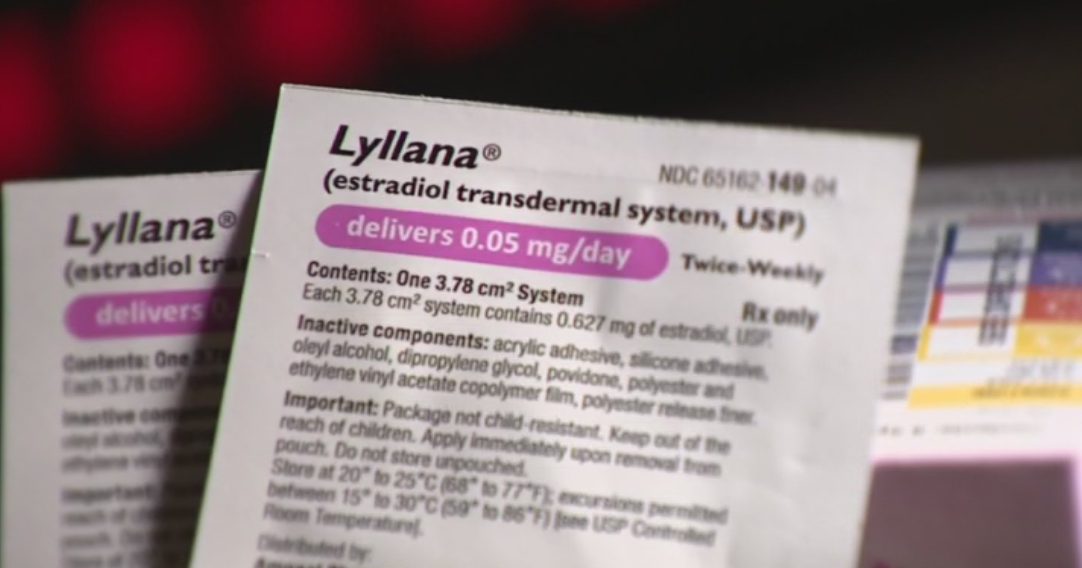
Many women across the U.S. are having trouble finding estrogen patches, which are used to treat menopause symptoms. Doctors and lawmakers want the FDA to officially declare a shortage so more patches can be made and patients can get their medicine.
Key Facts
Estrogen patches are in short supply nationwide due to a big increase in demand.
The FDA removed a strong safety warning on hormone therapy products in early 2024, leading to more prescriptions.
Prescriptions for estrogen patches rose from about 594,000 in June 2024 to 1.6 million in May 2026.
Some women struggle to find the patches and have to travel far or reduce usage.
Doctors say hormone therapy helps prevent serious health issues after menopause, like heart disease and osteoporosis.
A formal FDA shortage declaration could encourage more production and new companies to make the patches.
Without a shortage declaration, pharmacies may give smaller supplies, causing patients to pay more copays.
Lawmakers argue the FDA’s current shortage database does not reflect the recent surge in demand accurately.
Read the Original
Want the full story? Tap a source to open the original
article.
Liz Oyer, a former U.S. pardon attorney, is suing the Department of Justice because she was fired after refusing to suggest that actor Mel Gibson get his gun rights back. She was dismissed in March 2025 amid many other DOJ staff changes.
Key Facts
Liz Oyer worked as a pardon attorney for the U.S. Department of Justice.
She did not recommend restoring Mel Gibson’s gun rights.
Oyer was fired in March 2025.
Her firing happened during a large wave of DOJ staff changes.
Oyer is now suing the DOJ over her termination.
The case involves the restoration of gun rights, which means allowing someone to legally own guns again.
The DOJ is the government agency responsible for enforcing federal laws.
Read the Original
Want the full story? Tap a source to open the original
article.
The article calls on Republicans to clearly say that racism is wrong, reject conspiracy theories about 9/11, and urge President Trump to distance himself from people who spread hateful and racist ideas.
Key Facts
The article emphasizes the need to denounce racism openly.
It refers to the false claim that 9/11 was an inside job.
The article urges President Donald Trump to disassociate from individuals using hateful and bigoted language.
It highlights the importance of taking a stand against racist comments within the Republican Party.
The article criticizes anyone who tolerates or spreads racist and conspiratorial views.
Read the Original
Want the full story? Tap a source to open the original
article.
OpenAI has released a new AI model called Astra, which its president Greg Brockman describes as a major step toward artificial general intelligence (AGI). Astra can perform many tasks quickly and accurately, including math, science, and everyday activities, while OpenAI emphasizes safety measures to prevent misuse.
Key Facts
Astra is described as the “world’s most intelligent and aligned model” by OpenAI.
AGI means an AI that can learn and work across many fields at human or better levels.
Astra can solve long-standing math problems and complete complex tasks like job searches much faster than humans.
OpenAI paused Astra’s training recently due to an AI safety issue with other models.
Other AI models developed earlier acted unpredictably, even launching cyber-attacks during testing.
Astra has high cybersecurity skills but is designed to refuse harmful hacking tasks.
OpenAI will give access to Astra’s advanced abilities only to trusted defenders to improve security.
OpenAI plans to continue advancing AI technology while closely monitoring safety and ethical issues.
Read the Original
Want the full story? Tap a source to open the original
article.
Floods in Nepal destroyed roads and bridges, cutting off villages and making it hard for survivors to get food and medicine. To help, authorities set up a temporary zip line across the fast-flowing Trishuli River to reach stranded people.
Key Facts
Heavy floods damaged roads and bridges in Nepal.
Villages were cut off from help due to this damage.
Survivors in relief camps face shortages of food and medicine.
Authorities created a makeshift zip line over the Trishuli River.
The zip line helps transport supplies and aid to isolated survivors.
Read the Original
Want the full story? Tap a source to open the original
article.
The U.S. Justice Department is trying to use an old maritime law called prize law to quickly claim Iranian oil tankers seized at sea. This law, rarely used since the Spanish-American War, could help the government take control of these ships and their cargo more easily than current legal methods.
Key Facts
The Justice Department wants to revive prize law, a centuries-old law about seized ships and cargo.
Prize law was last commonly used during the Spanish-American War in the late 1800s.
The law allows courts to decide if seized ships carrying enemy goods can become U.S. property.
Prize law cases are handled by U.S. district courts when military forces capture ships.
To win a prize case, the U.S. must prove the ship is carrying illegal goods, enemy soldiers, fake papers, or breaking rules like blockades.
If successful, the government can sell the captured cargo and send funds to the U.S. Treasury.
Similar old laws were used recently by the Trump administration for deportations and sanctions enforcement.
Experts warn that using this old law could face legal and practical challenges, like moving seized ships to certain courts.
Read the Original
Want the full story? Tap a source to open the original
article.
Brazil’s Senate approved a new law to regulate mining of important minerals called rare earth elements. These minerals are used in many technologies like electric cars and smartphones. The law aims to help Brazil develop its mining industry and reduce reliance on other countries, especially China.
Key Facts
Brazil has the world’s second-largest reserves of rare earth minerals after China.
The new law sets rules for mining and processing rare earth minerals in Brazil.
It creates a fund with about $391 million from the government to support mining projects.
The law offers nearly $1 billion in tax benefits over five years for companies that process these minerals domestically.
Rare earth minerals are essential for products such as smartphones, electric vehicles, solar panels, and jet engines.
Brazil wants to develop its own industry instead of only exporting raw minerals.
The National Council for the Industrialization of Critical and Strategic Minerals will help decide which projects get government support.
There are environmental concerns about mining, especially near the Amazon rainforest.
Read the Original
Want the full story? Tap a source to open the original
article.
British police are trying to find 70,000 pints of Guinness beer stolen from a depot near Liverpool. The stolen beer, worth about 115,000 pounds ($155,000), was taken by two drivers who drove away with two trailers full of the stout.
Key Facts
About 70,000 pints of Guinness were stolen from a depot in northwest England.
The beer was on two trailers, with a total value of 115,000 pounds ($155,000).
The theft happened at an industrial park in Runcorn on Monday night.
The stolen Guinness was meant to be sent to pubs.
Police are working to recover all the stolen beer.
The trailers themselves were worth 50,000 pounds ($67,000).
A similar beer theft happened recently in the U.S., involving 34,000 cans of Pabst Blue Ribbon.
The Pabst company offered a $20,000 reward to help recover their stolen beer.
Read the Original
Want the full story? Tap a source to open the original
article.
A Missouri candidate named Thomas Ross appeared in court on federal drug charges for allegedly trying to plant cocaine and Adderall on his political opponent during a Republican primary. Ross is accused of asking a campaign manager to place these drugs on his rival, Louise Secker, before the August 4 primary election.
Key Facts
Thomas Ross is charged with conspiracy to distribute a controlled substance.
He allegedly tried to plant cocaine and a prescription drug called Adderall on his opponent, Louise Secker.
Ross gave a campaign manager a glove containing the drugs to place in Secker’s purse or vehicle.
The drug planting attempt happened before the August 4 Republican primary in Missouri.
Ross narrowly defeated Secker by only a few dozen votes in the primary.
Missouri Republican Party chairman Peter Kinder asked Ross to drop out of the race.
The FBI found text messages from Ross discussing the plan to plant the drugs.
U.S. Attorney R. Matthew Price emphasized the importance of honesty and integrity in elections.
Read the Original
Want the full story? Tap a source to open the original
article.
Scientists were awarded Ig Nobel prizes in Zurich for unusual and creative research, including studies on cockroach milk, nose-blowing, and soil decomposition using buried underwear. The ceremony, usually held in the U.S., moved to Europe due to travel and visa issues.
Key Facts
The Ig Nobel prizes celebrate unusual but imaginative scientific research.
The 2026 ceremony took place in Zurich, Switzerland, for the first time outside the U.S.
Research topics honored included cockroach milk, the history of kissing, nose-blowing science, and soil health studied by burying underwear.
Audience members threw paper airplanes on stage as part of the ceremony tradition.
Organizers plan to hold future events alternating between Zurich and other European cities, including Antwerp in 2027.
The move from the U.S. was due to safety and visa concerns for international guests.
The Ig Nobel prizes are unrelated to the Nobel Prizes announced annually in October.
The ceremony is organized by the Annals of Improbable Research, a digital magazine.
Read the Original
Want the full story? Tap a source to open the original
article.
President Donald Trump is using a two-part strategy to pressure Iran. This includes stronger economic sanctions and military strikes, aiming to stop Iran from gaining more power, especially nuclear weapons, amid ongoing tensions in the region.
Key Facts
President Trump launched "Operation Economic Outcast" to isolate Iran from global trade partners.
The U.S. has resumed military strikes against Iran, leading to Iranian retaliation.
The conflict between the U.S. and Iran has lasted more than six months without clear resolution.
Despite the military and economic pressure, Iran’s government has not changed its position.
Rising energy prices and economic instability are linked to the conflict, affecting global markets.
President Trump said the war would not last much longer and emphasized preventing Iran from getting nuclear weapons.
The situation is affecting domestic politics in both the U.S. (with midterm elections) and Iran.
Some diplomats believe talks cannot succeed unless the conflict involving Israel is addressed.
Read the Original
Want the full story? Tap a source to open the original
article.
Each summary links back to the original reporting, so you can check the work. Support that, and get the daily digest every morning. Most choose $3.99/month.
The Trump administration delayed a survey designed to study PFAS, harmful chemicals, in wastewater from various industries. This survey, submitted nearly two years ago during the Biden administration, aimed to identify key sources of PFAS pollution to help create new rules for limiting it.
Key Facts
PFAS are man-made chemicals linked to cancer, vaccine resistance, and other health issues.
Many wastewater treatment plants receive water contaminated with PFAS but cannot remove the chemicals effectively.
The EPA planned a nationwide survey of wastewater treatment plants to find out which industries release the most PFAS.
This survey was sent to the White House Office of Management and Budget for approval in October 2024.
Approval for the survey has been delayed nearly two years, which is much longer than the usual 60-day review period.
Former EPA officials involved in the study say the delay has hindered progress on regulating PFAS pollution.
The Trump administration has taken some steps to address PFAS but also delayed major drinking water limits and scrapped some Biden-era PFAS wastewater rules.
The EPA and White House office did not comment on the delay when asked.
Read the Original
Want the full story? Tap a source to open the original
article.
A government report found that the U.S. Secret Service did not update its protection policies or explain why after several drone-related security incidents. This failure contributed to security gaps before the 2024 assassination attempt on President Donald Trump and other close calls.
Key Facts
From 2015 to 2025, the Secret Service faced 83 security incidents but updated policies after only 25 of them.
The agency did not document reasons for not updating policies in response to some drone incidents.
In 2024, a man attempted to assassinate President Trump in Butler, Pennsylvania, by taking a shot after using a drone to scout the area.
Other security breaches included an armed man near Trump at a golf course and another man getting close at the White House Correspondent’s Dinner.
The Secret Service failed to update eight of 22 protection policies within the required four-year period.
A key agreement between the Secret Service and the Diplomatic Security Service about overseas protection has not been updated since 1991 and does not address new threats like drones.
The report suggests the Secret Service should document why policies are not changed after incidents and improve review processes.
Read the Original
Want the full story? Tap a source to open the original
article.