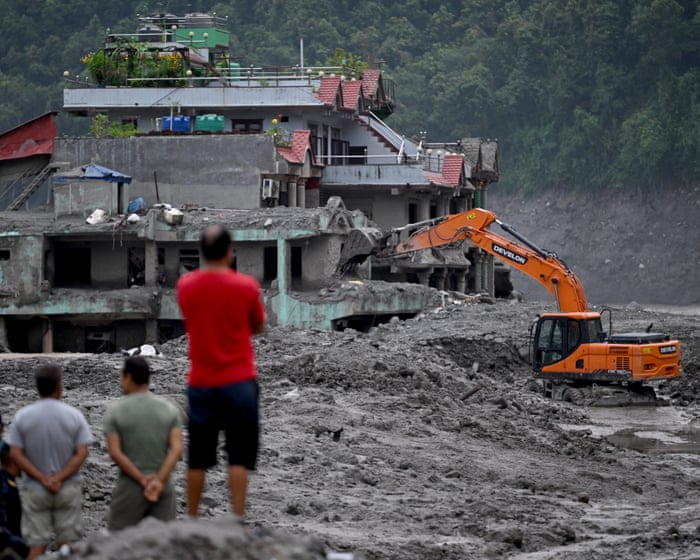
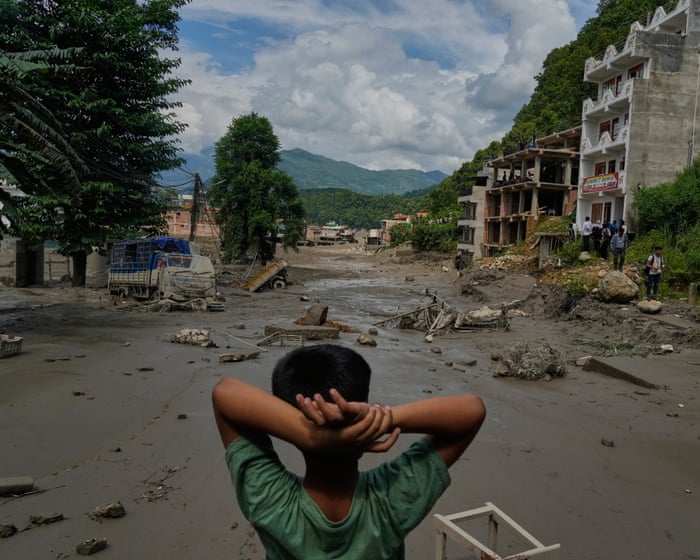
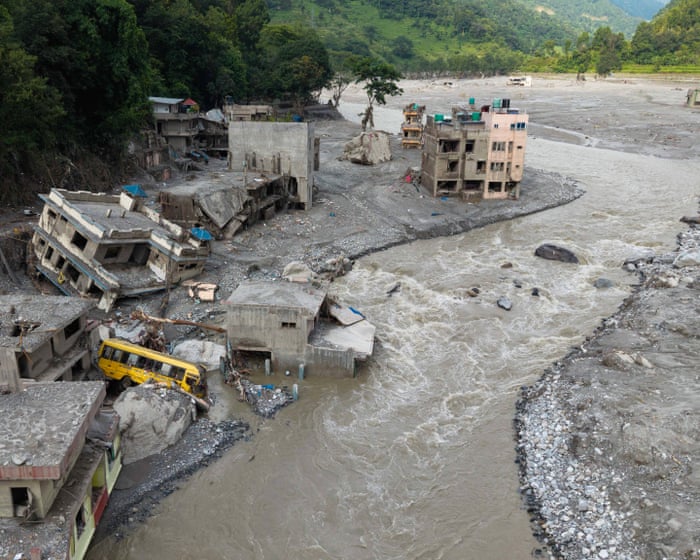
After major floods in Nepal and Tibet caused by a glacier collapse, 43 Australians are missing and more than 810 people have died. Some social media users made racist comments about the missing Australians, leading news outlets to limit who can comment and call for better control of hateful messages online.
Key Facts
A glacier collapse in the Himalayas caused flash floods in Nepal and Tibet.
At least 810 people have died, and 43 Australians are reported missing.
Many missing Australians were on religious pilgrimages, including to Mount Kailash.
Some social media users posted racist and hateful comments about the missing Australians.
News outlets like Guardian Australia restricted comments to reduce racist replies.
The Daily Telegraph deleted racist comments and closed comment threads on sensitive posts.
Experts say social media platforms have the technology to better detect and remove hate speech.
Officials call for stronger rules to make social media platforms responsible for controlling online hate.
Read the Original
Want the full story? Tap a source to open the original
article.
U.S. Central Command (CENTCOM) carried out strikes on Iranian forces in the Strait of Hormuz, targeting groups involved in laying sea mines that threatened civilian ships and global trade. These actions come amid ongoing conflict and negotiations between the U.S. and Iran following President Donald Trump's announcement of major military operations earlier.
Key Facts
CENTCOM attacked Iranian "minelaying forces" in the Strait of Hormuz to stop an imminent threat to civilian and commercial shipping.
The strikes were described as limited and precise, aimed at protecting global commerce routes.
The U.S. also targeted two Iranian rocket launch sites on Larak Island, a key location near the Strait of Hormuz.
Iran's Islamic Revolutionary Guard Corps (IRGC) warned that it would respond and punish the U.S. for the attacks.
Jordan intercepted and destroyed eight missiles launched over its airspace following the conflict escalation.
President Donald Trump announced wide-ranging U.S. and Israeli strikes on Iran earlier in the year to target military and infrastructure sites.
Despite talks between U.S. and Iranian delegations in June to end the war, strikes and tensions have continued, especially around the Strait of Hormuz.
The Strait of Hormuz is a critical waterway for international shipping and global commerce.
Read the Original
Want the full story? Tap a source to open the original
article.
Lee Man-hee, leader of the secretive Shincheonji Church in South Korea, was arrested for allegedly trying to influence elections by recruiting followers into the conservative People Power Party. Authorities are investigating ties between religious groups and politicians as part of wider probes under the current government.
Key Facts
Lee Man-hee is the 95-year-old founder and leader of the Shincheonji Church.
The church claims about 200,000 followers.
Lee is accused of pushing over 50,000 church members to join the conservative People Power Party from 2021 to 2024.
The goal was to influence party primaries and support former President Yoon Suk Yeol’s bid.
Investigators believe the church sought favors like permits to expand its facilities in return.
Lee was arrested because he was seen as a risk to destroy evidence.
The arrest is part of a broader inquiry into ties between religious groups (including the Unification Church) and politicians.
This investigation follows the removal and prosecution of former President Yoon, who was convicted for rebellion and other charges after imposing martial law in 2024.
Read the Original
Want the full story? Tap a source to open the original
article.
A court in Seoul, South Korea, sentenced Hak Ja Han, leader of the Unification Church, to two years in prison for corruption. She was found guilty of bribery, embezzlement, and destroying evidence related to her gambling activities.
Key Facts
Hak Ja Han is the leader of the Unification Church and widow of its founder, Sun Myung Moon.
The Seoul Central District Court sentenced her to two years in prison on August 31, 2026.
Charges include bribing the wife of former conservative President Yoon Suk Yeol and a close politician.
She was also charged with stealing church funds and destroying evidence in the U.S.
Former first lady Kim Keon Hee received a prison sentence for accepting luxury gifts from the church linked to political favors.
Kim Keon Hee’s sentence was increased to four years after additional charges.
Former President Yoon Suk Yeol was impeached and removed from office following these controversies in late 2024.
Read the Original
Want the full story? Tap a source to open the original
article.
A train traveling from Southport to Manchester hit a delivery van at a crossing in Burscough, West Lancashire, killing the van driver. The crossing has been identified as having a high safety risk, and investigations by Network Rail, British Transport Police, and the Rail Accident Investigation Board are ongoing.
Key Facts
The crash happened on Saturday around 3:00 pm at a crossing on Martin Lane and Whitehouse Lane in Burscough.
A supermarket delivery van collided with a Northern train traveling toward Burscough town center.
The crossing is a "user-worked crossing" where people open and close gates themselves; it has warning lights and sounds.
Locals say the gate is often left open, and the crossing is used increasingly by delivery drivers.
The crossing’s risk rating is B4, meaning it has "high individual risk" and "very high collective risk."
The hedge by Martin Lane may block clear views of approaching trains.
Passengers, including a woman with small children, were safely helped off the train after the crash.
The railway line remains closed while investigations continue with help from Network Rail, British Transport Police, and the Rail Accident Investigation Branch.
Read the Original
Want the full story? Tap a source to open the original
article.
An NHS watchdog in England warns that AI software used to write down what happens during doctor visits can make serious mistakes, like confusing drug names or illnesses. These errors could harm patients if not spotted, and there is currently little regulation to ensure the AI tools are safe and reliable.
Key Facts
AI scribes listen to patient-doctor talks and create written summaries.
The technology sometimes records wrong drug names or diagnoses, causing patient distress.
One case involved a wrong diagnosis of nerve damage called demyelination.
Patients often find these AI errors before doctors do.
The NHS plans to use AI scribes widely to reduce paperwork for doctors.
The Medicines and Healthcare products Regulatory Agency does not classify AI scribes as medical devices, so no strict controls apply.
Doctors must carefully check AI notes for mistakes, which reduces the expected time saved.
Some AI tools can misunderstand accents or invent details ("hallucinations"), leading to wrong information.
Read the Original
Want the full story? Tap a source to open the original
article.
The German TV series Babylon Berlin, set in the 1920s Weimar Republic, ends with Adolf Hitler's rise to power just as Germany faces current political challenges from far-right parties. The show’s creators say the timing is a coincidence but note parallels between the past and present political climate in Germany.
Key Facts
Babylon Berlin is a popular TV drama about 1920s Germany’s democracy and culture.
The series is concluding with its fifth season, showing Hitler becoming chancellor.
The final season’s release coincides with important state elections in Germany.
The far-right party Alternative für Deutschland (AfD) is leading polls and may win majorities in upcoming elections.
The show’s storyline echoes some present-day political tensions in Germany.
Some filming locations overlapped with real political events involving far-right groups.
Babylon Berlin is based on novels by Volker Kutscher and has helped raise the profile of European TV drama.
Experts say creating such a large-scale show was a significant effort in German television history.
Read the Original
Want the full story? Tap a source to open the original
article.
The Bank of England’s governor, Andrew Bailey, warned that advanced artificial intelligence (AI) could threaten the stability of the global financial system by increasing cyber risks. He called for international cooperation to manage the release and use of advanced AI models to protect financial markets.
Key Facts
Andrew Bailey, governor of the Bank of England and chair of the Financial Stability Board (FSB), sent a letter warning about risks from advanced AI.
Advanced AI models are becoming more autonomous and capable, which raises concerns about their use in cyberattacks that could disrupt global finance.
Many countries lack rules to safely manage the development and deployment of these advanced AI systems.
Bailey cautioned that cyber risks from AI could spread rapidly across borders and harm market confidence.
AI-driven optimism has pushed up financial market values, increasing risks if there is a sudden market correction.
Bailey urged international financial authorities to work together to ensure safe and responsible AI use.
The FSB coordinates global financial regulators to address risks to the financial system.
Concerns about AI risks echo those raised by researchers at leading AI labs who called for government action to manage AI development.
Read the Original
Want the full story? Tap a source to open the original
article.
Heavy flooding caused by a collapsing glacier in the Himalayan region has killed at least 903 people in Nepal and 16 in Tibet, with thousands more missing. Rescue teams from Nepal and other countries are searching for survivors, including about 90 people trapped inside hydropower tunnels.
Key Facts
A glacier collapse triggered the flooding on August 28, 2026, causing a big landslide and river swelling.
The flooding destroyed buildings, bridges, and roads in Nepal and Tibet near the Himalayas.
Nepal’s death toll is 903, with 4,247 people missing, including 592 foreigners.
Tibet reported 16 deaths and 546 missing, including many foreigners and Nepalese.
About 90 people remain trapped inside tunnels at hydropower plants.
Rescue operations have been ongoing for four days with help from foreign teams.
The glacier collapse caused a seismic event measuring magnitude 5.2.
A major highway in Nepal was washed away, cutting off some districts from neighboring areas.
Read the Original
Want the full story? Tap a source to open the original
article.
An election in eastern Germany’s Saxony-Anhalt state could result in the country’s first far-right governor since World War II. The anti-immigration party Alternative for Germany (AfD) is leading in polls, challenging Chancellor Friedrich Merz’s ruling Christian Democratic Union in a region with economic difficulties.
Key Facts
The election takes place in Saxony-Anhalt, a state in eastern Germany with about 2.1 million people.
The AfD party, known for opposing migration, is leading in polls for this state’s upcoming vote.
If AfD wins, it would be the first time a far-right party governs a German state in modern history.
Chancellor Friedrich Merz and his Christian Democratic Union have led Saxony-Anhalt since 2002.
AfD became Germany’s largest opposition party in last year’s national election with 20.8% of the vote.
The AfD’s strength is particularly notable in eastern Germany, which includes former communist regions.
Experts say an AfD win would break a long-standing taboo in German politics.
The election result may reflect public dissatisfaction with Merz’s national government.
Read the Original
Want the full story? Tap a source to open the original
article.
Charles Perrottet, brother of former New South Wales premier Dominic Perrottet, told the anti-corruption body Icac that he lied to a property developer, Jean Nassif, to keep him cooperating. Perrottet said he made up political updates and misled Nassif about his involvement in lobbying work while denying that payments received were illegal political donations.
Key Facts
Charles Perrottet admitted to lying to property developer Jean Nassif to maintain a good relationship.
Perrottet said he provided false political updates to encourage payments to a lobbying company called Beckington.
Perrottet denied that payments from Nassif were illegal political donations.
The payments were linked to services for Nassif’s company, Toplace, involving lobbying activities.
A message from Perrottet mentioned a scheme called the "money train," referring to ways to get around laws banning developer donations.
Perrottet denied trying to benefit from the same arrangement he accused others of using.
Nassif fled Australia in 2022 and is expected to testify to Icac via video from Lebanon.
Dominic Perrottet is not accused of any wrongdoing in this case.
Read the Original
Want the full story? Tap a source to open the original
article.
Police in New South Wales found the body of a newborn baby boy in a rubbish bin in Auburn, Sydney. They are searching for the baby’s mother, who they say needs urgent medical care.
Key Facts
The baby’s body was found on Monday morning at 11:20 am in a rubbish bin on Harrow Road, Auburn.
Emergency services and police officers responded quickly to the scene.
A crime scene has been set up, and detectives have started investigating.
Police are very worried about the health and safety of the baby’s mother.
The mother is urged to go to the nearest hospital for urgent care.
Authorities are asking the public for any information or video footage that could help.
People can contact Auburn police station or Crime Stoppers at 1800 333 000.
Police planned to hold a press conference later the same day at 4 pm AEST.
Read the Original
Want the full story? Tap a source to open the original
article.
That's the point of this site, and readers keep it that way. Support for any amount and the daily digest lands in your inbox every morning at 7am Eastern.
Nepal is burying hundreds of people killed by a huge flood that hit the Himalayan border with Tibet. The flood has killed over 900 people, and thousands, including many workers at hydropower plants, are still missing in Nepal and China.
Key Facts
Over 900 people have died in flooding along the Nepal-Tibet border.
Authorities are searching for more than 4,000 missing people in the area.
Among the missing are 933 workers from hydropower plants in Nepal.
Chinese officials reported 16 deaths and 546 people missing due to the floods.
The disaster started after a glacier collapsed high in the Himalayas, causing a massive flood.
The flood carried ice, rocks, and debris, destroying villages and sweeping people away.
Rescue efforts are ongoing but are slowed by bad weather and flooding.
Some of the missing people are foreigners, including many Nepalis working abroad.
Read the Original
Want the full story? Tap a source to open the original
article.
Over the weekend, severe flash floods caused by a collapsing glacier in the Himalayas struck villages in Nepal and Tibet, killing at least 903 people and leaving more than 4,000 missing. Rescue teams are working to save survivors trapped by mud and debris, while experts warn such disasters may become more frequent due to climate change and melting glaciers.
Key Facts
A large piece of glacier ice broke off in the Himalayas on Wednesday morning, triggering an avalanche of ice and rock.
The avalanche caused flash floods that destroyed villages and infrastructure near the Nepal-Tibet border.
At least 903 people have died, and over 4,000 are reported missing from the disaster.
Many survivors remain stranded on rooftops or trapped underground where rescuers cannot easily reach them.
Early satellite images were unclear due to dust, initially leading scientists to suspect an earthquake instead of glacier collapse.
The Nepali army is leading rescue operations, clearing roads and searching for survivors.
This disaster highlights risks linked to climate change, including faster glacier melting and increased flooding.
A headteacher saved 900 children by evacuating them just before the flood hit their town.
Read the Original
Want the full story? Tap a source to open the original
article.
The long-running Scottish TV show River City is ending after 24 years, with its final episode airing soon. The show’s writer and cast shared thoughts about the finale, which features intense scenes including a fire and focuses on a key villain, Lenny Murdoch.
Key Facts
River City has been on air for 24 years and is now ending.
Johnny McKnight, a writer for the show for nearly 10 years, wrote the final episode.
The last episode will include dramatic moments like a fire and show the villain Lenny Murdoch, played by Frank Gallagher.
The show is known for mixing drama with humor, representing Scottish life.
Grant Stott, who played Sam Spiller, joined River City despite limited TV drama experience.
Jenny Hulse, who has played Amber for 10 years, highlighted the show’s fast filming pace and strong production schedule.
River City has served as a training ground for many TV industry professionals, including actors, writers, and crew.
Some cast members have moved on to directing and writing within the show, showing its role in developing talent.
Read the Original
Want the full story? Tap a source to open the original
article.
A new report says coral reefs are bleaching more often and cannot recover before the next event. Coral cover worldwide has dropped sharply and could suffer permanent damage if current trends continue.
Key Facts
Coral bleaching happens when corals lose algae that give them color and food.
Bleached corals are not dead but need cooler water and time to recover.
The frequency of coral bleaching events has roughly doubled recently.
Coral reefs stayed mostly stable for 40 years until about 2010, then declined steeply.
In 2023, coral bleaching affected 77% of coral reef areas globally, the worst on record.
Scientists warn that another major bleaching event is very likely this year due to warm ocean temperatures.
Coral reefs cover less than 1% of the ocean floor but support over 25% of marine life.
The Pacific Islands Forum, which discusses climate and ocean issues, is seeing reduced attendance by some member leaders.
Read the Original
Want the full story? Tap a source to open the original
article.
Bathla Group, a big property developer in Sydney, is at risk of shutting down by the end of the week unless it finds new funding. The company went into voluntary administration on August 25, leaving many customers with unfinished homes and staff unpaid for weeks.
Key Facts
Bathla Group is a Sydney-based construction company with about 350 head office staff.
The company entered voluntary administration on August 25, taken over by insolvency firm Teneo.
Staff have not been paid for up to eight weeks, and the company has no cash to pay wages or suppliers.
Teneo needs to secure additional funding soon or will have to close the business by the end of the week.
Thousands of customers are waiting for their homes, with 45 projects currently under construction.
Bathla has around 20,000 apartments and 7,000 houses planned across various projects.
The New South Wales government declined a financial rescue request from Bathla.
Teneo plans to prioritize ongoing projects and may reduce staff if the company continues.
A meeting with potential lenders is scheduled to decide Bathla’s future by Friday.
Read the Original
Want the full story? Tap a source to open the original
article.
Russian missile strikes have destroyed large parts of Ukraine's book printing and cultural sites ahead of the new school year. Around 12 million books have been destroyed, and important cultural heritage sites, including the Kyiv-Pechersk Lavra monastery, have been damaged.
Key Facts
Russian attacks hit printing presses and publishing houses across Ukraine.
12 million books were destroyed, which is about one third of Ukraine's printed books this year.
A Kyiv printing press that supplied 10% of schoolbooks was completely destroyed.
Kyiv's Pochaina second-hand book market was also damaged, losing many books.
Cultural sites like museums, art galleries, and opera houses have been hit.
The Kyiv-Pechersk Lavra monastery suffered roof damage from a drone attack.
Repairs to the monastery’s roof are expected to cost $11.2 million and take two years.
UNESCO condemned the attacks and listed the monastery as a world heritage site in danger.
Read the Original
Want the full story? Tap a source to open the original
article.
There are no ads, so there is no reason to bait you. Readers who chip in keep it that way. Most choose $3.99/month, and get the daily digest every morning.
Climate change is affecting the world unevenly, with wealthier countries better able to handle extreme events like wildfires, while poorer countries experience greater damage and loss. Recent disasters, such as deadly floods in Nepal and heat waves in India, highlight the growing challenges faced by vulnerable communities with fewer resources.
Key Facts
Nepal experienced severe floods that killed over 750 people, with thousands still missing.
The cost to rebuild Nepal’s flood damage could be about $5 billion, around one-tenth of its economy.
European countries like France and the UK have provided financial aid and support to help communities recover from wildfires.
Wealthier countries use advanced technology, like AI-powered wildfire insurance, to manage climate risks.
Coral reef destruction impacts coastal economies, such as Jamaica, by reducing marine life and increasing storm damage.
Warmer temperatures cause more frequent and deadly heat waves, for example in India, where thousands of heat-related deaths were recorded recently.
Poorer regions face greater climate risks due to limited access to shelter, cooling, and fresh water.
These vulnerable areas, called “climate hotspots,” combine strong climate effects with poverty and limited resources.
Read the Original
Want the full story? Tap a source to open the original
article.
The NHS in England will offer free, quick cholesterol tests at pharmacies to help reduce heart disease and stroke deaths. People aged 40 to 84 can get a finger-prick blood test, receive advice, and get treatment if needed, aiming to catch health risks early.
Key Facts
The tests take about seven minutes and will be available at participating pharmacies.
People aged 40-84 who have not had a blood test in the past year can walk in to get tested.
The test uses a lancet to take a small blood sample from the fingertip and gives immediate analysis.
Pharmacists can offer lifestyle advice and prescribe treatments like statins if needed.
Patients receive their test results by email and can also get a blood pressure check.
The program began after a successful pilot in north London where 19% of patients tested were at high risk of heart attack or stroke.
About 100 NHS pharmacies will start offering the tests from autumn in the first phase of the national rollout.
The goal is to reduce heart disease and stroke deaths by 25% over the next ten years.
Read the Original
Want the full story? Tap a source to open the original
article.