Royal Navy warships and a helicopter tracked Russian Navy vessels and cargo ships for three days in UK waters, including the North Sea and English Channel. This operation aimed to monitor Russian movements closely and has caused delays and extra costs for Russian ships.
Key Facts
Royal Navy ships HMS Duncan, HMS St Albans, and HMS Severn tracked four Russian vessels last week.
A Merlin helicopter helped by watching from the air.
The Russian destroyer Admiral Levchenko escorted two sanctioned cargo ships called General Skobelev and Sparta.
Russia responded by sending more military ships, including the frigate Neustrashimy.
A NATO ally took over monitoring after the ships moved off the coast of France.
In June, Royal Marines and UK agencies boarded a Russian oil tanker in the English Channel during a six-hour operation.
The UK has sanctioned over 500 vessels linked to Russia’s “shadow fleet.”
Royal Navy activity to watch Russian ships increased by 25% compared to last year.
Read the Original
Want the full story? Tap a source to open the original
article.
A minibus carrying church members crashed head-on with a truck in central Zimbabwe, killing at least 27 people. The crash happened near Chivhu, about 140 km south of Harare, as the truck tried to overtake another vehicle.
Key Facts
At least 27 people died in the crash involving a minibus and a haulage truck in Zimbabwe.
The accident occurred near Chivhu, 140 km south of the capital city Harare.
The truck was attempting to pass another vehicle when it collided with the minibus.
The minibus was carrying members of a Christian church heading to a conference.
23 people died at the scene; others died later in hospital.
Zimbabwe’s roads often have many potholes due to underfunding and poor maintenance.
Many people use privately run minibus taxis called kombis, which are often overloaded.
Recent months have seen several deadly minibus accidents in Zimbabwe, including one in April that killed 18 people.
Read the Original
Want the full story? Tap a source to open the original
article.
A Russian drone struck a warehouse near Kyiv, Ukraine, killing at least 37 people and injuring 42 others. The attack caused large fires, damaged many homes including a care facility, and led to evacuations in the area.
Key Facts
The drone hit a warehouse thought to store explosive items in the Bucha district near Kyiv.
At least 37 people died and 42 were injured, including four children.
Over 370 people have been evacuated from the affected area.
The warehouse strike triggered fires and explosions, damaging at least 50 residential buildings.
Ukrainian authorities said storing ammunition near homes broke safety rules and opened criminal investigations.
A previous deadly strike on a munitions depot near Kyiv killed 22 people, with similar safety failures found.
Russia’s defense ministry claimed it targeted a warehouse storing drone parts and also attacked sites in Mykolaiv, Izmail, and the Kyiv region.
Russian attacks elsewhere in southern Ukraine killed two people and injured 27, including a child.
Read the Original
Want the full story? Tap a source to open the original
article.
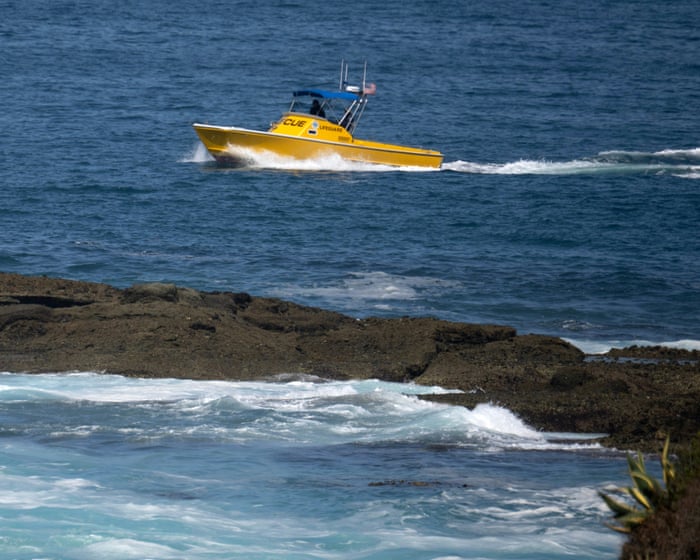
US officials are warning swimmers to be careful during a heatwave as drowning deaths have increased in recent months. Experts remind people that water temperature and conditions can be dangerous, and they advise following safety rules like wearing life jackets and avoiding risky rescues.
Key Facts
Drowning deaths rise each year from April to September in the US.
In June, two college students died in California after being swept away by waves.
Two brothers also died recently in the Trinity River, a popular rafting spot in California.
A bodysurfer and a five-year-old girl both died at Laguna Beach this summer.
Water temperatures below 70°F can cause cold shock, making swimming difficult.
Conditions such as tides, swells, and rip currents change quickly and may not look dangerous.
Officials advise knowing water conditions, wearing life jackets, and not trying to rescue others if untrained.
Drugs and alcohol increase the risk of drowning by impairing skills and judgment.
Read the Original
Want the full story? Tap a source to open the original
article.
The Department of Homeland Security (DHS) under President Trump used an uncommon law meant for customs investigations to secretly get private information on journalists, non-profits, and unions without court approval. This included obtaining six months of phone records for a journalist without her knowledge and trying to access YouTube account data after a judge denied a search warrant.
Key Facts
DHS obtained six months of phone records for journalist Georgia Fort without notifying her.
Federal prosecutors twice tried to get search warrants for YouTube data of journalists Georgia Fort and Don Lemon, but a judge denied both requests.
After the judge’s denial, DHS used a different law (19 USC 1509) about customs imports to request the same data without court approval.
The DHS required Google to keep the summons secret.
Experts said the customs law does not apply to domestic cases like protests or social media posts.
DHS’s actions bypassed judicial oversight, raising concerns about government power and press freedom.
T-Mobile gave the government phone records after reviewing the legal request but did not explain why.
Journalists worry this could expose confidential sources and damage press protections.
Read the Original
Want the full story? Tap a source to open the original
article.
Scott Bessent, the US Treasury Secretary, is managing President Donald Trump’s economic efforts amid a growing national debt of $40 trillion. Bessent faces challenges with bond markets and currency stability as he implements policies to support the economy during uncertain times.
Key Facts
Scott Bessent is the current US Treasury Secretary and manages a $40 trillion national debt.
President Trump shifted from a military bombing campaign to economic isolation in dealing with Iran.
Bessent, a former hedge fund manager and Democratic donor, now supports Trump’s economic nationalism.
He is the first openly gay Treasury Secretary in US history.
Bessent was confirmed by the Senate with bipartisan support, 68 to 29 votes.
Recent bond market issues include rising yields on long-term US Treasury bonds, increasing debt servicing costs.
Bessent intervened jointly in currency markets to stabilize the Japanese yen for the first time in 15 years.
He announced increasing bond buybacks to support market liquidity, though the effect was short-lived.
Read the Original
Want the full story? Tap a source to open the original
article.
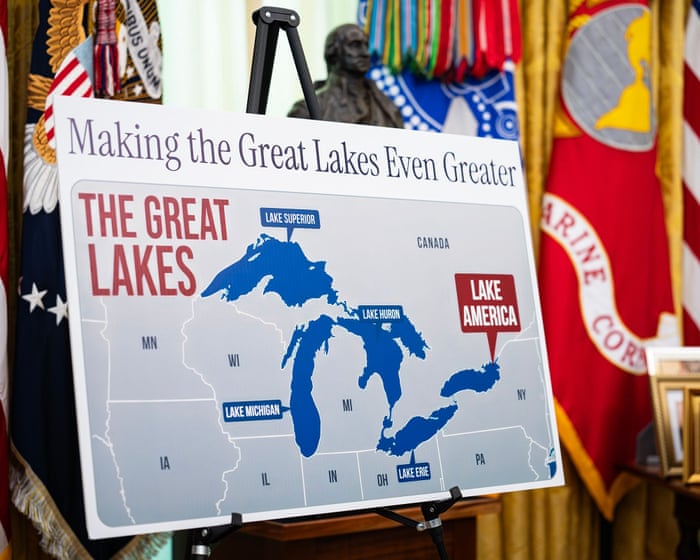
President Donald Trump signed an order to rename Lake Ontario, which borders the US and Canada, as "Lake America" on US maps. This change comes amid tense trade talks between the two countries and has been rejected by Canadian officials and New York’s governor.
Key Facts
President Trump ordered US federal agencies to use the name "Lake America" instead of Lake Ontario.
Lake Ontario's name comes from an Indigenous Wendat/Huron word and has been used for over 400 years.
The renaming follows Trump’s earlier order to call the Gulf of Mexico the "Gulf of America."
The move appears linked to recent failed trade negotiations and tariffs between the US and Canada.
Canadian Prime Minister Mark Carney responded by promising matching tariffs on US goods.
Both Canadian officials and New York’s governor have said they will continue using the original lake name.
Trump’s approval ratings have dropped recently amid rising costs and the ongoing war in Iran.
Global opinion of the US has worsened, with many countries rating it negatively in a recent survey.
Read the Original
Want the full story? Tap a source to open the original
article.
American artist Laurie Anderson will contribute a manuscript to the Future Library project, where it will be kept secret and unread for 88 years until 2114. The manuscript joins works by other famous writers and will eventually be printed using paper from trees planted for the project in Oslo, Norway.
Key Facts
Laurie Anderson is the 13th contributor to the Future Library project.
The project stores manuscripts in a silent room at the Oslo public library.
All texts will be printed together in 2114 on paper made from 1,000 spruce trees planted in a special forest.
Anderson is an artist known for multimedia performances, music, writing, and has won a Grammy and a lifetime achievement award.
Her manuscript could be a text, music score, story, instructions, or something new.
The Future Library was created by artist Katie Paterson, who planted the forest in 2014.
Previous contributors include Margaret Atwood, Han Kang, and Ocean Vuong.
The City of Oslo agreed in 2022 to keep the forest protected for the project’s duration.
Read the Original
Want the full story? Tap a source to open the original
article.
Marc Gaudisosi went to a clinic thinking he had a sinus infection, but a nurse found a heart murmur. After tests, he was diagnosed with mitral valve regurgitation, the same heart condition his mother had nearly 30 years earlier. Both are now being treated by the same heart surgeon.
Key Facts
Marc Gaudisosi thought he had a sinus infection because of headache and fatigue.
A nurse at a CVS Minute Clinic detected a heart murmur during his visit.
Tests confirmed Marc has mitral valve regurgitation, a condition where the heart valve leaks blood backwards.
Marc’s mother, Jean Gaudisosi, had the same diagnosis and surgery in 1998.
Mitral valve regurgitation is usually not inherited but may have a genetic component in rare cases.
Dr. Sabet Hashim performed surgery on both Jean and Marc, which is uncommon.
Mitral valve repair is a complex surgery but preferred as it offers better life expectancy than valve replacement.
Symptoms of this condition can include shortness of breath, swelling, and heart rhythm problems if untreated.
Read the Original
Want the full story? Tap a source to open the original
article.
A Colorado mother, Madisyn Parente, experienced a rare childbirth known as "en caul," where the baby is born still inside the amniotic sac. After her labor induction was delayed three times, she went into labor naturally and gave birth to her daughter in this unusual way.
Key Facts
Madisyn Parente’s scheduled labor induction was postponed three times due to hospital capacity.
When she arrived at the hospital, she was already in active labor and 4 centimeters dilated.
She gave birth to her daughter, Carter Jeanette, while still enclosed in the amniotic sac, a delivery type called "en caul."
An en caul birth is very uncommon, happening in about 1 in every 80,000 births.
Parente delivered her baby in a private room after initially soaking in a bathtub during labor.
She learned about the rarity of the birth only after researching it at home following delivery.
Parente shared her story on TikTok, which attracted a lot of attention and curiosity.
She hopes her daughter will feel proud of her uniquely special birth story.
Read the Original
Want the full story? Tap a source to open the original
article.
Seneca Nation President J. Conrad Seneca asked President Donald Trump to cancel an executive order that renamed Lake Ontario as “Lake America.” The Seneca Nation argues the name change breaks a 225-year-old treaty between Native Americans and the U.S. government.
Key Facts
President Trump signed an executive order renaming Lake Ontario to “Lake America.”
The order was issued on a Thursday before the Seneca Nation’s request.
The Seneca Nation is a Native American tribe historically connected to the area around Lake Ontario.
J. Conrad Seneca is the President of the Seneca Nation.
The Seneca Nation says the name change violates a treaty made with the U.S. government 225 years ago.
The treaty likely protects the original name or the tribe’s rights related to the lake.
The Seneca Nation is formally asking President Trump to reverse the order and keep the lake’s original name.
Read the Original
Want the full story? Tap a source to open the original
article.
A sudden flood caused by a glacier and mountain debris collapse struck northern Nepal and the nearby Tibet region, killing nearly 700 people and leaving about 3,000 missing. The flood came without typical warning signs like rain or earthquakes, highlighting gaps in current flood-warning systems.
Key Facts
The flood was triggered by the collapse of a glacier and mountain debris near Lāngtāng Lirung in the Himalayas.
This collapse created energy similar to a magnitude-5.2 earthquake but was not caused by an actual earthquake.
The debris formed a temporary dam that burst, causing a fast-moving flood with ice, water, rock, and sediment.
Nearly 700 people have died, and about 3,000 are missing in Nepal’s Rasuwa district and Tibet’s Gyirong County.
The flood traveled approximately 100 kilometers (62 miles) and raised a river by nine meters in 30 minutes.
The event is called a "blue-sky flood" because it happened during clear weather, with no rain, thunderstorms, or prior river rise.
Traditional flood-warning systems in Nepal monitor rainfall and major rivers but miss sudden mountain collapses and small waterways.
Experts suggest that mountain monitoring should be added to warning systems to better predict such rare floods.
Read the Original
Want the full story? Tap a source to open the original
article.
There are no ads, so there is no reason to bait you. Readers who chip in keep it that way. Most choose $3.99/month, and get the daily digest every morning.
A barber in Guildford, Surrey, is offering free back-to-school haircuts and school supplies to help families dealing with rising costs. The event runs from 9 a.m. to 5 p.m. on Sunday and includes free stationery, pencil cases, and water bottles.
Key Facts
Sid Gumbrell runs Clean Cuts Barber Shop in Guildford.
He is providing free haircuts and school essentials for children.
The event is held from 9:00 a.m. to 5:00 p.m. on Sunday.
Free items include stationery, pencil cases, and water bottles.
The effort aims to help families with the rising cost of back-to-school items like uniforms, shoes, and haircuts.
Tesco and Krispy Kreme donated to support the event.
The event also focuses on bringing children together.
The story is covered by BBC Surrey with contact details for story ideas.
Read the Original
Want the full story? Tap a source to open the original
article.
The Welsh Gender Service has stopped taking new referrals and paused scheduled gender-affirming surgeries while an independent review looks into the number of referrals and assessment processes. Other services, like hormone therapy and psychological support, will continue for patients.
Key Facts
The Welsh Gender Service provides support and care for adults seeking gender-affirming treatment in Wales.
Cardiff and Vale University Health Board manages the service.
Referrals for gender-affirming surgery from Wales are much higher compared to similar services in England.
Due to concerns about referral numbers and assessment methods, all new and scheduled surgeries are paused.
An independent clinical review will examine the referral and governance processes.
Patients should still attend appointments related to psychological and other non-surgical support.
The NHS Wales Joint Commissioning Committee requested the review to ensure proper oversight and safety.
The service continues hormone therapy, psychological support, and speech therapy during the pause.
Read the Original
Want the full story? Tap a source to open the original
article.
The island nation of Palau has coral reefs that are more heat-resistant than many others. Scientists are developing "super coral" by growing tough coral larvae to help protect reefs like Australia’s Great Barrier Reef from damage caused by rising ocean temperatures.
Key Facts
Palau’s coral reefs have so far avoided large-scale coral bleaching caused by heat.
Coral bleaching happens when coral gets too hot and loses the tiny algae it needs to survive.
Scientists are creating "super coral" that can survive hotter water temperatures.
Australia plans to spread these stronger coral larvae on the Great Barrier Reef.
The goal is to help coral reefs survive as global temperatures rise due to climate change.
The work involves visits and research in both Palau and Australia.
Read the Original
Want the full story? Tap a source to open the original
article.
A new poll shows Democratic Representative Alexandria Ocasio-Cortez is close to Republican Vice President JD Vance in a possible 2028 presidential race. Vance leads with 45.1% to Ocasio-Cortez’s 41.8%, but both have not yet declared their candidacies.
Key Facts
JD Vance leads Alexandria Ocasio-Cortez by 3.3 points in a national poll of likely voters conducted in late August.
Among decided voters, Vance has 51.9% support, and Ocasio-Cortez has 48.1%.
Pete Buttigieg leads the Democratic primary field with 25.7%, while Vance leads Republicans with 41%.
The poll surveyed 1,200 likely voters via mobile text interviews.
The margin of error for the poll is ±3.2 percentage points, making the race close.
Neither Ocasio-Cortez nor Vance has officially announced a 2028 presidential run.
Ocasio-Cortez’s campaign staff is changing, with some advisors leaving and others taking new roles.
Vance said he and his wife will decide about his future after the 2026 midterm elections, and President Trump would support his choice.
Read the Original
Want the full story? Tap a source to open the original
article.
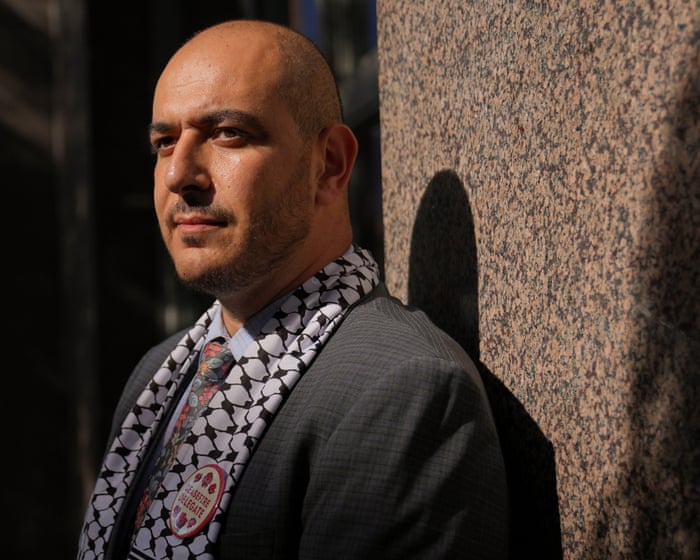
A political group called the Uncommitted movement pushed many Democrats in 2024 to vote “uncommitted” to demand a ceasefire in Gaza and a change in US policy, but the Democratic Party did not support their goals. In response, some activists, like Abbas Alawieh in Michigan, ran for office themselves and won Democratic nominations, showing growing political power of Arab American voters. This shift is changing election dynamics, especially in places like Michigan where Arab Americans form a significant part of the electorate.
Key Facts
The Uncommitted movement got over 700,000 Democrats to vote “uncommitted” in the 2024 presidential primaries to push for a Gaza ceasefire.
The Democratic Party did not add an arms embargo against Israel or include a Palestinian American speaker at its convention.
Abbas Alawieh, co-founder of the Uncommitted movement, won the Democratic nomination for a Michigan state senate seat and is expected to win in November.
Progressive candidates like Abdul El-Sayed have connected Arab American concerns to broader progressive causes and won nominations.
Michigan’s Arab American population grew 75% from 2010 to 2020 and now makes up about 4% of the state’s voters.
Arab American voters had mostly supported Democrats before 2024 but shifted away due to disagreements over the Gaza war.
Republicans, including President Trump and third-party candidates, actively campaigned in Arab American communities, unlike Democrats.
The Uncommitted movement’s efforts aim to gain political power by electing new leaders from these communities to influence party policies.
Read the Original
Want the full story? Tap a source to open the original
article.
Eve Ogden Schaub is growing flax in her garden to make a linen dress by hand, sharing the process on Instagram. Her project challenges fast fashion by showing the time and work involved in making clothes the slow, traditional way.
Key Facts
Schaub started growing flax in April 2025 in a 600 sq ft garden in Vermont.
She harvests flax, processes it through several traditional steps like retting, breaking, scutching, and hackling.
Schaub plans to spin the flax into linen yarn, dye it with indigo she is growing, weave it on a large loom, and sew a dress.
The project demonstrates how clothing was once made with great effort and was more valuable.
Fast fashion produces cheap clothes quickly but harms the environment and workers’ health, especially in places like Ghana and India.
Schaub wants to show the benefits of slower, more meaningful making and to raise awareness about synthetic materials in clothing.
She has experience with lifestyle experiments, including reducing waste and sugar in her family’s life.
Schaub shares her learning process openly, including mistakes, to highlight how complex traditional cloth-making is.
Read the Original
Want the full story? Tap a source to open the original
article.
On the biggest stories we show what the outlets agree on and where they differ. Readers keep that going, and get the daily digest by email every morning. Most choose $3.99/month.
Many Canadians have been avoiding American products since President Trump imposed tariffs on Canadian goods. This boycott has made daily life more expensive for some Canadians but reflects their response to trade tensions and political actions between the two countries.
Key Facts
President Trump started tariffs on Canadian goods in February last year, leading to a Canadian boycott of US products.
Canada responded by imposing matching tariffs after trade talks failed recently.
Some Canadians report higher costs from buying only Canadian goods, like groceries and beer.
The boycott includes avoiding US technology, streaming services, petrol, vehicles, and social media platforms.
Abbreviations like ABUS ("Anything but US") and slogans like "Elbows Up!" show organized resistance to US products.
A July survey found 40% of Canadian grocery shoppers actively check product origins and try to avoid US goods.
Canadians discuss boycotting US airlines, hotels, airports, and moving investments to Canadian companies.
Some people grow their own vegetables or buy produce from other countries to avoid US products despite environmental concerns.
Read the Original
Want the full story? Tap a source to open the original
article.
The Nancy Grace Roman space telescope, costing $4.3 billion and named after NASA's first chief of astronomy, is set to launch from Florida. It will travel about one million miles away to study planets outside our solar system and help understand the universe alongside the Hubble and James Webb telescopes.
Key Facts
The Roman telescope survived budget cuts proposed by President Trump.
It will launch from Kennedy Space Center at 7:26 am ET.
The telescope has a 300-megapixel infrared camera with a wide field of view 100 times larger than Hubble's.
It includes a coronagraph to block star glare and better image planets around stars.
Its destination is Lagrange point 2, a stable spot about one million miles from Earth.
Roman will support and complement Hubble and Webb but is not a direct replacement.
NASA expects the first images around early 2027 after setup and testing.
The mission aims to study dark matter, dark energy, exoplanets, and other cosmic phenomena.
Read the Original
Want the full story? Tap a source to open the original
article.