Ukrainian President Volodymyr Zelenskyy spoke about disagreements with his dismissed Defense Minister Mykhailo Fedorov, saying some of Fedorov’s actions and decisions were mistaken. Zelenskyy also shared concerns about Ukraine’s shortage of air-defense missiles and discussed recent battlefield progress against Russian forces.
Key Facts
President Zelenskyy said that Mykhailo Fedorov’s involvement in protests and calls for elections were misguided.
Fedorov was dismissed last month after conflicts with the military leadership.
Zelenskyy offered Fedorov several roles in the government, but Fedorov declined all offers.
Zelenskyy mentioned problems with defense spending and false information from the Defense Ministry.
A misunderstanding with U.S. President Donald Trump happened over the use of Starlink satellite internet in Russia.
Ukraine faces a growing shortage of Patriot missiles, which defend against Russian ballistic attacks.
The supply of these missiles from Western allies has dropped in the past three years.
Ukrainian forces have nearly retaken the Dnipropetrovsk region, with only a small area still under Russian control.
Read the Original
Want the full story? Tap a source to open the original
article.
Brazil’s presidential candidates, President Lula da Silva and Flavio Bolsonaro, held separate rallies in Rio de Janeiro as part of their campaigns. Both focused heavily on the issue of crime but proposed different solutions.
Key Facts
The rallies took place over the weekend in Rio de Janeiro.
President Lula da Silva and Flavio Bolsonaro are running against each other for president.
Crime was the main topic at both events.
Each candidate presented different ideas on how to handle crime.
Flavio Bolsonaro is a senator and presidential candidate.
The campaign is gaining momentum as voting approaches.
The coverage included video reports by Camille Corcoran.
The events are part of Brazil’s 2026 presidential election process.
Read the Original
Want the full story? Tap a source to open the original
article.
Hundreds of children in Gaza took part in a large swimming lesson organized by a non-governmental group to help them deal with trauma caused by ongoing conflict. The event took place on the beach in Khan Younis and aimed to provide psychological relief and possibly set a world record.
Key Facts
The swimming lesson involved hundreds of children from Gaza.
It was organized by an NGO to support children affected by war trauma.
The event occurred on the beach in Khan Younis, Gaza Strip.
The children learned how to swim collectively in this mass lesson.
The project may have aimed to set a world record for the number of participants.
The conflict has severely impacted the daily lives and wellbeing of Gaza's children.
This activity is part of efforts to help children cope with the psychological effects of conflict.
The article mentions broader context including the Israel-Hamas conflict and regional tensions.
Read the Original
Want the full story? Tap a source to open the original
article.
Two months after two earthquakes hit Venezuela, about 12,500 people still live in temporary camps in La Guaira. Many survivors face difficult living conditions and have limited access to medical help and aid.
Key Facts
Two earthquakes struck Venezuela around two months ago.
About 12,500 people remain in temporary camps in La Guaira.
Survivors have lost family members and homes.
People live in unsafe shelters exposed to weather.
Access to medical care is very limited.
Humanitarian aid has not reached many survivors.
Reporters visited three camps housing earthquake victims.
The situation highlights ongoing struggles after the disaster.
Read the Original
Want the full story? Tap a source to open the original
article.
Saudi Arabia is investing billions of dollars to become a leader in the global video game industry. This includes buying the game company Electronic Arts for $55 billion and hosting the Esports World Cup outside Saudi Arabia for the first time, in Paris. These actions aim to reduce the country's reliance on oil and gas money.
Key Facts
Saudi Arabia made a $55 billion purchase of Electronic Arts, a major video game company.
The Esports World Cup, a top gaming competition, is being held in Paris instead of Saudi Arabia.
The country is focusing on the gaming industry to diversify its economy.
Diversifying means finding new sources of income beyond oil and gas.
Saudi Arabia aims to become a global power in Esports, which refers to competitive video gaming.
Hosting international events helps the country gain more influence in the global gaming scene.
The move reflects a broader economic shift in Saudi Arabia’s national strategy.
This investment is one of the biggest in the gaming industry by any country.
Read the Original
Want the full story? Tap a source to open the original
article.
An Israeli air strike near the Maghazi refugee camp in central Gaza killed one person and injured two. This attack happened shortly after another Israeli drone strike in Deir el-Balah, which also caused casualties.
Key Facts
The air strike occurred near Salah al-Din Street close to the Maghazi refugee camp.
At least one person died and two were injured in this attack.
The previous day, an Israeli drone strike hit the al-Hasanat family in Deir el-Balah, killing one and wounding several.
Since October 2023, at least 1,286 Palestinians have died from Israeli attacks in Gaza according to Gaza’s Ministry of Health.
The article mentions a claimed total of more than 73,400 Palestinians killed since the war began, which is significantly higher than the official health ministry figure.
The attacks occurred amid a conflict and a ceasefire agreement that started in October 2023.
The information was reported by Palestinian news agency Wafa and Al Jazeera’s correspondent Ashraf Abu Amra.
The situation in Gaza includes concerns about limited burial spaces due to the ongoing violence.
Read the Original
Want the full story? Tap a source to open the original
article.
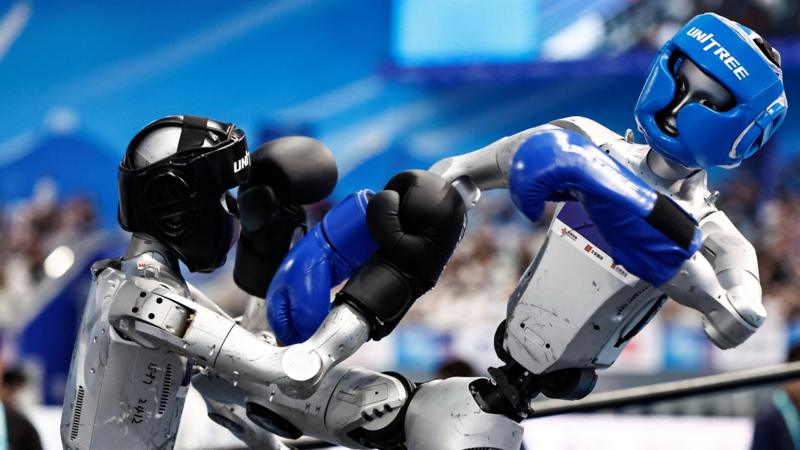
The second World Humanoid Games started in Beijing, China, where robots compete in various sports like boxing, football, and sprinting. One robot ran faster than the human 100m world record, and robots also demonstrated activities like synchronized marching and football celebrations.
Key Facts
The World Humanoid Games are being held in Beijing, China.
This is the second time the event has taken place.
The competition lasts for five days.
A robot at the event sprinted faster than Usain Bolt’s 100m world record.
Robots are competing in sports such as boxing, football, high jump, and table tennis.
During the opening ceremony, robots performed synchronized marching.
One robot recreated Cristiano Ronaldo’s famous football celebration.
Read the Original
Want the full story? Tap a source to open the original
article.
Iran’s President Masoud Pezeshkian said his country faces many problems like inflation, unemployment, and economic difficulties. This comes as the United States has announced new sanctions aiming to isolate Iran’s economy and pressure its government.
Key Facts
Iran’s President Masoud Pezeshkian admitted the country has many social and economic challenges.
The U.S. announced a new wave of sanctions against Iran to try to cause the government’s collapse.
Iran warned it will treat any country supporting U.S. sanctions as an enemy.
A press conference is planned to explain the U.S. strategy on Iran sanctions.
Iran recently executed a man accused of helping the U.S. and Israel during anti-government protests.
Pakistan’s army chief is visiting Tehran to discuss strengthening peace and security in the region.
Syria expects talks to resume soon with Israel about security and Israeli troop withdrawals.
Read the Original
Want the full story? Tap a source to open the original
article.
An earthquake with a magnitude of 5.9 hit eastern Japan early Sunday. It caused shaking in Tokyo and nearby areas and injured at least 37 people. There was no tsunami warning, but some transport services were disrupted.
Key Facts
The earthquake occurred early Sunday in eastern Japan.
It had a magnitude of 5.9 on the earthquake scale.
At least 37 people were injured due to the shaking.
Tokyo and nearby areas felt the earthquake.
Authorities confirmed there was no threat of a tsunami.
Some train and transport services were affected and delayed.
Emergency teams responded to the injured and damage.
No major building collapses or severe damage were reported.
Read the Original
Want the full story? Tap a source to open the original
article.
The number of conflicts related to water has risen sharply, reaching a record 420 incidents in 2024, a 78% increase since 2022. These conflicts often happen because water infrastructure is damaged, people compete over limited water, or water is used intentionally as a weapon during wars. Regions like Gaza, Sudan, and parts of the West Bank face serious water crises linked to ongoing violence and displacement.
Key Facts
In 2024, there were 420 water-related conflicts worldwide, up from 235 in 2022.
Water conflicts happen for three main reasons: damage to water systems (casualty), fights over water access (trigger), and deliberate use of water as a weapon.
About 55% of conflicts involved damage to water infrastructure like dams and treatment plants.
In Gaza, nearly 90% of water and sanitation systems are damaged due to Israeli attacks, causing severe water shortages.
Water prices in Gaza have increased up to 500%, worsening health problems like diarrhea and skin diseases.
In Sudan, fighting has displaced 12 million people and caused attacks on water systems, leading to cholera outbreaks and food shortages.
Palestinian water supplies in the West Bank are affected by attacks and demolitions, cutting water to around 100,000 people.
The World Water Week conference in Stockholm highlights the urgent global challenges linked to water security and conflicts.
Read the Original
Want the full story? Tap a source to open the original
article.
Hackers linked to Iran caused a cyber-attack that shut down a small power plant in the UK for four days. The UK government said the wider energy system was not at risk and is working to protect critical infrastructure from such attacks.
Key Facts
The cyber-attack targeted a small-scale energy generator in the UK.
The power plant was shut down for four days due to the attack.
UK officials said there was no danger to the wider energy system.
The National Cyber Security Centre (NCSC) did not receive reports of outages from major power stations linked to the incident.
The UK has allowed the US to launch defensive operations against Iran from British bases but not offensive ones.
Iran’s Islamic Revolutionary Guard Corps (IRGC) warned that bases used by the US could be targeted in retaliation.
The US and UK governments have previously accused Iran of cyber-attacks on various countries and critical infrastructure.
A group linked to Iran called “CyberAv3ngers” reportedly attacked US infrastructure in 2023, affecting at least 75 devices.
Read the Original
Want the full story? Tap a source to open the original
article.
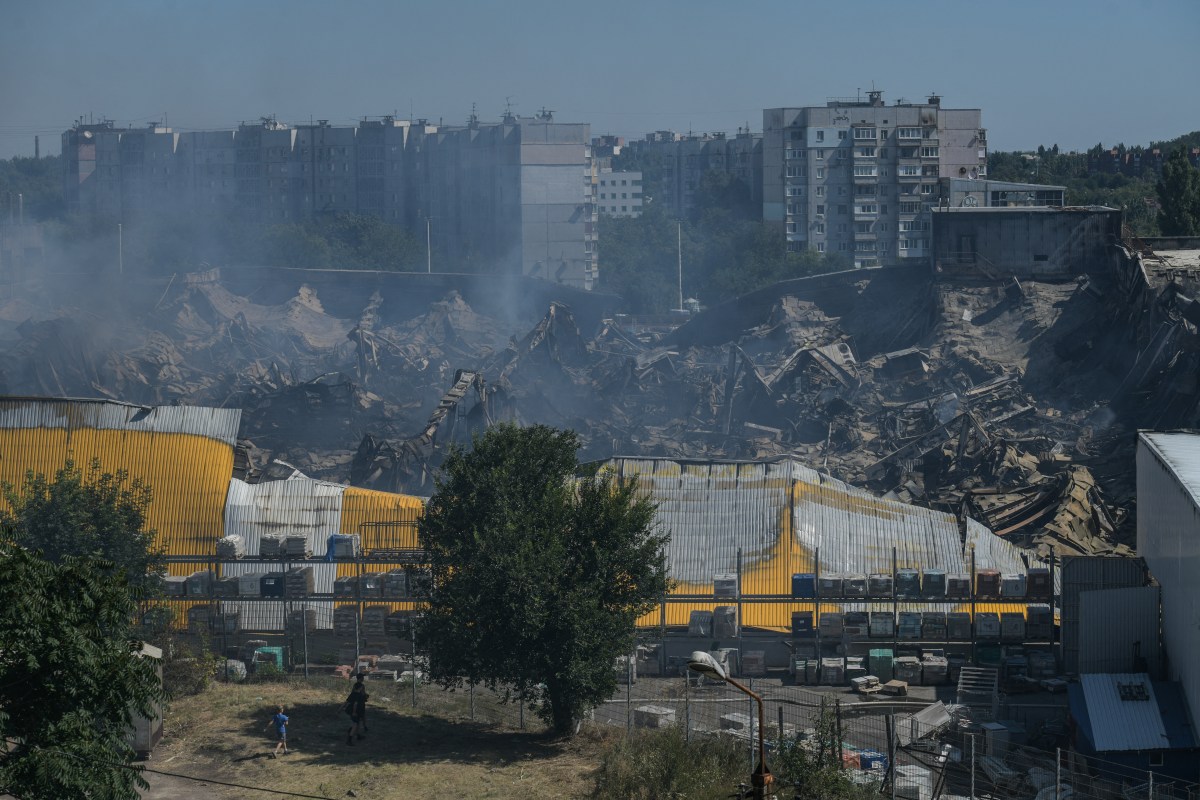
Ukrainian President Volodymyr Zelensky has asked for more Patriot interceptor missiles as Russia continues to strike Ukrainian cities. A recent Russian attack on a shopping center in Zelensky's hometown, Kryvyi Rih, killed at least sixteen people and injured many others.
Key Facts
A Russian missile hit a shopping center in Kryvyi Rih, Ukraine, killing at least 16 people.
Several people are still missing after the strike.
Kryvyi Rih is President Zelensky’s hometown.
Zelensky has been requesting more Patriot interceptor missiles for months to defend against attacks.
The request for more interceptors has grown urgent with the approach of winter.
Russia continues to carry out missile strikes against Ukrainian cities, causing civilian casualties.
France has agreed to deliver interceptor missiles to Ukraine after recent attacks.
Read the Original
Want the full story? Tap a source to open the original
article.
On the biggest stories we show what the outlets agree on and where they differ. Readers keep that going, and get the daily digest by email every morning. Most choose $3.99/month.
South Korea has sent its first container ship from Asia to Europe using the Arctic shipping route. This route bypasses the busy Middle East shipping lanes but may contribute to faster melting of polar ice.
Key Facts
South Korea used the Arctic route for the first time to send a container ship to Europe.
The Arctic route avoids traffic congestion in the Middle East shipping lanes.
Russia and China have been using the Arctic route for several years.
Experts warn that increased use of the Arctic route could speed up the melting of polar ice.
The Arctic shipping route offers a shorter path between Asia and Europe compared to traditional routes.
This shift in shipping patterns reflects changing global trade and transport strategies.
The Arctic ice melt is a concern because it affects the environment and climate.
Read the Original
Want the full story? Tap a source to open the original
article.
Canada and the United States had been negotiating a trade deal, but talks broke down with each side blaming the other for last-minute changes. In response to new U.S. tariffs on Canadian goods, Canada’s Prime Minister Mark Carney announced that Canada will impose retaliatory tariffs on American products.
Key Facts
The U.S. imposed a 50% tariff on $20 billion worth of goods from Canada.
Canada responded by announcing tariffs that match the U.S. tariffs "dollar for dollar."
Trade negotiations between the U.S. and Canada collapsed recently.
Both countries blame each other for changes that caused the talks to fail.
Canadian Prime Minister Mark Carney addressed the nation about the situation for the first time since the talks fell apart.
The trade dispute involves high tariffs, which are extra taxes placed on imported goods.
The dispute reflects growing tensions between the two countries over trade policies.
Read the Original
Want the full story? Tap a source to open the original
article.
Tensions between Iran and the United States are increasing as Iran warns it will consider any country joining U.S. sanctions against it as an enemy. The U.S. plans to announce its strategy on isolating Iran's economy soon.
Key Facts
Iran is responding strongly to U.S. efforts to impose economic sanctions.
Tehran says countries supporting U.S. sanctions will be treated as enemies.
The United States aims to isolate Iran’s economy through these sanctions.
A U.S. press conference will soon explain the details of this new strategy.
This conflict is part of ongoing tensions in the Middle East between Iran and the U.S.
The article mentions other related regional issues involving Israel and the West Bank.
The situation reflects wider geopolitical struggles in the Middle East.
Read the Original
Want the full story? Tap a source to open the original
article.
Tata Steel’s Llanwern factory in south Wales is running at half capacity because cheap steel imports from countries like India and Vietnam have increased. Changes in government trade rules expanded the amount of steel these countries can send to the UK without paying extra tariffs, causing fewer orders for the UK-made steel and putting jobs at risk.
Key Facts
Llanwern steelworks has idle production lines and workers doing maintenance due to fewer orders.
The UK government set a 50% tariff on cheap steel imports to protect local producers.
Some countries, including India, Vietnam, and South Korea, received bigger tariff-free quotas for steel imports.
India’s tariff-free quota for galvanised steel rose from 98,000 to 125,000 tonnes.
Vietnam’s quota more than tripled from 51,000 to 174,000 tonnes.
Galvanised steel is steel coated with zinc to prevent rust; Llanwern produces about 600,000 tonnes yearly.
Tata Steel is transitioning to a cleaner electric arc furnace but job losses occurred when older blast furnaces closed.
Increased cheap imports threaten the factory’s future and the company’s plans for greener steel-making.
Read the Original
Want the full story? Tap a source to open the original
article.
A woman who was pregnant with twins experienced severe chest pain, which doctors initially thought was caused by gallstones. After months of worsening symptoms and tests, she was diagnosed with pancreatic neuroendocrine tumors, a rare type of cancer that started in her pancreas.
Key Facts
The woman first felt sharp chest pain at five months pregnant with twins.
Doctors initially suspected the pain was due to gallstones and pregnancy-related pressure on organs.
The pain continued after giving birth and significantly affected her daily life.
She waited for a gallbladder removal surgery but was referred for an MRI before the operation.
Further scans, including a PET-MRI and DOTATATE PET scan, were done to investigate a possible tumor.
She was diagnosed with pancreatic neuroendocrine tumors (pNETs), a rare cancer of the pancreas.
The diagnosis came after about a year of ongoing pain and multiple medical tests.
She experienced emotional distress during the diagnosis process and after learning about the cancer.
Read the Original
Want the full story? Tap a source to open the original
article.
The fight for control of the U.S. Senate after the 2026 elections could depend on a few closely contested states and the impact of third-party candidates. Democrats need to win four Republican seats and keep their own, while in some states, small vote percentages going to third-party or independent candidates might decide the winner. Key races include Alaska, Texas, Michigan, Georgia, and others where polling shows close competition.
Key Facts
Democrats need to flip four GOP Senate seats and keep their current ones to control the Senate.
They must defend Georgia and Michigan, states President Trump won in 2024.
Target states include Maine, North Carolina, Alaska, Iowa, Ohio, and Texas, some won by Trump by large margins.
Polls show Democratic candidates close to or just below 50%, with Republicans close behind.
Third-party or independent candidates getting even 1-2% of votes could tip close races.
In Alaska, two candidates named Dan Sullivan might split GOP votes, helping Democrat Mary Peltola.
In Texas, Libertarian Ted Brown polls around 2-4%, while Democrat James Talarico leads Republican Ken Paxton narrowly.
Analysts rate several key races as toss-ups, making third-party impacts important.
Read the Original
Want the full story? Tap a source to open the original
article.
Recent conflicts involving Ukraine and Iran show that having nuclear weapons has not stopped these countries from attacking their adversaries. Experts now say nuclear weapons may not prevent wars as once believed, and their presence might encourage risky and aggressive behavior by nuclear-armed countries.
Key Facts
Ukraine has carried out large drone and missile attacks inside Russia, despite Russia's nuclear weapons.
Russia has not responded to Ukraine's attacks with nuclear weapons.
Past wars, like those involving Egypt, Syria, Argentina, Vietnam, India, and Pakistan, show nuclear weapons did not prevent conflicts.
The Cuban Missile Crisis nearly led to nuclear war, which was avoided by luck, not nuclear deterrence.
Iran has launched missile and drone attacks against Israel and U.S. bases despite threats from nuclear-armed countries.
Israel uses missile defenses against Iran rather than nuclear threats.
Nuclear-armed countries may act more aggressively, ignoring international laws, because of their nuclear weapons.
Some governments are considering increasing reliance on smaller, tactical nuclear weapons, but experts warn this could increase danger.
Read the Original
Want the full story? Tap a source to open the original
article.
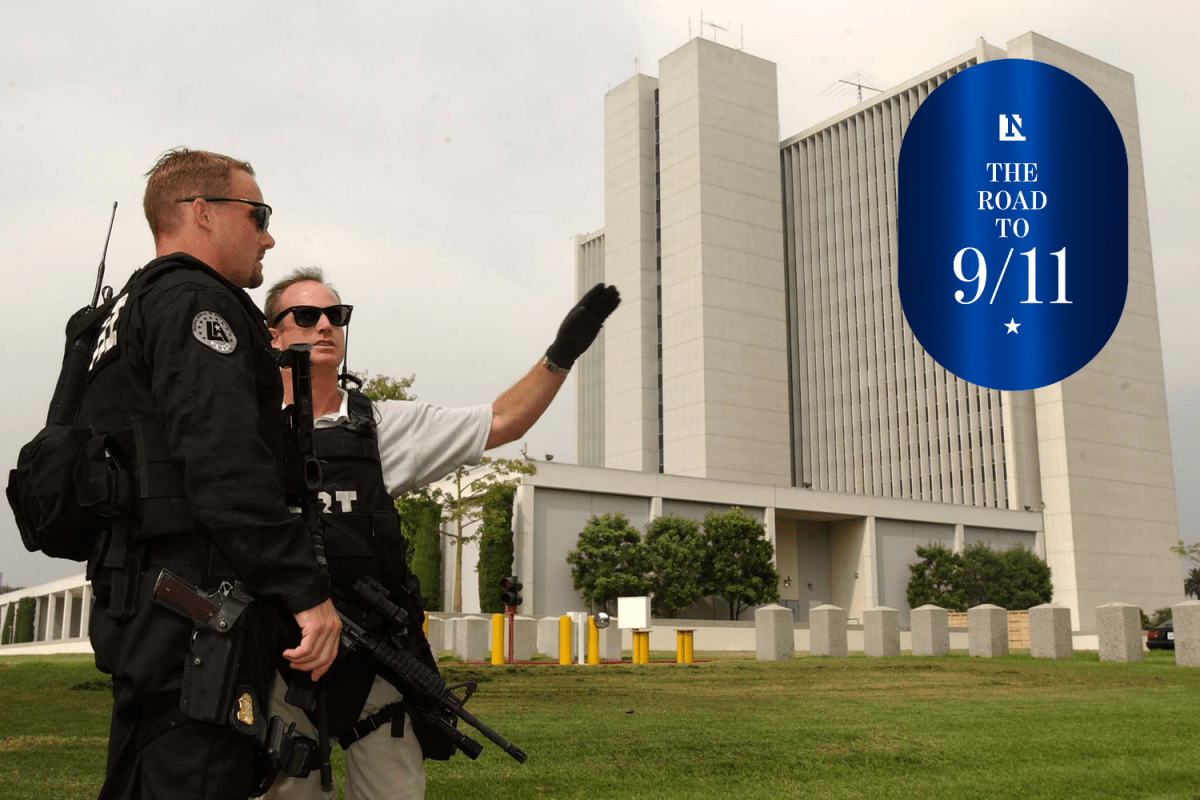
In August 2001, FBI and other U.S. agencies identified two men, Khalid al-Mihdhar and Nawaf al-Hazmi, as potential terrorists linked to Osama bin Laden. Despite being watch-listed and flagged as dangerous, the FBI failed to act effectively on this information before the 9/11 attacks. A Phoenix FBI agent had warned months earlier about suspicious flight training by suspected terrorists but his recommendations were ignored.
Key Facts
On August 23, 2001, the FBI requested that al-Mihdhar and al-Hazmi be added to watch-lists to block their entry to the U.S.
Al-Mihdhar was flagged as "armed and dangerous" in a customs and immigration database by August 31.
The State Department revoked al-Mihdhar’s visa on September 4 for terrorist activities.
FBI field offices were asked to search for al-Mihdhar and al-Hazmi, but New York found no evidence and Los Angeles received the request on 9/11.
A Phoenix FBI agent sent a memo on July 10 warning that bin Laden was sending trainees for flight training in the U.S. to prepare for attacks.
The Phoenix memo recommended steps like listing flight schools and coordinating intelligence but FBI headquarters did not act on these suggestions before 9/11.
The three main watch lists used were the State Department’s VISA/VIPER, the TIPOFF no-fly list, and the Treasury Enforcement Communication System for inspections.
Despite warnings and intelligence, the security agencies did not effectively coordinate to prevent the 9/11 hijackers from training and entering the U.S.
Read the Original
Want the full story? Tap a source to open the original
article.