TikTok has agreed to pay $400 million to settle a privacy case with the U.S. Department of Justice. The case involved claims that TikTok collected personal information from children under 13 without parental permission, which is against the Children's Online Privacy Protection Act.
Key Facts
TikTok faced accusations of breaking a law that protects children's privacy online.
The law requires websites to get permission from parents before collecting data from kids under 13.
TikTok will pay $300 million right away as part of the settlement.
An additional $100 million will be paid later according to the agreement.
The case was handled by the U.S. Department of Justice.
TikTok is a popular social media platform used worldwide.
The settlement resolves the privacy claims without going to trial.
Read the Original
Want the full story? Tap a source to open the original
article.
Two Palestinians were killed in the West Bank on Friday. One died in the northern town of Jenin after Israeli army gunfire, and another was killed in the south by an Israeli settler.
Key Facts
Two Palestinians died in the West Bank on the same day.
One death happened in Jenin, in the northern part of the West Bank.
The first was killed by gunfire from the Israeli army.
The second was killed by an Israeli settler in the southern West Bank.
Both Palestinian sources and the Israeli army confirmed these incidents.
The West Bank is a territory occupied by Israel with ongoing conflict issues.
The article mentions related regional tensions involving Israeli policies and Palestinian communities.
Read the Original
Want the full story? Tap a source to open the original
article.
Russian drones attacked a shopping center in Kryvyi Rih, a city in central Ukraine, killing 15 people and injuring around 130. Some of the injured were children. Kryvyi Rih is known as the hometown of Ukraine's President Volodymyr Zelensky.
Key Facts
The attack happened on Friday in Kryvyi Rih, central Ukraine.
Russian drones targeted a shopping center during the strike.
15 people were reported dead in the attack.
About 130 people were injured, including children.
Kryvyi Rih is President Volodymyr Zelensky’s hometown.
The incident is part of ongoing conflict between Russia and Ukraine.
The attack followed other recent missile and drone strikes in Ukraine.
Ukrainian authorities confirmed the casualties and injuries.
Read the Original
Want the full story? Tap a source to open the original
article.
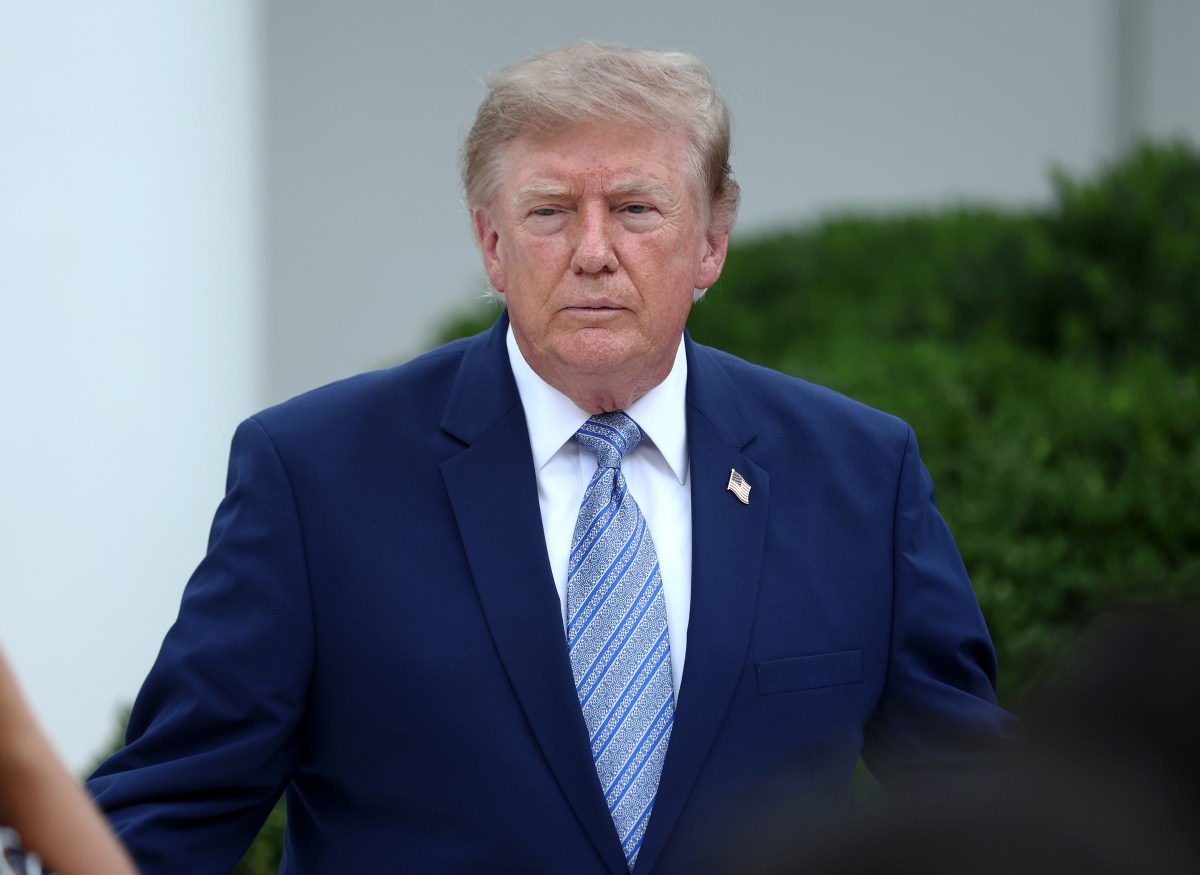
President Donald Trump is facing challenges in his conflict with Iran, similar to those faced by President Jimmy Carter in 1980. Trump’s efforts to end the war started earlier this year have struggled after a ceasefire ended, affecting oil prices and the U.S. economy, while his party risks losing control of Congress in upcoming elections.
Key Facts
President Trump began a military conflict with Iran on February 28, 2025.
A ceasefire agreement signed in June recently expired without a new deal.
Iran controls the Strait of Hormuz, a key route for about 20% of the world’s oil.
The conflict has raised oil prices, increased inflation, and made living costs higher in the U.S.
Trump’s Republican party faces difficulties in the November midterm elections.
Public support for the war is low, with many Americans feeling worse off since Trump took office.
The article compares Trump’s situation to President Carter’s during the 1980 Iran hostage crisis.
Carter’s unsuccessful rescue mission and failed negotiations before elections contributed to his defeat.
Read the Original
Want the full story? Tap a source to open the original
article.
More than 100 former British and French diplomats have warned that Palestine is being erased and have called for urgent actions, including banning trade and arms sales to Israel, to support the creation of a Palestinian state. They criticize Israel's actions in settlements and accuse the Israeli government of ethnic cleansing, urging their countries to take stronger measures.
Key Facts
Over 100 former diplomats from Britain and France signed a letter warning about the erasure of Palestine.
They call for urgent actions like trade and arms sales bans against Israel to pressure it for a Palestinian state.
The letter accuses Israel of ethnic cleansing and questions its status as a democracy.
Britain and France recognized Palestine as a state in 2025 and are urged to act on equal rights for Israelis and Palestinians.
The letter was addressed to French President Emmanuel Macron and British Prime Minister Andy Burnham.
UK and France condemned Israel’s plans to build 1,200 homes in the E1 settlement project in the West Bank.
Israel’s foreign minister defended Israel’s right to live throughout its territory, comparing it to the UK.
Negotiations on Gaza’s future have been led by Jared Kushner, but Israel rejected a recent US peace plan.
Read the Original
Want the full story? Tap a source to open the original
article.
CD players and CDs are becoming popular again, especially among young people and students. Sales of CD players and CDs have increased, driven by factors like lower cost compared to vinyl and better sound quality than streaming on phones.
Key Facts
Searches for CD players have increased by 96% since July.
Popular CD players like the Crosley Voyager and Pure Classic C-D6 are sold out online.
CD sales grew by 16% this year, outperforming vinyl sales growth of 2.4%.
Artists like BTS, Olivia Rodrigo, and Ariana Grande are helping drive CD demand.
CDs typically cost around £12, much cheaper than vinyl records priced about £35.
Young buyers prefer CDs due to good audio quality, compact size, and lower price.
Retro technology, including vinyl, cassettes, and wired earphones, is gaining renewed interest.
The trend is supported by people wanting an all-in-one system for playing music without using phones.
Read the Original
Want the full story? Tap a source to open the original
article.
In August 2001, the FBI and CIA handled information about Zacarias Moussaoui, who was detained in Minnesota and suspected of terrorist ties. Confusion over legal rules delayed a search of his belongings, and despite warnings, officials did not fully investigate his connections before the 9/11 attacks.
Key Facts
Zacarias Moussaoui was arrested in Minnesota on August 16, 2001.
French intelligence reported Moussaoui had ties to a man involved in Chechen rebel fighting.
FBI agents were unsure if the Chechen rebels counted as a "recognized foreign power" under surveillance laws.
FBI headquarters incorrectly told agents they needed to prove this recognition to get a search warrant under the Foreign Intelligence Surveillance Act (FISA).
Because of this misunderstanding, FBI agents spent time trying to connect Chechen rebels to al-Qaeda instead of pursuing other legal options.
The FBI considered deporting Moussaoui to France for investigation rather than searching his belongings themselves.
CIA director George Tenet was briefed about Moussaoui but believed the FBI had the situation under control.
Agents suspected a possible terrorist plot involving planes but failed to fully act on the intelligence before 9/11.
Read the Original
Want the full story? Tap a source to open the original
article.
The article discusses how in the United States, people often decide who is right or wrong in criminal cases before the trial finishes. Defendants become symbols or "preemptive martyrs," representing bigger causes even though the full facts are not yet clear.
Key Facts
Many U.S. criminal cases spark public debates where people form strong opinions early.
Defendants like Lindsay Clancy and Karmelo Anthony have been seen as symbols for larger social issues.
Clancy’s case involves questions about postpartum mental illness and support systems.
Anthony’s case involved self-defense claims and racial tensions, with public views shifting as more facts emerged.
Other defendants like Luigi Mangione, Daniel Penny, and Kyle Rittenhouse have also been cast as representatives of political or social causes.
Supporters often rally behind these defendants based on emotions or beliefs before all evidence is revealed.
The article highlights a divide between the legal process timeline and social media’s rapid judgments.
Read the Original
Want the full story? Tap a source to open the original
article.
A woman raised her daughter alone for 18 years after an early pregnancy from a brief relationship. When her daughter turned 18 and reconnected with her biological father, the woman and her daughter's father eventually married.
Key Facts
The woman got pregnant at age 20 after a brief relationship with a married colleague named Jeff.
Jeff's marriage ended, and the woman's parents urged Jeff to stay out of their lives.
The woman allowed Jeff to see their infant daughter twice but then cut contact due to anger at Jeff.
When the daughter was 10, they tried to find Jeff but had no success initially.
In 2011, the daughter and Jeff had their first phone call, but timing and life events delayed further connection.
Years later, before the daughter’s move to Paris for school, they met in person and reconnected.
Jeff met his daughter’s half-brothers from his previous marriage and they were kind to the daughter.
After the woman’s marriage ended, she and Jeff rekindled their relationship and decided to marry.
Read the Original
Want the full story? Tap a source to open the original
article.
New polling shows that fewer parents approve of how President Donald Trump is performing in his job, with his approval rating falling from July to August 2024. Overall, his approval rating among all voters has slightly improved but remains mostly negative as the midterm elections approach.
Key Facts
In August 2024, 40% of parents of children under 18 approved of President Trump's job performance, down from 44% in July.
Disapproval among parents increased from 55% in July to 59% in August.
This gives President Trump a net approval rating of -17 among parents in August, compared to -11 in July.
Among all voters, approval rose slightly from 38% in July to 40% in August, but disapproval remains high at 59%.
The poll was conducted by Echelon Insights, surveying about 1,000 voters each month, including around 240 parents.
Experts say parents may be more concerned about economic issues like inflation and foreign policy, including the war with Iran.
The White House has dismissed low approval ratings, pointing to President Trump's 2024 election win as proof of public support.
Approval ratings matter because midterm elections may change control of Congress, affecting the president’s agenda.
Read the Original
Want the full story? Tap a source to open the original
article.
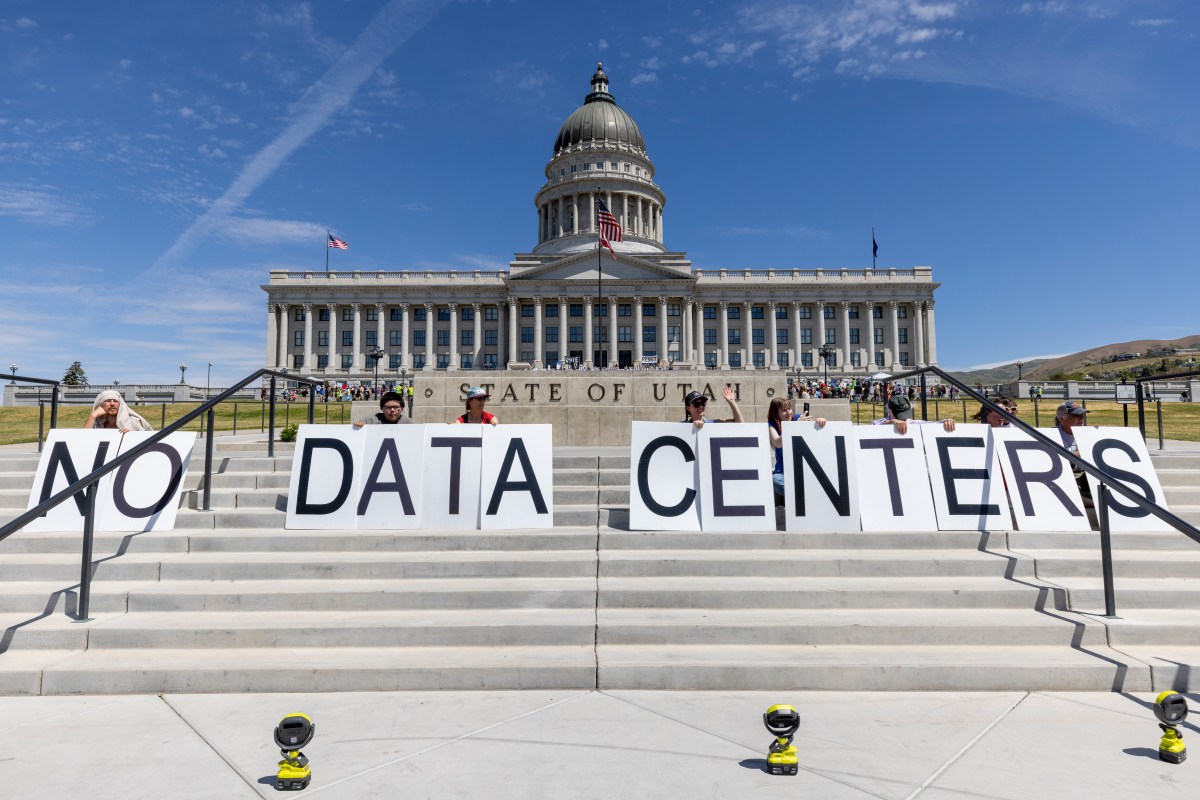
Data centers, used to support artificial intelligence (AI), have become a major issue in several close U.S. Senate races for 2026. Many voters, including Democrats and Republicans, oppose new data centers near them, and candidates are taking different positions on whether to allow or restrict these facilities.
Key Facts
A poll found 61% of Americans do not want new data centers in their area, with opposition from 69% of Democrats and 54% of Republicans.
In some states like Michigan, candidates have changed their stance on data centers due to funding from AI and data center-related donors.
In Michigan, Democrat Abdul El-Sayed opposes new data centers without federal rules, while Republican Mike Rogers recently supported a one-year moratorium on building them.
In Ohio, Democrat Sherrod Brown opposes data centers and highlights his opponent Jon Husted’s past support for tax breaks benefiting tech companies involved in data centers.
The National Republican Senatorial Committee is concerned that association with data centers may hurt some Republican candidates’ chances.
Fundraising totals show Brown outraised Husted by more than two to one in the second quarter of the year.
Texas candidate James Talarico is focusing on requiring data center developers to pay for necessary infrastructure and taxes before building.
Read the Original
Want the full story? Tap a source to open the original
article.
Many American companies face worker shortages but overlook people with disabilities as potential employees. Assumptions about disability often prevent these individuals from getting job opportunities, even though they have valuable skills and qualities.
Key Facts
Businesses struggle to find enough skilled workers.
People with disabilities are a large, untapped group of potential workers.
Employers often assume disabled candidates will be less productive or require costly support.
These assumptions stop many from being hired or even interviewed.
People with disabilities often develop unique problem-solving skills and persistence.
Most workers are hired based on potential and given chances to learn and grow.
Disability inclusion benefits businesses by adding talent and improving innovation.
Disability Employment Awareness Month in October highlights the importance of inclusive hiring.
Read the Original
Want the full story? Tap a source to open the original
article.
Somali pirates hijacked an oil tanker called the M.T. Sibu 1 off the coast of Yemen. This is the sixth commercial ship seized by pirates in the Gulf of Aden and western Indian Ocean since April 2026.
Key Facts
The M.T. Sibu 1, an Eritrean-flagged tanker, was taken by six armed pirates about 136 nautical miles east of al-Mukalla, Yemen.
The tanker was managed by a UAE company and had been sanctioned by the U.S. Treasury last year for links to an Iranian fleet evading U.S. sanctions.
The ship carried 20 crew members from several countries, including India, Syria, Sudan, and Iraq.
Earlier attacks involved ships named Honor 25, Sward, Eureka, Asana, and Lutuf, all targeted by Somali pirates since April 2026.
Piracy incidents now happen farther from Somalia’s coast, including near Yemen’s shores.
The International Maritime Bureau recorded 38 piracy and armed robbery cases worldwide in the first half of 2026; Somali pirates were responsible for most crew kidnappings.
Puntland’s Security Ministry said forces outside its control were behind the piracy but did not name any group or country.
Puntland condemned airstrikes near coastal communities where hijacked ships are held and called on involved countries to explain the attacks.
Read the Original
Want the full story? Tap a source to open the original
article.
A father in Japan left his 7-year-old son alone on Mount Fuji for several hours while he continued hiking with his older son. The boy was found by mountain staff near a hiking station and reunited with his father, who was reprimanded by police for leaving the child alone.
Key Facts
The boy, 7 years old, was left on Mount Fuji, Japan’s highest mountain, at over 2,000 meters (6,500 feet) elevation.
The father told his son to wait after he said he was tired and continued hiking with his older son.
Mountain hut staff found the child around 07:30 local time and alerted police.
The father was located at the eighth station, about three hours’ hike away.
Police told the father that leaving a child alone on the mountain is unacceptable.
The family was hiking the Fujinomiya route, starting from the fifth station, which takes about five hours to the summit.
Mount Fuji is 3,776 meters (12,389 feet) tall and is an active volcano and a World Heritage site.
About 200,000 people climb Mount Fuji each year, but some routes limit daily hikers to avoid crowding.
Read the Original
Want the full story? Tap a source to open the original
article.
Multiple people died in a crash between a police vehicle and a car on the A66 near Middlesbrough, England. The accident happened early in the morning, and emergency services are still at the scene while the road remains closed.
Key Facts
The crash involved a police vehicle and a Volkswagen Passat.
It occurred on the A66 in South Bank, near Middlesbrough, Teesside.
The collision happened at about 03:39 BST on 22 August 2026.
Multiple people have died as a result of the crash.
Police are working to identify the victims and notify their families.
The road is closed both ways between Normanby Road and Church Lane.
Emergency services vehicles are still present at the site.
The situation is ongoing, and updates will be provided as they become available.
Read the Original
Want the full story? Tap a source to open the original
article.
Wall Street will receive new reports next week on how confident consumers feel about the economy and on inflation rates. These reports show that consumer confidence has been falling and inflation remains higher than the Federal Reserve’s target.
Key Facts
A consumer confidence report from The Conference Board is due Tuesday, expected to show a drop in confidence in August.
Consumer confidence has been low most of 2026 because prices have risen steadily.
Inflation has stayed above 3%, higher than the Federal Reserve’s goal of 2%.
The U.S. war with Iran disrupted oil supplies, increasing gasoline and shipping costs.
The Personal Consumption Expenditures (PCE) report, which the Fed uses to track inflation, will be released Wednesday.
Inflation briefly neared the target in early 2025 but rose again after new global tariffs and the Iran conflict.
The Federal Reserve is expected to keep interest rates unchanged at its September meeting.
Read the Original
Want the full story? Tap a source to open the original
article.
Congo has received over 16,000 doses of the Ervebo Ebola vaccine to help fight a fast-spreading Ebola outbreak caused by the Bundibugyo virus. The outbreak has caused 2,516 deaths out of 5,290 confirmed cases and is growing quickly despite challenges like armed conflict and attacks on health workers.
Key Facts
Congo received 16,250 doses of the Ervebo Ebola vaccine at Kinshasa airport.
A total of 70,000 vaccine doses are expected from the World Health Organization and partners.
The current outbreak is caused by the Bundibugyo virus, which has no approved treatment or vaccine.
Ervebo has been effective against other Ebola strains and may offer some protection against this virus.
So far, 2,516 people have died out of 5,290 confirmed cases in this outbreak.
This outbreak is spreading faster than any previous Ebola outbreak in Congo.
Violence and attacks on health workers have made it harder to control the outbreak.
Displacement and poor infrastructure also worsen the situation for response efforts.
Read the Original
Want the full story? Tap a source to open the original
article.
The United States has added 50% taxes, called tariffs, on $20 billion of goods from Canada after trade talks failed. Experts say these tariffs will hurt important parts of Canada’s economy but probably won’t destroy it.
Key Facts
The US imposed 50% tariffs on $20 billion worth of Canadian goods.
The tariffs were put in place after trade negotiations between the US and Canada collapsed.
Key industries in Canada will be heavily affected by these tariffs.
A trade expert, Steven Okun, stated that these measures will not ruin Canada’s entire economy.
The tariffs have increased tensions between the US and Canada.
The trade dispute is ongoing and likely to continue.
Read the Original
Want the full story? Tap a source to open the original
article.
On the biggest stories we show what the outlets agree on and where they differ. Readers keep that going, and get the daily digest by email every morning. Most choose $3.99/month.
Trade unions are concerned that Labour’s plan to reduce zero-hours contracts might not fully meet the party’s promise to protect workers. They want the policy to cover all workers and fear that limits and rules could leave many out. The government is still deciding details as the consultation period ends soon.
Key Facts
Labour wants to cut zero-hours contracts to give workers contracts that match the hours they usually work.
Trade unions like Usdaw, GMB, and Unite warn the policy might exclude some workers due to limits on who qualifies.
Unions want the policy to apply to all workers, including full-time employees, without loopholes.
The government proposed a “regularity requirement” that unions say could disqualify many workers.
Business groups estimate the policy could cost companies up to £2.9 billion a year.
The Trades Union Congress (TUC) argues that some cost estimates assume employers won’t adapt their practices, which is unlikely.
Irregular work schedules on zero-hours contracts currently cost workers about £3,000 a year and affect their mental health.
The consultation on the zero-hours contract policy closes soon, and Business Secretary Jonathan Reynolds will lead the next steps.
Read the Original
Want the full story? Tap a source to open the original
article.
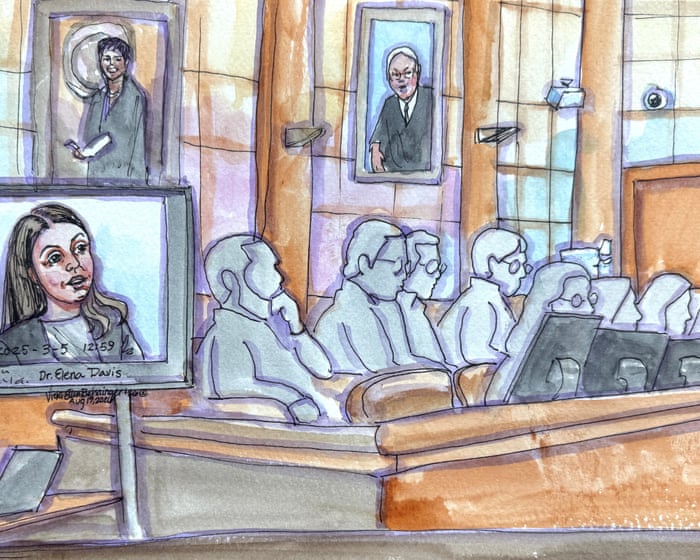
California and 28 other US states are suing Meta, the company that owns Facebook and Instagram, over claims it created addictive products that harm children. The trial in Oakland examines whether Meta broke child privacy laws by collecting data from kids under 13 without permission and could lead to huge fines and changes in how Meta runs its platforms.
Key Facts
Meta’s business model was described as “hook, hold, harvest, hide,” meaning it attracts users, keeps them engaged, collects their data, and hides information from the public.
The lawsuit alleges Meta’s social media platforms are addictive and cause harm to children.
The case is led by California and includes 28 other states suing Meta in US courts.
The lawsuit claims Meta broke federal child privacy laws by gathering data on children under 13 without parental consent.
Meta denies the allegations, stating it does not allow children under 13 to create accounts and has disabled over 1 million such accounts.
If found liable, Meta could face damages up to $200 billion, equal to its projected 2025 yearly revenue.
The trial includes testimony from former Meta employees, a psychologist, and is expected to last 6-8 weeks.
Meta has already lost two similar lawsuits earlier this year related to child safety and addictive design on its platforms.
Read the Original
Want the full story? Tap a source to open the original
article.