A charter plane with eight people crashed near a radar site in western Alaska on Thursday. The plane was approaching Cape Newenham after leaving Anchorage, and authorities have launched a search and rescue mission.
Key Facts
The plane had eight people on board: two pilots and six passengers.
The crash happened near the Cape Newenham Long Range Radar Site.
The plane took off from Anchorage earlier that day.
The crash occurred early Thursday afternoon during the plane’s descent.
The National Transportation Safety Board (NTSB) is investigating the incident.
The Alaska Rescue Coordination Center is conducting search and rescue efforts.
Details about the condition of those on board are not yet known.
More information will be provided as the investigation continues.
Read the Original
Want the full story? Tap a source to open the original
article.
Shipping traffic through the Strait of Hormuz dropped sharply due to stalled talks between the US and Iran and increased security concerns. Oil prices have risen as the ongoing conflict in the Middle East disrupts energy supplies.
Key Facts
Only seven commodity ships crossed the Strait of Hormuz on Thursday, half the number from the previous day.
The Strait of Hormuz is a key waterway that handles about 20% of the world's crude oil and liquefied natural gas shipments.
No very large crude oil or liquefied natural gas tankers passed through the strait that day, but one very large gas carrier carrying propane and butane did transit.
US-Iran peace talks have stalled, increasing tensions and risks around shipping in the region.
The USS George Washington aircraft carrier strike group arrived in the Middle East to replace the USS Abraham Lincoln amid criticism of President Donald Trump’s approach to the Iran conflict.
President Trump announced new sanctions on Iran to increase economic pressure.
Yemen's Iran-backed Houthi rebels claimed attacks on Saudi facilities near the Yemeni border.
Oil prices rose, with Brent crude reaching $93.82 per barrel, continuing a weekly increase due to supply worries from the Middle East conflict.
Read the Original
Want the full story? Tap a source to open the original
article.
Japan has executed Sunao Takami, who killed five people by setting fire to a pachinko gaming parlor in 2009. This is Japan’s first execution in more than a year and the first under the current Justice Minister's administration.
Key Facts
Sunao Takami, age 58, set fire to a pachinko parlor in Osaka in 2009, killing four customers and one employee.
Takami was sentenced to death in 2011 after a jury and judges rejected his mental illness defense.
Japan and the United States are the only G7 countries that still use the death penalty.
Prisoners on death row in Japan are usually told about their execution just a few hours before it happens.
Justice Minister Hiroshi Hiraguchi approved the execution after careful review.
In June 2023, Japan executed Takahiro Shiraishi, who killed nine people and was known as the “Twitter killer.”
Public opinion polls show strong support for the death penalty in Japan.
Human rights groups criticize Japan for keeping death-row prisoners isolated and for a lack of transparency about executions.
Read the Original
Want the full story? Tap a source to open the original
article.
Rep. Seth Moulton and Sen. Ed Markey took part in their final televised debate before the Massachusetts Democratic Senate primary. Moulton, a younger House member, is challenging Markey, an experienced Senator, in a tough race.
Key Facts
Seth Moulton is a 47-year-old U.S. Representative.
Ed Markey is an 80-year-old U.S. Senator.
Both competed in the last debate before the Massachusetts Democratic Senate primary.
The debate was broadcast by WCVB-TV, WBUR-FM, and The Boston Globe.
Moulton is trying to unseat Markey in the Democratic primary.
The race is described as competitive and heated.
This debate was the final event before voters make their choice in the primary.
Read the Original
Want the full story? Tap a source to open the original
article.
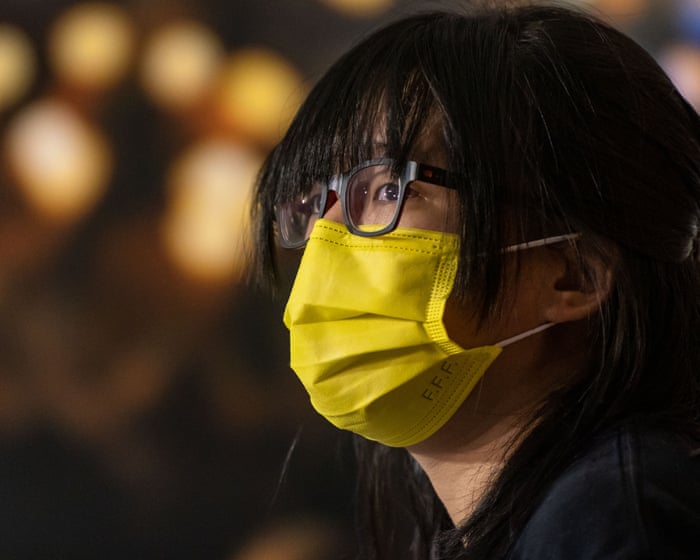
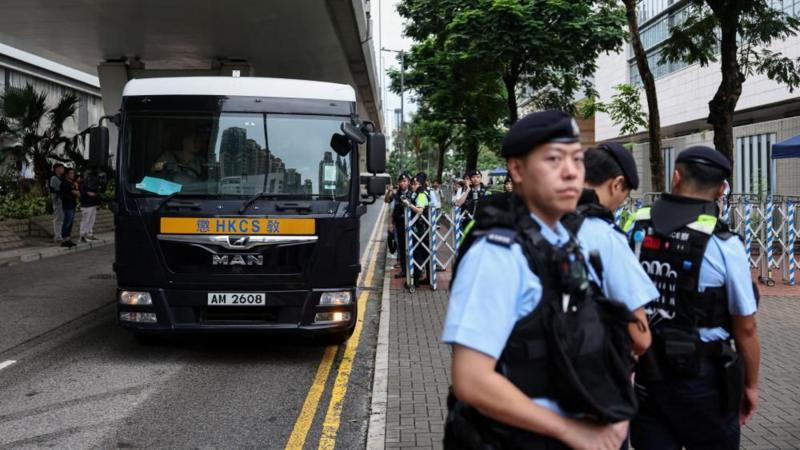
Two Hong Kong activists, Lee Cheuk-yan and Chow Hang-tung, were found guilty of inciting subversion for organizing annual vigils remembering the 1989 Tiananmen Square crackdown. They face up to 10 years in prison under Hong Kong’s national security law imposed by Beijing in 2020.
Key Facts
Lee Cheuk-yan (69) and Chow Hang-tung (41) were leaders of the Hong Kong Alliance, which organized Tiananmen Square vigils.
They were accused of encouraging people to take part in acts that threaten state power.
The trial lasted 24 days, and a third defendant, Albert Ho, pleaded guilty earlier.
The Hong Kong Alliance has been disbanded and the vigils banned since the 2020 national security law.
The law was introduced after large protests in Hong Kong in 2019 and aims to stop actions seen as challenging Beijing’s authority.
Public vigils for the Tiananmen crackdown were unique to Hong Kong and Macau within China before the ban.
Amnesty International criticized the case, saying the law’s definitions of "subversion" are too vague and broad.
Supporters and human rights groups see the case as evidence of Beijing’s increasing control over Hong Kong’s freedoms.
Read the Original
Want the full story? Tap a source to open the original
article.
The United States, led by President Donald Trump, is urging its allies and China to join a campaign aimed at putting strong economic pressure on Iran to weaken its government. US officials say they want to avoid more military action by focusing on economic measures, while Iran calls these threats "economic terrorism" and says the efforts will fail.
Key Facts
President Trump announced a new, intense campaign to isolate and pressure Iran’s economy.
The US wants allies and China to join this economic pressure effort against Iran.
US Treasury Secretary Scott Bessent supports using economic tools to avoid renewed military conflict.
Iran’s government calls the US actions "economic terrorism" and denies they will work.
Details of the planned US measures are expected in a press conference soon.
The US warns nations maintaining ties to Iran could face economic consequences.
China’s President Xi Jinping plans to visit the White House on September 24, amid these tensions.
The US has had sanctions and a naval blockade on Iran for years, yet Iran still manages to continue some activities.
Read the Original
Want the full story? Tap a source to open the original
article.
Liberia received its first group of migrants deported by the U.S. to a country where they have no citizenship, part of President Trump's immigration enforcement policy. About 20 deportees from various countries arrived, and Liberia plans to accept up to 1,200 such deportees in the next year, allowing them to apply for asylum.
Key Facts
Liberia welcomed the first group of "third country" deportees sent from the U.S., including migrants from Latin America.
Around 20 deportees from different countries arrived on Aug. 20, 2026, at Roberts International Airport near Monrovia, Liberia's capital.
Some deportees initially refused to leave the plane and their current whereabouts are unknown.
Liberia agreed to accept up to 1,200 deportees over the next year and will allow them to seek asylum there.
This deportation practice is part of President Trump's efforts to reduce illegal immigration by sending migrants to countries where they have no citizenship or ties.
The Trump administration has made similar deals with countries in Africa, including South Sudan, Central African Republic, and Democratic Republic of the Congo.
Human rights groups criticize these deportations as illegal and harmful, while the administration defends them as legal and effective.
The policy mainly targets migrants whose home countries refuse to take them back or who have legal protections against deportation to their own country.
Read the Original
Want the full story? Tap a source to open the original
article.
A Swiss tourist was sentenced to one year in prison in Bali for disrespecting the island's Hindu Day of Silence holiday, known as Nyepi. He posted a video showing himself breaking the island’s strict rules during Nyepi, which caused upset among local people.
Key Facts
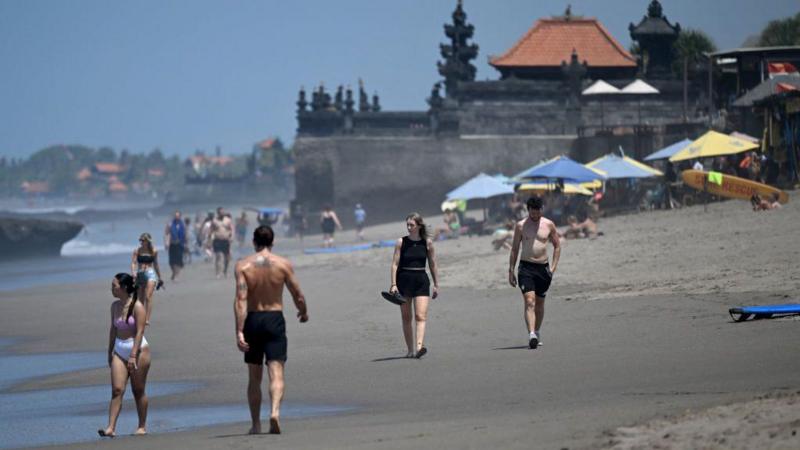
The tourist, Luzian Andrin Zgraggen, 26, filmed himself on an empty beach during Nyepi, calling the scene "crazy."
Nyepi is a Hindu holiday on Bali where the whole island stays silent, people stay home, and loud noises are banned.
During Nyepi, Bali's airport closes, internet is often cut, entertainment stops, and electricity use is discouraged to maintain silence.
Zgraggen was arrested in March after his video angered many Balinese on social media.
The judge said his actions offended local people and hurt their religious beliefs.
Zgraggen apologized in court, saying he did not understand the rules or intend to insult anyone.
Tourists in the past have been punished or deported for breaking Nyepi rules.
Bali’s growing number of tourists have caused concerns about disrespectful behavior toward local customs.
Read the Original
Want the full story? Tap a source to open the original
article.
Two Hong Kong activists, Lee Cheuk-yan and Chow Hang-tung, were found guilty of inciting others to threaten state power under Hong Kong's national security law. They face up to 10 years in jail for organizing annual vigils remembering the 1989 Tiananmen Square crackdown, which have been banned since 2020.
Key Facts
Lee Cheuk-yan (69) and Chow Hang-tung (41) were convicted under the national security law introduced by China.
They led the Hong Kong Alliance, a group formed to support pro-democracy protests after the 1989 Tiananmen Square crackdown.
The national security law was passed in 2020 and bans many forms of dissent and protest.
Annual vigils to commemorate the Tiananmen crackdown were legal in Hong Kong until banned in 2020 due to Covid-19 rules.
A third defendant, Albert Ho (74), pleaded guilty earlier in 2023.
The activists have been in jail since their 2021 arrest.
Human rights groups criticize the law, saying it is vague and restricts freedom.
The Tiananmen Square crackdown in 1989 involved troops stopping pro-democracy protests, killing hundreds or possibly thousands.
Read the Original
Want the full story? Tap a source to open the original
article.
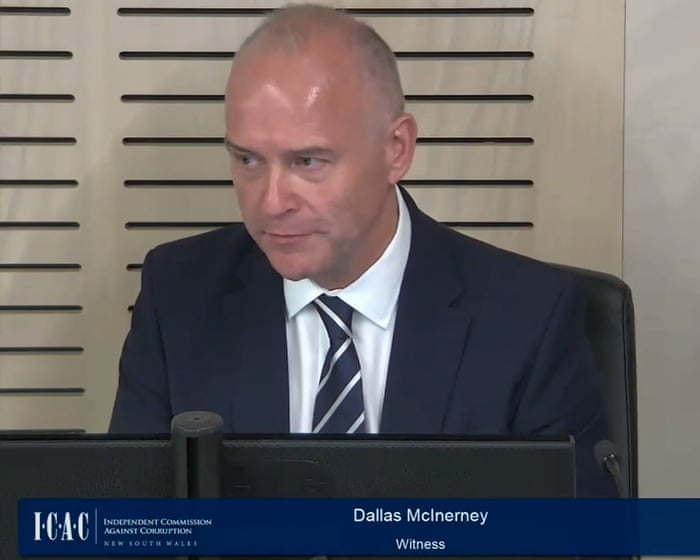
Dallas McInerney, the chief executive of Catholic Schools New South Wales, was fired after giving evidence at an investigation into alleged illegal political donations linked to the NSW Liberal party. The Independent Commission Against Corruption (Icac) is looking into claims that McInerney approved payments disguised as consulting fees to a conservative political group.
Key Facts
Dallas McInerney led Catholic Schools New South Wales and was removed from his job following an Icac inquiry.
Icac investigates if McInerney arranged illegal political donations from Catholic Schools NSW to lobbying firms.
The payments in question totaled $265,900 over four years.
McInerney denied deleting important evidence from his phone and iPad during the inquiry.
His membership in the Liberal party was suspended when the inquiry was announced.
McInerney is linked to a faction allied with federal opposition leader Angus Taylor, who is not accused by Icac.
The board of Catholic Schools NSW said it lost confidence in McInerney’s leadership.
An interim CEO, Peter Yates, will lead the organization while a new CEO is found.
Read the Original
Want the full story? Tap a source to open the original
article.
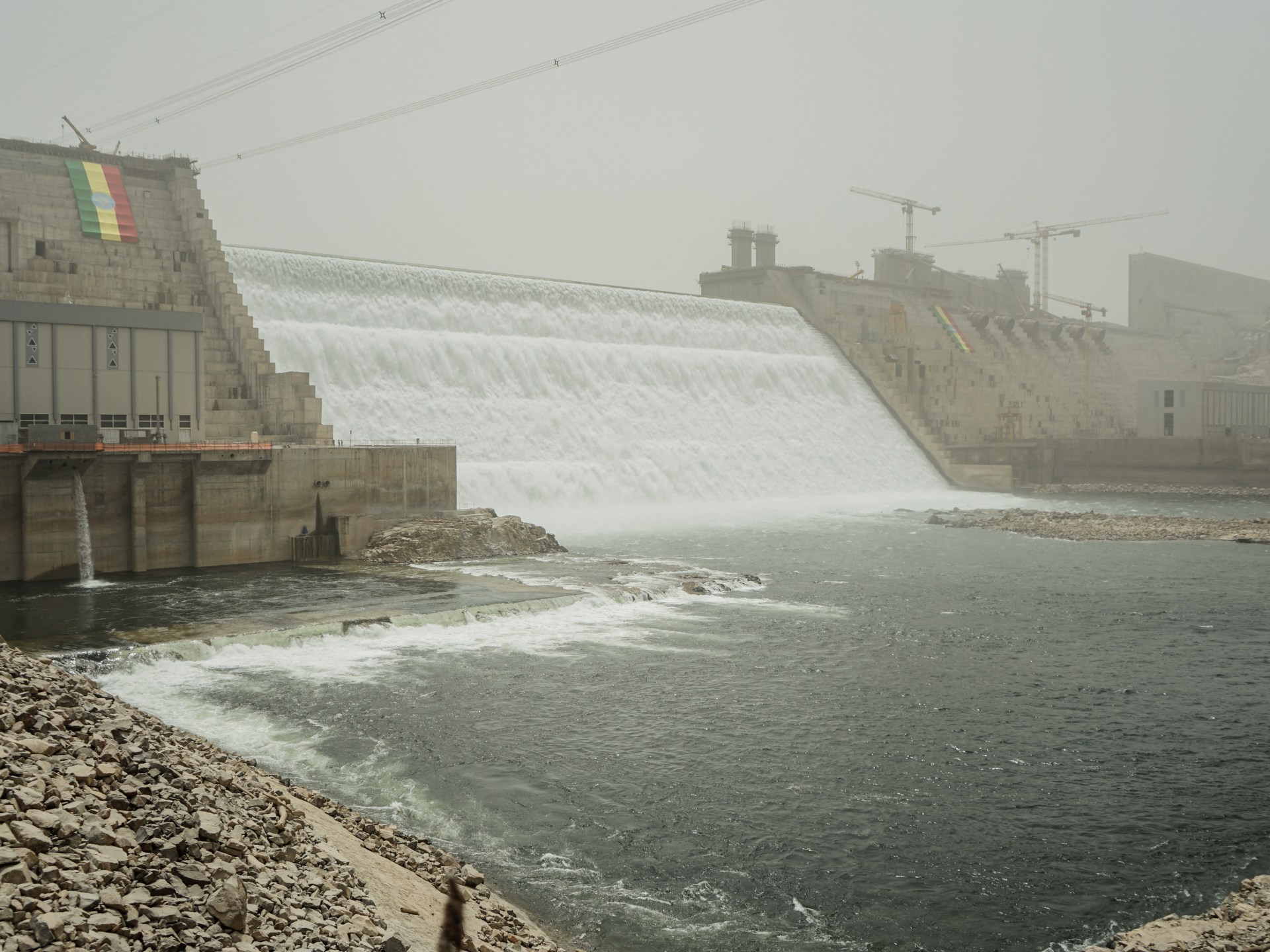
Egypt is responding to Ethiopia’s new plans for three Nile River dams by focusing on diplomacy and working with Sudan, rather than trying to stop construction. Ethiopia began the Grand Ethiopian Renaissance Dam (GERD) in 2025 despite Egypt’s objections, and now it plans more dams to increase electricity and economic growth, which raises concerns for Egypt about water availability.
Key Facts
Ethiopia plans to build three new dams on the Blue Nile: Karadobi, Mandaya, and Beko Abo.
These dams could generate around 5,700 megawatts of electricity when completed.
Ethiopia uses hydropower development to improve electricity access and economic growth.
Egypt relies heavily on the Nile for fresh water and views upstream dams as a national security issue.
Egypt and Sudan want agreements on dam operations to protect their water supply during droughts.
The GERD, inaugurated in 2025, was built without a binding agreement with Egypt or Sudan.
Ethiopia prioritizes using the Nile for development, while Egypt seeks guarantees on water flow.
The situation shows limits to Egypt’s diplomatic influence over Ethiopia’s dam projects.
Read the Original
Want the full story? Tap a source to open the original
article.
Democratic Representative Suhas Subramanyam from Virginia wants to put some limits on data centers but not so much that the U.S. falls behind China in technology development. He emphasized the importance of balancing regulation with growth in new technologies like artificial intelligence (AI).
Key Facts
Rep. Suhas Subramanyam represents a district with many data centers.
He supports regulating data centers to some extent.
The goal is to avoid harming the U.S. technology industry while managing growth.
Subramanyam mentioned AI as an example of an important emerging technology.
He highlighted the competition between the U.S. and China in technology development.
The discussion took place on a Thursday during a political event.
Read the Original
Want the full story? Tap a source to open the original
article.
Staying informed here is free for everyone. If it's worth something to you, pay what you want. Supporters also get the daily digest by email every morning.
The United States has added new economic sanctions against Cuban state-owned companies and officials, including those linked to the Cuban Institute of Friendship with the Peoples (ICAP). The sanctions aim to stop Cuba from supporting repression and spreading Marxism, while Cuba says the measures will hurt its economy and public services.
Key Facts
The US targeted nine Cuban state-owned firms in mining, metal, and construction sectors.
The Ministry of Construction and officials from ICAP were included in the sanctions.
ICAP was founded by Fidel Castro in 1960 to build international support for Cuba.
The sanctions accuse Cuba of spreading communist ideas and engaging in anti-American activities.
Fernando Gonzalez Llort, ICAP’s president and a former spy, was specifically sanctioned.
Cuba criticizes the sanctions for worsening its economic problems and limiting basic services.
Since early 2024, the US has enforced an oil blockade, causing power outages and protests in Cuba.
Cuban officials say the sanctions threaten hospitals and public welfare on the island.
Read the Original
Want the full story? Tap a source to open the original
article.
A jury in Alabama decided that The New York Times defamed Kai Spears, a University of Alabama basketball player, by wrongly saying he was involved in a fatal shooting. The jury awarded Spears $9.25 million in damages after the newspaper admitted it made a mistake in its report.
Key Facts
The jury was made up of eight people and reached its verdict after a nine-day trial.
The New York Times incorrectly reported that Kai Spears was in a car connected to a shooting that killed a 23-year-old woman.
The Times based its report on an anonymous source but later corrected the story.
Spears sued in 2023, saying the false report caused him emotional harm and wrongly linked him to a murder.
The shooting happened in January 2023 and involved other basketball players from the University of Alabama.
The Times stated it was disappointed with the verdict and planned to consider legal options.
The newspaper said it had not lost a defamation lawsuit in the U.S. for over 50 years before this case.
Read the Original
Want the full story? Tap a source to open the original
article.
A federal court is being asked to stop the Kennedy Center from putting President Donald Trump’s name back on its building. The Kennedy Center’s board, which supports Trump, voted to include his name on the building and rename the plaza in his honor, but legal issues remain because Congress says the center can only honor John F. Kennedy.
Key Facts
Rep. Joyce Beatty requested a federal court block to stop the Kennedy Center from restoring President Trump’s name on the building.
The Kennedy Center board approved adding “President Donald J. Trump” to the building’s facade and renaming the plaza after him.
The center would add another inscription if the Trump Kennedy Center Fund raises $100 million.
Congress named the center as a memorial only to John F. Kennedy, forbidding naming it after anyone else or adding others’ names on the exterior.
Judge Christopher Cooper ruled in May that adding Trump’s name was illegal and ordered it removed.
The Kennedy Center removed Trump’s name but kept scaffolding and a tarp where the name was.
The Kennedy Center says it won’t engrave Trump’s name before September 8 to allow time for legal proceedings.
Lawyers for the Kennedy Center say the scaffolding is needed for roof repairs and water testing.
Read the Original
Want the full story? Tap a source to open the original
article.
Brazil is investing about $444 million to improve its artificial intelligence (AI) technology. The country is working with both U.S. and Chinese companies to build supercomputers that will help develop AI applications and protect national control over data.
Key Facts
Brazil will spend 2.3 billion reais ($444.2 million) to support AI development.
1.3 billion reais ($251 million) will fund a supercomputing project in Rio de Janeiro in partnership with China's Huawei and iFlytek.
This infrastructure will focus on creating large language models for general and specific uses.
About 1 billion reais ($193.1 million) will go to a supercomputer expected to be among the world's top 10 AI machines, located in Rio Grande do Norte.
Brazil expects U.S. chipmaker Nvidia to win the contract for the supercomputer.
The project aims to avoid dependence on a single country or company and to strengthen Brazil’s control over its data.
The Chinese partnership will start in July 2027, and the supercomputer is expected to be operational by the end of next year.
The investments are funded by Brazil’s National Fund for Scientific and Technological Development (FNDCT).
Read the Original
Want the full story? Tap a source to open the original
article.
A young woman in California, who was on juvenile probation for killing a teen at age 15, was arrested again for allegedly dealing drugs while living in a UC Davis dorm. She was part of a state program that allows young offenders to live in less restrictive settings like university housing while serving their sentences.
Key Facts
The woman was 15 when she killed 15-year-old Omari Lowery and was placed on juvenile probation.
After serving about three years in secure custody, a judge allowed her to move to a less restrictive program at UC Davis.
She joined the Underground Scholars program, which supports incarcerated and formerly incarcerated students.
Seven months after moving into the UC Davis dorm, she was arrested for allegedly selling drugs and possessing ammunition.
Police found marijuana, vape cartridges, a digital scale, cash, texts about drug sales, and live ammunition in her dorm room.
She faces charges in Yolo County as an adult and a probation violation in Sacramento County juvenile court.
Prior to this arrest, she was featured as a success story and worked as a youth advocate for a state youth restoration office.
Similar programs exist across California, moving young offenders into community-based settings, including college campuses.
Read the Original
Want the full story? Tap a source to open the original
article.
A court stopped the case against two police officers charged with using a Taser, pepper spray, and restraints on a mentally vulnerable First Nations man in police custody. The judge found that a false statement was added to the victim’s interview, making a fair trial impossible.
Key Facts
Two senior constables were charged for their actions in a police watch house in Mareeba, Queensland, in January 2024.
The man involved was 23 years old, diagnosed with schizophrenia, and described as cognitively and emotionally vulnerable.
The man was pepper sprayed, Tasered four times, and left restrained in a violent detention cell.
The police investigation included interviews, but a key part of the victim’s statement was falsely inserted by an investigating officer.
The victim did not understand the meaning of "consent" and had said the officers acted as needed during the incident.
The judge ruled that because of the false statement, a fair trial could not happen, leading to a permanent stay of the case.
There is video footage of the incident from CCTV and body cameras.
The judge said that although the charges were serious, the legal fault in the investigation prevented the case from continuing.
Read the Original
Want the full story? Tap a source to open the original
article.
On the biggest stories we show what the outlets agree on and where they differ. Readers keep that going, and get the daily digest by email every morning. Most choose $3.99/month.
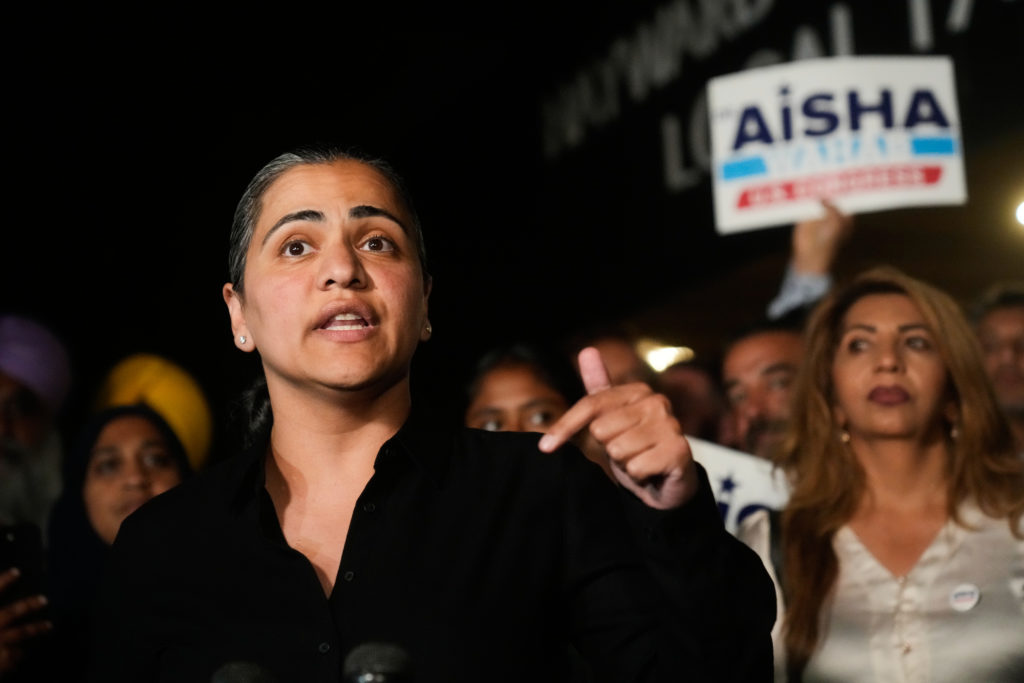
Aisha Wahab won a special election to fill the rest of former Representative Eric Swalwell's term in California's 14th Congressional District. Wahab, the first Afghan American elected to Congress, defeated Melissa Hernandez and will serve through January while Swalwell faces ongoing criminal investigations.
Key Facts
Aisha Wahab won a special election to replace Eric Swalwell in California's 14th District.
Eric Swalwell resigned from Congress in April amid sexual assault allegations, which he denies.
Swalwell is also under federal investigation, with agents seizing devices and searching his home.
Wahab will serve the remainder of Swalwell's term until January.
Wahab is the first Afghan American elected to the U.S. Congress.
Wahab previously served on the Hayward City Council and California Legislature.
She supports housing affordability and has worked on laws against caste-based discrimination.
Wahab and Hernandez, her election opponent, will compete again in November for the next full term.
Groups like AIPAC spent millions backing Hernandez and opposing Wahab in the race.
Read the Original
Want the full story? Tap a source to open the original
article.
The Panama Canal will reduce the number of ships passing through starting in early September due to lower water levels caused by the El Nino weather pattern. Limits will drop from 34 to 32 vessels per day to manage water shortages and protect both shipping and local water supplies.
Key Facts
The Panama Canal Authority announced daily ship limits beginning September 4 (34 ships) and September 15 (32 ships).
The canal usually handles about 40 ships daily and currently averages 35 ships per day.
Lower water levels in the canal are linked to El Nino and climate change.
El Nino is a natural weather event that warms the Pacific Ocean and can cause droughts and floods worldwide.
The canal uses a lock system and freshwater from lakes like Gatun Lake to operate.
Gatun Lake also provides drinking water to nearby cities including Panama City.
A severe drought in 2023 caused a 36% drop in canal traffic, disrupting global trade.
Scientists expect this El Nino to be especially strong, which could bring more extreme weather.
Read the Original
Want the full story? Tap a source to open the original
article.