Jessica Bowie, a 35-year-old woman from Albany, New York, was charged with plotting to bomb the state Capitol and kill lawmakers. The FBI stopped her plan after monitoring her for over a month, during which she communicated with informants and gathered materials for an attack.
Key Facts
Jessica Bowie was arrested for planning to bomb the New York state Capitol and kill lawmakers.
She converted to Islam about five years ago and expressed support for terrorism online.
Bowie communicated with at least one FBI informant posing as an ISIS facilitator for over a month.
She visited the Capitol grounds multiple times to plan the attack and bought ingredients to make explosives.
Bowie also intended to buy a firearm and ammunition to use against police or security.
After the attack, she planned to flee the country but was willing to return for more attacks on major U.S. targets.
State officials have increased security measures at the Capitol due to rising political violence threats nationwide.
The law enforcement response prevented the attack weeks before the anniversary of 9/11.
Read the Original
Want the full story? Tap a source to open the original
article.
Cameroon's 93-year-old President Paul Biya returned to the country after being away in Geneva for 73 days. His long absence raised concerns about his health and who was running the country during that time.
Key Facts
President Paul Biya has been in power since 1982 and is the world's oldest serving head of state.
He was away from Cameroon for 73 days, staying in Geneva with family and close aides.
Biya’s office described the trip as a short private stay.
Opposition parties criticized the absence, saying the country was left "on autopilot" and lacked leadership.
Government officials said the president continued to manage state affairs during his absence.
Biya was re-elected for an eighth term in October 2025 after term limits were removed in 2008.
His long rule has faced challenges like armed conflicts and a weak economy, leading to frustration especially among young people.
There is no vice-president currently, so if Biya could not serve, the senate president would temporarily take over.
Read the Original
Want the full story? Tap a source to open the original
article.
A woman in New York was arrested for planning to attack the state capitol building in Albany using a fake bomb. She intended to kill public officials and damage the building before escaping to territory controlled by the Islamic State group in Syria.
Key Facts
Jessica Bowie, 35, was charged with planning an attack on the New York state capitol.
She sought to use an explosive device to kill officials and destroy the building.
Bowie was caught after obtaining what she believed was a bomb, which was fake.
She took photos of the capitol and targeted it to impact the American political system.
Bowie shared anti-American messages online, including praising the 9/11 attacks.
The New York governor said security at the capitol has been increased due to rising threats.
Law enforcement says there is no immediate threat following the arrest.
Officials are working to keep communities safe amid political violence concerns.
Read the Original
Want the full story? Tap a source to open the original
article.
A psychologist testified that Lindsay Clancy did not understand that killing her three children was wrong because of her mental illness. The defense says she had bipolar disorder and a rare condition called postpartum psychosis when the tragedy happened.
Key Facts
Lindsay Clancy is on trial for killing her three children.
A psychologist named Paul Zeizel testified for the defense.
Zeizel said Clancy had bipolar disorder and postpartum psychosis.
Postpartum psychosis is a rare mental illness that can affect mothers after childbirth.
According to Zeizel, Clancy could not understand that her actions were wrong.
Clancy tried to take her own life after killing her children.
The psychologist began treating Clancy after the incident in a hospital.
The defense argues that her mental illness means she should not be legally responsible for murder.
Read the Original
Want the full story? Tap a source to open the original
article.
A judge ruled that an oil pipeline off the California coast can keep operating despite opposition from state officials and environmental groups. The Trump administration used emergency authority to reopen the pipeline, citing national energy needs, and the court said federal rules override conflicting state laws.
Key Facts
The pipeline off Santa Barbara coast restarted operations in 2024 after being closed since 2015 due to an oil spill.
President Donald Trump ordered Sable Offshore Corporation to reopen the pipeline to address energy supply concerns during tensions with Iran.
California tried to stop the pipeline, claiming it trespasses on public land and harms the environment.
The Trump administration used the Defense Production Act (DPA), which allows the president to control industries for national defense.
Judge Stephen Wilson ruled the pipeline can operate and moved oversight from state to federal authorities.
The court fined Sable $1.5 million for breaking terms of a previous agreement without permission.
Sable bought the pipeline from ExxonMobil in 2024 after trying for over a year to restart production.
Federal energy officials said reopening the pipeline supports national security, while California’s governor criticized the move as harmful.
Read the Original
Want the full story? Tap a source to open the original
article.
Rep. Jared Moskowitz, a Democrat from Florida, criticized left-wing streamer Hasan Piker and members of the Democratic Socialists of America (DSA). He said that they cannot work together with him.
Key Facts
Jared Moskowitz is a Democratic representative from Florida.
He spoke on Fox Business Network with host Stuart Varney.
Moskowitz made comments about Hasan Piker, a left-wing online streamer.
He also mentioned members of the Democratic Socialists of America (DSA).
Moskowitz said that Piker and the DSA “can’t coexist with me.”
He suggested there is a lack of ability to work together between him and those groups.
Read the Original
Want the full story? Tap a source to open the original
article.
First Lady Melania Trump appeared at a White House event after being absent from public view for over a month. The event focused on her foster care initiative and partnerships to support young people leaving foster care.
Key Facts
Melania Trump joked about being missed during her public absence at a White House Rose Garden event.
The event announced a collaboration involving her foster care initiative, IndyCar, Fox Sports, Indiana University, and Purdue University.
This was one of her first major public appearances since July 19, when she joined President Trump at the FIFA World Cup final.
She missed two important events in July: Senator Lindsey Graham's funeral and the rescheduled White House Correspondents’ Dinner.
In June and earlier, she attended other public events including the UFC Freedom 250 and the White House Correspondents’ Dinner before it was cut short.
The U.S. Secret Service is aware of a threatening video linked to Iran targeting Melania Trump but has not connected this to her recent absence.
Security officials keep protective intelligence details confidential and continue to investigate potential threats.
Read the Original
Want the full story? Tap a source to open the original
article.
The Democratic Republic of the Congo (DRC) will receive 70,000 doses of the Ervebo vaccine to help fight its biggest Ebola outbreak. The World Health Organization (WHO) said some doses will be used in a study to see if the vaccine works against the Bundibugyo virus, which is causing this outbreak and has no approved vaccine yet.
Key Facts
The DRC is experiencing its largest Ebola outbreak, caused by the Bundibugyo virus.
So far, there are 5,208 confirmed cases and 2,476 deaths.
The Ervebo vaccine is approved for one type of Ebola virus but not for Bundibugyo.
20,000 doses will be used in a late-stage trial to test if Ervebo protects against Bundibugyo.
The other 50,000 doses will be given to frontline and health workers.
Gavi, a global vaccine alliance, is funding shipping and vaccination efforts with $13 million total.
WHO calls the outbreak a global emergency and says more efforts are underway to control it.
The Congolese government started a program called “Congo River Without Ebola” to strengthen monitoring and response.
Read the Original
Want the full story? Tap a source to open the original
article.
Michael Selig, the chair of the Commodity Futures Trading Commission (CFTC), said the agency will quickly create rules for the cryptocurrency market if Congress does not pass new laws this year. He spoke to leaders in crypto and prediction markets, emphasizing the agency’s readiness to act.
Key Facts
Michael Selig is the head of the CFTC.
He made the statement at a meeting with crypto and prediction market leaders.
The CFTC will move quickly to regulate cryptocurrencies if Congress doesn’t pass laws soon.
The agency is prepared to start making rules immediately.
The goal is to provide clearer regulations for the growing crypto market.
Congress is currently working on legislation related to cryptocurrencies.
The CFTC oversees futures, options, and some digital asset markets.
Read the Original
Want the full story? Tap a source to open the original
article.
Congress members from both parties are concerned about the United States’ $40 trillion national debt. Despite efforts by Republicans and Democrats to address the issue, lawmakers find it hard to make significant progress.
Key Facts
The national debt has reached $40 trillion.
Both Republicans and Democrats have tried to reduce the debt.
Republicans say high government spending and entitlement programs are major causes.
Democrats focus on other factors contributing to the debt.
Lawmakers agree the problem is becoming harder to ignore.
Congress has struggled to take strong action to cut the debt.
The debate reflects ongoing political disagreements about solutions.
Read the Original
Want the full story? Tap a source to open the original
article.
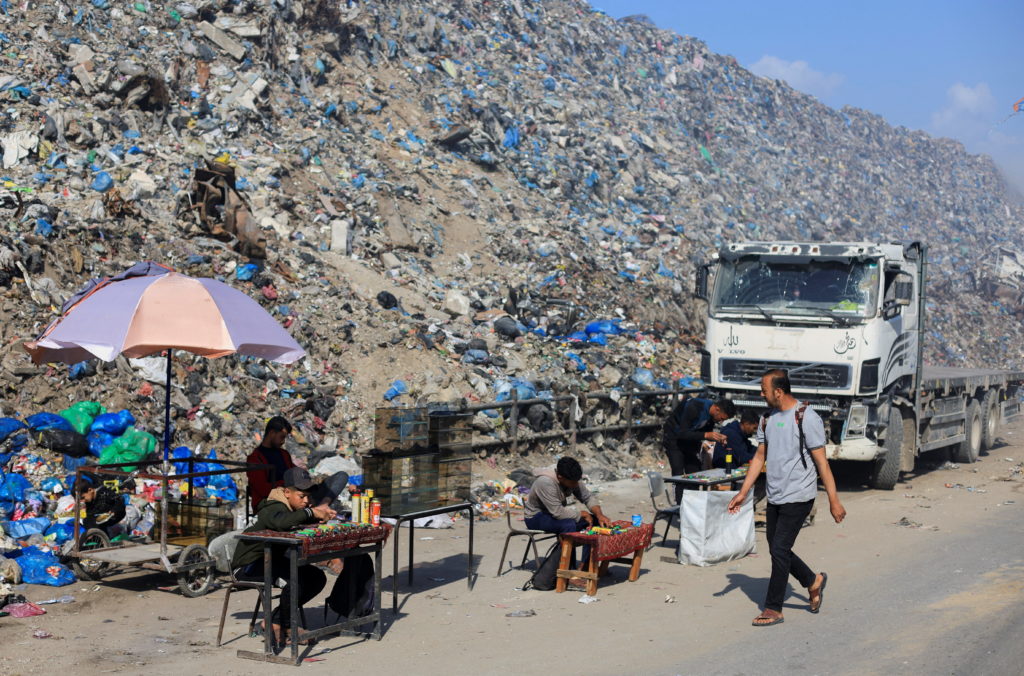
Prices for everyday items in Gaza have increased sharply because many goods are smuggled into the territory due to Israeli restrictions. Israeli soldiers and middlemen are accused of making millions by controlling this illegal trade, which includes items like cigarettes, phones, fuel, and medical supplies.
Key Facts
Israel limits or bans many goods from entering Gaza, calling some "dual use" because they might be used by militants.
Smugglers bring in cigarettes, tobacco, iPhones, solar panels, fuel, anesthetics, and other banned or limited items.
Prices for groceries, batteries, and medicines have risen sharply in Gaza due to these restrictions and smuggling.
Israeli court documents and interviews reveal soldiers and middlemen are involved in profiting from smuggling.
The Associated Press investigation included talks with traders, merchants, truckers, Palestinian officials, U.N. staff, and residents.
Many sources spoke anonymously due to fear of retaliation from Israel, Hamas, or smugglers.
Cigarettes and tobacco generate the highest profits in this smuggling trade.
Hospitals sometimes rely on smugglers to get necessary medicines and equipment.
Read the Original
Want the full story? Tap a source to open the original
article.
Children in Khan Younis, Gaza, who have lost limbs during the ongoing conflict are learning to swim. This program helps them regain confidence and improve their movement after serious war injuries.
Key Facts
Children in Khan Younis, Gaza, have lost limbs due to the conflict in the region.
Gaza has the highest number of child amputees compared to its population worldwide.
About 4,000 children in Gaza have lost limbs since the war began.
A swimming program has been created to support these amputee children.
The program aims to help children build confidence and improve their physical abilities.
Swimming is used as a way to help children recover both physically and emotionally.
Read the Original
Want the full story? Tap a source to open the original
article.
On the biggest stories we show what the outlets agree on and where they differ. Readers keep that going, and get the daily digest by email every morning. Most choose $3.99/month.
Neutrogena responded to criticism following the death of actress Hayden Panettiere by expressing sadness and regret for not supporting her during a difficult time. The company acknowledged that it ended her contract as a brand ambassador after she spoke publicly about postpartum depression.
Key Facts
Hayden Panettiere died at age 36 and was found in cardiac arrest.
She had a partnership with Neutrogena for over ten years.
Neutrogena chose not to renew Panettiere's contract after she discussed her postpartum depression.
The company issued a statement expressing sadness and regret over its past actions.
Neutrogena said it wants to be known as supportive and that it failed in this case.
Panettiere wrote about her relationship with Neutrogena in her memoir released in May 2026.
The issue sparked public backlash against the company.
Read the Original
Want the full story? Tap a source to open the original
article.
Syria is going through big changes after President Bashar al-Assad’s fall in late 2024, affecting how civil society groups operate. Many organizations that once worked independently during the war are now asked to register with the government, which is trying to control and reshape their role in society.
Key Facts
Bahjat Hajjar, once a supporter of opposition-run councils, is now deputy minister of social affairs and labour in Syria.
Before Assad’s fall, civil society groups were tightly controlled by the intelligence service, making it hard to get official approval.
Since December 2024, many organizations from opposition areas have been asked to register in Damascus, and approvals have become easier.
Founding a civil society organization is now simpler and cheaper than starting a company in Syria.
Experts warn that growing numbers of groups do not necessarily mean civil society is strong or influential.
Civil society in Syria developed during war to fill gaps left by the weakened state, especially in areas like healthcare, education, and shelter.
The government aims to regain control of services that civil society organizations handled, creating uncertainty about the future role of these groups.
The Ministry of Social Affairs and Labour involved civil society in creating a strategy for 2026–2028, showing some cooperation between the state and civil society.
Read the Original
Want the full story? Tap a source to open the original
article.
The United States has started sending deported migrants to Liberia under a new agreement, with plans to send about 1,200 people. These deportations are part of a broader U.S. immigration policy where migrants, including some asylum-seekers, are sent to countries that are not their own.
Key Facts
Twenty migrants were deported from the U.S. to Liberia, the first of about 1,200 planned under a new deal.
The Trump administration has agreements with around two dozen countries to deport migrants, nearly half of these countries are in Africa.
Some African countries accepting these deportees are South Sudan, Ghana, Rwanda, Cameroon, and Sierra Leone.
Many details of these agreements are kept secret, and some African governments say these moves are humanitarian.
Some deportees sent include asylum-seekers who had legal protection from being returned to their home countries.
The U.S. spent at least $40 million deporting about 300 migrants to countries outside their home nations.
Critics say this practice is used as a legal loophole to return people indirectly to countries they fled.
Some countries involved have authoritarian governments, raising concerns about the deportees' rights and protection.
Read the Original
Want the full story? Tap a source to open the original
article.
Treasury Secretary Scott Bessent has tried to lower long-term borrowing costs by doubling the size of a bond buyback program. Despite this, interest rates on key government bonds rose because investors remain concerned about rising national debt, heavy borrowing by technology companies, and the Federal Reserve’s fight against inflation.
Key Facts
The 10-year Treasury note yield rose to 4.69%, nearly back to its level before the buyback announcement.
Treasury plans to double bond buybacks to $4 billion per operation to reduce bond supply and raise prices.
Higher bond yields increase borrowing costs for consumers and businesses, affecting mortgage rates.
The national debt surpassed $40 trillion recently, a record high.
The government budget deficit is expected to top $2 trillion this year.
Treasury Secretary Bessent said a new plan to reduce the deficit may be announced soon.
Heavy bond issuance by large tech companies is increasing supply, pushing yields higher.
Some financial experts say reducing the deficit mainly depends on Congress, not Treasury actions.
Read the Original
Want the full story? Tap a source to open the original
article.
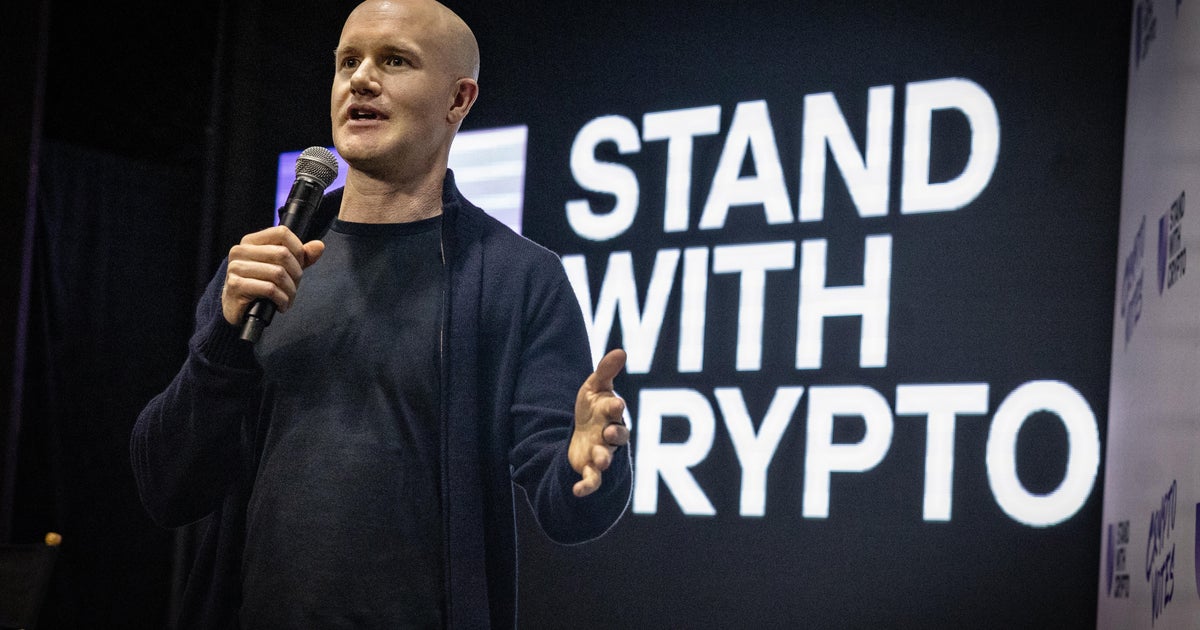
Coinbase CEO Brian Armstrong supports the CLARITY Act, a new bill that aims to regulate the cryptocurrency industry and protect consumers. The bill, backed by President Trump, would give government agencies clearer rules for overseeing digital assets and prevent problems like the FTX collapse.
Key Facts
The CLARITY Act is a bipartisan cryptocurrency bill supported by President Trump.
It would create clear rules and consumer protections for cryptocurrency users.
The bill gives the Securities and Exchange Commission and the Commodity Futures Trading Commission joint authority to regulate digital assets.
This legislation seeks to prevent collapses similar to FTX, which failed after misuse of customer funds.
President Trump met with tech leaders, including Coinbase CEO Brian Armstrong, to push for the bill’s approval.
Armstrong says the bill includes an ethics provision to prevent conflicts of interest.
Some critics, like Senator Elizabeth Warren, believe the ethics rules are not strong enough.
The bill is expected to be voted on in the Senate in September.
Read the Original
Want the full story? Tap a source to open the original
article.
President Donald Trump has made strong threats against Iran, warning of severe economic and military actions. However, these threats have not been carried out, and Iran appears to be dismissing them while some in Iranian leadership consider military escalation as a response to the current stalemate.
Key Facts
President Trump warned of the "most crushing economic operation" against Iran.
Previous Trump threats, including a large attack and severe consequences, were not acted on.
Diplomatic talks with Iran have been inconsistent, with some positive discussions delayed by Trump.
Experts say Iranian leaders do not take Trump’s threats seriously but growing frustration may increase calls for military action.
Trump’s strategy is compared to the "madman theory," aiming to keep opponents uncertain about his intentions.
Iran has successfully used control over the Strait of Hormuz to influence the global economy and targeted regional U.S. bases.
Iran is rebuilding its military and cooperating with allied groups like Hezbollah and the Houthis.
The conflict between the U.S. and Iran has lasted about six months with ongoing tensions and no clear resolution.
Read the Original
Want the full story? Tap a source to open the original
article.
Each summary links back to the original reporting, so you can check the work. Support that, and get the daily digest every morning. Most choose $3.99/month.
Tulsi Gabbard, former Director of National Intelligence, gave an update about her husband’s rare bone cancer. She said he was diagnosed earlier this year and that his illness influenced her decision to leave the Trump administration.
Key Facts
Tulsi Gabbard was the Director of National Intelligence.
Her husband, Abraham, was diagnosed with a rare type of bone cancer.
The diagnosis happened earlier in the year.
Gabbard resigned from the Trump administration partly because of her husband’s illness.
She provided this update several months after leaving the White House.
The cancer is described as very rare.
Gabbard’s announcement was emotional and personal.
Read the Original
Want the full story? Tap a source to open the original
article.
New emails show that U.S. immigration officials and Iranian authorities worked together to deport Iranian nationals from the United States back to Iran during late 2025 and early 2026. This cooperation between ICE (Immigration and Customs Enforcement) and Iran was not publicly known before.
Key Facts
ICE is a U.S. government agency that handles immigration enforcement.
The cooperation occurred quietly without public announcements.
The deportations took place over a period from late 2025 to early 2026.
Emails between U.S. and Iranian officials reveal this collaboration.
The Iranians involved were returned to Iran from the U.S.
The information was reported by CBS News.
This reveals a new aspect of how immigration deportations were managed.
Read the Original
Want the full story? Tap a source to open the original
article.