A website called ClarityCheck, which helps people find information about others using photos and personal details, accidentally left over 9 million photos and other personal data publicly accessible online. A security researcher found this issue and alerted the company, which then secured the data, but the exposure lasted for months.
Key Facts
ClarityCheck offers a reverse image search to identify people using photos.
More than 9 million images, including faces of adults and children, were stored in an unsecured online location.
The exposed data amounted to around 450 gigabytes of files, including profile pictures and screenshots.
The images were stored in an Amazon S3 bucket with no password protection, accessible via URL.
A second security problem exposed email addresses and phone numbers.
Independent researcher Jeremiah Fowler discovered the exposure and tried to warn ClarityCheck before contacting WIRED.
ClarityCheck secured the data after learning about the issue but disagreed that the data was truly "exposed" to the public.
Experts say that any data accessible without login credentials is considered exposed and poses privacy risks.
Read the Original
Want the full story? Tap a source to open the original
article.
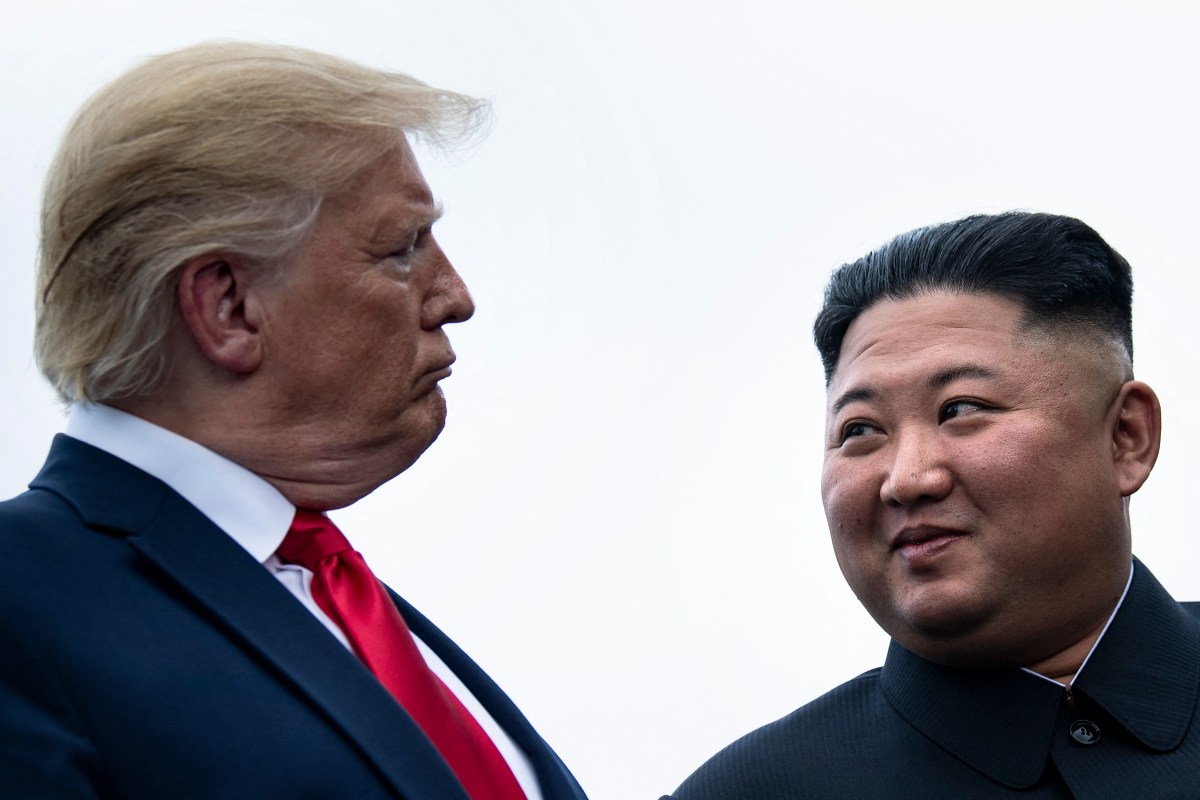
President Donald Trump has expressed interest in meeting North Korean leader Kim Jong Un again and reducing U.S.-South Korea military exercises, calling them hostile to North Korea. Trump aims to use renewed talks with North Korea to achieve a historic diplomatic success and improve his foreign policy record, which has faced several stalled efforts.
Key Facts
President Trump announced plans to cut back annual U.S.-South Korea military exercises due to cost and tensions with North Korea.
He stated the exercises sent a "hostile signal" to North Korea based on his relationship with Kim Jong Un.
Trump wants to arrange a summit with Kim, possibly during an Asia Pacific Economic Cooperation (APEC) meeting in China later this year.
Past diplomatic efforts by Trump on issues in Gaza, Ukraine, and Iran have largely stalled or failed.
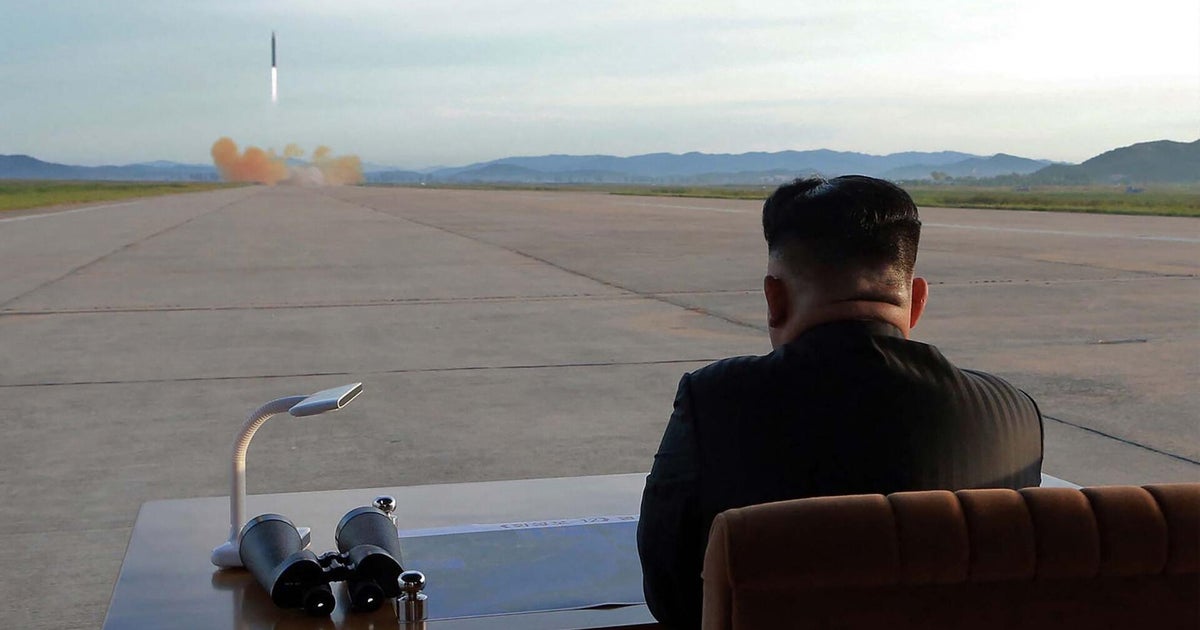
North Korea has about 57 nuclear weapons, which Trump opposes but acknowledges exist.
Trump was the first sitting U.S. president to meet a North Korean leader and to step into North Korean territory during his first term.
Negotiations with North Korea face long-standing challenges, including Pyongyang’s demand to be recognized as a nuclear state.
Renewed talks with North Korea could help Trump highlight his diplomatic skills amid recent foreign policy difficulties.
Read the Original
Want the full story? Tap a source to open the original
article.
The US national debt has gone over $40 trillion for the first time, according to government data. This increase in debt happens partly because of tariffs linked to President Donald Trump's policies and challenges his promise to reduce government spending.
Key Facts
The US national debt exceeded $40 trillion for the first time.
The rise in debt was faster than earlier predictions.
Part of the increase is due to tariffs introduced by President Donald Trump that were later invalidated.
President Trump had promised to reduce public spending during his 2024 campaign.
The growing debt has caused concern among politicians from different parties.
Debt data was reported by government sources on August 20, 2026.
The issue is seen as a setback for President Trump’s fiscal goals.
Read the Original
Want the full story? Tap a source to open the original
article.
President Donald Trump announced a strong new economic plan targeting Iran to pressure it over control of the Strait of Hormuz. Meanwhile, Americans are facing higher prices for everyday items, and experts say the conflict with Iran is increasing borrowing costs in the U.S.
Key Facts
President Trump promised the "most crushing economic operation ever" against Iran.
The U.S. national debt recently reached $40 trillion.
Consumer prices in the U.S. rose 3.5% in June compared to a year ago.
Gasoline prices increased by 26.7% over the past year.
The University of Michigan reported a sharp drop in consumer confidence from July to August.
The Iran conflict has raised long-term interest rates, increasing borrowing costs for households, businesses, and the government.
Inflation is higher worldwide, with Iran experiencing severe price increases.
The U.S. dollar’s role in global finance allows America to apply economic pressure while continuing to spend heavily.
Read the Original
Want the full story? Tap a source to open the original
article.
The Ebola outbreak in the Democratic Republic of Congo (DRC) has reached over 5,000 cases, with more than 2,300 deaths. The virus is spreading faster than ever before, making it very difficult for health workers to control in remote and insecure areas.
Key Facts
The DRC’s Ministry of Health reported 5,021 Ebola cases as of August 2026.
There have been 2,378 deaths from the outbreak so far.
This outbreak is spreading more quickly than any previous Ebola outbreak in history.
The outbreak is occurring in some of the most remote and hard-to-reach regions of the country.
Security problems and large movements of people are making efforts to control the virus harder.
Health responders are struggling to keep up with the fast pace of the outbreak.
The situation poses serious challenges for medical teams and the government.
Read the Original
Want the full story? Tap a source to open the original
article.
James Baird, the White House legislative director, is leaving his job, as announced by Vice President Vance. This change happens before the November midterm elections and during a time of tension between President Trump and Senate Republicans.
Key Facts
James Baird was the White House legislative director.
Vice President Vance announced Baird’s departure on Thursday.
Baird worked previously as Vice President Vance’s legislative director in the Senate.
The departure occurs ahead of the November midterm elections.
President Trump’s relationship with Senate Republicans has become tense recently.
Baird is leaving while Vice President Vance is still in office.
The legislative director role involves managing relations with lawmakers.
No replacement for Baird has been reported yet.
Read the Original
Want the full story? Tap a source to open the original
article.
Iran’s Foreign Minister Seyed Abbas Aragachi responded to President Donald Trump’s announcement of an “economic D-Day” targeting Iran. Aragachi stated that this U.S. economic move will lead to more failure for America, criticizing the country’s growing debt and interest costs.
Key Facts
President Trump announced a plan called “economic D-Day” aimed at Iran.
Iran’s Foreign Minister Seyed Abbas Aragachi called this an economic attack on Tehran.
Aragachi said the move will cause “further defeat” for the United States.
He described the announcement as a distraction from America’s financial problems.
The U.S. is facing high national debt and rising interest costs, according to Aragachi.
The response was shared publicly on social media by Iran’s Foreign Minister.
The term “economic D-Day” refers to a large-scale economic action intended to pressure Iran.
Read the Original
Want the full story? Tap a source to open the original
article.
Prince Harry and his wife Meghan plan to move back to the United Kingdom from the United States after six years. They will live in a private home outside London and will no longer have official royal roles.
Key Facts
Prince Harry and Meghan will leave the United States by the end of August 2026.
They intend to live in a private residence near London, not an official royal home.
Their move follows a six-year absence that caused tension with the royal family.
They will not have royal duties or titles in their new life in the UK.
The news was reported by The Daily Telegraph and shared by France 24.
Many questions remain about their future roles and relationships with the royal family.
Read the Original
Want the full story? Tap a source to open the original
article.
Tunisia is facing a severe summer heat wave that has caused power and water shortages, leading to public anger. A new opposition group called Nafas has planned a protest in the capital, Tunis, to demand political change and better government services.
Key Facts
Tunisia has experienced extreme heat with temperatures up to 50°C (122°F).
High temperatures have increased electricity use, causing power cuts in many areas.
Power shortages have also affected water pumping, worsening water supply problems.
The Nafas movement is a new opposition group formed in May that includes multiple political parties and independent activists.
Nafas opposes President Kais Saied’s government and calls for an end to what they see as government failure and injustice.
A recent Nafas protest included many first-time political protesters and young people, some influenced by social media.
Tunisia has had political turmoil since President Saied suspended parliament and tightened his control in 2021.
Protest slogans have grown stronger, echoing the language used in Tunisia’s 2011 Arab Spring uprising.
Read the Original
Want the full story? Tap a source to open the original
article.
Pirates hijacked a cargo ship carrying Turkish weapons off Somalia’s Puntland coast and took it toward the Nugaal coast. The ship had a mixed crew and was headed to a Turkish military training center in Mogadishu. Turkish forces monitored the situation, and an airstrike later killed four men near the hijacked ship.
Key Facts
The cargo ship M/V LUTUF, flagged in Cameroon, was hijacked about 3½ miles off Eyl in Puntland, Somalia.
The ship was carrying Turkish weapons, communications, and satellite equipment for a military training facility in Mogadishu.
The crew included 10 people: six Indians, one Turkish, one Georgian, and two Serbian security guards.
Eight pirates, linked to a previous hijacking in April, took control of the ship and headed toward Garmaal in Puntland.
Two Turkish-owned vessels and Turkish helicopters and drones monitored the hijacked ship.
On Tuesday, a small boat delivering khat approached the ship, then an airstrike followed, killing four men and wounding two others near the vessel.
The details about who carried out the airstrike and the current status of the ship and crew are unclear.
Turkish authorities had not commented on the incident at the time of the report.
Read the Original
Want the full story? Tap a source to open the original
article.
The United States sent 20 deportees to Liberia as part of a plan to send 1,200 migrants there under a new agreement. Most of the deportees violated migration rules, and some can try to apply for asylum in Liberia.
Key Facts
The 20 deportees arrived at Roberts International Airport near Monrovia, Liberia.
Liberia will receive 1,200 migrants from the U.S. under a recent deal.
These deportees include people from Africa, North America, South America, and the Caribbean.
Most deportees faced migration-related violations or offenses.
Deportees in Liberia can apply for asylum if they want protection there.
The U.S. has used agreements with multiple countries to deport people to nations that are not their original homes.
This policy is part of President Trump’s effort to reduce immigration by sending people to third countries.
Some migrants are sent to places they never lived in, often leaving them with no safe options but to return to their home countries.
Read the Original
Want the full story? Tap a source to open the original
article.
Staying informed here is free for everyone. If it's worth something to you, pay what you want. Supporters also get the daily digest by email every morning.
Brazil is becoming an important source of rare earth minerals, which are vital for technology and clean energy. Many foreign companies, especially from the U.S., Australia, and Canada, are investing in Brazil's rare earth mining, but there are concerns about environmental damage and effects on Indigenous communities.
Key Facts
Brazil has the second-largest rare earth mineral reserves in the world, after China.
Rare earth minerals are used in electronics, magnets, batteries, wind turbines, and electric vehicle motors.
Over 42% of mining exploration applications in Brazil come from foreign companies or investors.
Most rare earth exploration applications have been filed in the last three years, with a sharp rise recently.
The U.S. increased investment in Brazil’s rare earth sector after China limited rare earth exports to the U.S. in 2025.
Brazil’s only commercial rare earth producer, Serra Verde Mining, was bought by a company partially owned by the U.S. government.
Mining projects may threaten areas in the Amazon rainforest and affect Indigenous and local communities.
Demand for rare earth minerals is expected to grow at least three times by 2040 due to a shift to renewable energy and digital technologies.
Read the Original
Want the full story? Tap a source to open the original
article.
Countries like the US and others are looking to Brazil for rare earth minerals that are important for technology and green energy. Brazil has the second-largest reserves after China, leading to a rise in mining interest, though this raises worries about harm to the environment and Indigenous lands.
Key Facts
Rare earth minerals are crucial for electronics, defense, wind turbines, and electric cars.
China holds almost half of the world’s rare earth reserves and controls most of the processing.
Brazil has the second-largest reserves and has seen a big increase in mining exploration since 2023.
More than 86% of Brazil’s rare earth mining applications were filed in the last three years.
Foreign investors, especially from the US and Australia, account for over 40% of these mining applications.
Chinese companies have not applied for mining in Brazil but are investing in related projects there.
About 25% of mining applications overlap or are close to protected natural areas and Indigenous territories in Brazil.
Mining in these areas can cause pollution, deforestation, and harm to water supplies and local wildlife.
Read the Original
Want the full story? Tap a source to open the original
article.
Tulsi Gabbard left her job as director of national intelligence earlier this year after her husband was diagnosed with a rare bone cancer. She said he is recovering but needs ongoing checkups and therapy. President Trump chose a new director after her resignation, and the intelligence office underwent major staff and structure changes during her time there.
Key Facts
Tulsi Gabbard resigned as director of national intelligence due to her husband's cancer diagnosis.
Her husband, Abraham Williams, was diagnosed with sacral chordoma, a rare tumor on the tailbone.
He underwent an eight-hour surgery to remove the tumor and is now in physical therapy.
Gabbard said he needs frequent MRIs to monitor any cancer return.
President Trump first named Bill Pulte to replace Gabbard, but after controversy, Jay Clayton was nominated and confirmed.
During Gabbard’s leadership, the Office of the Director of National Intelligence (ODNI) cut about 40% of staff and reorganized offices.
The changes were meant to reduce excess but raised concerns about weakening the agency’s overall capacity.
Critics say the changes shifted power back to independent agencies like the CIA.
Read the Original
Want the full story? Tap a source to open the original
article.
President Donald Trump said North Korea has 57 nuclear warheads. South Korean officials estimate North Korea might have as many as 120 nuclear warheads. The statements came amid ongoing discussions about a possible future meeting between President Trump and North Korean leader Kim Jong Un.
Key Facts
President Trump stated that North Korea possesses 57 nuclear warheads.
South Korea estimates the number of North Korean nuclear warheads could be up to 120.
North Korea responded to President Trump's comments about a future meeting with Kim Jong Un.
The numbers reflect uncertainty about the exact size of North Korea’s nuclear arsenal.
Talks between the United States and North Korea continue amid these differing estimates.
The discussions focus on managing nuclear weapons and improving relations.
The topic is part of a broader effort to address security concerns on the Korean Peninsula.
Read the Original
Want the full story? Tap a source to open the original
article.
The US Ambassador to India, Sergio Gor, called Indian-administered Kashmir "an important part of India" during a recent visit. Pakistan’s Foreign Ministry strongly disagreed, calling Kashmir a disputed territory according to the United Nations and criticized the US for changing its usual position.
Key Facts
Sergio Gor is the US Ambassador to India and a special envoy for South and Central Asia under President Trump.
Gor visited Indian-administered Kashmir, the first US ambassador to do so since 2019.
He described Kashmir as an important part of India and mentioned improved security under local leadership.
Pakistan’s Foreign Ministry summoned the top US diplomat in Islamabad to protest Gor’s comments.
Pakistan said Kashmir is internationally recognized as disputed according to UN Security Council resolutions.
The US currently has a "Do Not Travel" advisory for Jammu and Kashmir due to security concerns.
Kashmir is claimed by both India and Pakistan, who have fought wars over the territory.
A plebiscite to decide Kashmir’s status was called for by the UN in 1949 but never took place.
Read the Original
Want the full story? Tap a source to open the original
article.
The United States’ total debt has passed $40 trillion for the first time. Debt has grown quickly in recent years due to government spending on crises like the COVID-19 pandemic and lower tax revenues, raising concerns about the country’s financial future.
Key Facts
US debt exceeded $40 trillion in 2024, according to the Treasury Department.
Debt has more than doubled since President Trump’s first term began in 2017, growing from about $20 trillion.
The COVID-19 pandemic was a major factor, linked to about one-third of debt added since 2017.
Debt increased by $7.8 trillion during Trump’s first term and by $3.8 trillion since he returned to office in 2025.
Under the Biden administration, debt rose by $8.4 trillion between 2021 and 2025.
The Congressional Budget Office predicts US debt will grow to 120% of the country’s total economic output by 2036.
High debt growth is caused by crisis spending and tax revenue not keeping pace with government spending.
A significant portion of spending goes to Social Security and healthcare for an ageing population.
Read the Original
Want the full story? Tap a source to open the original
article.
Senator Darline Graham from South Carolina explained her mistake answering a question about Taiwan during a recent debate. She said her answer showed she is honest about not having much political experience.
Key Facts
Darline Graham is a Republican Senator from South Carolina.
She made a mistake answering a national security question about Taiwan in a primary runoff debate.
Graham described her mistake as a result of being honest about her limited political experience.
The incident happened earlier in the week during a televised debate.
She talked about this issue in an interview with Fox News on Wednesday.
Read the Original
Want the full story? Tap a source to open the original
article.
Maricopa County in Arizona has seen more than twice as many deaths related to heat compared to last year. A reporter visited a cooling center in Phoenix to show how people are staying safe from the extreme heat.
Key Facts
Heat-related deaths in Maricopa County have more than doubled since last year.
Phoenix has special cooling centers to help people escape dangerous heat.
These centers provide a safe, cool place for residents during heat waves.
The increase in heat deaths indicates rising health risks from hotter weather.
Community efforts focus on helping vulnerable people stay safe.
Extreme heat events are becoming more common in Arizona.
The cooling center visit helps raise awareness of the heat’s serious effects.
Read the Original
Want the full story? Tap a source to open the original
article.