Frank Beard, the drummer for the Texas rock band ZZ Top, died at age 77 while in hospice care at his ranch in Richmond, Texas. He played on many of the band’s biggest hits and was known for his strong drum beat that helped define their sound.
Key Facts
Frank Beard was the drummer for ZZ Top, a Texas boogie-rock band.
He passed away at age 77 in hospice care, surrounded by family.
Beard helped create hits like “Sharp Dressed Man,” “Legs,” and “Gimme All Your Lovin’.”
ZZ Top sold over 50 million records and had six No. 1 singles on rock charts.
The band had seven albums reach the Top 10 on the Billboard 200 chart.
ZZ Top received three Grammy Award nominations during Beard’s time in the band.
Bandmate Billy Gibbons praised Beard as a talented drummer and long-time collaborator.
Beard was part of ZZ Top for about 60 years and expressed that he loved playing with the band.
Read the Original
Want the full story? Tap a source to open the original
article.
Frank Beard, the drummer for the rock band ZZ Top, died at age 77 on August 17 while in hospice care at his Texas ranch. He had played with the band since 1971 and was known for his distinctive drumming on many popular ZZ Top songs.
Key Facts
Frank Beard died at 77 years old on August 17 in Richmond, Texas.
He was the drummer for ZZ Top, joining the band in 1971.
Beard contributed to famous ZZ Top songs like "La Grange," "Tush," and "Legs."
The band canceled recent shows due to Beard’s health problems.
Beard overcame drug addiction after a band break and remained sober.
He had health issues before, including an emergency appendectomy in 2002.
ZZ Top bassist Dusty Hill died in 2021 and was replaced by Elwood Francis.
The band plans to continue performing as Beard wished.
Read the Original
Want the full story? Tap a source to open the original
article.
Canadian Prime Minister Mark Carney and U.S. President Donald Trump spoke by phone to discuss trade negotiations, aiming to prevent new U.S. tariffs from starting at midnight on Wednesday. The talks focus on resolving differences over tariffs on Canadian goods including automobiles, with possible impacts on jobs and businesses.
Key Facts
The U.S. plans to impose new tariffs of 50% on about $20 billion of Canadian imports starting Wednesday midnight.
These tariffs would apply even if Canadian goods qualify under the US-Mexico-Canada trade deal protections.
One major issue is the U.S. auto tariffs, currently at 25%, which the U.S. might reduce to 15% based on the percentage of U.S.-made parts in vehicles.
The U.S. only wants to count U.S.-made parts to reduce tariffs, while Canada wants to include parts made anywhere in North America.
The U.S. Commerce Department has set new rules for automakers to certify U.S. content once per year instead of twice.
Tariffs could cause job losses and hurt industries like lumber, wine, and dairy in Canada.
Trade experts warn that this dispute could complicate the larger U.S.-Mexico-Canada trade agreement review process.
Canadian officials recently met with key U.S. trade representatives to negotiate tariff issues and ongoing trade disagreements.
Read the Original
Want the full story? Tap a source to open the original
article.
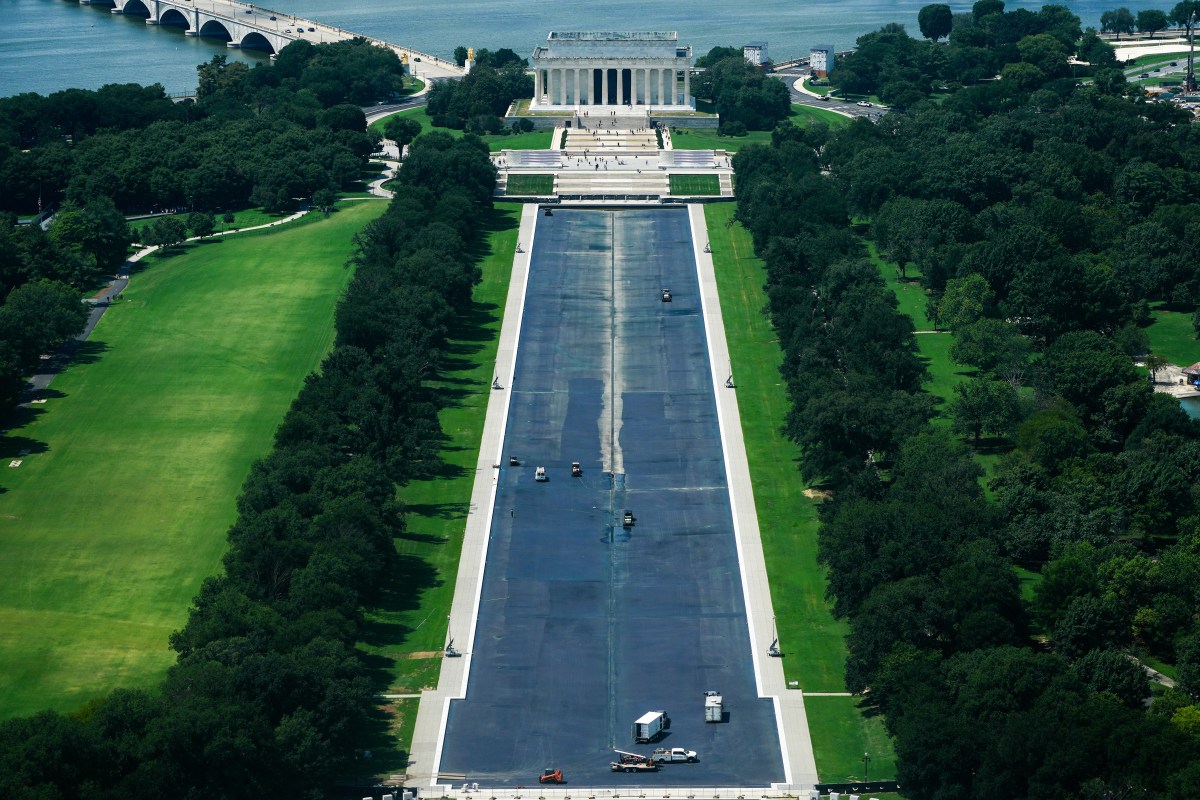
New photos show damage to the Lincoln Memorial Reflecting Pool during repairs connected to President Donald Trump's renovation project. The damage was caused by mistakes made during installation, not vandalism, and crews are still working to fix the pool.
Key Facts
The Lincoln Memorial Reflecting Pool shows peeling and patching damage after recent renovation work.
Federal prosecutors said the damage was caused by contractor errors, not vandalism.
President Trump acknowledged some contractor mistakes but also claimed vandalism happened.
The pool renovation included adding a new blue coating called "American flag blue."
The project cost over $15 million, more than originally expected.
Algae quickly returned to the pool after cleaning efforts, causing the water to look green again.
Repairs are ongoing as crews work to restore the pool.
The White House referred questions about the pool to the National Park Service.
Read the Original
Want the full story? Tap a source to open the original
article.
American Airlines will bring back TV screens on seats for all its US domestic flights. The airline stopped using these screens years ago but is now adding them again to improve passenger comfort and increase revenue. The new screens are part of a larger plan to upgrade their cabins and compete better with other airlines.
Key Facts
American Airlines removed seatback TV screens from most US planes in 2017.
The airline will restore these screens across its domestic fleet by early next decade.
Passengers had complained about using their own devices due to battery drain, viewing issues, and poor Wi-Fi.
Adding screens aims to improve the travel experience and increase airline revenue.
Other US airlines like Delta, United, and JetBlue still have seatback TVs, making them standard for many travelers.
American Airlines had removed screens to save weight and lower maintenance costs during a focus on efficiency.
Improved technology makes screens lighter, use less power, and cheaper to install now.
These changes are part of a bigger cabin investment plan announced recently by American Airlines.
Read the Original
Want the full story? Tap a source to open the original
article.
A court case has started against Meta, the company that owns Facebook and Instagram. Several U.S. states claim Meta broke rules by harming children’s privacy and using manipulative features to keep kids using its apps too much.
Key Facts
The lawsuit involves 29 attorneys general from both Democratic and Republican states.
States accuse Meta of designing features that keep children scrolling and using the platforms compulsively.
The lawsuit claims Meta misled the public by hiding the true harms of its products.
States say Meta broke the Children’s Online Privacy Protection Act by collecting children’s data without parent permission.
Meta denies all allegations and argues that its products are not addictive and public statements were not misleading.
Meta says it has age restrictions and that children who misuse the apps do so by lying or fraud.
Research on social media’s effects on children is unclear, showing both positive and negative impacts.
Experts say moderate social media use can help kids connect, but too much use may cause problems like negative self-image.
Read the Original
Want the full story? Tap a source to open the original
article.
John Bolton, who used to advise President Trump on national security, criticized the president’s approach to dealing with the war involving Iran. Bolton said that President Trump’s recent threat to Oman shows he is confused and unsure about how to handle the situation.
Key Facts
John Bolton was President Trump’s national security advisor in the past.
Bolton spoke on the show "State of Play" with Peter Alexander.
The discussion focused on President Trump’s foreign policy during the Iran conflict.
Bolton said President Trump’s threat to Oman is a sign of confusion.
Bolton believes President Trump does not have a clear plan to manage the Iran war tensions.
The comments were made on a TV program called MS NOW.
This criticism highlights public disagreement about the U.S. approach to Iran under President Trump.
Read the Original
Want the full story? Tap a source to open the original
article.
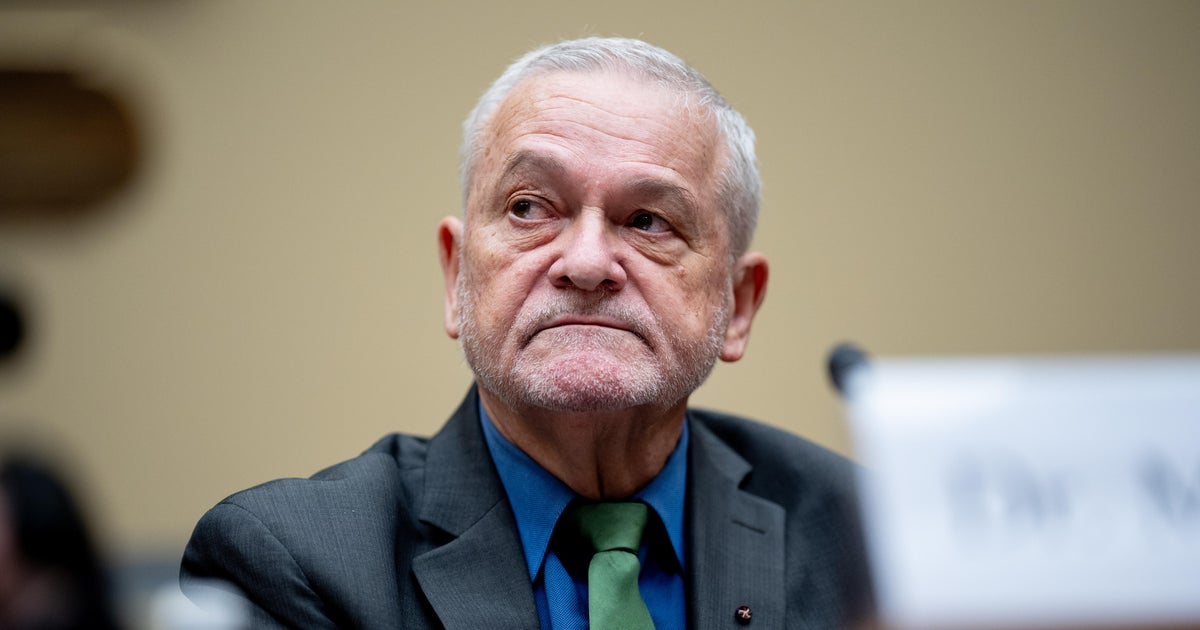
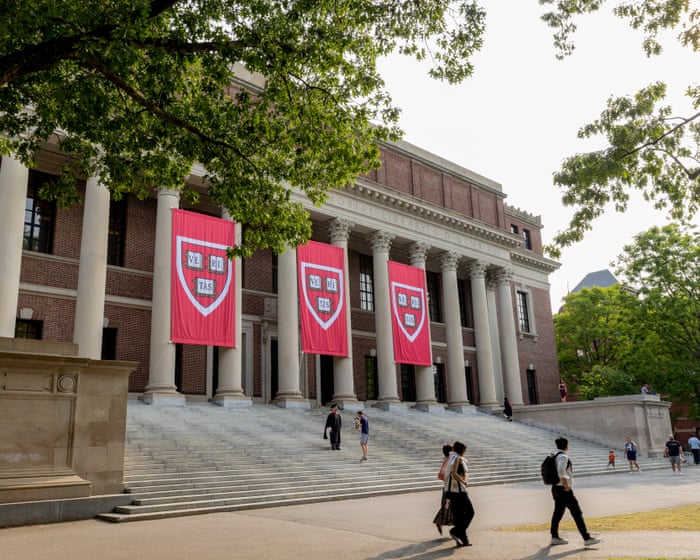
A former Justice Department lawyer claims that investigations into antisemitism at three Ivy League universities had outcomes decided before the facts were fully checked. The lawyer filed a complaint saying the investigations did not follow normal rules and sometimes ignored objections from staff.
Key Facts
The complaint was filed by Haley Van Erem, a former DOJ Civil Rights Division attorney with nearly 10 years of experience.
The investigations involved Brown, Columbia, and Harvard Universities and focused on alleged antisemitism.
The complaint says DOJ and Health and Human Services officials ignored standard investigative procedures to ensure fairness and accuracy.
Some investigations started without enough factual reason and had results planned before evidence was reviewed.
In the Brown University case, no legal violation was found, but DOJ leaders still pushed for a settlement.
Columbia’s investigation was rushed due to media attention, while Harvard faced proposed funding freezes and changes before any violations were proven.
Brown settled with the DOJ to restore some federal funding; Harvard and Columbia cases remain in court.
The DOJ reportedly warned Van Erem not to create a written record when she raised concerns about these methods.
Read the Original
Want the full story? Tap a source to open the original
article.
The administration of President Donald Trump has placed sanctions on the president and a senior lawyer of the International Criminal Court (ICC). These sanctions block their access to U.S. financial resources and aim to stop the ICC’s investigations into U.S. and Israeli actions.
Key Facts
President Tomoko Akane of the ICC and senior trial lawyer Abdoulaye Seye have been sanctioned by the U.S. government.
The sanctions freeze any assets they hold in the U.S. and prevent U.S. businesses from working with them, starting September 17.
The U.S. has sanctioned over a dozen ICC judges, prosecutors, and some human rights activists linked to the court.
The Trump administration says the ICC is overstepping by investigating alleged war crimes by the U.S. and Israel, neither of which is a member of the ICC.
ICC’s role is to investigate serious crimes like genocide, war crimes, and crimes against humanity in its 125 member countries.
The ICC opened an investigation into alleged U.S. war crimes in Afghanistan and issued arrest warrants related to Israel’s conflict in Gaza.
Some countries, such as Chad and Venezuela, plan to leave the ICC, partly influenced by U.S. pressure.
The Trump administration calls the ICC a politicized court threatening national sovereignty and plans to continue opposing it.
Read the Original
Want the full story? Tap a source to open the original
article.
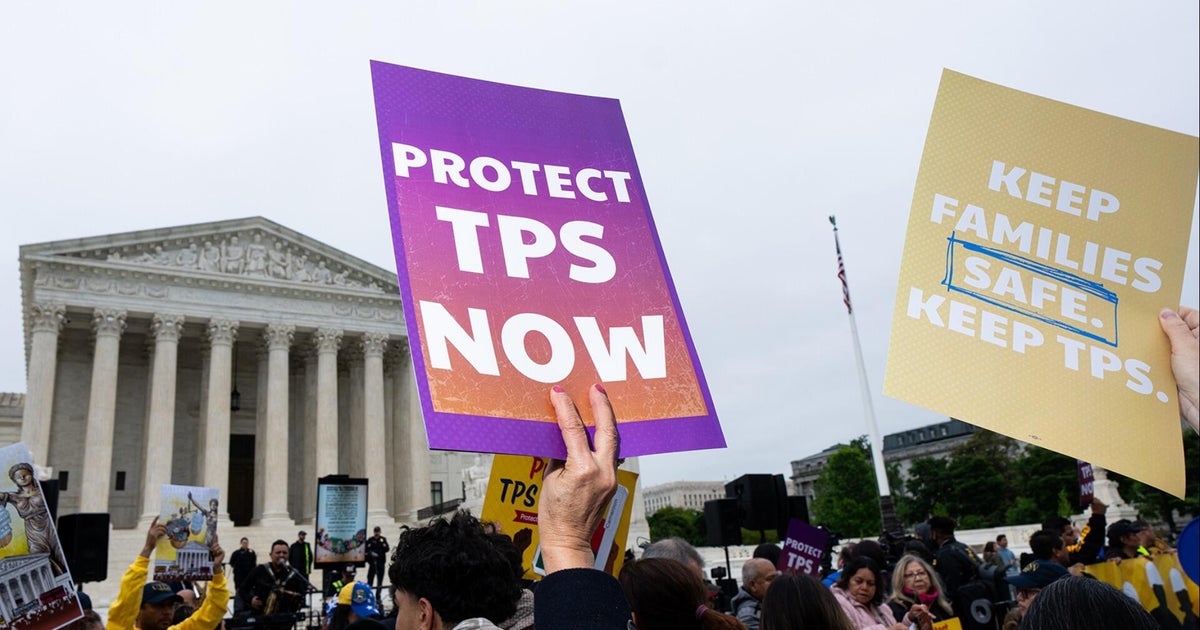
The U.S. government has ended Temporary Protected Status (TPS) for over 1 million people from 13 countries. This means these individuals no longer have special permission to live and work in the United States temporarily.
Key Facts
Temporary Protected Status allows people from certain countries affected by disasters or conflicts to stay in the U.S. temporarily.
More than 1 million people from 13 different countries had TPS revoked.
When TPS ends, those individuals may lose their legal right to work and remain in the U.S. temporarily.
The affected countries experienced changes in conditions that led to the government ending the protections.
People with TPS may have to leave the U.S. unless they have another legal status.
This change impacts many families and workers living in the United States.
The decision was reported by CBS News and covered by immigration correspondent Camilo Montoya-Galvez.
Read the Original
Want the full story? Tap a source to open the original
article.
David Morens, a former senior adviser at the National Institute of Allergy and Infectious Diseases (NIAID), pleaded guilty to conspiracy to defraud the United States by hiding federal records related to COVID-19. Morens and others used his personal email to avoid public records laws and received illegal gifts in connection with the scheme.
Key Facts
David Morens served as a senior adviser at NIAID from 2006 to 2022.
He pleaded guilty to one count of conspiracy to commit offenses and to defraud the U.S., facing up to five years in prison.
Morens worked with two co-conspirators, including Peter Daszak, president of the EcoHealth Alliance.
The group hid emails about COVID-19 origins and a terminated coronavirus grant by using Morens’ personal Gmail instead of official NIH email.
The EcoHealth Alliance had received a grant related to bat coronaviruses, which was terminated in 2020 amid lab-leak allegations.
Morens and co-conspirator 1 exchanged illegal gifts, including two bottles of wine and offers of meals at expensive restaurants.
Emails and actions were investigated by the House Select Subcommittee on the Coronavirus Pandemic in 2024.
Former NIAID director Dr. Anthony Fauci denied involvement and said Morens was not his adviser on major policy issues.
Read the Original
Want the full story? Tap a source to open the original
article.
President Donald Trump threatened to bomb Oman if it interferes with U.S. interests, expressing frustration over Oman's talks with Iran about managing the Strait of Hormuz. Oman, a small Gulf country, is mediating with Iran on navigation rules in the strait while U.S.-Iran negotiations have stalled.
Key Facts
President Trump told Fox News the U.S. would bomb Oman if it "gets in the way" amid tensions with Iran.
Oman and Iran are negotiating a deal about managing shipping through the Strait of Hormuz.
The Strait of Hormuz is a key waterway near Oman and Iran, important for global oil shipments.
U.S.-Iran nuclear talks recently ended without progress, with no new talks planned.
Oman has maintained a low profile and acted as a mediator in the region’s conflicts.
Oman allows some U.S. military access but on a smaller scale than other Gulf countries.
Iran has increased control over the strait and fired on ships there recently.
The proposed Oman-Iran agreement may set rules for safe passage and include fees for ships.
Read the Original
Want the full story? Tap a source to open the original
article.
Staying informed here is free for everyone. If it's worth something to you, pay what you want. Supporters also get the daily digest by email every morning.
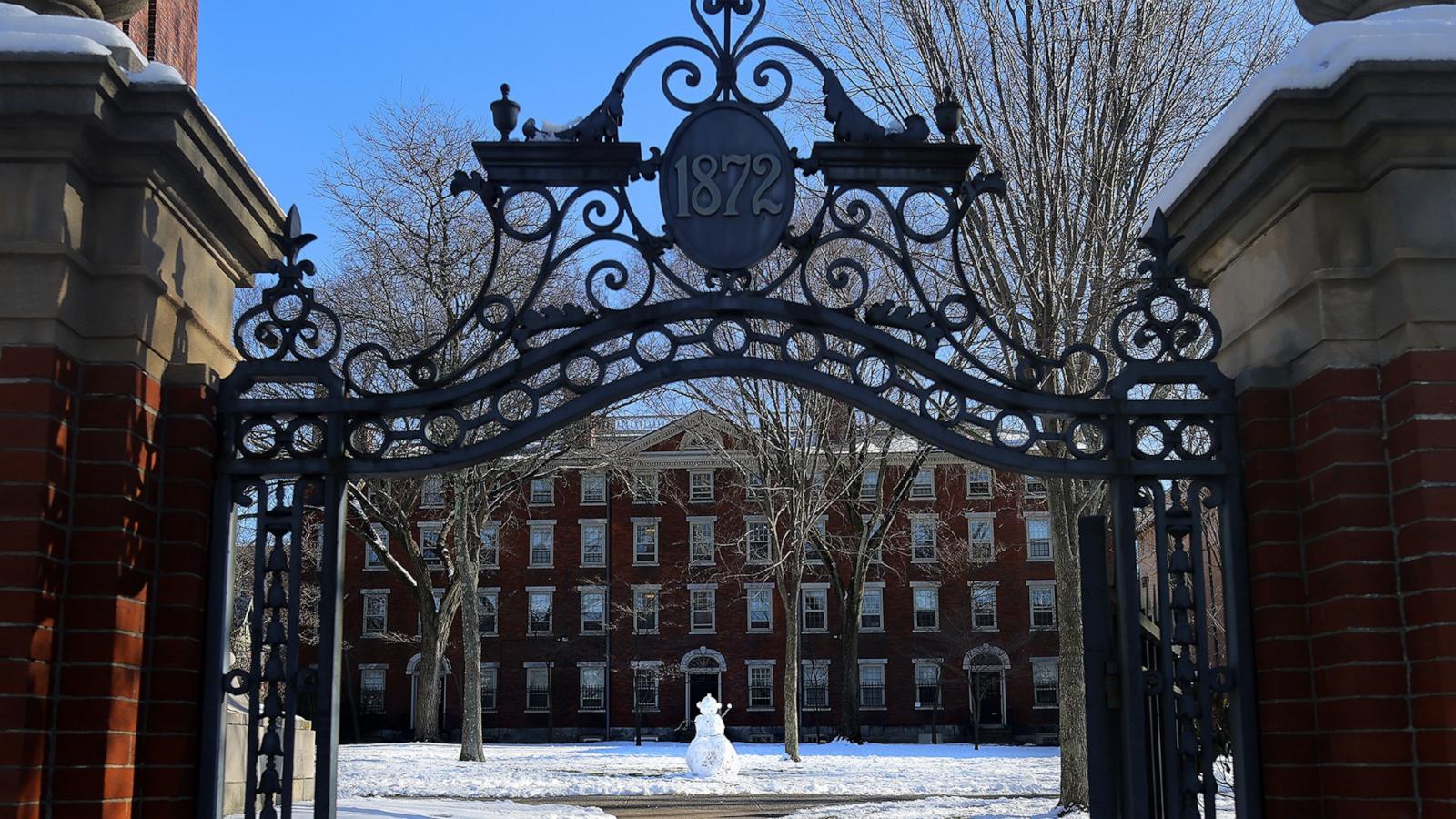
The Pentagon has ordered 30 US universities to review and end foreign academic partnerships it sees as national security risks, mostly involving Chinese institutions. These universities, including Harvard and MIT, must complete their reviews by August 31 or face losing federal funding.
Key Facts
The Pentagon’s directive targets 30 universities with potential security risks from foreign partnerships.
Harvard, MIT, Johns Hopkins, Georgetown, Cornell, and several University of California campuses are on the list.
The reviews must identify and end partnerships that could compromise national security by August 31.
The Pentagon aims to protect US research from unauthorized technology transfer and intellectual property theft.
The Pentagon previously published a list of 130 foreign institutions (mainly Chinese) linked to risks involving US-funded research.
The directive is part of a broader effort started under President Trump to address national security concerns about foreign influence in US universities.
Harvard has faced additional federal investigations related to donor scholarships and protection of certain student groups.
China rejects the US view that academic cooperation presents a security threat and calls for open scientific exchanges.
Read the Original
Want the full story? Tap a source to open the original
article.
A project called Operation Blue Skies uses artificial intelligence (AI) to reduce contrails, which are cloud-like trails from airplane engines that harm the environment. The episode also explores ways manufacturers help people use mobile phones in a healthy way and explains how AI detectors work.
Key Facts
Contrails are cloudy lines in the sky made by airplane engines.
Contrails have a negative impact on the environment.
Operation Blue Skies is a project aiming to reduce contrails using AI technology.
Google is involved in the Operation Blue Skies project.
The episode discusses three different methods manufacturers use to support healthy phone use in kids and adults.
AI detectors, tools that identify AI content or actions, are explained in the episode.
The episode is part of the Tech Life series from the World Service.
The presenter of the episode is Shiona McCallum.
Read the Original
Want the full story? Tap a source to open the original
article.
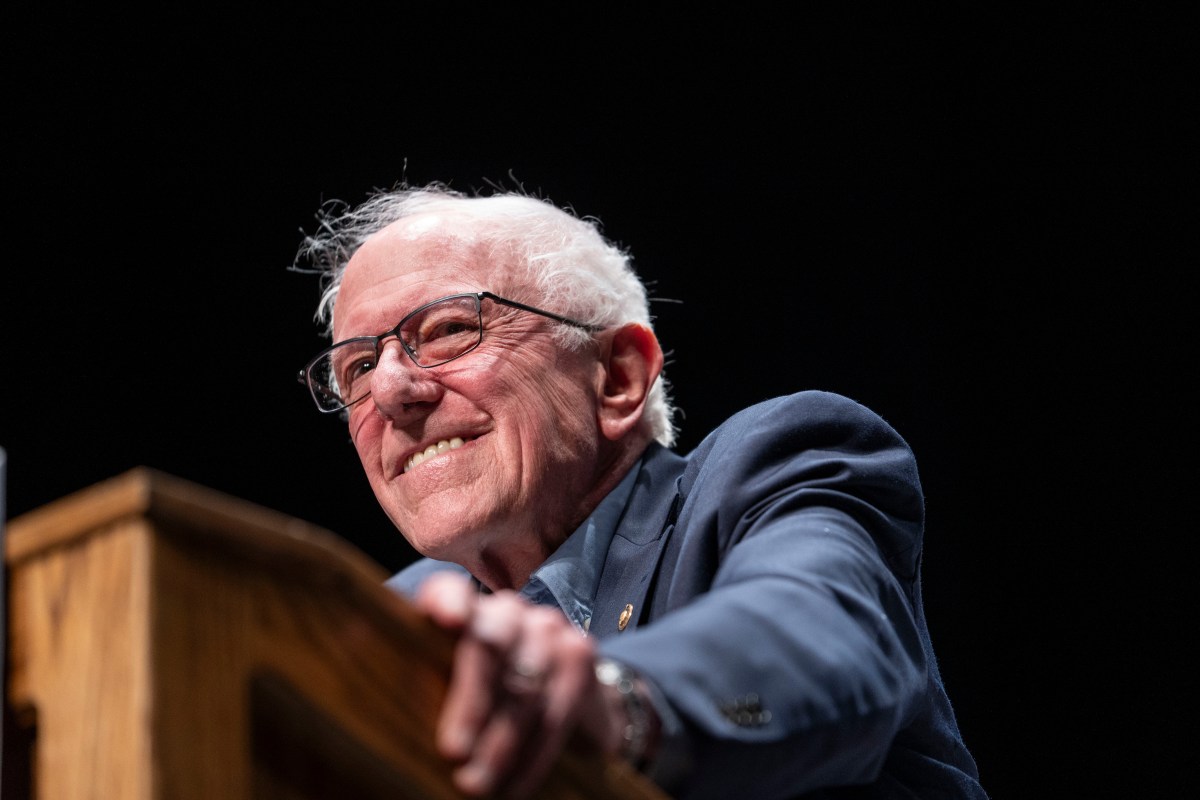
Senator Bernie Sanders has proposed a new law to stop the federal government from taking Social Security money to pay back unpaid student loans. This change would protect older Americans and people with disabilities who depend on Social Security from losing part of their benefits due to student loan debt.
Key Facts
The proposed law is called the Stop Social Security Garnishment Act.
It would stop the government from deducting money from Social Security payments to collect defaulted student loans.
Over 3 million people over 62 years old have federal student loan debt.
Many Social Security recipients with student loans rely on this money for basic living needs like food, medicine, and housing.
Currently, the government can take up to 15% of monthly Social Security payments to pay defaulted student loans.
The bill would also protect Social Security Disability Insurance (SSDI) benefits from being garnished.
Some borrowers lose access to medical care or prescriptions when their Social Security payments are reduced.
The Trump administration has paused some student loan collections from Social Security, but this law aims to make that protection permanent.
Read the Original
Want the full story? Tap a source to open the original
article.
Senator Jon Ossoff called President Donald Trump a "draft-dodging crook president" during a town hall meeting in Georgia. Ossoff spoke alongside Senator Mark Kelly and Gabrielle Giffords while talking to voters.
Key Facts
Senator Jon Ossoff represents Georgia in the U.S. Senate.
Ossoff made the statement during a town hall event with local voters.
He called President Trump a "draft-dodging crook president."
Ossoff shared the stage with Senator Mark Kelly from Arizona.
Gabrielle Giffords, a former Arizona congresswoman, was also present at the event.
The town hall focused on political discussions relevant to voters.
Ossoff and Kelly work together on issues related to Senate Intelligence.
Read the Original
Want the full story? Tap a source to open the original
article.
A whistleblower alleges that President Donald Trump’s administration predetermined investigations into anti-Semitism at top universities for political reasons, ignoring normal legal procedures. The Justice Department denies these claims, saying the whistleblower was not involved in the investigations.
Key Facts
A whistleblower claims the Trump administration’s anti-Semitism investigations at Ivy League schools were politically driven and ignored proper procedures.
The whistleblower, Haley Van Erem, worked in the Justice Department’s Civil Rights Division but was not part of these university probes, according to DOJ.
Van Erem filed a complaint accusing the task force of targeting professors based on religion and ethnicity and forcing multimillion-dollar settlements without legal proof.
The task force was created by President Trump’s executive order in early 2025 to address anti-Semitism on college campuses amid protests during the Gaza conflict.
The complaint alleges political appointees overruled career investigators and predetermined outcomes to pressure universities financially.
The Justice Department spokesperson stands by the investigations and denies any wrongdoing.
House Judiciary Committee member Jamie Raskin has opened an investigation into the whistleblower’s allegations of political manipulation in these federal probes.
The complaint and investigation focus on possible violations of Title VI, a law that prohibits discrimination in programs receiving federal funding.
Read the Original
Want the full story? Tap a source to open the original
article.
On the biggest stories we show what the outlets agree on and where they differ. Readers keep that going, and get the daily digest by email every morning. Most choose $3.99/month.
Steve Bannon, an adviser to President Donald Trump, urged the administration to declare a national emergency to place immigration agents (ICE) at polling stations during the 2024 midterm elections. Bannon says this would help stop illegal voting and ensure election security, but critics argue it could intimidate voters and block some Americans from voting.
Key Facts
Steve Bannon wants a national emergency declared for election security.
He suggests having an "up-armored ICE presence" at voting sites in November.
Bannon believes this will stop illegal voters from casting ballots.
Critics say this may intimidate voters and prevent legal voters without ID from voting.
President Donald Trump has not confirmed any national emergency plans for the elections.
The Safeguard American Voter Eligibility Act includes voter ID and mail-in ballot limits but has not passed the Senate.
Election experts say a national emergency cannot force changes to state-run elections.
Democrats, including Senator Chuck Schumer, oppose these efforts and say they will fight attempts that undermine voting rights.
Read the Original
Want the full story? Tap a source to open the original
article.
The article explores important American objects that reveal parts of U.S. history over the last 250 years. It invites readers to test their knowledge of 10 notable items connected to American culture and history.
Key Facts
The article discusses objects like apple pie, baseball, and the atomic bomb.
These objects reflect different periods and aspects of American history.
Some items, like the “whites-only” sign, represent historical social issues.
The focus is on things Americans have made, shaped, or owned.
The article is written by Holly Meyer, a member of the Associated Press Global Religion team.
Holly Meyer is based in Nashville, Tennessee.
The article is designed to educate and engage readers about U.S. heritage.
Read the Original
Want the full story? Tap a source to open the original
article.