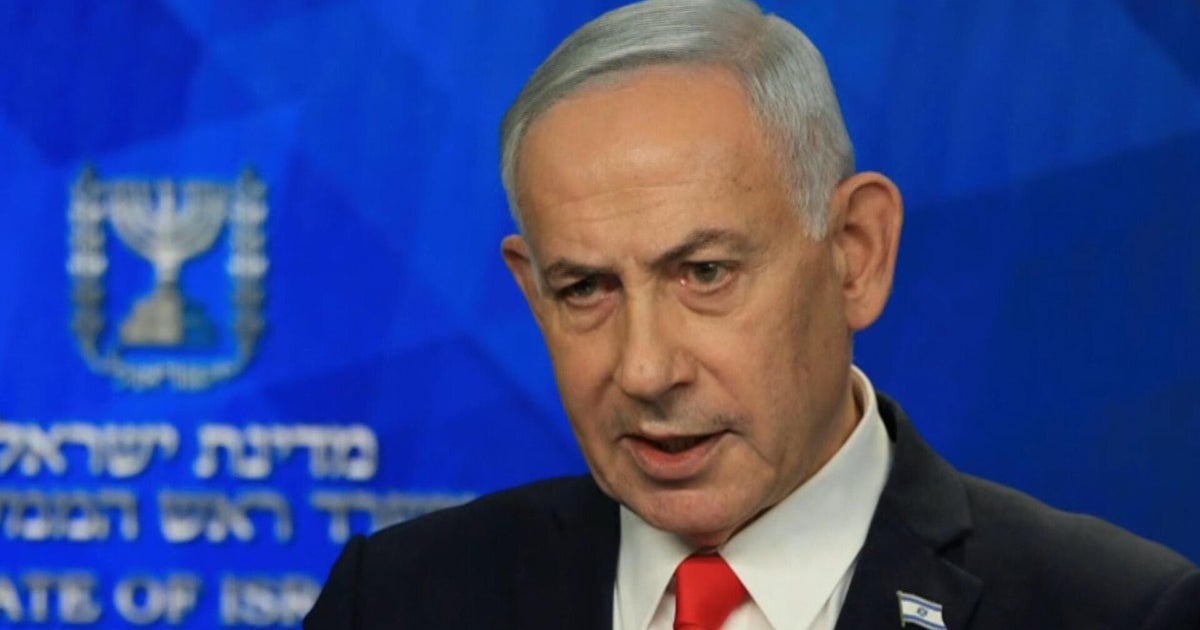
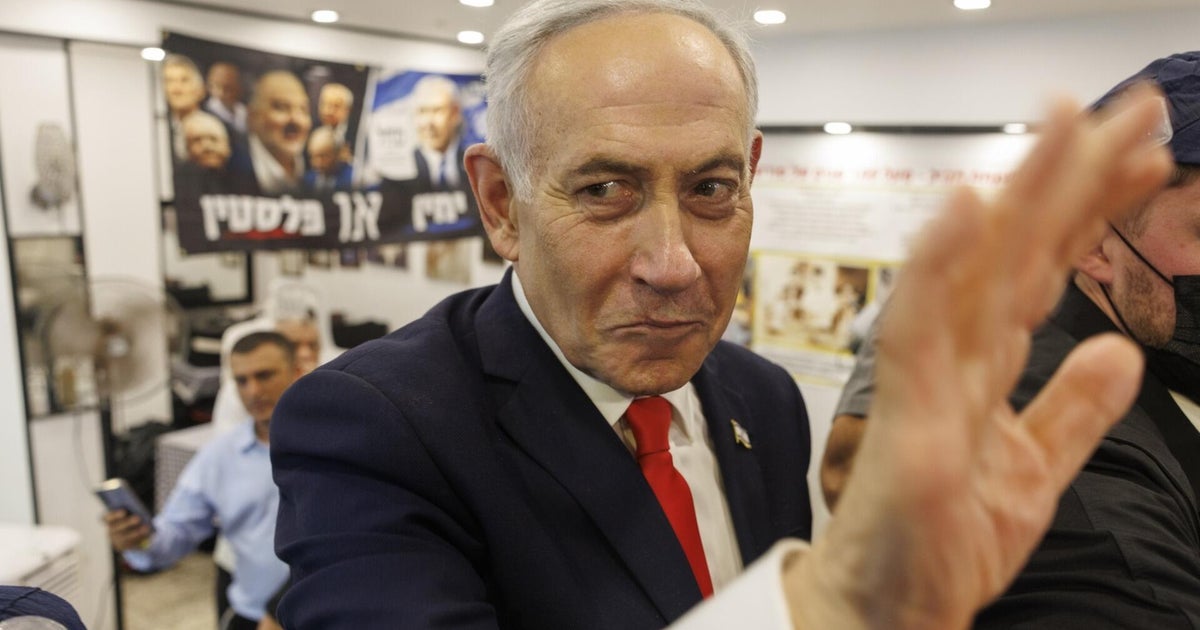
Benjamin Netanyahu has long campaigned on the promise that he is the only leader who can keep Israel safe. As Israelis vote in the country’s first election since the October 7 Hamas attacks and the start of the Gaza war, that message may be less effective, according to the report.
Key Facts
Netanyahu is Israel’s longest-serving prime minister.
Netanyahu has campaigned on a promise to keep Israel safe.
Israelis are voting in the first election since the October 7 Hamas attacks.
The election follows the start of the war in Gaza.
The report says Netanyahu’s security-focused strategy may be less effective in this election.
Read the Original
Want the full story? Tap a source to open the original
article.
Polls show Prime Minister Benjamin Netanyahu’s governing coalition trailing ahead of Israel’s first election since the Gaza war began. The report does not provide poll figures or details about the election date.
Key Facts
Benjamin Netanyahu is Israel’s prime minister.
Polls cited in the report show Netanyahu’s coalition trailing.
The upcoming election will be Israel’s first since the war in Gaza began.
The report does not give polling numbers.
The report does not state when the election will take place.
Read the Original
Want the full story? Tap a source to open the original
article.
Serbia’s ruling Serbian Progressive Party lost a parliamentary election to a grassroots student movement after nearly two years of protests, ending Aleksandar Vucic’s 14-year dominance of Serbian politics. The protests began after a train-station canopy collapse killed 16 people in 2024, and the student movement campaigned against corruption, cronyism and organized crime.
Key Facts
Vucic conceded his party’s defeat on Sunday.
The student movement led protests for nearly two years before winning the election.
The protests began after a canopy collapsed at a renovated train station in northern Serbia, killing 16 people.
Vucic campaigned with favorable state-media coverage, attacks on opponents, cash payments to voters and promises of higher pensions, roads and cheaper medicines.
Vucic blamed foreign interference for the result, citing European countries and what he called the “deep American state.”
Vucic began his political career as an ultranationalist and later presented himself as pro-European while also maintaining ties with Russia.
Vucic refused to join European Union sanctions against Russia over its war in Ukraine while Serbia pursued EU membership.
Russian government spokesman Dmitry Peskov said Moscow hoped Serbia’s next government would maintain friendly relations with Russia.
Read the Original
Want the full story? Tap a source to open the original
article.
Anthropic publicly filed for an initial public offering on Monday, taking a step toward a stock market debut. The Claude maker’s filing with the Securities and Exchange Commission could make it the first large frontier AI lab to go public.
Key Facts
Anthropic publicly filed for an initial public offering on Monday morning.
The company submitted an S-1 filing to the Securities and Exchange Commission.
Anthropic makes the Claude AI assistant.
The filing moves Anthropic closer to going public.
Anthropic could become the first large frontier AI lab to list on the stock market.
Read the Original
Want the full story? Tap a source to open the original
article.
Two men were jailed for causing the deaths of 27-year-old Justyna Hulboj and her four-year-old daughter, Lena Czepczor, in a Leeds crash in January 2023. At Leeds Crown Court, Hardeep Bhachu received 12 years in prison and Jasskamal Riyat received 16 years.
Key Facts
Hulboj and her daughter were walking to the girl's nursery when an Audi hit them on 16 January 2023.
The crash happened on Scott Hall Road, where the speed limit was 40 mph.
Prosecutors said Riyat's BMW reached up to 89 mph before Bhachu lost control of his Audi and mounted the pavement.
Bhachu admitted two counts of causing death by dangerous driving.
A jury convicted Riyat after he denied racing Bhachu.
The judge said the pair's competitive driving put speed ahead of public safety.
Hulboj's fiancé told the court that the deaths had left him grieving and struggling to carry on.
Read the Original
Want the full story? Tap a source to open the original
article.
Anthropic, the company behind the Claude AI chatbot, formally filed on Monday for a potential initial public offering. The filing marks a step toward listing the company on public markets.
Key Facts
Anthropic makes the AI chatbot Claude.
The company formally filed for a potential IPO on October 26, 2026.
An IPO is a company's first sale of shares to public investors.
The filing moves Anthropic closer to a possible public-market listing.
The article identifies Anthropic as a leader in AI development.
Read the Original
Want the full story? Tap a source to open the original
article.
A report by Democratic members of the Congressional Joint Economic Committee says President Donald Trump’s oil and gas stock holdings rose in value after the Iran war began. It estimates those holdings at $22.5 million to $81.6 million, up from $12.6 million to $46 million at the end of 2025, while fuel prices and energy-company shares also climbed.
Key Facts
The report says Trump’s oil and gas stocks gained an average of 43% in value since the end of 2025.
Between March and the end of August, Trump reported buying $4.7 million to $17.5 million in oil and gas stocks and selling $2 million to $5.4 million in the sector.
The estimates draw on financial filings to the Office of Government Ethics and market data from LSEG; filings disclose transaction ranges rather than exact amounts.
The White House says independent financial institutions manage Trump’s portfolio and that neither Trump nor his family directs investment decisions.
Trump said oil and gas companies were making hundreds of billions of dollars amid the conflict and said oil prices would fall after the war ends.
The article reports average U.S. gasoline prices rose from $2.87 per gallon in early February to $4.29, while diesel rose from $3.68 to $6.28.
Brent crude was above $115 a barrel, compared with less than $75 the day before the war began.
Energy companies listed on the S&P 500 had gained more than 50% since the start of the year, compared with about 11% for the broader index.
Read the Original
Want the full story? Tap a source to open the original
article.
Democratic Senate candidate Abdul El-Sayed criticized President Donald Trump at a Grand Rapids rally, contrasting Trump’s attacks on his Muslim identity with Saudi investment in Jared Kushner’s firm and Qatar’s provision of a jet for U.S. government use. Trump repeated unsubstantiated claims about El-Sayed at a separate rally in Port Huron as both candidates campaigned in Michigan’s closely contested Senate race.
Key Facts
El-Sayed is running against Republican Mike Rogers for the Michigan Senate seat being vacated by Gary Peters.
El-Sayed said Trump objects to his name while accepting Saudi investment connected to Kushner and a Qatari-provided aircraft.
The aircraft is a Boeing 747-8 provided to the U.S. government for use as a presidential plane; the article says it was not given to Trump personally.
The article says Kushner’s Affinity Partners received billions in investment from a Saudi government-owned entity.
Trump has called El-Sayed a jihadist and claimed he belongs to the Muslim Brotherhood; El-Sayed has denied ties to the group.
At a Port Huron rally, Trump repeated those claims and compared opposition to El-Sayed with passengers who resisted hijackers on Flight 93.
Three polls cited in the article showed El-Sayed leading Rogers by one to two percentage points, with each lead within the poll’s stated margin of error.
Trump carried Michigan by 1.4 percentage points in the 2024 presidential election.
Read the Original
Want the full story? Tap a source to open the original
article.
Brazilian President Luiz Inácio Lula da Silva won re-election with 51.7% of the vote, defeating far-right challenger Flavio Bolsonaro, who received 48.2%. Lula now faces a conservative-leaning Congress, economic and security concerns, and international tensions, including with U.S. President Donald Trump.
Key Facts
Lula defeated Flavio Bolsonaro in the October 25 runoff election.
Lula received 51.7% of the vote, while Bolsonaro received 48.2%.
The article says Lula is set to govern without a majority in Congress.
The Liberal Party, led by the Bolsonaro camp, won 121 of 513 lower-house seats and 28 of 81 Senate seats in earlier legislative elections.
Lula will need to work with centrist parties and the centre-right Centrao bloc to pursue his agenda.
Rising fuel prices and inflation have squeezed household budgets, while the government faces pressure over public spending and welfare programs.
Flavio Bolsonaro called for the runoff to be annulled, citing delays in decisions on requests to extend voting hours.
The article says Lula must also address public security and navigate international tensions with the United States and neighbouring countries.
Read the Original
Want the full story? Tap a source to open the original
article.
Meta plans to raise $95 billion through two stock offerings to fund its investment in AI infrastructure. The announcement came as investors weighed concerns about debt-heavy data-center providers, after Elon Musk warned that many smaller companies could face financial trouble.
Key Facts
Meta plans to raise $35 billion through an underwritten public stock offering.
Chipmakers Nvidia, AMD and Broadcom have expressed interest in buying up to $5 billion of the shares as cornerstone investors.
Meta also plans a $60 billion at-the-market offering of new Class C shares, which do not carry voting rights.
Meta said the fundraising would support investment in AI infrastructure and personal superintelligence.
Musk said debt markets had largely stopped lending to companies without substantial revenue outside AI data centers and predicted consolidation among more than 200 neocloud firms.
Shares in Nebius, CoreWeave and Iren fell more than 2% in premarket trading before rising after the market opened.
CoreWeave has about $35 billion in borrowing, and its stock had lost more than a third of its value over the past month.
SpaceX reported a $40 billion deal with Apollo Global Management to lease chips for AI data centers.
Read the Original
Want the full story? Tap a source to open the original
article.
A preliminary Justice Department survey found that violent crime victimization, excluding simple assaults, fell about 25% in 2025 compared with 2024. The survey also reported declines in several types of property crime, while earlier FBI data showed year-over-year decreases in reported violent crime categories.
Key Facts
The survey estimated 669,000 fewer violent crimes, excluding simple assaults, in 2025 than in 2024.
Aggravated assault victimization fell an estimated 31%, or about 390,000 incidents.
Robbery victimization declined 27%, according to the preliminary survey.
Property crime victimization fell 19%; burglary and trespassing fell 25%; and motor vehicle theft fell 29%.
The National Crime Victimization Survey draws on interviews with people ages 12 and older in U.S. households.
The 2025 survey included 101,980 household interviews, and 53% of eligible households completed interviews.
Earlier FBI data reported that aggravated assaults fell 7.2%, rapes fell 7.6%, and robberies fell about 18.5% in 2025.
Read the Original
Want the full story? Tap a source to open the original
article.
President Donald Trump praised Libyans as “proud, resilient” and deserving of peace and prosperity in a Truth Social post on Sunday. The post followed his description of Libya as “terror-infested” at a rally in Georgia; Trump also referred to U.S.-Libya cooperation against terrorism.
Key Facts
Trump posted his praise of the Libyan people on Truth Social.
He called Libyans “proud, resilient, hospitable, and deserving of peace and prosperity.”
Trump had described Libya as “terror-infested” at a rally in Georgia.
Trump said the United States and Libya share a partnership in combating terrorism.
The article does not provide further details about the partnership or the rally.
Read the Original
Want the full story? Tap a source to open the original
article.
Senior political analyst Juan Williams criticizes several candidates in the 2026 midterm elections over their campaign advertising. He describes the tactics as increasingly unethical and deceptive, but the provided article text gives no specific examples.
Key Facts
Juan Williams is identified as a senior political analyst.
Williams criticizes several candidates in the 2026 midterm elections.
His criticism concerns political advertising tactics.
Williams characterizes the tactics as increasingly unethical.
Williams also describes the tactics as deceptive.
The provided article text does not identify the candidates or give examples of the ads.
Read the Original
Want the full story? Tap a source to open the original
article.
Homeowners are decorating their front yards with elaborate Halloween displays. The decorations are described as lifting spirits, according to an ABC News report published October 25, 2026.
Key Facts
The report focuses on Halloween decorations at homeowners’ front yards.
It describes the displays as elaborate.
The article says the decorations are lifting spirits.
The article was published October 25, 2026.
The video segment is 3 minutes and 18 seconds long.
Read the Original
Want the full story? Tap a source to open the original
article.
Anthropic disclosed details of its business and plans to list on the Nasdaq under the ticker ANT. The company has not yet set the number of shares or their price range, and its expected valuation could exceed the roughly $1.8 trillion valuation reported for SpaceX’s stock listing this summer.
Key Facts
Anthropic makes the Claude AI chatbot.
The company said it intends to sell shares to the public and list on the Nasdaq under the symbol ANT.
Anthropic has not determined how many shares it will offer or their price range.
Its expected public-market valuation is reported to exceed SpaceX’s roughly $1.8 trillion initial valuation this summer.
Anthropic was founded five years ago by CEO Dario Amodei, his sister Daniela Amodei and five other co-founders.
Anthropic announced its plan to go public in June; rival OpenAI has also said it intends to list, with its debut expected early next year, according to a person familiar with its plans.
Anthropic’s documents restated its commitment to developing AI for public benefit and warned investors about risks from the technology.
Read the Original
Want the full story? Tap a source to open the original
article.
Israel is holding its first parliamentary election since Hamas’s Oct. 7, 2023, attacks. The election will affect Benjamin Netanyahu’s political future and how voters assess the attacks.
Key Facts
Israel is holding a parliamentary election.
It is the first parliamentary election in Israel since the Oct. 7, 2023, attacks by Hamas.
The election could determine Netanyahu’s political fate.
The election will give voters a chance to weigh the government’s handling of the attacks.
Zvika Klein, editor-in-chief of The Jerusalem Post, discussed the election with CBS News.
Read the Original
Want the full story? Tap a source to open the original
article.
A London court gave singer Chris Brown an eight-month prison sentence, suspended for 12 months, after he pleaded guilty to affray over a 2023 nightclub attack. His vocal coach, Omololu Akinlolu, also received a suspended sentence; both were ordered to pay costs.
Key Facts
The attack happened at Tape nightclub in Mayfair on 19 February 2023.
The court heard Brown struck music producer Abraham “Abe” Diaw with a glass tequila bottle four times, hitting his head twice.
Diaw needed hospital treatment for his injuries.
Akinlolu received a four-month prison sentence, suspended for 12 months.
Brown and Akinlolu pleaded guilty to affray in July.
The court ordered each man to pay £1,500 in costs.
Brown will not go to prison unless he commits another offence during the 12-month suspension period.
Read the Original
Want the full story? Tap a source to open the original
article.
Cenk Uygur’s Rebellion PAC released a campaign ad supporting Democratic U.S. Senate candidate Abdul El-Sayed. The ad highlights U.S. foreign aid to Israel alongside Americans’ rising living costs, and it has drawn online attention.
Key Facts
The ad supports Abdul El-Sayed’s U.S. Senate campaign.
El-Sayed is identified as a Democratic candidate.
Cenk Uygur’s Rebellion PAC released the ad.
The ad focuses on U.S. foreign aid to Israel.
The ad references rising living costs for Americans.
The ad has generated online discussion.
Read the Original
Want the full story? Tap a source to open the original
article.
A Ukrainian defense adviser disputed Elon Musk’s claim that Ukraine violated Starlink’s terms by using the satellite network for lethal drone attacks. Ukraine says restrictions on Starlink and Starshield have hindered military operations, but it remains unclear who ordered the limits.
Key Facts
Musk said Ukraine violated Starlink’s terms of service by using the network for attacks and said SpaceX had closed a loophole earlier this month.
Serhii Beskrestnov, an adviser to President Volodymyr Zelensky, said Starlink does not work over Russian soil and is limited to speeds as low as 70 kilometers per hour in Ukraine.
Ukraine said limits on Starshield access have affected strikes on Russian logistics, weapons depots and command centers, as well as air defense operations.
Ukrainian forces mainly use Starlink for communications and data transfers, according to the article.
Musk said Starlink is critical to Ukraine’s defense, while saying the U.S. government decides how Starshield is used.
It remains unclear who ordered the limits on Ukraine’s Starlink and Starshield access; Musk and U.S. officials have given different accounts of responsibility.
Three-way peace negotiations involving the United States, Ukraine and Russia are expected to restart next month.
Ukraine’s air force said Russia attacked Ukraine overnight with 140 drones and four missiles. Russia’s Voronezh regional governor reported more than 100 drones detected in the region, with two people killed and 17 injured after debris fell on a train and fires broke out.
Read the Original
Want the full story? Tap a source to open the original
article.
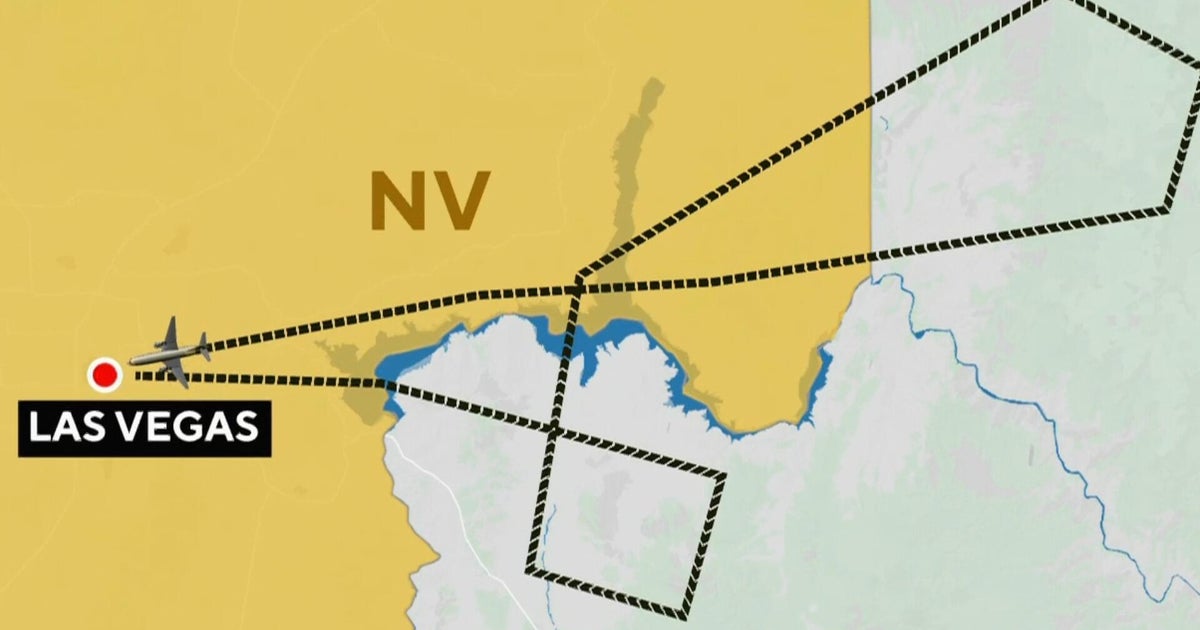
A United flight made an emergency landing in Las Vegas after a flight attendant reportedly saw a passenger texting about hijacking the plane. The pilot alerted air traffic controllers, and the aircraft was diverted over the weekend.
Key Facts
The aircraft was a United flight.
The flight made an emergency landing in Las Vegas over the weekend.
A flight attendant reportedly saw a passenger texting about hijacking the aircraft.
The pilot told air traffic controllers about the reported threat.
The flight was diverted because of the hijacking scare.
Read the Original
Want the full story? Tap a source to open the original
article.