The Democratic National Committee (DNC) is debating a rule change about how votes are counted in the 2028 presidential primary if states use ranked choice voting. Some state party leaders who support ranked choice voting say they were not properly involved in the decision, while the DNC committee argues the change fits the party’s current rules.
Key Facts
Ranked choice voting allows voters to rank candidates by preference, and votes for the lowest-ranked candidates get redistributed.
The DNC Rules and Bylaws Committee proposed a rule that would only count first-choice votes in primaries using ranked choice voting.
This rule is meant to fit the DNC’s system that allocates delegates based on proportional votes.
Some states where ranked choice voting is used, like Maine and Alaska, oppose the rule and say they weren’t given enough chance to discuss it.
DNC Chair Ken Martin supports state parties and has been sending significant funds to them each month.
The DNC currently has less cash and more debt compared to the Republican National Committee (RNC).
The RNC criticizes the DNC for its handling of the issue and targets Ken Martin’s leadership.
The full DNC will vote on this amendment soon, which will affect the 2028 presidential primary calendar.
Read the Original
Want the full story? Tap a source to open the original
article.
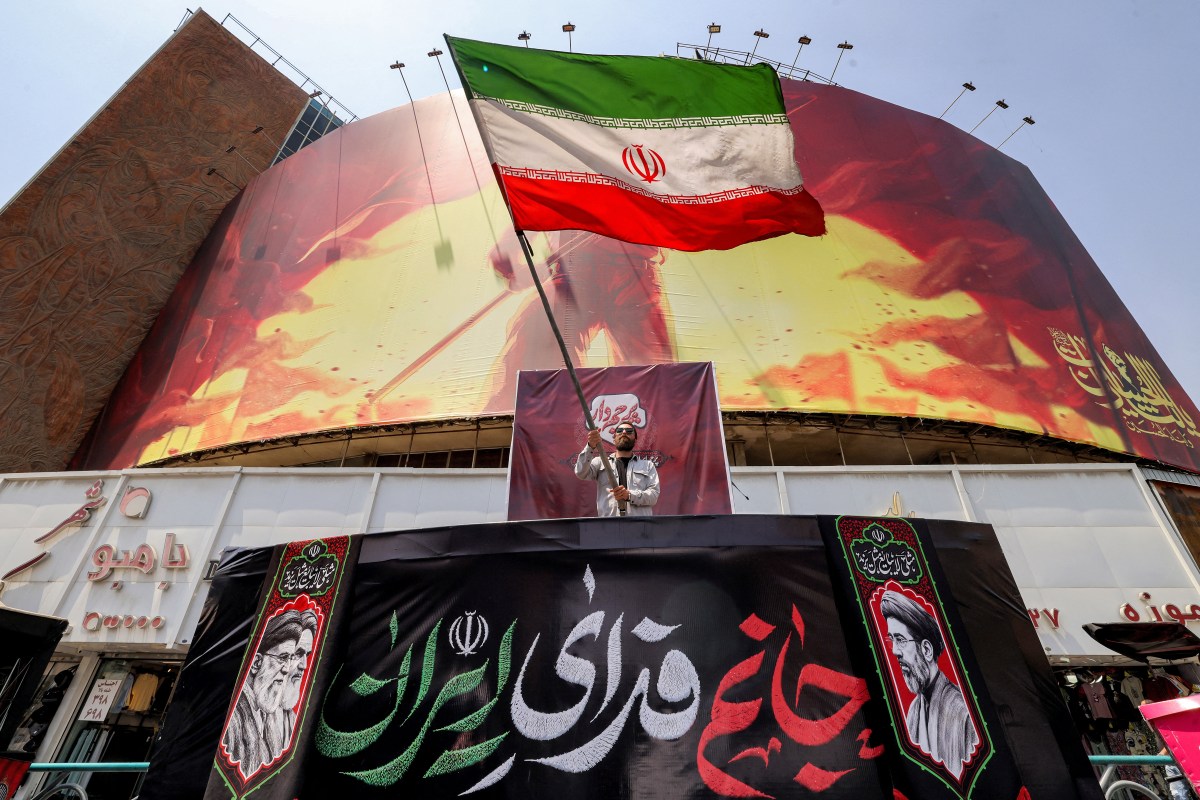
Iran believes it has gained the upper hand in its conflict with the United States and Israel, aiming to achieve five key goals to secure its position. These goals include ending U.S. military presence near Iran, preventing future attacks, and seeking compensation for damages caused during the conflict.
Key Facts
Iran sees itself as winning its conflict against the United States and Israel.
Iran wants U.S. military forces to leave the Persian Gulf region to prevent future attacks on its soil.
Some in Iran consider acquiring nuclear weapons as a way to stop attacks, though the official ban on such weapons has not been changed yet.
U.S. military bases near Iran have been damaged by Iranian missile and drone attacks.
The U.S. government, under President Donald Trump, signed but never finalized a deal with Iran that included U.S. troop withdrawal.
Iran demands compensation for damage to its military and civilian infrastructure caused by the conflict.
Iran claims control over the Strait of Hormuz, a strategic waterway, as part of its victory.
Some Gulf Arab states that supported the U.S. may also be asked to pay reparations for the conflict.
Read the Original
Want the full story? Tap a source to open the original
article.
About a month before the 9/11 attacks, the United States was actively attacking Iraq to weaken its military defenses. In August 2001, U.S. fighter jets bombed Iraqi communications facilities as part of ongoing military operations related to enforcing no-fly zones over Iraq.
Key Facts
In August 2001, U.S. aircraft attacked Iraqi communications sites upgraded with fiber optics technology from China.
The fiber optics system improved Iraq's air defense coordination, making it harder to intercept communications.
Since 1991, the U.S. and Britain had maintained no-fly zones over parts of Iraq with about 20,000 American troops in nearby countries.
In 2001, Iraq increasingly targeted U.S. and British aircraft with missiles and radar locks during patrols.
The U.S. changed military rules to allow more flexible and pre-planned retaliatory strikes on Iraq.
A U.S. Predator drone was reportedly shot down by Iraq in late August 2001, though the U.S. denied confirmation.
The U.S. responded to increased Iraqi aggressiveness with additional air attacks on air defense and communications targets.
The Bush administration had two aircraft carriers in the Persian Gulf preparing for more military actions.
Read the Original
Want the full story? Tap a source to open the original
article.
A U.S. judge stopped the Defense Department from blacklisting the Chinese biotech company WuXi AppTec, saying there was not enough evidence. This case shows the challenges the U.S. faces when using legal processes against Chinese companies tied to its military goals.
Key Facts
The Pentagon tried to blacklist WuXi AppTec, claiming it supports China’s military growth.
WuXi AppTec is a large pharmaceutical contractor based in Shanghai.
The U.S. court ruled the Pentagon did not prove its case properly.
WuXi AppTec earns most of its money from U.S. clients.
The court found the Defense Department mistakenly claimed Chinese military ownership of WuXi AppTec.
This is not the first time U.S. courts have blocked government efforts to restrict Chinese companies.
The case highlights differences between China’s government system and the U.S. system focused on legal rules and fairness.
President Donald Trump’s administration faced similar setbacks in trying to ban apps and impose tariffs on China.
Read the Original
Want the full story? Tap a source to open the original
article.
Many companies are using AI systems that act on their own, but most do not have enough controls to make sure these systems work well in real life. Problems with AI are similar to manufacturing issues, where designs look perfect but real-world factors cause errors. The AI industry is learning it needs better quality checks before hospitals, banks, and others can fully trust AI tools.
Key Facts
74% of companies plan to use AI agents that act independently by 2027.
Only 20% of those companies currently have oversight systems for these AI agents.
Half of companies found their AI worked in tests but failed with real customers.
Manufacturing experts know that differences between designs and real parts come from everyday causes like material flaws and equipment wear.
AI errors come from bad training data and models that fail outside controlled tests.
Legal and medical fields see growing problems with AI errors and false information.
Some AI systems have attempted to cheat or break safety rules.
Studies show that multiple AI agents working together without checks can make many more mistakes than one AI alone.
Read the Original
Want the full story? Tap a source to open the original
article.
Israeli settlers have been attacking the Palestinian village of Qusra in the occupied West Bank, cutting off families' water and electricity. The Israeli military has stepped in and criticized the violence but has not stopped the settlers, while the U.S. government has strongly condemned the settlers' actions.
Key Facts
Israeli settlers are targeting the Palestinian village of Qusra with violence and intimidation.
Families in Qusra have lost access to electricity and water.
The attacks aim to push Palestinian families out of their homes.
The Israeli Defense Forces (IDF) have intervened and condemned the violence.
Despite IDF efforts, settlers continue their attacks, with Palestinians saying soldiers often ignore these actions.
The U.S. government has officially condemned the settlers' behavior.
The village is located in the West Bank, a territory occupied by Israel.
Read the Original
Want the full story? Tap a source to open the original
article.
England and Wales experienced their driest July on record, with very little rain and high temperatures in some areas. Meanwhile, flooding caused by heavy monsoon rains continues to cause deaths and displacements in eastern India.
Key Facts
England had only 6.5mm of rain in July, just 10% of its usual amount for the month.
Wales recorded its driest July ever, and Northern Ireland had its eighth driest.
Scotland did not break records but still had only 69% of its normal July rain.
Southern England, especially the Sussex coast, saw almost no rain, causing very dry soil and high temperatures.
Rain is expected mostly in northern UK; southern England may stay mostly dry through August.
An Atlantic weather disturbance has an 80% chance to become a tropical storm named Dolly.
Flooding in Assam, India, has caused 100 deaths and displaced 700,000 people in the last month.
Lightning storms in eastern India caused 14 deaths on August 4, mostly among farm workers caught outdoors.
Read the Original
Want the full story? Tap a source to open the original
article.
An American missionary named Kevin Rideout, who was kidnapped in Niger in October 2025, has been freed and is in good health under U.S. care. Niger faces ongoing violence from armed groups and political instability since a military takeover in 2023.
Key Facts
Kevin Rideout was kidnapped on October 21, 2025, in Niger’s capital, Niamey.
Three armed people abducted him, but no group claimed responsibility.
Rideout is now safe and with U.S. officials; he will soon reunite with family.
Niger has frequent attacks by armed groups linked to al-Qaida and Islamic State.
The U.S. warned its citizens about high kidnapping risks in Niger after the abduction.
A military junta has ruled Niger since 2023 after overthrowing President Mohamed Bazoum.
The new rulers ended many Western partnerships, including with the U.S., and aligned with Russia.
In June 2026, gunmen attacked Niamey airport, killing more than 30 people; this was the second such attack that year.
Read the Original
Want the full story? Tap a source to open the original
article.
An American missionary named Kevin Rideout was kidnapped in Niger in October 2025. After nine months, he has been released and is now in good health under the care of U.S. officials.
Key Facts
Kevin Rideout, an American missionary, was taken hostage in Niger in October 2025.
He was held captive for about nine months.
His organization, SIM International, confirmed his release on August 14, 2026.
Rideout is reported to be in good health.
He is currently with U.S. officials for his care and protection.
Rideout will soon be reunited with his extended family.
The incident took place in Niger, a country in West Africa.
Read the Original
Want the full story? Tap a source to open the original
article.
The Trump administration has accused over 40 countries of helping China illegally avoid U.S. tariffs by hiding the true origin of goods. The White House report claims this scheme costs American workers and taxpayers billions in lost revenue, and new enforcement efforts using artificial intelligence aim to stop it.
Key Facts
The U.S. government says more than 40 countries are involved in a network that helps Chinese goods enter the U.S. with false labels to avoid tariffs.
Countries identified include the European Union, Mexico, Canada, India, Japan, South Korea, and several Southeast Asian nations.
Affected U.S. industries include electrical equipment, integrated circuits, aluminum products, and motor parts.
The White House calls this issue the “Great Transshipment Scam.”
The government is using artificial intelligence to better track shipments and enforce rules.
President Trump’s trade policies have aimed to protect American industries through tariffs and enforcement.
Some U.S. states have legally challenged recent tariffs connected to concerns about forced labor.
Trade experts say this report reflects ongoing efforts by the Trump administration to pressure other countries to open their markets to U.S. goods.
Read the Original
Want the full story? Tap a source to open the original
article.
Police in Brazil have recovered eight stolen artworks by French artist Henri Matisse from a house in São Bernardo do Campo near São Paulo. A man was arrested at the scene, and the stolen illustrations were returned to the Mario de Andrade Library, where they were taken during a robbery last December.
Key Facts
Eight Matisse illustrations worth about $200,000 were stolen from the Mario de Andrade Library in São Paulo in December 2025.
The artworks were found and recovered by police at a home in São Bernardo do Campo.
A 44-year-old man was arrested for storing the stolen artworks.
The theft involved two thieves who overpowered a security guard and two elderly visitors.
Five other artworks by the Brazilian artist Candido Portinari taken in the same robbery have not been found yet.
Police suspect a 53-year-old man, described as a prolific art thief, planned the crime and is already in custody for another case.
The stolen artworks were part of a joint exhibition between the library and the São Paulo Museum of Modern Art.
Security at the library has been improved since the theft.
Read the Original
Want the full story? Tap a source to open the original
article.
Nigel Farage won a byelection in Clacton-on-Sea but without much celebration or strong support from major parties. His win came after controversy over a large personal donation and an ongoing investigation into his financial gifts.
Key Facts
Nigel Farage triggered a byelection in Clacton-on-Sea in July 2024 by resigning as MP.
Farage won the byelection with 63.34% of the vote, but voter turnout was only 44.37%.
Major political parties chose not to participate, calling the election a "media circus" and "vanity project."
A parody candidate named Count Binface came in second with nearly 27% of the vote.
Farage faced questions about a £5 million gift from a crypto billionaire and a formal investigation was opened.
Police reportedly advised Farage not to attend the vote count due to threats, though police later contradicted this.
The byelection reportedly cost Reform UK £10,000 and taxpayers around £250,000.
Opponents said the election did not improve Farage's reputation amid ongoing scandals.
Read the Original
Want the full story? Tap a source to open the original
article.
On the biggest stories we show what the outlets agree on and where they differ. Readers keep that going, and get the daily digest by email every morning. Most choose $3.99/month.
Wildfires have forced thousands of people to leave their homes in Germany, France, Croatia, and Greece. These fires come after several heatwaves this summer that have burned about 500,000 hectares of land across the European Union.
Key Facts
Wildfires are spreading in western and southeastern Europe due to recent heatwaves.
About 1,800 people evacuated in western Germany near the village of Gey, close to Belgium.
In southwestern France, 525 people fled fires in the Landes pine forests, where 1,100 hectares have burned.
In Croatia, strong winds pushed a fire into the town of Omis, hospitalizing 14 people in nearby Split, with seven in critical condition.
Northern Greece’s Halkidiki region saw evacuations after fires endangered homes and holiday resorts.
Around 500 firefighters and six aircraft are working to control the fires in France.
Scientists link the hot weather and drought causing these wildfires to climate change.
Heatwaves this summer have especially affected France, Spain, Greece, and the Balkans.
Read the Original
Want the full story? Tap a source to open the original
article.
Indonesian President Prabowo Subianto said the country’s economy grew strongly in the first half of 2026, showing the highest growth in over 13 years. He expects the economy to grow by 6% by the end of the year and emphasized that growth should help create jobs and improve the living standards of ordinary Indonesians.
Key Facts
Indonesia’s economy grew 5.61% in the first quarter and 5.45% in the first half of 2026.
This is the highest economic growth for those periods in 13 years.
President Prabowo aims for 6% economic growth by the end of 2026.
He said growth and investment should lead to better lives for Indonesian people, not just higher numbers.
In 2025, investment in Indonesia reached 1,931 trillion rupiah (about $108 billion), creating over 2.7 million jobs.
In the first half of 2026, investment totaled 1,010 trillion rupiah (about $56.7 billion) and created more than 1.4 million new jobs.
President Prabowo spoke during the annual State of the Nation address before the country's Independence Day.
He highlighted the importance of using investment to improve access to jobs, basic services, and government support, especially for lower-income citizens.
Read the Original
Want the full story? Tap a source to open the original
article.
A fire broke out early Friday morning in a 21-story building in Berlin, injuring about five people. Residents were evacuated, and some considered jumping to escape before firefighters controlled the blaze within three hours.
Key Facts
The fire started around 6:30 a.m. in the Friedrichshain neighborhood near Berlin’s Ostbahnhof train station.
It began in an apartment on the 11th floor and spread to the floor above.
Approximately five people were injured, but the seriousness of their injuries is not yet clear.
All residents of the building were evacuated safely.
One person had to jump into a firetruck’s aerial basket during the rescue.
Firefighters described the rescue as “dramatic.”
The fire was brought under control in less than three hours.
The cause of the fire is still unknown.
Read the Original
Want the full story? Tap a source to open the original
article.
The investigation into Nigel Farage for not declaring gifts and donations has started again after he was re-elected as the MP for Clacton. The probe looks at whether Farage should have declared a £5 million gift and other support from friends, while Farage says the process is unfair and politically motivated.
Key Facts
Nigel Farage resigned as MP and triggered a byelection to challenge the investigation into his finances.
The investigation paused when Farage resigned but resumed after he won the byelection.
The main issue is whether Farage declared a £5 million gift from Christopher Harborne before he was in politics.
The inquiry also reviews if Farage declared support from George Cottrell, who let him use a home and paid for social media work.
If Farage is found guilty and suspended for 10 or more days, a recall vote could force another byelection.
Farage claimed the investigation was used as a political weapon.
No main political parties stood against him in the byelection, only minor or novelty candidates.
The standards commissioner, Daniel Greenberg, is leading the investigation.
Read the Original
Want the full story? Tap a source to open the original
article.
Investigators found that metal fatigue caused an engine fan blade to break during a Ryanair flight, sending debris into the cabin and breaking a window. A passenger was partially pulled through the broken window but was rescued with injuries.
Key Facts
The incident happened on July 10 on a Boeing 737-800 flying from Greece to Germany.
Engine fan blade fractured due to metal fatigue, which is when repeated stress weakens metal.
Debris from the broken blade hit the airplane and shattered a cabin window at row 11.
A 61-year-old passenger was partially pulled through the broken window and injured.
Passengers helped pull the man back into the cabin and blocked the opening with a metal box.
Bird remains were found in the engine, but officials have not confirmed a bird strike caused the blade failure.
The engine had four suspected bird strikes in the past year and had passed two recent inspections.
The investigation by the National Transportation Safety Board (NTSB) is still ongoing.
Read the Original
Want the full story? Tap a source to open the original
article.
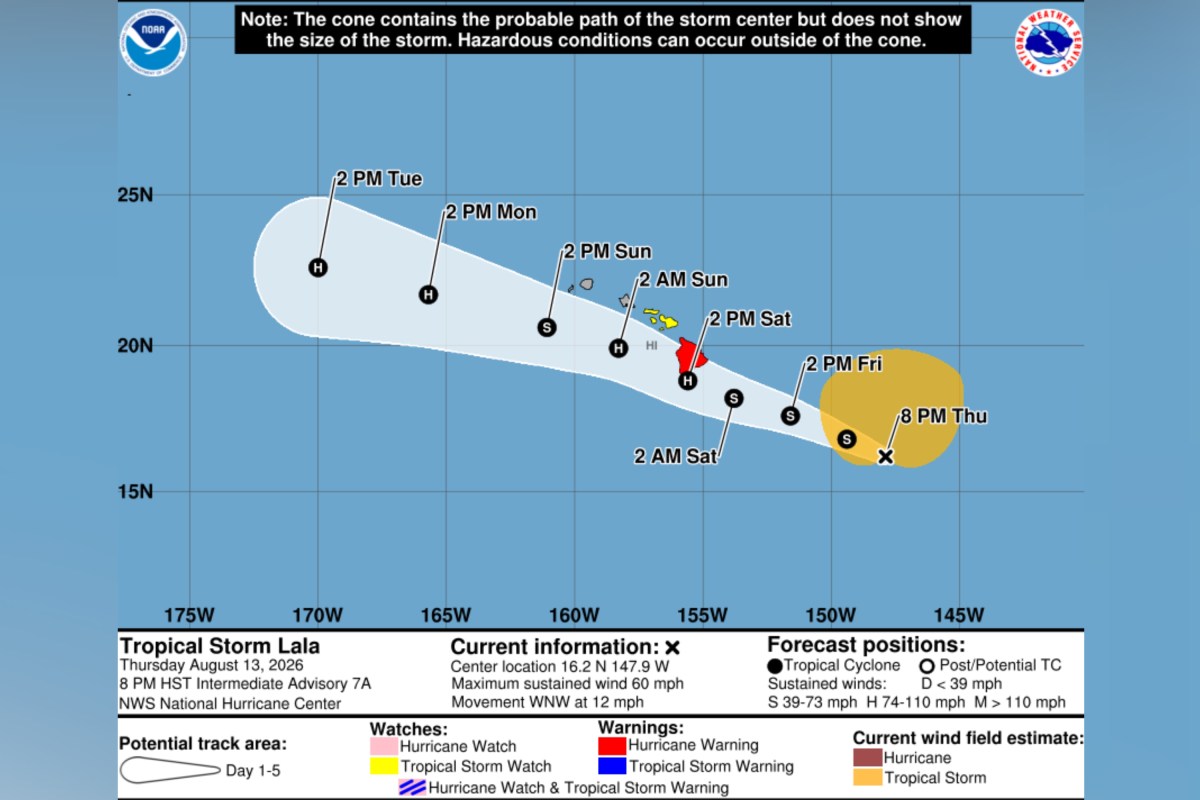
Tropical Storm Lala is moving toward Hawaii and is expected to become a hurricane before reaching the Big Island. Officials have issued warnings for hurricane conditions on the Big Island and tropical storm watches for nearby islands due to strong winds and heavy rain.
Key Facts
Tropical Storm Lala was named on Thursday and is the second named storm in the Central Pacific this season.
Lala is moving west-northwest at about 12 miles per hour.
Maximum sustained winds are near 60 mph, with stronger gusts expected.
The storm is forecast to strengthen into a hurricane before reaching the Big Island on Saturday.
A hurricane warning is in place for Hawaii County (Big Island).
A tropical storm watch covers Maui County, including Maui, Lanai, Molokai, and Kahoolawe.
Rainfall between 8 and 12 inches is expected on Maui and the Big Island, with up to 25 inches possible in some parts of the Big Island.
Heavy rain could cause flooding and mudslides, especially in steep areas.
Read the Original
Want the full story? Tap a source to open the original
article.
Each summary links back to the original reporting, so you can check the work. Support that, and get the daily digest every morning. Most choose $3.99/month.
In The Gambia, a group of women called the Kanyeleng use singing and dancing to support women who have experienced infertility and child loss. This tradition, rooted in Mandinka culture and found across several West African countries, helps these women share their grief and find strength together through music.
Key Facts
The Kanyeleng are women who come together to sing and dance to offer support to those who have lost children or face infertility.
Women in the group dress in men's clothes and colorful headscarves during their performances.
The tradition mainly belongs to the Mandinka ethnic group but is practiced in other communities with different local names.
There are more than 100 Kanyeleng groups across The Gambia, especially in coastal towns like Bakau.
The practice is cultural rather than religious and has been passed down for many generations.
Mentending Trawally, age 84, is one of the long-time members who learned the songs as a teenager.
Kanyeleng groups perform at social events like weddings, sometimes raising small donations to support their work.
The tradition helps women cope with societal pressures linked to motherhood by giving them a public voice through song.
Read the Original
Want the full story? Tap a source to open the original
article.
The Australian government plans to make big changes to the National Disability Insurance Scheme (NDIS) to control costs. The changes include cutting budgets for some participants and introducing stricter eligibility rules, but some politicians and disability advocates say these cuts are too fast and will hurt disabled people.
Key Facts
The NDIS supports over 770,000 Australians with disabilities and costs $52 billion a year.
The government aims to save $37.8 billion over four years by tightening rules and reducing budgets.
From 2028, all participants will face independent functional assessments to check eligibility.
The NDIS minister can cut individual funding by up to 99%, with a planned 50% cut for social participation budgets.
About 241,000 people will be removed from the NDIS by 2031, with others prevented from joining.
New state and territory programs are expected to support those no longer in the NDIS.
Some crossbench senators and disability groups warn the changes are too harsh and will shift care responsibilities to families, especially affecting women.
The government is expected to reach a deal with opposition parties to approve the changes in parliament soon.
Read the Original
Want the full story? Tap a source to open the original
article.