Scientists studied fossils and ancient ocean chemistry to find that the ability of early animals to produce feces may have helped life evolve rapidly about 540 million years ago. Poop pellets likely moved nutrients to deeper ocean areas, supporting bigger animals and more diverse ecosystems during the Cambrian Explosion.
Key Facts
The Cambrian Explosion happened around 540 million years ago, when many complex animals appeared.
Early animals evolved the ability to poop, creating fecal pellets that sank into the ocean depths.
Poop helped spread important nutrients like carbon, iron, nitrogen, and phosphorus to deeper waters.
This nutrient recycling boosted marine life by making deep ocean areas more habitable.
Scientists analyzed fossilized poop (coprolites) and digestive systems from the Cambrian period.
The study compared ancient nutrient cycles to those in today’s oceans, focusing on a system called the biological pump.
Fossilized poop containing shell fragments from animals like trilobites was found in places including Australia, Greenland, and China.
The research suggests feces played an important role in supporting the evolution and growth of early animal life.
Read the Original
Want the full story? Tap a source to open the original
article.
A total solar eclipse will happen soon, passing over the Arctic, Greenland, Iceland, and parts of Spain. During this event, the Moon will fully cover the Sun, creating a rare and impressive natural sight for many people.
Key Facts
The solar eclipse will be total, meaning the Moon will completely block the Sun.
The path of the eclipse crosses the Arctic region, Greenland, Iceland, and some areas in Spain.
Millions of people will have the chance to see this rare event.
A solar eclipse occurs when the Moon moves between the Earth and the Sun.
Total solar eclipses are uncommon and often attract attention from scientists and sky watchers.
Read the Original
Want the full story? Tap a source to open the original
article.
British actor and comedian Jasper Carrott expressed pride and gratitude after his daughter, actress Lucy Davis, announced she has incurable stage four breast cancer that has spread to her bones. Davis shared her diagnosis publicly and urged people to check any unusual changes in their bodies.
Key Facts
Lucy Davis, known for her role in the BBC sitcom The Office, revealed she has incurable stage four breast cancer.
The cancer has spread to her spine, right hip, and ribs.
Davis initially found a small hard spot but almost ignored it, highlighting the importance of early checks.
Jasper Carrott, her father, thanked the public for their support and asked for privacy as they cope.
Davis said she is trying to live life as fully as possible and is at peace with her condition.
Many of Davis’s co-stars and other celebrities publicly showed their support.
Stage four breast cancer means the cancer started in the breast and spread to other parts of the body, making it incurable, but it can be managed for some time with treatment.
Common breast cancer symptoms include lumps or swelling, skin changes, nipple changes, and discharge.
Read the Original
Want the full story? Tap a source to open the original
article.
Brazil will hold important elections soon, which will test the effectiveness of President Trump’s new approach to Latin America. This approach is often compared to a modern version of the Monroe Doctrine, a U.S. policy aimed at influencing countries in the Americas.
Key Facts
Brazil’s election is scheduled to take place in less than two months.
President Trump has introduced a new strategy for dealing with Latin American countries.
This strategy is being called the “new Monroe Doctrine,” referencing a historical U.S. policy from the 19th century.
The upcoming election is seen as a major test for how well this new policy will work.
The Monroe Doctrine originally aimed to limit European influence in the Americas but is now used metaphorically for U.S. influence in the region.
Brazil is the largest country in Latin America, making its political decisions very important for the region and U.S. relations.
Read the Original
Want the full story? Tap a source to open the original
article.
Lebanese parliament passed a general amnesty law to reduce prison overcrowding by shortening sentences and releasing some inmates, including those detained for over 12 years without charges. The law was approved one day after Lebanon abolished the death penalty, making it the first Middle Eastern country to do so.
Key Facts
Lebanon’s parliament approved a broad amnesty law aimed at reducing overcrowding in prisons.
The law shortens sentences, especially for those sentenced to death or life imprisonment, lowering them to 17 prison years (equivalent to about 13 actual years).
Prisoners held for more than 12 years without charges will be released as their trials continue.
Lebanon abolished the death penalty the day before passing this amnesty law, a first in the Middle East.
Prisons in Lebanon are reported to be overcrowded at 300% capacity, with over 6,200 inmates as of March 2026.
The amnesty includes Islamist prisoners connected to the Syrian civil war, as well as individuals linked to Hezbollah and other political groups.
Different political groups pushed for the law to benefit their communities, including families of people involved in drug offenses and those who fled to Israel after 2000.
Lebanon’s last major amnesty law was passed after its civil war (1975-1990) to help former fighters enter politics.
Read the Original
Want the full story? Tap a source to open the original
article.
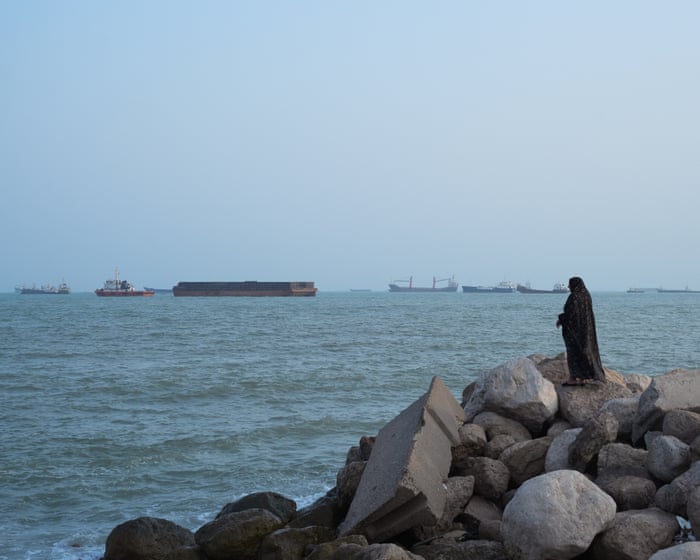
Costs for ships using the Panama Canal have risen due to disruptions caused by the war in Iran and low water levels linked to this year’s El Niño weather event. Ships face long delays, with some paying millions of dollars to move ahead in the queue, as water shortages have led the Panama Canal Authority to impose limits on ship sizes and cargo weight.
Key Facts
A ship reportedly paid $4 million to jump the queue and pass through the Panama Canal faster.
Ships currently wait about 10 days to transit the canal, the longest backlog since May.
The war in Iran has closed nearby key shipping routes, increasing demand for the Panama Canal.
Water levels in the canal are falling due to El Niño, a weather pattern causing drought and heat.
The Panama Canal Authority sets limits on how deep ships can sit in the water to keep traffic moving safely.
Larger ships must carry lighter loads because of these water level restrictions.
The number of transits through the canal increased by 5% from October to June, driven by container ships and gas carriers.
Other major trade routes, like Europe’s Rhine River, face similar problems with low water impacting shipping.
Read the Original
Want the full story? Tap a source to open the original
article.
A giant, 30-foot tall replica of a Hoosier cabinet was unveiled in Nappanee, Indiana, to celebrate the 150th anniversary of Coppes Napanee, a company that still makes cabinets and was one of the original makers of Hoosier cabinets. These cabinets were popular kitchen workstations in American homes in the early 1900s and helped speed up food preparation.
Key Facts
The Hoosier cabinet is a freestanding kitchen workstation and storage unit from the early 20th century.
The replica cabinet in Nappanee is 30 feet tall and has stairs leading to a small loft for visitors to climb and look out from.
Coppes Napanee, one of the two original Hoosier cabinet makers still in business, created the replica as part of its 150th anniversary.
The cabinet’s design centralized and sped up food preparation before built-in kitchen cabinets became common after World War II.
Originally, Hoosier cabinets were sold through about 5,000 dealers nationwide.
The replica is located near Coppes Commons, a marketplace and museum on the site of the original factory.
Wesley Mast, owner and president of Coppes Napanee, said the giant cabinet helps attract visitors and promotes the company’s history and brand.
Read the Original
Want the full story? Tap a source to open the original
article.
A ferry carrying too many passengers capsized on Lake Kariba, which lies between Zimbabwe and Zambia, leaving 44 people dead. The ferry was overloaded, with more passengers than its 90-person limit, and rescue efforts have saved 77 people so far.
Key Facts
The ferry was carrying at least 114 adults and 5 crew members, exceeding its 90-person capacity.
Lake Kariba forms part of the border between Zimbabwe and Zambia.
The death toll has reached 44 people after the ferry capsized.
Rescue teams have saved 77 people from the accident.
The exact number of passengers is unclear because children without tickets may have been on board.
Some of the deceased were children, but officials have not given full details.
The ferry operates between rural areas around Lake Kariba and the town of Kariba on the lake’s shore.
Lake Kariba is the world’s largest man-made lake by volume, created by damming the Zambezi River in the 1950s and 1960s.
Read the Original
Want the full story? Tap a source to open the original
article.
Severe storms hit the Midwest, including tornadoes, heavy rain, and flooding, causing deaths, power outages, and property damage. Emergency crews worked to clear roads, restore power, and rescue stranded people across multiple states.
Key Facts
A 4-year-old boy died when a tree fell on a home in Geneva, Indiana.
A person died during a health emergency in Ohio when flooded roads blocked first responders.
Officials are investigating if severe weather contributed to a house explosion in Portage, Indiana, that killed someone.
Lightning struck a prison near Cleveland, Ohio, injuring 16 inmates who were hospitalized.
More than 700,000 customers lost power in Illinois, Indiana, Ohio, and Kentucky.
The National Weather Service confirmed three tornadoes south of Chicago.
Ohio deployed 40 Army National Guard members to assist with flooding rescue efforts.
Severe weather caused flight delays and temporary shutdowns at Chicago’s airports.
Read the Original
Want the full story? Tap a source to open the original
article.
Germany’s government plans to expand the powers of its intelligence services to better defend against threats like hacking, sabotage, and espionage from foreign countries and extremists. The proposed law aims to allow agencies to take more active steps, such as disabling dangerous technology and accessing digital devices, to protect the country.
Key Facts
Germany is expanding powers for its Federal Intelligence Service (BND) and domestic intelligence service (BfV).
The new powers would allow actions like disabling sabotage attempts and hacking operations.
The legislation was approved by the German Cabinet but still needs the parliament’s approval.
Germany has relied heavily on intelligence information from its allies, which the government sees as too one-sided.
Germany’s cautious approach to intelligence comes from historic concerns about government surveillance.
The intelligence services could intervene by swapping dangerous components, accessing IT systems of factories, or shutting down servers related to foreign attacks.
Officials mentioned the possibility of replacing explosives with harmless substances to prevent attacks.
Germany faces ongoing cyberattacks, espionage, and efforts to destabilize its political and social systems by foreign powers.
Read the Original
Want the full story? Tap a source to open the original
article.
The Metropolitan Police plan to use live facial recognition (LFR) cameras permanently on London’s Oxford Street and other busy areas to help catch criminals. This technology scans people’s faces and compares them to a list of suspects, but some groups worry it could violate privacy and unfairly target certain groups.
Key Facts
The Met will install fixed LFR cameras on Oxford Street and six other locations starting by Christmas and into next year.
Oxford Street is newly pedestrianized and one of the busiest shopping streets in the UK.
LFR technology scans faces of everyone passing by and matches them to wanted suspects.
Cameras will be attached to street furniture like lamp-posts instead of temporary police vans.
Human rights groups warn the technology increases public surveillance and may discriminate, especially against Black people.
The Met began using LFR cameras at some London tube stations this month.
Almost half of people surveyed oppose scanning faces without a clear reason to suspect wrongdoing.
The mayor’s office says LFR is part of efforts to make Oxford Street safer and more pedestrian-friendly, with oversight planned to maintain public trust.
Read the Original
Want the full story? Tap a source to open the original
article.
Every year on August 12, people in Britain celebrate the start of grouse hunting season, but this year wildfires on moorlands have damaged habitats and reduced grouse numbers. Environmental groups say that how grouse moors are managed, including burning peatlands, increases fire risks, and some call for banning the hunting season to protect the land.
Key Facts
Grouse hunting season traditionally begins on August 12, known as the Glorious Twelfth.
Wildfires have damaged moorlands in the UK, harming wildlife and burning peatlands.
Managing grouse moors often involves burning plants and draining peat, which can make wildfires worse.
Peat is a wet soil that stores carbon but burns slowly and is hard to put out when dry.
The UK government recently banned burning vegetation on deep peat to protect habitats.
The Scottish Green Party has called to ban the start of the grouse hunting season to prevent damage.
Some chefs are finding fewer grouse available this year due to heat and fires and are careful about where they buy birds from.
There are concerns about illegal killing of birds of prey on grouse estates to increase grouse numbers.
Read the Original
Want the full story? Tap a source to open the original
article.
The International Energy Agency (IEA) reported that global oil reserves have dropped below 7.9 billion barrels, the lowest since April 2025. This decline increases pressure to reopen key shipping routes like the Strait of Hormuz, as oil supply forecasts for 2026 have been reduced due to ongoing conflicts affecting production in the Middle East and Russia.
Key Facts
The IEA says oil stockpiles are quickly running out and fell below 7.9 billion barrels recently.
Oil prices swung widely in July, from about $70 to $105 per barrel, due to changes in the Iran-US conflict.
The IEA cut its global oil supply forecast for 2026, expecting a drop of 4.3 million barrels per day.
Growth in oil production in the Americas will not fully make up for losses in the Middle East and Russia.
The IEA stresses the need to reopen the Strait of Hormuz and ensure free passage through the Bab el-Mandeb Strait.
OPEC lowered its forecast for 2024 world oil demand growth for the fourth month in a row, now expecting an increase of 580,000 barrels per day.
The UK’s energy grid operator canceled an electricity shortage warning for an upcoming solar eclipse day after securing enough power offers.
Balfour Beatty raised its profit outlook due to increased spending on UK infrastructure and US data centers, despite contract renegotiations on a railway project.
Read the Original
Want the full story? Tap a source to open the original
article.
Fighter jets intercepted a civilian plane over Geneva, Ohio, because it flew into restricted airspace during President Trump’s visit there. The jets used flares to get the pilot’s attention, and the plane was safely escorted out of the area. Similar interceptions happened over Bedminster, New Jersey, near one of President Trump’s golf courses.
Key Facts
The interception happened around 6:15 p.m. Eastern Time on Tuesday near Geneva, Ohio.
The civilian plane violated a temporary flight restriction set near President Trump’s event.
F-16 jets released flares to signal the plane; the flares are safe and burn out quickly.
NORAD and the FAA monitor and enforce temporary flight restrictions for security.
The restriction was in place because President Trump was attending the 2026 Patriot Games, a youth sports event.
Similar interceptions occurred over Bedminster, New Jersey, at another temporary flight restriction area.
The FAA issues temporary flight restrictions for events with high-profile visitors and public safety concerns.
Both incidents ended safely with planes escorted out by fighter jets.
Read the Original
Want the full story? Tap a source to open the original
article.
Israeli settlers have surrounded two Palestinian families in the West Bank village of Qusra, cutting off their water, electricity, and food supplies. Israeli security forces later withdrew from the settler outpost after clashes, and the Israel Defense Forces condemned the settlers’ actions as illegal.
Key Facts
Two Palestinian families in Qusra, West Bank, have been besieged by Israeli settlers since Sunday.
The settlers cut off the families’ water, power, and food supplies, isolating them in their homes.
The village of Qusra is located in Area B, which is under Palestinian administrative control and Israeli security control.
Israeli soldiers initially prayed with settlers upon arrival but later withdrew after clashes with extremist settlers.
The Israel Defense Forces called the seizure of Palestinian homes “illegal and unacceptable.”
A Palestinian ambulance was allowed to deliver food and take a child for medical help after several days.
Human rights group Yesh Din appealed to the Israeli military to protect the Palestinians and remove settlers.
The Israeli military said it would discipline security personnel shown present during the siege.
Read the Original
Want the full story? Tap a source to open the original
article.
The University of Cambridge will conduct an independent investigation into Jason Arday's appointment and his time working there. Arday resigned last week amid accusations of plagiarism, which he denies, and the review aims to improve how senior academic jobs are filled.
Key Facts
Jason Arday resigned as a Cambridge professor of sociology of education last week.
He was the youngest Black professor at Cambridge, appointed in 2023.
He faces plagiarism allegations but denies any wrongdoing.
The university’s vice-chancellor confirmed an independent investigation by senior academics from inside and outside Cambridge.
The investigation will start as soon as possible.
The university recognizes concerns and wants to protect the reputation of staff of colour.
Results of the investigation will help review how senior academic roles are appointed.
The university is addressing anger and anxiety caused by the case internally and publicly.
Read the Original
Want the full story? Tap a source to open the original
article.
Millions of people in Europe are preparing to watch a rare total solar eclipse on August 12, 2026. The eclipse will be most visible in northern Spain, where the moon will fully cover the sun for about two and a half minutes, causing temporary darkness during the day.
Key Facts
A total solar eclipse occurs when the moon passes directly between the Earth and the sun, blocking the sun’s light.
This is the first total solar eclipse visible in mainland Europe in 20 years.
The eclipse will start in Russia’s Arctic north and move across Greenland, Iceland, and northern Spain.
Northern Spain will have the best views, with total darkness lasting less than 2.5 minutes.
Millions of Europeans will also see a partial eclipse, including people in Canada, northern US, and northwest Africa.
Spanish authorities are warning people to avoid actions that could cause wildfires, as the eclipse happens during a hot summer with ongoing fires.
The event may bring an extra half a million visitors to Spain.
Scientists study solar eclipses to learn more about the sun, including its outer atmosphere called the corona.
Read the Original
Want the full story? Tap a source to open the original
article.
Zhu Rongji, a former Chinese Premier known for transforming China into a major global trading nation, died at age 97. He led important economic reforms, including China's entry into the World Trade Organization, and worked to modernize the economy and fight corruption.
Key Facts
Zhu Rongji served as China’s Premier from 1998 to 2003.
He played a key role in China joining the World Trade Organization in 2002.
His economic reforms included moving tax powers to the central government and privatizing failing state firms.
Under his leadership, China became a global manufacturing powerhouse.
These reforms led to rapid economic growth but also caused job losses for about 30 million people and increased inequality.
Zhu was known for being tough and outspoken, criticizing corruption and poor local officials.
He was born in 1928, studied electrical engineering, and joined the Communist Party in 1949.
Zhu was removed from power twice during political purges but returned after Mao’s death and rose to high leadership roles.
Read the Original
Want the full story? Tap a source to open the original
article.
On the biggest stories we show what the outlets agree on and where they differ. Readers keep that going, and get the daily digest by email every morning. Most choose $3.99/month.
David Crowley won the Democratic primary for governor in Wisconsin, narrowly beating socialist Francesca Hong by about 3,000 votes. Crowley’s win may help the center-left Democrats regain strength ahead of the November election, where he will face Republican Tom Tiffany.
Key Facts
David Crowley won the Wisconsin Democratic governor primary by roughly 3,000 votes.
Crowley was behind by nearly 20 points in earlier polls before his comeback.
Francesca Hong, a socialist candidate, had strong support from young voters and activists but lost due to concerns about her electability.
Wisconsin Governor Tony Evers endorsed Crowley to prevent Hong from winning, fearing she might lose to Tiffany in November.
Tom Tiffany, the Republican nominee, voted to overturn the 2020 presidential election results and could become Wisconsin’s first governor to do so if elected.
Crowley would be Wisconsin’s first Black governor if he wins the November election.
Some Republicans spent millions supporting Hong, seeing her as an easier candidate to defeat in the general election.
Minnesota’s progressive Lt. Gov. Peggy Flanagan won her Democratic Senate primary and will face Republican Michele Tafoya in November.
Read the Original
Want the full story? Tap a source to open the original
article.
A total solar eclipse will pass over northern Spain on August 12, 2026. This rare event is one of the most important astronomical occurrences in Europe this decade and offers scientists a chance to study the Sun, animal behavior, and human reactions.
Key Facts
The eclipse will be total, meaning the Moon will completely cover the Sun.
It will be visible in northern Spain and parts of Europe.
Total solar eclipses like this are rare and happen in Europe roughly once every 20 years.
Scientists study solar eclipses to learn about the Sun’s corona (outer atmosphere).
Eclipses can also affect animal behavior and human emotions, based on scientific observations.
The last total solar eclipse visible in mainland Europe was in 2006.
People are advised never to look directly at the Sun during an eclipse without proper eye protection.
The event is widely anticipated and followed by both scientists and the public.
Read the Original
Want the full story? Tap a source to open the original
article.