Many Americans have started using GLP-1 medications like Ozempic and Wegovy to lose weight. This fast weight loss often leads to loose skin, increasing demand for plastic surgery procedures that remove excess skin and reshape the body.
Key Facts
GLP-1 drugs help people lose significant weight by controlling appetite and blood sugar.
Use of GLP-1 medications in the U.S. nearly quadrupled since 2024, with about 11% of the population using them.
More Americans take GLP-1 drugs for weight loss than those who smoke cigarettes (9.9%).
Rapid weight loss can cause loose skin and changes in body shape.
Procedures like tummy tucks, arm lifts, and breast reshaping are becoming more common after GLP-1 weight loss.
Plastic surgeons say patients should wait until their weight is stable before surgery.
A 2026 study found that fast weight loss before surgery increases the risk of complications.
Careful medical checkups and personalized advice are important before undergoing body-contouring surgery.
Read the Original
Want the full story? Tap a source to open the original
article.
Hospitals are increasingly asking patients to pay large deposits before treatment, especially when their insurance is out-of-network. This practice comes as healthcare costs and patients' deductibles rise, making it harder for many to afford care.
Key Facts
Thomas Zordani traveled for a neurosurgery consultation but had his appointment canceled after Mayo Clinic required a $5,000 upfront payment.
Mayo Clinic determined after the appointment was made that Zordani's insurance was out-of-network, designating him "self-pay."
Hospitals are asking for prepayments more often to cover patients' larger share of medical costs due to rising deductibles.
Rising hospital prices, drug costs, and labor expenses push insurers to shift more costs to patients through higher deductibles.
The average deductible for employer family insurance plans is about $3,762; for Affordable Care Act plans, it rose 37% to around $3,786 in 2024.
Industry experts say this trend could make it harder for patients to get care and put financial strain on both providers and patients.
A health poll found that lower out-of-pocket costs are the most desired insurance plan change by insured adults.
Consumer advocates are receiving increasing complaints about upfront medical payment demands.
Read the Original
Want the full story? Tap a source to open the original
article.
Many noncitizen members of the U.S. military and veterans have been arrested and face deportation by ICE, causing concern among Democrats. Senator Elizabeth Warren and others are asking government agencies for explanations about these actions, which contradict long-standing traditions that honor military service as a path to citizenship.
Key Facts
Over 60 Democratic lawmakers, led by Senator Elizabeth Warren, sent a letter to several federal agencies asking for information about arrests and deportations of noncitizen service members and veterans.
ICE arrested 125 former members of the military from January 2025 to January 2026; 73 were detained, and 34 started removal (deportation) processes.
At least 282 veterans and their close family members are currently facing deportation.
Since October, 16 active-duty military members have been arrested by immigration agents, according to ICE data.
U.S. law allows noncitizens serving in the military during active conflicts to apply for citizenship quickly after one day of service.
Military service does not automatically grant citizenship or protect individuals from immigration laws if they have criminal convictions or other issues.
Historically, immigrant soldiers in the U.S. have had easier paths to citizenship going back to the Civil War era.
More than 800,000 people have become U.S. citizens through military service since World War I, including nearly 187,000 after 9/11.
Read the Original
Want the full story? Tap a source to open the original
article.
Joshua Smith, a healthy 34-year-old man, experienced extreme migraines for 10 days before doctors discovered a tumor in his brain. He was diagnosed with glioblastoma, an aggressive brain cancer with a poor outlook, and began surgery and treatment to slow the disease.
Key Facts
Joshua Smith had severe migraines lasting 10 days starting February 4, 2026.
Initial medical visits resulted in pain medication but no serious diagnosis.
A CT scan later revealed a 4.5-centimeter mass in his right frontal lobe.
Doctors suspected the mass was glioblastoma, a fast-growing brain cancer.
Glioblastoma symptoms include headaches, vision problems, and seizures.
The prognosis for glioblastoma is usually 12 to 18 months.
Joshua had surgery removing 95% of the tumor on February 24.
He is undergoing chemotherapy and radiotherapy and managing seizures with medication.
Read the Original
Want the full story? Tap a source to open the original
article.
The Danube River is becoming less reliable for Ukraine to export grain because of drought and slowing water flow, while Russian attacks on Ukrainian ports and infrastructure have increased. Russia cannot control the weather, but the hotter, drier conditions in Europe are making Ukraine’s alternative export routes and power sources harder to use during the ongoing conflict.
Key Facts
The Danube River near Serbia shows sunken German warships from World War II due to drought lowering the water level.
Ukraine uses the Danube as a key route to export grain when Black Sea ports are too dangerous.
This summer, drought slowed the Danube’s flow in Romania, hurting shipping and power generation.
Russia has increased attacks on Ukrainian ports around Odesa and destroyed related infrastructure like the Mayaki bridge.
Ukrainian grain exports shift between sea ports, rail, roads, and the Danube depending on conditions.
Ukraine also imports electricity from Europe when its own power plants are hit by Russian strikes.
Extreme heat and drought put extra pressure on Ukraine’s backup systems during the conflict.
Russian analysts describe Europe’s heatwaves and failed harvests as economic weaknesses.
Read the Original
Want the full story? Tap a source to open the original
article.
This article reviews several cultural events and personalities at the end of summer. It discusses Lollapalooza losing ground to Coachella, Ryan Murphy adapting Bret Easton Ellis's novel for TV, and Ariana Grande taking a break from public appearances amid body image discussions.
Key Facts
Lollapalooza is a long-running music festival in Chicago since 2005 but is seen as less exciting than Coachella recently.
The article suggests that if Lollapalooza returned to being a traveling festival, it could regain cultural influence.
TV producer Ryan Murphy is adapting Bret Easton Ellis's 1980s-set horror novel *The Shards* for the FX network.
Bret Easton Ellis is well known for novels like *American Psycho* and *Less Than Zero*, which have been adapted before.
Ariana Grande faced public comments about her body after a new video release.
In response, she announced a planned break from public work starting in September to focus on herself.
Grande clarified her decision was long planned, not impulsive or reactionary.
The article reflects on how these stories relate to public attention and culture.
Read the Original
Want the full story? Tap a source to open the original
article.
The article discusses how people’s political beliefs affect their perception of news bias, using a recent poll about Alexandria Ocasio-Cortez (AOC) in Michigan as an example. It explains that the same facts can be seen as biased depending on how they are presented, reflecting the “hostile media phenomenon,” where people believe news is biased against their view.
Key Facts
A study in the 1980s showed that people from opposing sides saw different biases in the same news coverage.
The “hostile media phenomenon” means people perceive bias based on their own beliefs, not on the facts alone.
A recent Newsweek article reported on a Michigan poll about AOC’s chances against other Democratic candidates for 2028.
In the poll, AOC was in third place behind Pete Buttigieg and Jon Ossoff but slightly ahead of Gavin Newsom and Kamala Harris.
Different readers saw the Newsweek article as biased either to the left or right, depending on how they viewed AOC.
The article’s headline focused on AOC beating Newsom and Harris, which some readers saw as an optimistic spin.
Bias can be found in how facts are framed and what comparisons are chosen by reporters.
The article highlights how readers’ political views influence whether they see news coverage as fair or biased.
Read the Original
Want the full story? Tap a source to open the original
article.
A mom named Amelia was told her unborn baby had serious health problems at 20 weeks and was unlikely to survive. Despite the doctors’ warnings, she chose to continue the pregnancy, and her son Lucas was born healthy enough to breathe and drink on his own, surprising everyone.
Key Facts
Amelia and her husband Trent learned at a 20-week ultrasound that their baby had severe skeletal and neurological abnormalities.
Doctors said the abnormalities likely meant the baby would not survive long and there was a high chance of stillbirth.
The couple canceled baby celebrations and prepared for the worst during the pregnancy.
Amelia never considered ending the pregnancy, choosing to continue despite the prognosis.
The pregnancy surprisingly progressed into the third trimester, with doctors expressing surprise.
Around weeks 32–33, doctors told them Lucas had a good chance of survival.
Lucas was born by planned C-section at 37 weeks, weighing 4.5 pounds, breathing on his own and feeding shortly after birth.
Lucas only spent a few days in intensive care and went home with his parents; he is now seven weeks old but continues to face health challenges.
Read the Original
Want the full story? Tap a source to open the original
article.
One month before the 9/11 attacks, Mohammed Atta met with fellow hijacker Hani Hanjour in New Jersey and took several flights to learn about airports and airplanes. Atta was the main planner of the 9/11 attacks and had the final say on targets and timing.
Key Facts
On August 12, 2001, Mohammed Atta was in Fort Lee, New Jersey, using an internet café.
Atta was traveling to Washington, D.C., then flew the next day to Las Vegas.
Atta met with Hani Hanjour, the only pilot not from the Hamburg group and trained in Florida.
Atta was the leader of the 9/11 hijackers and planned logistics, training, finances, and targets.
Al-Qaeda leaders wanted to attack military, political, and financial targets; Atta chose the exact targets and date.
Atta began radicalization in 1996, influenced by an event in Lebanon involving civilian deaths.
The "Hamburg Four" hijackers, including Atta, trained in Afghanistan and Pakistan and prepared by getting new passports and learning about airplanes.
Atta took multiple flights for practice and to study airport layouts, including trips to Las Vegas that were used for reconnaissance.
Read the Original
Want the full story? Tap a source to open the original
article.
The U.S. government, led by Senator Marco Rubio and supported by President Donald Trump, is working to weaken and possibly dismantle the International Criminal Court (ICC). The U.S. argues that the ICC is biased, selectively enforces justice, and poses a threat to American soldiers and officials abroad.
Key Facts
Senator Marco Rubio announced a plan for the U.S. government to disable the ICC’s ability to operate against Americans.
The ICC tries to prosecute serious crimes like genocide and war crimes under the Rome Statute, but the U.S. is not a member.
Countries where U.S. troops are stationed, such as Japan, South Korea, and Italy, are ICC members.
President Donald Trump issued sanctions against the ICC in 2025 due to concerns of politicized actions.
Critics say the ICC focuses mostly on weaker countries and has a poor record of convictions, with many indictments targeting Africans.
The court has convicted fewer than 15 people in over 20 years, with some convictions later overturned.
Supporters argue the ICC is essential for global justice, but the U.S. disputes its impartiality and effectiveness.
ICC Prosecutor Karim Khan issued arrest warrants for Israeli Prime Minister Benjamin Netanyahu, which added to tensions.
Read the Original
Want the full story? Tap a source to open the original
article.
David Crowley won the Democratic primary for governor in Wisconsin by a very small margin over Francesca Hong, a democratic socialist candidate. Crowley aims to win the general election against Republican Tom Tiffany, who has President Donald Trump's support. The close race shows a split in the Democratic Party between moderate and progressive wings.
Key Facts
David Crowley, a moderate Democrat, narrowly won the Wisconsin governor primary against Francesca Hong.
Crowley seeks to become Wisconsin’s first Black governor.
Republican Tom Tiffany is Crowley’s opponent in the November general election and has President Trump’s endorsement.
Francesca Hong is a democratic socialist and represented the progressive wing of the party.
Crowley's victory margin was less than 1 percent, but no recount was requested because it was more than 0.25 percent.
The Democratic Party faces a divide between establishment candidates and progressives ahead of the 2026 midterm elections.
National progressive leaders like Bernie Sanders and Alexandria Ocasio-Cortez did not endorse any candidate in this race.
The result reflects broader tensions within the party about electability and progressive policies.
Read the Original
Want the full story? Tap a source to open the original
article.
A drone strike caused a fire at a power substation in the Libyan city of Zawiya, cutting off electricity in parts of the city. This attack is part of a series of strikes on energy infrastructure in western Libya amid ongoing tensions between rival governments and armed groups.
Key Facts
The power substation in Zawiya was completely destroyed by fire after the drone strike.
Zawiya has major energy facilities, including the country’s largest oil refinery and a power plant.
The attack caused power outages in the southern parts of Zawiya, a city of about 250,000 people.
No group has claimed responsibility for the drone strike so far.
Libya is divided between two rival governments: the western government led by Prime Minister Abdul-Hamid Dbeibah and the eastern government led by Prime Minister Ossama Hammad.
The U.S. company General Electric withdrew its workers from the Zawiya power plant due to security concerns after the attacks.
Turkey, a key supporter of the western government, is working to improve relations with Libya’s rival eastern authorities.
The violence and attacks on energy infrastructure add to the instability in Libya, which is influenced by militias and foreign interests.
Read the Original
Want the full story? Tap a source to open the original
article.
There are no ads, so there is no reason to bait you. Readers who chip in keep it that way. Most choose $3.99/month, and get the daily digest every morning.
N Chandrasekaran, chairman of Tata Group, announced he will step down when his term ends in February 2027. The Tata Sons board did not agree on renewing his contract, revealing ongoing disagreements within the company’s leadership.
Key Facts
Chandrasekaran is 63 years old and has chaired Tata Group since 2017.
The Tata Sons board could not agree on extending his term for another five years.
Tata Group owns major companies like Air India, Tata Steel, and Jaguar Land Rover.
The chairman’s decision highlights divisions and conflicts among Tata Sons board members.
Tata Trusts, a charity organization, owns 66% of Tata Sons and appoints some board members.
Disputes involve issues like board nominations, funding, and whether Tata Sons should be publicly listed.
Tata Group is dealing with business challenges, including reviving Air India.
Chandrasekaran’s predecessor, Cyrus Mistry, was removed in a controversial move that led to legal battles.
Read the Original
Want the full story? Tap a source to open the original
article.
Seven poor labourers in Panna, India, found a large and valuable diamond weighing 17.96 carats on land they leased two years ago. The diamond will be auctioned in October, and the workers will share the money after a government royalty is deducted.
Key Facts
The diamond weighs 17.96 carats and is considered gem quality, one of the best types of natural diamonds.
It was found in Panna, a region in central India known for diamond mining but also poverty and few job opportunities.
The diamond’s estimated value is at least 5 million rupees (about $52,400).
The mine was leased two years ago by Akhilesh Pal and six other workers for a small amount.
The mine was closed for a year before the diamond was discovered on an inspection visit after heavy rains.
The diamond will be sold at a government auction in October, open to buyers from India and abroad.
The government will take a 12% royalty from the sale, and the remaining money will be shared equally by the seven labourers.
Finding such a valuable diamond is rare but could significantly improve the labourers’ lives.
Read the Original
Want the full story? Tap a source to open the original
article.
Ship traffic through the Strait of Hormuz has dropped to eight vessels, the lowest in a week, as conflict in the region affects shipping. In the Red Sea, Iran-backed Houthi rebels killed six people on a vessel, while the U.S. military disabled a Panama-flagged ship trying to break the blockade of Iranian ports.
Key Facts
Only eight ships passed through the Strait of Hormuz on Tuesday, down from about 130 ships per day before the war started on February 28.
The Houthi rebels, supported by Iran, killed six people on a cargo ship in the Red Sea near Yemen.
This attack marks the first known Houthi deaths on shipping since renewed fighting began in Yemen.
The Houthis have also attacked Saudi Arabian oil facilities and ports, escalating the conflict.
Mohammed Abdul-Salam, a Houthi spokesperson, accused Saudi Arabia of using a ceasefire to tighten a blockade on Yemen.
The U.S. military fired missiles at a Panama-flagged ship that tried to bypass the U.S. blockade of Iran’s ports in the Gulf of Oman.
The U.S. disabled three ships, boarded two, and redirected 55 others trying to break the blockade.
The ongoing conflicts threaten to expand the Yemen civil war and create a broader regional crisis.
Read the Original
Want the full story? Tap a source to open the original
article.
In Wisconsin’s Democratic primary for governor, Francesca Hong and David Crowley are running very close, showing a split between progressive and moderate Democrats. Other states, including Minnesota and Vermont, also held primaries where left-leaning candidates won in some races, while President Donald Trump’s endorsed candidates had mixed results.
Key Facts
In Wisconsin, Crowley leads Hong by a very small margin in the Democratic primary for governor, with about 94% of votes counted.
Hong supports progressive policies like ending ICE, a pause on new data centers, and higher taxes on billionaires and companies.
Crowley has the endorsement of Wisconsin’s current Democratic Governor Tony Evers.
Wisconsin’s Democratic voters are divided between moderate and progressive candidates.
In Minnesota, progressive Lieutenant Governor Peggy Flanagan won her Senate primary against a more moderate opponent.
Trump-backed Republican Mike Lindell lost the Minnesota governor race to Lisa Demuth.
Vermont’s Democratic gubernatorial primary was won by Amanda Janoo; Republican incumbent Phil Scott ran unopposed and won.
The results highlight ongoing competition between Democrats with different political views and mixed influence of President Trump’s endorsements.
Read the Original
Want the full story? Tap a source to open the original
article.
Europe is preparing for another heatwave after experiencing very hot weather this summer. The heat has caused dry land and low river levels, revealing old objects from World War II.
Key Facts
July was the hottest month ever recorded for almost 120 million people in Europe.
Europe is warming faster than any other continent.
Heatwaves this summer have dried out grasslands and lowered river water levels.
Low rivers have uncovered historical remains from World War II.
Multiple European countries, including Spain and France, have been affected by extreme heat.
Authorities are warning about the dangers and impacts of these repeated heatwaves.
Wildfires have been a problem in some parts of Europe during this hot summer.
Europe is facing challenges related to climate change and natural disasters due to higher temperatures.
Read the Original
Want the full story? Tap a source to open the original
article.
Parts of the UK are experiencing their fifth heatwave this summer, with temperatures expected to reach 38°C. The Met Office issued an amber warning for extreme heat, and the UK government held an emergency meeting to address the situation, which has caused wildfires, drought, and high demand on emergency services.
Key Facts
The UK is facing its fifth heatwave of the summer, with temperatures possibly reaching 38°C.
The Met Office issued an amber warning for extreme heat in parts of England, including London and Birmingham.
Wildfires have burned large areas, including over 371 acres in Suffolk, requiring more than 600 firefighters.
Nearly three-quarters of England and all of Wales are currently in drought conditions.
Southern Water has requested a drought order to limit water use for non-essential activities in some areas.
The UK government held a Cobra emergency meeting chaired by the prime minister to respond to the heatwave.
The heatwave is causing health risks to vulnerable people, travel delays, and possible power outages.
Record-high temperatures this summer reflect ongoing climate changes linked to human activities.
Read the Original
Want the full story? Tap a source to open the original
article.
Russia’s Supreme Court has banned the country’s only anti-war party from joining next month’s parliamentary elections. This move is part of the Russian government's efforts to stop public opposition to the war in Ukraine, which started over four years ago.
Key Facts
Russia’s only anti-war party is barred from the upcoming parliamentary elections.
The Supreme Court made the decision to ban the party.
The ban shows Russia’s government is cracking down on critics of the war.
The war in Ukraine has been ongoing for more than four years.
Russian President Vladimir Putin launched the war.
The article mentions ongoing conflict and missile attacks between Russia and Ukraine.
Read the Original
Want the full story? Tap a source to open the original
article.
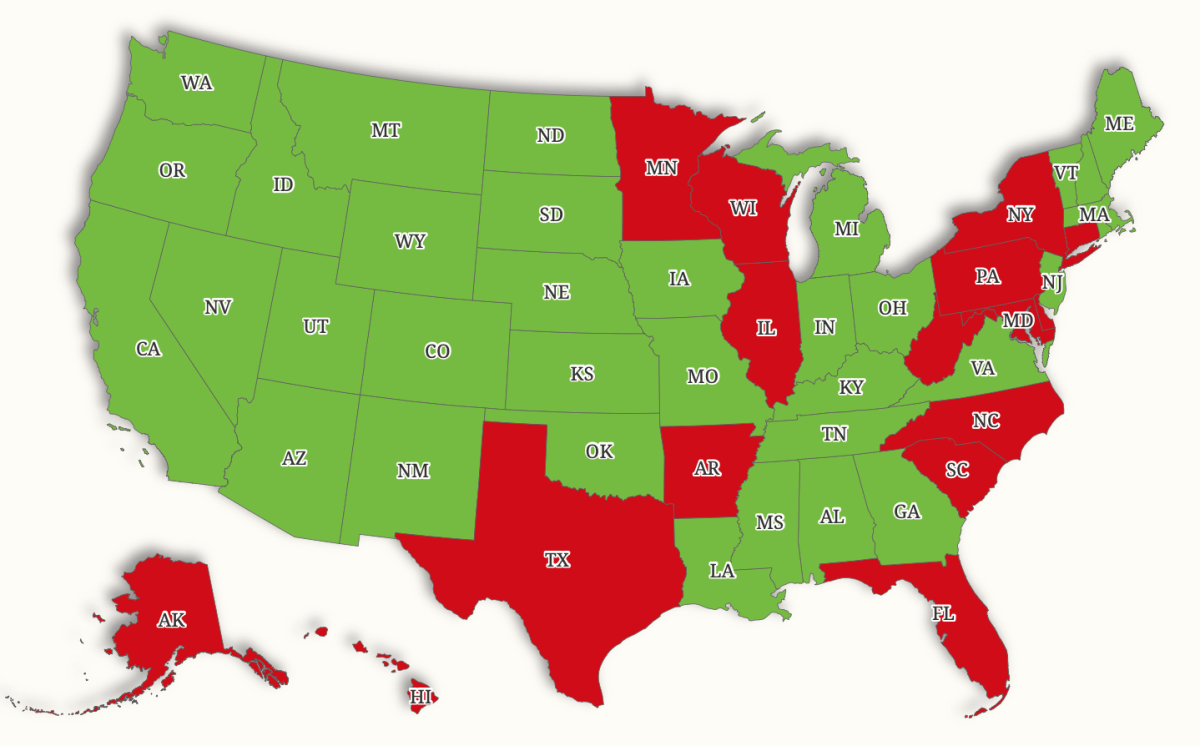
At least 34 states and the District of Columbia have stopped or changed a practice where child welfare agencies used Social Security survivor benefits meant for children in foster care to pay for their care. The Trump administration pushed for these changes, calling the practice the "orphan tax," which is not an actual tax but the use of these benefits to offset foster care costs.
Key Facts
More than 330,000 children are in foster care across the United States.
Social Security survivor benefits are intended to help children whose parents have died and who qualify based on the parent's work history.
Some states used these benefits to reimburse foster care costs, taking money meant for the children.
The Trump administration urged states to stop this practice starting in 2025.
Federal guidelines say that benefits must be used for the child's current and future needs, not to cover government expenses.
Children can receive up to 75% of a deceased parent's Social Security benefit, averaging $1,179 per month.
States that have ended the practice include Alabama, California, New Jersey, Michigan, Maine, and many others.
Recent states to change the policy include Oklahoma, Iowa, Montana, Michigan, and Maine.
Read the Original
Want the full story? Tap a source to open the original
article.