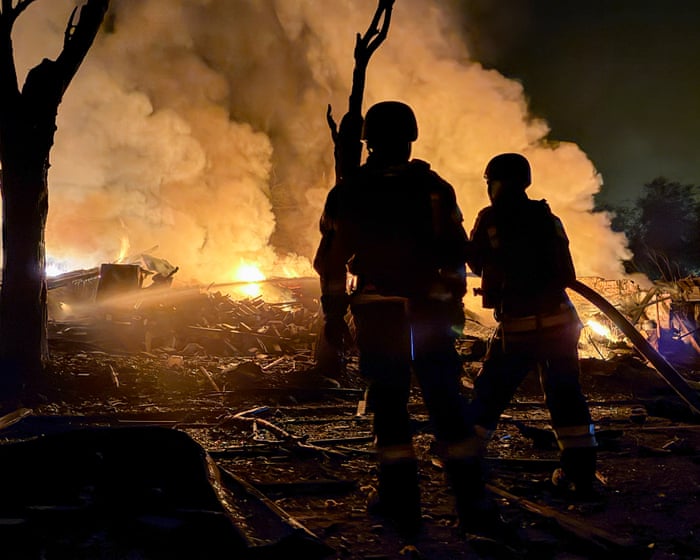
Ukrainian President Zelenskyy’s recent 40-day military campaign aimed to pressure Russia into ending the war, but it did not lead to a ceasefire or significant Russian concessions. Russia responded with harsh attacks on Ukraine’s infrastructure, worsening the situation as Ukraine faces difficult choices between continued conflict and negotiating peace under tough conditions.
Key Facts
Ukraine launched intense attacks using long-range missiles targeting Russian infrastructure to force Moscow to end the war.
Russian President Putin has not agreed to any peace deals and continues military offensives.
Ukrainian strikes caused fuel shortages in Russia and Crimea, but Russia managed to ease the crisis.
Russia retaliated with airstrikes shutting down Ukraine’s Black Sea ports and damaging key supply and retail hubs.
Fighting continues in eastern Ukraine, especially near Donetsk, with Russia taking more border territory.
Ukraine’s media campaign aimed to influence U.S. President Donald Trump but did not change his support stance.
New U.S. sanctions against Russia face uncertainty in Congress and may not affect the war’s direction.
Ukraine expects a very harsh winter due to destroyed energy and possibly water systems from Russian attacks.
Read the Original
Want the full story? Tap a source to open the original
article.
Russian forces launched overnight attacks on several cities in Ukraine, including Zaporizhzhia, Dnipropetrovsk, and Donetsk, causing deaths and injuries. President Zelenskyy said the strike on Zaporizhzhia involved North Korean missiles and other weapons, and Ukraine responded with drone attacks inside Russia.
Key Facts
Russian attacks on Zaporizhzhia killed at least six people and injured 20.
Six people were also killed and 16 injured in attacks on Dnipropetrovsk and Donetsk.
President Zelenskyy said Russian forces used North Korean ballistic missiles, Zircon missiles, and guided bombs in the Zaporizhzhia attack.
The attacks targeted civilian infrastructure, according to Zelenskyy.
Ukraine’s drone strikes hit Russian targets including a military base in Voronezh, an oil refinery in Orsk, a cargo ship in the Black Sea, and facilities in occupied Russian areas.
Russia’s defense ministry claimed it targeted military transport and logistics centers in Kyiv and a steelworks in Zaporizhzhia.
The Russian strikes included a warehouse complex storing drone components and electronic warfare equipment.
Ukraine’s drone strike on Voronezh caused fires at a logistics warehouse but no goods were damaged, and deliveries were rerouted.
Read the Original
Want the full story? Tap a source to open the original
article.
President Donald Trump secretly switched planes in Turkey during the NATO summit because of a threat from Iran. While cameras showed him boarding one plane, he was quietly moved to a smaller aircraft to improve his safety on the trip back to the U.S.
Key Facts
President Trump attended the NATO summit in Ankara, Turkey, in July 2026.
After the summit, he was supposed to fly home on a newly gifted and upgraded Qatar jet and an older Air Force One plane.
Due to an Iranian assassination threat, Trump secretly left on a different smaller military plane (Air Force C-32A).
The White House made it appear the president was on the older Air Force One plane to journalists and some staff.
Trump was moved to the smaller plane using an airport catering truck to keep the switch secret.
The U.S. military had recently carried out strikes in Iran amid rising tensions in the region.
Intelligence raised concerns about the president’s safety and the security of the new Qatar-provided plane.
The White House said the new plane has strong security features and will get more upgrades.
Read the Original
Want the full story? Tap a source to open the original
article.
Indonesia is facing large wildfires that have burned over 100,000 hectares of land. These fires have caused poor air quality, leading to school closures and a large firefighting effort involving nearly 50,000 personnel.
Key Facts
More than 100,000 hectares (247,000 acres) have been burned by wildfires in Indonesia.
Nearly 50,000 firefighters are working to control the fires.
Dozens of schools remain closed due to unhealthy air caused by the smoke.
The mayor of Pontianak city on Borneo island ordered schools to close and students to study from home.
Six provinces are currently prioritized for firefighting: Riau, Jambi, South Sumatra, West Kalimantan, Central Kalimantan, and South Kalimantan.
El Nino, a climate pattern causing dry weather, is making fires worse by reducing rainfall.
Authorities are using cloud seeding—a method where chemicals like silver iodide are sprayed into clouds to encourage rain—to help put out the fires.
Firefighters have mostly controlled a fire in Bromo Tengger Semeru National Park in East Java, which burned about 900 hectares (2,200 acres).
The area burned so far in 2024 is more than double compared to the same period in 2023.
Read the Original
Want the full story? Tap a source to open the original
article.
Heathrow Airport has lost its title as Europe’s busiest airport to Istanbul Airport, which had more passengers in July 2024. Heathrow is operating nearly at full capacity and is pushing for government approval to build a third runway to handle more passengers and support economic growth.
Key Facts
Heathrow had 7.86 million passengers in July 2024.
Istanbul Airport had 8.15 million passengers in the same month, overtaking Heathrow.
Heathrow was Europe’s busiest airport from 1996 to 2019 and regained the title after 2020 until now.
Passenger traffic at Heathrow on Middle East routes dropped by 20.2% due partly to the US-Israel-Iran conflict.
Heathrow runs nearly at full capacity with two runways and wants permission to add a third runway.
The planned expansion would allow Heathrow to serve up to 150 million passengers a year; it handled 84.46 million passengers in 2023.
The UK government is consulting on Heathrow’s expansion plan, with aims to build the third runway by 2035.
New airlines from Italy, the US, and Saudi Arabia have started flights to Heathrow, showing high demand.
Read the Original
Want the full story? Tap a source to open the original
article.
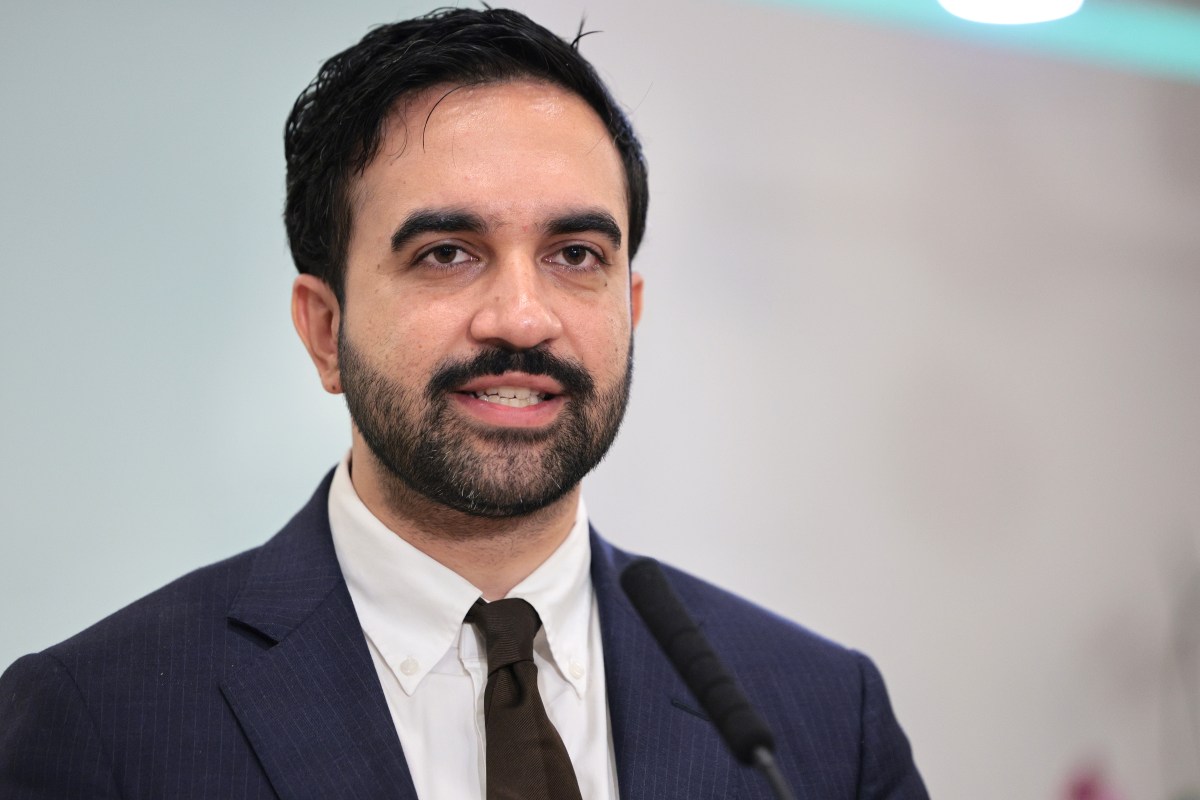
Israeli Consul General Ofir Akunis criticized New York City Mayor Zohran Mamdani for calling the pro-Israel lobby group AIPAC "monsters," saying this language is similar to what Nazis used against Jewish people. Mamdani defended his words by saying AIPAC supports a harmful status quo in the Middle East through hidden political money. Akunis also warned about rising antisemitism and urged Americans to pay attention to this issue.
Key Facts
Israeli Consul General Ofir Akunis compared Mayor Mamdani’s use of the word "monsters" for AIPAC to Nazi language used against Jews in Europe.
AIPAC (American Israel Political Action Committee) is a powerful group that supports Israel and has been criticized by some progressive politicians in the U.S.
Mayor Mamdani said AIPAC uses dark money (untraceable political donations) to keep its political power and block peace efforts.
Akunis expressed concern about increasing antisemitism worldwide, calling it a threat to both Israel and Western countries.
Akunis criticized progressives who support both LGBTQ+ rights and the Palestinian cause, saying such rights are not respected in Palestinian territories or in Iran.
Mamdani’s comments came during a rally supporting progressive candidates who later won their races.
Akunis urged Americans to defend freedom of speech and women’s rights against extremist influences.
The Israeli diplomat accused some U.S. politicians of using Israel-related issues to distract from local problems.
Read the Original
Want the full story? Tap a source to open the original
article.
Australia’s Prime Minister Anthony Albanese faced criticism for his remarks about two expensive melons given to him by Japan’s Prime Minister Sanae Takaichi. A former Japanese ambassador called Albanese’s comments disrespectful, but Albanese said the joke came from the podcast host, not him. Opposition leaders have asked Albanese to apologize, but he has rejected their demands.
Key Facts
Japan’s Prime Minister Sanae Takaichi gave Anthony Albanese two high-value crown melons during her visit to Australia in May.
Crown melons are a prized gift in Japan, costing more than $180 each.
Albanese called the melon gifts “pretty strange” but also “quite good” during a July podcast episode.
The podcast host made a joke comparing the melons to Pamela Anderson, which Albanese joined in responding to.
Shingo Yamagami, former Japanese ambassador to Australia, called the comments “sexist” and damaging to the Australia-Japan relationship.
Opposition leaders in Australia demanded Albanese apologize to Takaichi, which he refused, saying the joke was from the host.
Albanese’s government denies the comments were offensive and stresses the strong partnership between Australia and Japan.
Albanese previously apologized for unrelated controversial comments about Kylie Minogue on the same podcast.
Read the Original
Want the full story? Tap a source to open the original
article.
Prime Minister Andy Burnham has asked the justice secretary to find a way to stop the men who killed police officer Andrew Harper from being released early under a new prison early release plan. The government is exploring options to keep more serious offenders in jail as part of efforts to reduce prison overcrowding.
Key Facts
PC Andrew Harper died in 2019 after being dragged by a car during a crime.
Jessie Cole and Albert Bowers were sentenced to 13 years for manslaughter in Harper’s death.
Under current rules, Cole and Bowers could be released halfway through their sentence, in January.
The government imposed early release changes to reduce prison crowding but currently cannot exclude specific manslaughter offenders.
About 5,000 prisoners are expected to be released early under the new scheme, after some exemptions for serious offenders.
A petition has gathered almost 900,000 signatures asking to stop Harper’s killers’ early release.
The justice secretary will propose options in parliament to keep more serious criminals, including Harper’s killers, in prison longer.
Officials warn changing the scheme to exclude manslaughter convictions could require more releases in the future to manage prison capacity.
Read the Original
Want the full story? Tap a source to open the original
article.
Criminal gangs in Belgium are using short-term rental platforms, similar to Airbnb, to store drugs, money, weapons, and people. Belgium’s national drug commissioner, Ine Van Wymersch, says the flexibility of these rentals helps organised crime, and authorities are working to stop this misuse.
Key Facts
Gangs rent short-term apartments to hide illegal goods because bookings can be easily changed or canceled.
In August, police found cocaine and cash in an Airbnb rental in Brussels linked to drug activity.
In 2024, a drug operation seizure worth €21 million involved an Airbnb rental in West Flanders.
Airbnb says criminal bookings are very rare and uses technology to spot suspicious activity.
Short-term rentals are part of a larger problem including anonymous emails, encrypted communication, cryptocurrency, and delivery services that criminals exploit.
Antwerp is a major entry point for cocaine in Europe and has seen drug-related violence and threats.
Belgium’s national drug commissioner warns the country risks becoming a narco state without stronger action.
The government is focusing on tracing and attacking criminal money to fight organised crime effectively.
Read the Original
Want the full story? Tap a source to open the original
article.
Sudanese armed forces found a mass grave with at least 25 bodies in Kurmuk, Blue Nile State, after retaking the town from the paramilitary Rapid Support Forces (RSF). Local officials accuse the RSF of killing women, children, and hospital staff during their occupation, amid ongoing fighting in the region.
Key Facts
The mass grave was discovered in the northeastern part of Kurmuk during army operations.
The victims included children, women, and hospital workers.
The killings reportedly happened near Jebel Fankat, a strategic hill used by the RSF for drone attacks.
The RSF and Sudanese army have been in conflict since April 2023.
The RSF has been accused of mass killings in several areas, including Khartoum and El-Fasher.
Fighting continues in Blue Nile State and West Darfur, causing many people to flee their homes.
The World Health Organization estimates around 40,000 people have died due to the conflict.
More than 14 million people have been displaced from their homes because of the fighting.
Read the Original
Want the full story? Tap a source to open the original
article.
Amber heat health alerts have started across most of England from Tuesday morning until Friday morning because of a fifth heatwave this summer. These alerts warn of serious effects on health services, vulnerable people, and other risks as temperatures rise and drought conditions worsen.
Key Facts
Amber heat health alerts are active across almost all regions in England from 9am Tuesday to 9am Friday.
The north-east of England has a less intense yellow heat health alert.
High temperatures may affect hospitals, care homes, and workers, causing health risks especially to older people and those with illnesses.
Other risks include overheating indoor places, problems managing medicines, power demand exceeding capacity, and more travel delays.
Water-related accidents like drowning and cold shock may increase during the heatwave.
Four more English regions were declared in drought recently, joining several others and all of Wales, due to very dry weather.
About 71% of England is under "flash drought," a rapid dry period after the driest July on record.
Temperatures are forecast to reach mid-30s Celsius by Thursday, possibly over 36°C in some areas.
Read the Original
Want the full story? Tap a source to open the original
article.
Legend Storer, a 20-year-old former college swimmer from Hawaii, has been charged in connection with the death of a security guard at a Maui resort. The security guard was found unresponsive after an attack by a naked man, who was later identified and arrested as Storer.
Key Facts
Legend Storer is 20 years old and used to be a college swimmer from Hawaii.
A security guard named Michael Dyer, 63, was found dead at a West Maui resort.
Police found Dyer after an attack by a naked man around 5:30 a.m. on August 5.
Surveillance footage showed the naked man arriving around 1:45 a.m. and attacking Dyer.
The same naked man was later found injured in a nearby area called Kahana.
Storer was taken to a hospital for medical evaluation before being arrested.
He was charged with second-degree murder and first-degree burglary; an indecent exposure charge was also referred to prosecutors.
Police have not shared a reason or motive for the attack.
Read the Original
Want the full story? Tap a source to open the original
article.
London Heathrow Airport lost its position as Europe’s busiest airport to Istanbul Airport in July, with Istanbul serving 8.15 million passengers compared to Heathrow’s 7.86 million. Heathrow has faced a drop in Middle East passenger traffic due to the US-Israel conflict with Iran and is planning to expand by building a third runway to handle more passengers.
Key Facts
Istanbul Airport had 8.15 million passengers in July 2025, while Heathrow had 7.86 million.
Heathrow was Europe’s busiest airport from 1996 to 2019 and again since 2023, except during the 2020 pandemic.
Passenger numbers on routes to the Middle East from Heathrow fell by 20.2% in July 2025.
Heathrow operates two runways nearly at full capacity and wants approval to build a third runway.
The airport recorded 84.46 million passengers in the first half of 2025.
Heathrow’s busiest day in 2025 was July 19, with 267,000 passengers.
Heathrow plans an expansion to handle up to 150 million passengers annually.
The airport will charge airlines higher fees to recover costs spent on the third runway project’s early work.
Read the Original
Want the full story? Tap a source to open the original
article.
Congo is facing its fastest growing Ebola outbreak, with over 4,300 confirmed cases and more than 2,000 deaths reported. The outbreak, caused by a rare type of the Ebola virus, began in February and has no approved vaccine or treatment.
Key Facts
The Ebola outbreak in Congo started in February but was officially declared on May 15.
There are 4,381 confirmed Ebola cases in Congo so far.
At least 2,011 people have died from the outbreak.
Currently, 704 patients are being treated and isolated.
This outbreak is the fastest growing Ebola outbreak on record.
The virus involved is the Bundibugyo strain, which is rare.
There are no approved vaccines or treatments for this type of Ebola virus.
The outbreak began in a remote and vulnerable area of Congo.
Read the Original
Want the full story? Tap a source to open the original
article.
President Donald Trump said the United States controls the Strait of Hormuz with a strong naval blockade amid ongoing conflict with Iran that began on February 28. He also demanded compensation from Iran for harm caused by the conflict, responding to Iran’s own compensation demands. Oil prices surged due to uncertainty about when the strait might reopen for shipping.
Key Facts
President Trump stated the U.S. Navy controls the Strait of Hormuz with a “steel wall” naval blockade.
The conflict with Iran started on February 28, affecting global oil transport through the strait.
Iran demands compensation for war damages linked to the conflict.
President Trump countered by demanding compensation from Iran for U.S. military deaths and injured personnel.
Around 20% of the world’s oil supply passed through the Strait of Hormuz before the war.
Oil prices rose by 5% amid doubts about the strait reopening soon to free ship passage.
U.S. intelligence detected a missile threat to Air Force One in Turkey, leading President Trump to secretly switch planes for security.
The U.S.-Iran conflict is causing ongoing tensions affecting global trade routes and energy markets.
Read the Original
Want the full story? Tap a source to open the original
article.
Massachusetts Governor Maura Healey signed a law that lets doctors decide whether a woman can have an abortion at any stage of pregnancy. This law removes previous limits that only allowed abortions after 24 weeks for certain medical reasons.
Key Facts
The new law lets doctors use their professional judgment to allow abortions at any point in pregnancy.
The previous law only allowed abortions after 24 weeks if necessary to protect the woman’s life, health, or due to fatal fetal conditions.
Massachusetts is now the 10th U.S. state, plus Washington, D.C., with no time limit on abortions.
Other states with no abortion time limits include Alaska, Colorado, Maryland, Michigan, Minnesota, New Jersey, New Mexico, Oregon, and Vermont.
Governor Healey said the law helps women access care locally without having to travel far or pay extra costs.
The goal of the law is to protect health care decisions between women and their doctors.
The law reflects Massachusetts’ efforts to have strong protections for abortion access.
Read the Original
Want the full story? Tap a source to open the original
article.
Russian forces launched missile and drone attacks overnight in southeastern Ukraine and Kyiv, killing six people and injuring others. Ukraine and Russia both reported damage and casualties, with Russia stating it targeted military and transport facilities, while Ukraine said a children’s hospital in Kyiv was hit.
Key Facts
Six people were killed and 19 wounded in missile and bomb attacks in Ukraine’s Zaporizhzhia region.
A ballistic missile struck Kyiv, causing damage and injuring one person.
A children’s hospital in Kyiv’s Shevchenkivskyi district was hit, resulting in a fire and one injury.
A drone attack in the southern city of Mykolaiv injured a 75-year-old woman.
Russia said its attacks targeted defense and logistics centers in Kyiv and Zaporizhzhia.
Ukraine claimed an overnight drone attack killed one person and injured two in Russia’s Voronezh region.
Russian air defenses destroyed 15 drones over Voronezh and surrounding areas.
Ukraine is facing challenges defending against attacks due to shortages of Patriot missile interceptors.
Read the Original
Want the full story? Tap a source to open the original
article.
A strong 7.4-magnitude earthquake hit western Colombia's coffee-growing region on Monday, killing at least 164 people. Rescue teams worked through the night on Tuesday to find survivors amid damaged buildings and collapsed homes in cities like Cali and Pereira.
Key Facts
The earthquake struck Colombia's coffee-growing area early Monday.
At least 164 people have died, with more casualties expected.
Cities like Cali and Pereira saw many buildings destroyed or damaged.
In Cali, around 85 people died, and some hospital floors collapsed, trapping patients.
Rescue workers, police, soldiers, and volunteers dug through rubble to find survivors.
Pereira reported 66 deaths and major damage, including to its airport.
A curfew was put in place in Cali and Pereira due to safety concerns, including reports of looting.
Authorities deployed 1,000 security forces to help maintain order and assist rescue efforts.
Read the Original
Want the full story? Tap a source to open the original
article.
That's the point of this site, and readers keep it that way. Support for any amount and the daily digest lands in your inbox every morning at 7am Eastern.
Rescue teams in western Colombia continue working after a powerful earthquake caused buildings to collapse and homes to be destroyed. The number of deaths is expected to increase as search efforts continue.
Key Facts
The earthquake hit western Colombia and was the strongest in the country in many years.
Rescue workers are digging through rubble to find survivors.
Many buildings and houses were flattened by the quake.
The death toll is not final and may rise as more searches are done.
Emergency response is ongoing to help those affected by the disaster.
The earthquake has caused widespread damage across the region.
This event is one of the most serious natural disasters Colombia has faced recently.
Read the Original
Want the full story? Tap a source to open the original
article.
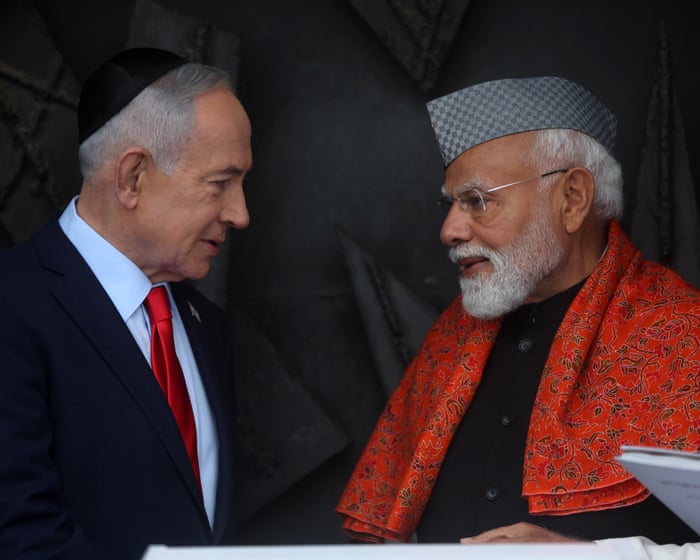
India’s relationship with Israel has grown stronger, including cooperation in military supply and production. Despite concerns about the conflict in Gaza and international criticism of Israel’s actions, India continues to support Israel and supply military components.
Key Facts
Under Prime Minister Narendra Modi, India’s ties with Israel have become closer, especially in defense and strategic areas.
India used to mainly buy weapons from Israel but now helps produce weapons through joint ventures and partnerships.
Amnesty International revealed that Indian companies supplied many weapon parts to Israeli military suppliers during the Gaza conflict.
These parts included small arms components, artillery shell casings, drone warheads, and military vehicle parts.
Some Western countries have limited arms sales to Israel over concerns about the war in Gaza and humanitarian law violations.
United Nations commissions have accused Israel of committing genocide and war crimes in Gaza, and the International Criminal Court issued an arrest warrant for Israeli Prime Minister Benjamin Netanyahu.
Despite this, India’s government and public have not shown major opposition to the arms supply or Israel’s actions.
Analysts link India’s support to shared nationalist ideologies and political support from Modi’s voter base.
Read the Original
Want the full story? Tap a source to open the original
article.