Egypt is considering whether to send forces to help defend Saudi Arabia from Houthi attacks, but officials say any role would be defensive and not target the Houthis. Cairo is wary of becoming drawn into Yemen’s conflict, partly because Egypt suffered heavy losses in its 1960s intervention and wants to avoid broader regional entanglements.
Key Facts
Egypt sent thousands of troops to Yemen in 1962 to support republican forces against royalists.
Egyptian forces withdrew after heavy losses and Egypt’s defeat in the 1967 war with Israel.
President Abdel Fattah el-Sisi said a possible deployment would focus on defending Saudi Arabia, not attacking Yemen’s Houthis.
Egypt’s foreign minister called for a political solution to the Yemen conflict.
Saudi Arabia has faced Houthi missile and drone attacks, including a strike on Riyadh’s King Khalid International Airport that killed 13 people, one of them Egyptian.
Egypt’s National Defence Council said on October 18 that Egypt was ready to provide necessary and possible support to Saudi Arabia.
An Egyptian combat deployment abroad requires parliamentary approval, and a vote was scheduled for Monday after a one-week delay.
Read the Original
Want the full story? Tap a source to open the original
article.
Hundreds of thousands of people marched across France to protest rising living costs, and clashes broke out in several cities. Police arrested nearly 1,000 people, while authorities said the response was more controlled than during the previous week’s unrest.
Key Facts
Interior Minister Laurent Nunez said police arrested nearly 1,000 people nationwide on Saturday.
Riot police used tear gas in Paris and cities including Marseille, Lyon, Bordeaux, Lille, Toulouse, Montpellier and Nantes.
Authorities deployed about 70,000 security personnel for the demonstrations.
The previous week’s unrest led to vandalism of public buildings, looting of hundreds of businesses and 2,700 arrests.
Nunez said police made faster interventions, conducted more checks before demonstrations and better protected commercial areas.
At least two people were seriously injured, including a man in Toulouse and another person in Clermont-Ferrand.
Rights advocates and protesters criticized what they viewed as restrictions on freedom and the right to demonstrate.
France is due to elect a successor to President Emmanuel Macron in six months.
Read the Original
Want the full story? Tap a source to open the original
article.
Israel said it will restrict Palestinian workers from entering most areas of the occupied West Bank from Sunday through Monday and close all crossings on Tuesday, the day of its general election. The measures follow a lockdown and raids in Hebron after an attack that killed two Israeli soldiers and two Palestinian gunmen; Israeli officials say about 2,000 people have been displaced, while Hebron’s mayor put the figure at 2,200.
Key Facts
The Israeli army announced the worker restrictions and Tuesday closure of crossings.
Israeli Prime Minister Benjamin Netanyahu ordered a full lockdown of the occupied West Bank after the attack.
Two Israeli soldiers and the two Palestinian gunmen were killed in Friday’s attack on an Israeli army reserve base.
Defence Minister Israel Katz said about 2,000 people had been displaced from Hebron.
Hebron Mayor Yousef al-Ja’bari said 2,200 people had been forced from their homes and described the city and nearby villages as under a complete blockade.
The Palestinian Authority called for international pressure and described Israel’s actions as collective punishment.
The Israeli military said its operation would last several days; Netanyahu said he was planning a large-scale operation.
Israel’s general election is scheduled for Tuesday, and Netanyahu is seeking another term.
Read the Original
Want the full story? Tap a source to open the original
article.
Ursula Wills said a camping trip to Melinsey Mill in Cornwall inspired her 2006 short story, The Wicker Husband. The story was adapted into Wicker, a film starring Olivia Colman, Alexander Skarsgård and Peter Dinklage, which opened in UK cinemas on 30 October 2026.
Key Facts
Wills wrote the 14-page story after seeing wicker sculptures on an art trail around a pond at Melinsey Mill.
The story follows an ostracised fisherwoman who pays a basket-maker to weave her a husband.
Wills posted the story on the short-story website East of the Web, where it attracted readers.
Actor Rhys Jennings and composer Darren Clark adapted the story into a musical that opened at Watermill Theatre in March 2020 and closed after four nights because of the Covid-19 pandemic.
Producer Justin Lothrop approached Wills about film rights in 2021.
Filming took place in Budapest in 2024 after Olivia Colman joined the project in 2023.
The film was written and directed by Alex Huston Fischer and Eleanor Wilson, who expanded the intimate relationship in the original story.
Read the Original
Want the full story? Tap a source to open the original
article.
Serbia is holding a parliamentary election on October 25, 2026, in a close contest between the ruling Serbian Progressive Party and the student-backed Students’ List. The vote follows nearly two years of protests after a train-station canopy collapse killed 16 people, and election monitors have raised concerns about campaign fairness and safety.
Key Facts
Serbia’s 6.4 million voters are choosing among 18 parties for seats in the 250-member Parliament.
The Students’ List is challenging the party of populist leader Aleksandar Vucic.
The movement grew out of student-led protests that began after the 2024 canopy collapse in Novi Sad.
Protesters have demanded accountability and justice for the 16 people killed in the collapse.
The article says the main contenders are polling neck-and-neck, making the election unusually uncertain.
Parties need at least 3 percent of the vote to enter Parliament.
International and local election monitors have raised concerns about detentions, media control, surveillance and cyberattacks against activists.
Vucic resigned as president last month to lead his party’s campaign; he could become prime minister if his party wins the most votes.
Read the Original
Want the full story? Tap a source to open the original
article.
Households in Upper Teesdale are facing sharply higher heating oil costs ahead of winter. A local buying group combines orders to seek lower prices, but some residents say oil is too expensive and use other ways to heat their homes.
Key Facts
A 500-litre heating oil delivery in rural areas including Teesdale, Weardale, Northumberland and parts of North Yorkshire costs about £600, or around £1.19 per litre.
Domestic heating oil cost about 52p per litre in October 2025.
Many homes in Middleton-in-Teesdale rely on heating oil because they do not have access to mains gas.
UTASS runs a buying group that combines household orders into monthly bulk purchases and can lower prices by about 3p per litre.
The UTASS scheme allows orders from 500 litres, while discounts typically require purchases of more than 1,000 litres.
Kim Richardson, a local resident, said she needs 1,000 litres and described the price as double last year's cost.
Pauline Thompson said she avoids heating oil because she cannot afford it and uses electric oil-filled radiators instead.
Read the Original
Want the full story? Tap a source to open the original
article.
Israel is set to vote on October 27 for all 120 seats in the Knesset, in an election that could reshape Prime Minister Benjamin Netanyahu’s government. Polls cited in the article show neither main bloc near a majority, so coalition talks and possible support from Palestinian-led parties could determine who governs.
Key Facts
The election is the first since the Hamas-led attacks of October 7, 2023.
Recent polling cited in the article projects 52 seats for the opposition bloc and 50 for Netanyahu’s religious-nationalist alliance.
A party or coalition needs at least 61 of the Knesset’s 120 seats to hold a majority.
Netanyahu could seek to form another government with traditional allies, including Jewish Power, Religious Zionism, Shas, and United Torah Judaism.
Four opposition parties signed a pact in late September to work together to try to unseat Netanyahu.
The opposition has not named a candidate to lead a government; the article identifies Gadi Eisenkot and Naftali Bennett as possible candidates.
The Joint List and Ra’am, both Palestinian-led parties, are projected to win about 13 seats combined.
Ra’am leader Mansour Abbas has signalled openness to joining an opposition-led coalition, while several opposition leaders have ruled out such an alliance.
Read the Original
Want the full story? Tap a source to open the original
article.
Families in the UK are reducing Halloween costs by swapping or buying second-hand costumes and making outfits from materials they already have. Charity shops and community workshops are helping families reuse clothing and other household items as Halloween costumes and decorations.
Key Facts
A survey found that 36% of shoppers planned to celebrate Halloween in 2026, up from 27% in 2025.
Some parents use Facebook groups to swap or sell costumes and search resale sites for cheaper outfits.
Birmingham mother Mandy Thomas said she often finds character costumes on eBay or Vinted for about a quarter of their original price.
A charity shop in Coundon, Coventry, sets aside donated costumes for Halloween sales.
The shop sells some costumes for as little as £1.50; items in original packaging are often priced at about a quarter of their retail value.
Coventry-based organisation Cov Cloth runs workshops where families make costumes, decorations and accessories from unwanted textiles and household items.
Workshop founder Adele Harrison encourages families to use materials such as old tights, cereal boxes and unwanted clothing before buying new items.
Read the Original
Want the full story? Tap a source to open the original
article.
Businesses in Devon say high employment costs are delaying hiring and making it harder to grow. Ahead of Wednesday’s Budget, they are asking the government to reduce employer National Insurance costs and consider cutting VAT for hospitality businesses.
Key Facts
Links Publishing owner Tim Randell said he is holding back from filling two positions because of employment costs.
Businesses at the Devon Business Show said they have struggled with higher employer National Insurance contributions and increases to the National Minimum Wage.
From April 2025, employers pay National Insurance at 15% on salaries above £5,000, compared with 13.8% on salaries above £9,100 before the change.
The minimum wage for workers aged 21 and over rose from £11.44 to £12.21 an hour in April 2025.
Business representatives called for lower employment costs and tax relief for small businesses.
Hospitality representatives called for VAT on pubs and restaurants to be cut from 20% to 10%.
A charity representative said tighter household spending affects how much the charity can raise and how many families it can support.
Read the Original
Want the full story? Tap a source to open the original
article.
The UK government has introduced a statutory code for private parking operators after cases such as Rosey Greenwood’s, who faced a £1,906 demand despite having paid to park. Many protections in the proposed code already appear in the parking sector’s voluntary code, and the new rules are still subject to parliamentary scrutiny.
Key Facts
Greenwood was told to pay £1,906 after paying more than five minutes after entering a Derby car park, despite having paid for parking and having bank records to show it.
The parking sector later banned the five-minute payment rule in its own code of practice.
The government’s statutory code was laid before Parliament and is subject to a 40-day period for MPs and peers to object.
The proposed code gives drivers at least five minutes to decide whether to park and a 10-minute grace period to leave after their permitted stay; the sector’s code already provides both.
The proposed code sets a maximum parking charge of £100, reduced to £60 if paid within two weeks, matching the sector’s existing code.
Under four specified circumstances, charges should be reduced to £20 on appeal; the sector’s code already includes those reductions.
Operators may still add a £70 debt recovery fee, as well as court fees and legal costs, if drivers do not pay.
Read the Original
Want the full story? Tap a source to open the original
article.
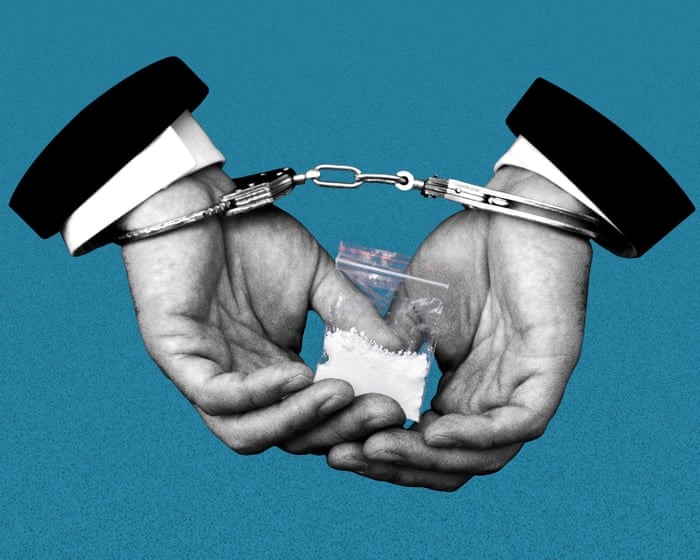
Wastewater estimates indicate that cocaine consumption in England rose 26% from 2021 to 2025, reaching an estimated 123,000kg in 2024-25. Survey data suggests the number of users has not grown in step, while treatment figures point to more people seeking help and a shift toward older age groups.
Key Facts
Home Office scientists estimated that people in England consumed 123,000kg of cocaine in 2024-25, with an estimated street value of £9.8bn.
Wastewater samples indicated a 26% rise in cocaine consumption between 2021 and 2025.
Crime survey data shows reported past-year use has remained flat or fallen slightly since the pandemic, though surveys may miss some users.
The National Crime Agency said wholesale prices reached historically low levels in 2025 and showed signs of rising in 2026.
An expert tracking advertised prices found that an ounce fell from about £1,300 in March 2022 to about £700 in September 2025, then rose to about £1,000 in July 2026.
In England, 33,612 people started treatment for cocaine problems in 2024-25, 57% more than in 2019-20.
People in their 30s were the largest age group seeking treatment; a decade earlier, people in their 20s were the largest group.
Guardian-collected figures from 39 police forces showed a 10% rise in recorded crime rates mentioning cocaine since 2019.
Read the Original
Want the full story? Tap a source to open the original
article.
Novelist Zadie Smith told Dua Lipa that rising inequality and the decline of public services have made cultural differences feel more threatening. At a London literature festival, Smith also reflected on multiculturalism, her novel “White Teeth” and the value of public education, health care and literary criticism.
Key Facts
Smith linked sharper divisions in Britain to inequality, unemployment and problems with housing, schools and hospitals.
She said that when people have secure housing and access to health care, differences can feel interesting rather than existential.
Smith said her state education helped her communicate with people from different backgrounds.
She argued that people could look back to the social democracy of earlier decades while rejecting the era’s racial prejudice and LGBTQ+ discrimination.
Smith began writing “White Teeth” at 21 and published it at 24 in 2000.
She said she finished the novel on Valentine’s Day after a breakup and then went out clubbing.
Smith called literary criticism essential because it helps develop taste.
The Southbank Centre’s London literature festival runs through 1 November.
Read the Original
Want the full story? Tap a source to open the original
article.
Cookie theft occurs when malware steals active session cookies from a device, letting fraudsters access accounts without entering a password or triggering some login checks. Logging out, limiting downloads, clearing cookies, and using a password manager can help reduce the risk; suspected victims should scan devices, end active sessions, and change passwords.
Key Facts
A session cookie keeps a person logged into a website as they move between pages.
An active stolen cookie can let a fraudster use an account and may bypass multifactor authentication.
The article says malware, often hidden in downloaded software or browser extensions, can steal cookies from a browser’s database.
Fraudsters may use hijacked sessions to access bank accounts, redirect purchases, or scam a victim’s contacts.
Signs of possible malware include unusual slowdowns, fast battery drain, crashes, browser redirects, pop-ups, or a changed homepage.
Closing a browser tab does not necessarily end a session; manually logging out invalidates the session cookie.
The article recommends careful downloading, using a dedicated password manager, and clearing cookies regularly.
If an account may be compromised, run an antivirus scan, log out of accounts on all devices, and change passwords.
Read the Original
Want the full story? Tap a source to open the original
article.
Police forces across Britain recorded a 10% rise in crimes mentioning cocaine between 2019 and 2025, while estimates show cocaine use has increased in England. The figures include drug offences, violence, sexual offences and driving offences, but a cocaine mention in a crime report does not establish that the drug caused the offence.
Key Facts
Police recorded at least 29,922 crimes mentioning cocaine in 2025, or 63.4 per 100,000 people, compared with 57.7 per 100,000 in 2019.
Home Office estimates indicate cocaine use at sites across England rose 26% between 2021 and 2025.
Wastewater analysis estimates that people in England consumed 123,000kg of cocaine in 2024–25.
Of crimes mentioning cocaine in 2025, 18% were violent offences and just under 4% were sexual offences; the reports included 344 rapes.
Nearly six in 10 people arrested on suspicion of domestic abuse who received a police drug test between July 2025 and June 2026 tested positive for cocaine.
In 2025, 30,707 drug-driving offences were added to driving licences, up 28% from 2022; 29,769 drink-driving offences were added, down 17%.
The article notes that drug tests in domestic-abuse cases are not representative and that a cocaine mention in a crime record does not prove the drug caused the offence.
Read the Original
Want the full story? Tap a source to open the original
article.
The article argues that Israel’s election will change the government’s leadership but not its policies toward Palestinians. It says candidates across the political blocs oppose a Palestinian state and broadly support continued occupation, while the campaign focuses on differences such as military service and the treatment of Palestinians.
Key Facts
The article says Israeli politics is framed as a contest between a bloc led by Benjamin Netanyahu and parties opposing him.
It argues that neither bloc offers a different policy toward Palestinians or supports establishing a Palestinian state.
The article cites campaign slogans and statements by candidates that it says advocate force, expulsion, or settlement expansion.
It says Netanyahu rival Avigdor Liberman has made statements denying that there are innocents in Gaza and has supported taking over Lebanon.
It says opposition politician Yair Golan has criticized international recognition of Palestine and supports Israeli settlements in the occupied West Bank.
The article says the election is expected to focus on issues such as Haredi participation in wars and the treatment of Palestinians, rather than Israel’s broader policies.
It attributes the persistence of these policies to their normalization in Israeli society and the lack of consequences for past actions.
Read the Original
Want the full story? Tap a source to open the original
article.
The article says polls suggest Benjamin Netanyahu’s coalition may fall short of a parliamentary majority, while opposition parties may also struggle to form a government because most have ruled out relying on Arab parties. It argues that a government led by Gadi Eisenkot could differ from Netanyahu’s on Gaza and cooperation with U.S. President Donald Trump’s peace plan, but says major policy change would remain uncertain.
Key Facts
Most polls cited in the article forecast that Netanyahu and his far-right and ultra-Orthodox partners will not win a parliamentary majority.
Most opposition parties have ruled out forming a coalition with parties that mainly represent Israel’s Palestinian citizens.
The article says the opposition could also lack enough support to govern if it excludes those parties.
The article identifies retired Lieutenant General Gadi Eisenkot, a former Israeli military chief of staff, as a possible leader of a new government.
Eisenkot and Benny Gantz joined Netanyahu’s emergency government after the October 7 attacks and later left, according to the article.
Netanyahu faces trial in three corruption cases on charges including fraud, breach of trust and bribery.
The article argues a government without Itamar Ben-Gvir and Bezalel Smotrich could be more likely to cooperate with Donald Trump’s peace plan.
The article says a new government might improve humanitarian conditions in Gaza and allow some Israeli withdrawal, while a complete and immediate withdrawal remains unlikely.
Read the Original
Want the full story? Tap a source to open the original
article.
Ahead of Chancellor John Healey’s first Budget, Ipswich resident Dawn Fazackerley-King says her family has little left to cut as they prepare for a possible rise in their mortgage rate. The article describes household cost pressures and cites Office for Budget Responsibility forecasts of modest growth in real disposable income from 2026 to 2030.
Key Facts
Fazackerley-King, 42, is a self-employed Pilates instructor and lives in Ipswich with her husband and two children, aged six and eight.
The couple’s household income is about £70,000 a year.
Their mortgage rate could rise from 1.4% to about 5.3%, which she estimates could add about £250 a month.
She says the family has already cut spending and has no regular meals out.
In an August survey, 55% of adults who responded to the Office for National Statistics said their cost of living had risen from the previous month; the article reports 62% in August 2025 and 79% in April this year.
Among respondents reporting higher costs, the most common reasons were food shopping, fuel and energy bills.
The article says Prime Minister Andy Burnham announced a £2 cap on most single bus fares in England, a cut to VAT on domestic electricity bills, and plans to remove gas standing charges.
The Office for Budget Responsibility forecast average annual growth of 0.75% in real household disposable income from 2026 to 2030, compared with average annual growth of 3% from 2000 to 2007.
Read the Original
Want the full story? Tap a source to open the original
article.
A shooting near Florida A&M University in Tallahassee on Saturday night left 11 people with gunshot wounds and one other person injured, authorities said. Police said a physical altercation came before the shooting and reported that at least three victims had serious injuries; the department’s violent crimes unit is investigating.
Key Facts
The shooting happened near Florida A&M University’s campus on Perry Street in Tallahassee.
Police counted six adults and six juveniles among the injured.
At least three victims had serious injuries, while nine others were reported in stable condition, police said.
Police said initial findings showed a physical altercation preceded the shooting.
The university said students, faculty, and staff safety remained its highest priority.
The department’s violent crimes unit is investigating the circumstances.
Read the Original
Want the full story? Tap a source to open the original
article.
Brazilian voters are choosing between incumbent Luiz Inácio Lula da Silva and Senator Flávio Bolsonaro in a presidential runoff on October 25, 2026. The result will decide whether Lula wins another term or Bolsonaro, an ally of U.S. President Donald Trump, takes office; polls show a close race after Bolsonaro led the first round without securing a majority.
Key Facts
Flávio Bolsonaro received 47 percent of the first-round vote, compared with Lula’s 45 percent.
Neither candidate won an outright majority in the first round, requiring a runoff.
Lula, 80, has served as president from 2003 to 2010 and again since 2023.
Lula’s approval rating fell as low as 24 percent during his current term, amid concerns about crime and living costs.
Lula increased payments through the Bolsa Família welfare program by 15 percent and cut fuel taxes ahead of the runoff.
Flávio Bolsonaro, 45, has campaigned on hard-line security policies, including building large prisons modeled on those in El Salvador.
Flávio’s father, former president Jair Bolsonaro, is serving a 27-year sentence for attempting a coup to prevent the end of his presidency.
Read the Original
Want the full story? Tap a source to open the original
article.
A Guardian analysis says UAE government entities and Emirati developers have greatly expanded their property and business interests in Manchester over the past decade. It traces part of that growth to a 2013 UK government effort to secure UAE investment, including a £1bn housing scheme with Abu Dhabi.
Key Facts
UAE government and Emirati developer property holdings in Manchester reached an area equal to about 260 football pitches at their peak in 2023, according to the analysis.
In 2013, the UK government asked Manchester city council to prepare three investment proposals for the UAE amid tensions over Britain’s approach to the Muslim Brotherhood.
One proposal became Manchester Life, a planned £1bn development involving 6,000 homes.
Under the deal, the council sold Abu Dhabi a prime piece of city-centre land for £5m and granted it a right of first refusal on other projects.
Former council leader Richard Leese said housing development in and around the city centre had stalled for several years and other developers were unwilling or unable to proceed.
Sheikh Mansour, owner of Manchester City, has built a wider portfolio in the city that includes an indoor arena, a hotel, apartment blocks and investment in university research.
The article says scrutiny of Manchester City’s cheating scandal has drawn attention to Abu Dhabi’s broader influence in Manchester.
Read the Original
Want the full story? Tap a source to open the original
article.