Italy's Prime Minister Giorgia Meloni approved new laws to increase security after violence in Milan. These laws create a new crime for violent actions during protests and set harsher punishments for people who riot or damage property. Parents can also be held responsible if their children are involved in vandalism or looting.
Key Facts
Italy introduced tougher anti-riot laws on October 21, 2026.
A new offense was created for violent participation in demonstrations.
Penalties for rioters have been made more severe.
Parents can be financially responsible if their children commit vandalism or looting during protests.
The laws aim to reduce violence after recent unrest in Milan.
Giorgia Meloni is the Prime Minister of Italy and approved these security measures.
The focus is on stopping riots and punishing those involved in violent protests.
Read the Original
Want the full story? Tap a source to open the original
article.
King Charles III called the Aberfan disaster in 1966 the "most tragic of days imaginable" during the 60th anniversary event in Wales. The disaster involved a coal waste tip collapse that buried a school and homes, killing 116 children and 28 adults.
Key Facts
The disaster happened on 21 October 1966 near Merthyr Tydfil, South Wales.
A coal spoil tip collapsed, sending 150,000 tonnes of coal waste onto Pantglas Junior School and nearby houses.
116 children and 28 adults died in the disaster.
King Charles III, Queen Camilla, and the Prince of Wales attended the 60th anniversary memorial service.
An official inquiry in 1967 found the National Coal Board responsible for the disaster, but no one was prosecuted.
Emergency workers and miners worked around the clock to rescue people trapped in the debris.
Compensation to victims was limited, and some public disaster funds were used to remove remaining coal tips.
Survivors and families faced limited trauma support and ongoing challenges.
Read the Original
Want the full story? Tap a source to open the original
article.
The UK Home Office has canceled a deportation order against Tony Hall, a 62-year-old man who has lived in the UK for 50 years. Hall, whose parents were part of the Windrush generation, faced deportation to Barbados after serving a prison sentence, but officials have now allowed him to stay.
Key Facts
Tony Hall moved to the UK from Barbados at age 12 in 1976 with his family.
The Home Office had sought to deport him due to a 2001 conviction related to attempted robbery and firearm possession.
Hall served eight years in prison and was targeted for deportation after his release in 2009.
Authorities tried to deport him in 2010, but Barbados officials refused entry documents, so he was returned to the UK.
For many years, Hall was unable to work, rent housing, receive benefits, or access full health services due to his immigration status.
Advocates and a government commissioner called for a compassionate review of his case, leading to the deportation order being lifted.
Hall expressed relief at being allowed to remain in the country he calls home after long uncertainty.
His lawyer highlighted the long period of hardship and exclusion Hall endured despite the revocation of the deportation order.
Read the Original
Want the full story? Tap a source to open the original
article.
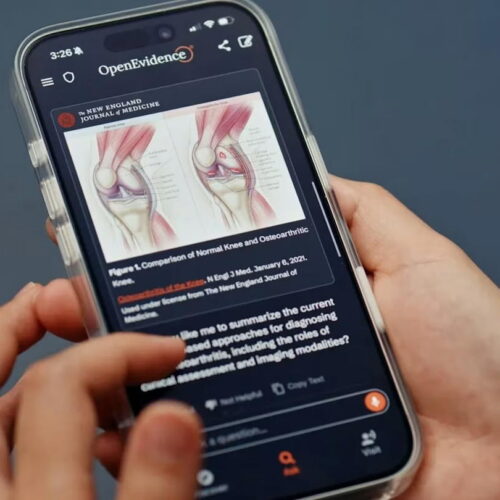
OpenEvidence is a Miami-based startup that created an AI-powered search engine used by nearly two-thirds of U.S. doctors to help diagnose and treat patients. The company uses advertisements to fund its platform, has grown rapidly since 2022, and is valued at $15 billion after raising $250 million in its latest funding round.
Key Facts
OpenEvidence was founded in 2022 by Daniel Nadler.
Nearly 2 out of 3 U.S. doctors use OpenEvidence’s AI chatbot regularly.
Last month, doctors made over 42 million requests using the platform.
The tool searches trusted medical journals and clinical guidelines to support doctors’ decisions.
The company earned nearly $1 billion in investment from big firms like Andreessen Horowitz and Sequoia.
OpenEvidence expects to earn $400–500 million through ads by the end of 2026.
It has partnerships with hospitals like Mount Sinai and Memorial Sloan Kettering.
The startup withdrew from the EU and UK due to concerns about new AI regulations.
Read the Original
Want the full story? Tap a source to open the original
article.
A top U.S. economist, Mark Zandi, disagrees with claims that America's economy is booming. He says most Americans are struggling with higher energy prices and inflation, which is hurting their real wages and savings, even though some parts of the economy, like AI-related businesses, are doing well.
Key Facts
President Donald Trump and some officials describe the U.S. economy as "booming."
JPMorgan CEO Jamie Dimon also called the economy "kind of booming," citing low unemployment and high corporate profits.
The unemployment rate was 4.2 percent in September 2026, which is low by historical standards.
Corporate profits hit a record $4.7 trillion in the second quarter of 2026.
Mark Zandi says most Americans are not benefiting from the economic gains, except those in the AI sector.
Inflation was 3.7 percent in September, driven mostly by rising fuel costs.
After adjusting for inflation, wages have actually decreased, causing a drop in real income for workers.
Consumer confidence is near record lows, indicating many people are worried about the economy.
Read the Original
Want the full story? Tap a source to open the original
article.
President Donald Trump said AI data centers should pay money to local communities to gain support. He encouraged companies to make deals that benefit people living near these centers, especially as many voters oppose new data centers due to concerns about their impact on water and energy resources.
Key Facts
President Trump suggested AI data centers pay "dividends" to communities or individuals to become popular.
He said financial deals with communities can change local opinions about data centers.
Many Americans oppose new AI data centers because of worries about water and energy use.
Some Republican Senate candidates want more rules and restrictions on data centers.
Trump defended data centers as important for economic success and growth.
He issued an executive order last year to speed up building data centers using federal land.
Trump supports voluntary payments from AI companies to cover electricity costs but not mandatory federal rules.
Polls show about 71-72% of Americans do not want AI data centers built near them.
Read the Original
Want the full story? Tap a source to open the original
article.
The article discusses how artificial intelligence (AI) is improving at mimicking human behavior but cannot fully understand human feelings and experiences. It stresses the importance of "somatic intelligence," which is a person's ability to sense emotions and social cues through body signals, something AI cannot replicate.
Key Facts
AI is increasingly used to handle tasks like customer service, messages, and conversations.
Somatic intelligence means using body signals and experience to understand emotions and social situations.
AI can recognize words linked to feelings like sadness but does not feel emotions itself.
Human connection remains important, especially as technology mediates more communication.
The World Health Organization reported that 1 in 6 people worldwide feel lonely, which harms health.
Somatic intelligence helps people notice unspoken discomfort or disengagement during interactions.
Businesses use AI to improve efficiency but risk losing the quality of human service that keeps customers loyal.
Only 20% of employees worldwide felt engaged at work in 2025, highlighting challenges in workplace connection.
Read the Original
Want the full story? Tap a source to open the original
article.
European Union prosecutors searched the offices of the far-right Patriots group in the European Parliament as part of an investigation into misuse of EU funds by their predecessor, the Identity and Democracy group. The probe concerns alleged improper spending of about €4.3 million between 2019 and 2024 by the former group, which included members from several far-right parties such as Marine Le Pen's National Rally.
Key Facts
EU prosecutors searched Patriots group offices in Brussels and Strasbourg on October 21, 2026.
The search is linked to an ongoing investigation into the former far-right group Identity and Democracy (ID), dissolved in 2024.
The European Public Prosecutor’s Office (EPPO) oversees the probe into possible misuse of European funds.
ID included far-right parties such as France’s National Rally, Italy’s League, and Germany’s Alternative for Germany.
The investigation follows reports that ID improperly spent €4.3 million between 2019 and 2024.
Much of this money allegedly went to an adviser of Marine Le Pen and his wife.
Patriotic for Europe, the successor group, said it has no legal continuity with ID and claims it is not part of the investigation.
EPPO has kept details limited to protect the investigation’s progress.
Read the Original
Want the full story? Tap a source to open the original
article.
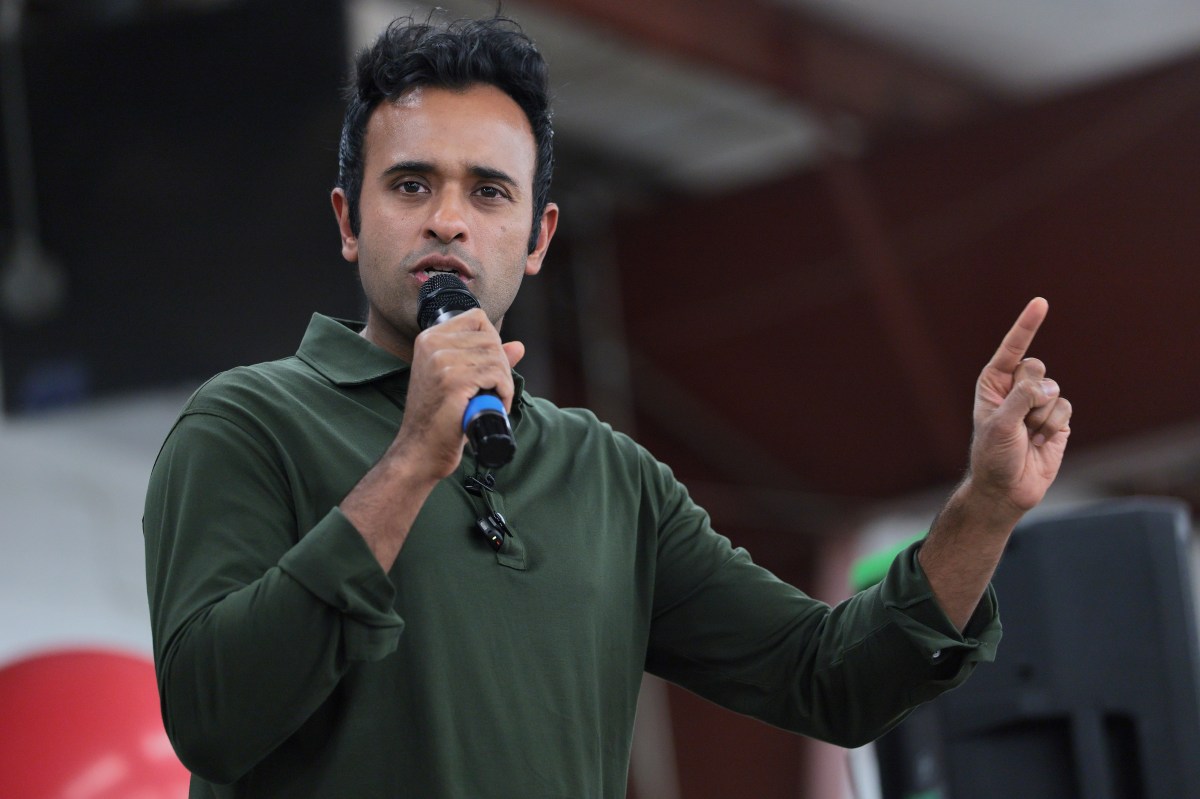
A new political ad supporting Republican Vivek Ramaswamy in Ohio’s governor race features Amy Acton’s mother denying Acton’s account of childhood abuse and calling her a liar. The ad has stirred controversy as Acton has accused her stepfather of abuse, a claim supported by court records, and many find the ad offensive. Despite backlash from both Democrats and Republicans, Ramaswamy’s campaign says it will spend $4 million on the ad.
Key Facts
The ad shows Donna Arthur, Amy Acton’s mother, denying Acton’s story of being homeless as a child and calling her a liar.
Amy Acton has publicly said her stepfather sexually abused her and that her mother sided with him.
Court records show the stepfather was charged with raping Acton when she was 12 but was never convicted and later died.
Donna Arthur lost custody of her children and has not seen Acton since 1981.
Ramaswamy’s campaign took responsibility for the ad and plans to spend $4 million promoting it despite strong criticism.
The ad received criticism from Democrats and Republicans, including public figures who said it could backfire politically.
A review of past elections shows attacking an opponent using family members often leads to losing votes.
Examples from previous elections demonstrate that using family attacks generally harms the campaign that employs them.
Read the Original
Want the full story? Tap a source to open the original
article.
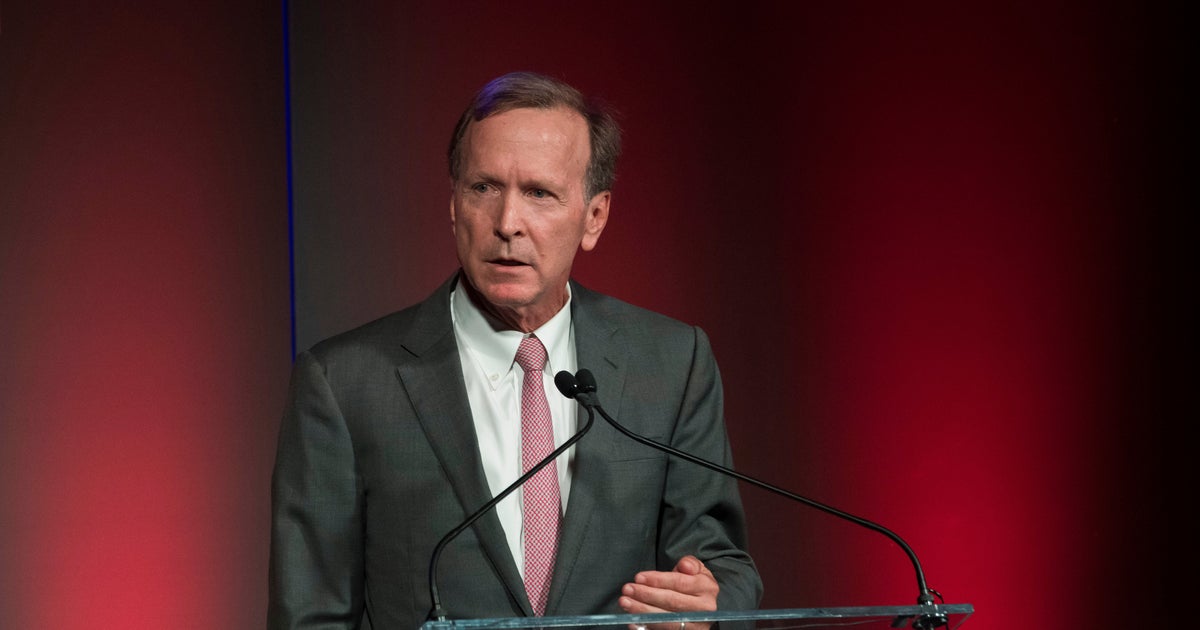
Neil Bush, brother of former President George W. Bush, said he voted for Democrat James Talarico in the Texas Senate race. He criticized Texas Attorney General Ken Paxton and President Donald Trump for harming the Republican Party.
Key Facts
Neil Bush voted for Democrat James Talarico in the Texas Senate race.
He criticized Ken Paxton, the Republican candidate, for his actions as Texas Attorney General.
Ken Paxton challenged the 2020 presidential election results in other states to help President Trump stay in power.
Paxton was indicted for securities fraud in 2015 and impeached in 2023 but acquitted by the Texas Senate.
Paxton defeated incumbent Senator John Cornyn in the Republican primary with President Trump's support.
James Talarico is seen by Neil Bush as having integrity, civility, humility, and a willingness to listen.
Texas has not elected a Democrat to the U.S. Senate since 1988, but polls show the race is close.
The Bush family is historically linked to the Texas Republican Party but has mostly avoided criticizing President Trump until now.
Read the Original
Want the full story? Tap a source to open the original
article.
Elizabeth Holmes, who was convicted of fraud related to her company Theranos, lets a camera crew film her life before she starts her prison sentence. The documentary raises questions about whether she is being truthful or creating a false image of herself. It also shows the challenges in documentaries where subjects and filmmakers often want to control the story differently.
Key Facts
Elizabeth Holmes invited filmmakers Nathan Fielder and Lance Oppenheim into her home shortly before going to prison.
Holmes was convicted of defrauding investors in her blood-testing company, Theranos.
Her partner, Billy Evans, says filming shows the real Holmes and their family life.
The documentary questions if Holmes is showing her true self or a crafted image.
Documentaries often involve a struggle between subjects who want control and filmmakers who have their own goals.
Other examples include Anthony Weiner and the Siegels, who also tried to control how their stories were told but lost control.
Filmmakers may reveal more critical views than the subjects expect.
Imelda Marcos showed how public image can differ from truth, saying “perception is real” while “truth is not.”
Read the Original
Want the full story? Tap a source to open the original
article.
Poland’s lower house of parliament has passed two bills to ease the country’s strict abortion laws, but these bills may be rejected by the president. The changes would remove some criminal penalties for those helping women get abortions and allow abortions in cases of serious fetal abnormalities, but many activists say the bills do not go far enough.
Key Facts
Poland currently has one of the strictest abortion laws in Europe.
The two new bills would ease criminal penalties for aiding abortions and allow abortions for fetal defects.
The nationalist president is expected to veto the bills.
Activists say the bills will not significantly help most women needing abortion care.
Rallies are planned in 27 cities to demand full decriminalization and access to abortion services.
The protests mark the sixth anniversary of a 2020 ruling that tightened abortion laws and led to major nationwide protests.
The current law only allows abortion in cases of rape, incest, or serious threat to the mother’s health or life.
The UN says Poland’s abortion laws violate women’s human rights due to their restrictiveness.
Read the Original
Want the full story? Tap a source to open the original
article.
The European Union's commission has started an investigation into Booking.com for not doing enough to stop fake listings and scams on its site. The investigation checks if Booking.com broke EU rules aimed at protecting internet users and if it properly warns customers about paid ads on the platform.
Key Facts
The EU suspects Booking.com may have broken the Digital Services Act (DSA), which requires companies to prevent online fraud.
Booking.com is accused of having weak systems to detect and stop fake listings and phishing scams.
The European Commission may fine Booking.com up to 6% of its global yearly income if rules are broken.
Booking.com says it is working with the EU and wants to protect travelers and their information.
Some scams involve fake accommodation offers and "reservation hijacks," where scammers use stolen data to trick customers.
The Dutch consumer group reported around 200 scam cases tied to Booking.com in 2025, costing victims about €65,000.
Booking.com told the BBC it saw a large increase in scams recently, helped by AI tools that create realistic fake emails and booking links.
EU officials are also checking if Booking.com is clear about which listings are paid ads.
Read the Original
Want the full story? Tap a source to open the original
article.
The Senate is expected to take no action on the Sunshine Protection Act of 2025, a proposal related to daylight saving time. This means the current system of changing clocks twice a year will probably continue unchanged.
Key Facts
The Sunshine Protection Act of 2025 aims to change how daylight saving time is handled.
The Senate is unlikely to pass or advance this law.
If the act does not pass, the U.S. will keep adjusting clocks twice a year.
Daylight saving time means moving clocks forward in spring and back in fall to make better use of daylight.
There is ongoing debate about whether to keep, change, or eliminate daylight saving time.
Doing nothing is considered the safest political choice by some lawmakers.
The issue has not gained enough support for major change recently.
Read the Original
Want the full story? Tap a source to open the original
article.
A new book prize called the Prix Pascal de Littérature IA has been created for books co-written with artificial intelligence (AI). Writers can submit manuscripts written with AI tools in French, and the winner will have their book published.
Key Facts
The prize accepts unpublished manuscripts between 10,000 and 50,000 words.
Participants must say which AI model and prompt they used, including popular models like ChatGPT, Claude, Gemini, and LLaMA.
The submitted works should be fiction and address ethical, social, or ecological issues that threaten humanity.
The prize is named after Blaise Pascal, a French thinker known for his work in math and literature.
The founders are technology entrepreneurs with backgrounds in blockchain, media, and philosophy.
The prize was created after controversies about AI use in other literary awards this year.
Submissions opened recently and close at the end of November; the winner will be announced in early December.
A jury of writers, critics, journalists, philosophers, and publishers will select the winner.
Read the Original
Want the full story? Tap a source to open the original
article.
U.S. special envoy Steve Witkoff called Russian President Vladimir Putin a "humanitarian" after Putin released an American prisoner. This statement caused strong criticism from Republican politicians who disagree with praising Putin, especially given Russia's actions in the war with Ukraine. President Donald Trump recently eased sanctions on Russia, which also drew criticism.
Key Facts
Steve Witkoff, a U.S. special envoy, called Putin a "humanitarian" during a meeting after the release of American Stephen Hubbard from Russian prison.
Hubbard, 74, had been imprisoned in Russia for four years and was deemed wrongfully detained.
Witkoff's comments aimed at encouraging progress in resolving the Russia-Ukraine war.
Republicans like Senator Thom Tillis and Senator John Cornyn criticized Witkoff’s praise of Putin.
Putin started the war with Ukraine over four years ago, and Russia has recently increased attacks on civilians and energy infrastructure in Ukraine.
President Donald Trump waived new U.S. sanctions on Russia shortly before they were to begin, going against Congress.
Trump also eased sanctions on Russian diesel fuel and made a diesel import deal with Putin.
Trump has shown frustration with Ukrainian President Zelenskyy and recently said Russia "has been fine on Ukraine."
Read the Original
Want the full story? Tap a source to open the original
article.
The Pennsylvania health department warned doctors about more cases of measles during pregnancy. They also raised concerns about a rare condition called congenital measles, where a newborn catches measles from the mother.
Key Facts
The warning came from Pennsylvania’s health department on Monday.
Measles cases during pregnancy are increasing in the state.
Congenital measles means the baby gets measles from the infected mother before birth.
This condition is very rare in the United States.
Health officials are monitoring the situation closely.
Doctors are urged to watch for signs of measles in pregnant patients and newborns.
The alert aims to improve early detection and care for affected mothers and babies.
Read the Original
Want the full story? Tap a source to open the original
article.
The film "Wicker" is a fantasy romance starring Olivia Colman and Alexander Skarsgård. It explores themes of love, society, and patriarchy. Other movies released this week include the Russian drama "Minotaur" and the survival story "Whalefall" featuring Austin Abrams.
Key Facts
"Wicker" is a fantasy romance film starring Olivia Colman and Alexander Skarsgård.
The film deals with love, society, and issues around patriarchy (male dominance in society).
"Minotaur" is a new film by Russian director Andriy Zvyagintsev.
"Minotaur" is a modern take on the classic movie "The Unfaithful Wife" by Claude Chabrol.
"Whalefall" is about a scuba diver trapped inside a whale’s belly.
Austin Abrams, known from "Euphoria," stars in "Whalefall."
These films were recently discussed by film critics Emma Jones and Dheepthika Laurent.
The article is part of a culture segment covering new film releases and related stories.
Read the Original
Want the full story? Tap a source to open the original
article.
Russia will send its first shipment of diesel fuel to the United States under a deal with President Donald Trump. The first tanker will carry 40,000 tonnes of diesel, with more shipments planned despite recent damage to Russia’s oil production caused by Ukrainian drone strikes.
Key Facts
Russia lifted its ban on diesel exports on October 9.
The first diesel tanker to the US will carry 40,000 tonnes of fuel.
Russia’s oil refining capacity has been damaged by Ukrainian drone strikes, reducing diesel output.
Agreements between President Trump and Russian leaders include ongoing fuel deliveries to the US.
US special envoy Steve Witkoff said several tankers will be sent one after another.
Russia also plans to export fertilizers to the US market in large amounts.
President Trump announced plans for shipments totaling over 1.8 million tonnes of diesel in the coming months.
Diesel prices in the US remain high, averaging $6.31 per gallon but are slowly decreasing.
Read the Original
Want the full story? Tap a source to open the original
article.
Ukrainian President Volodymyr Zelensky said he is willing to stop fighting along the current front lines in the war with Russia. He believes this pause could help end the war while keeping much of Ukraine's land unchanged.
Key Facts
Zelensky spoke about freezing the front lines in the Russia-Ukraine conflict.
Freezing front lines means stopping active fighting and holding positions as they are now.
Zelensky thinks this approach might help end the war.
The goal is to keep much of Ukraine’s territory unchanged despite the conflict.
He made this statement in an interview with Fox News.
This shows Ukraine’s openness to negotiations or a ceasefire under certain conditions.
The war between Russia and Ukraine began in 2022 and is ongoing.
Read the Original
Want the full story? Tap a source to open the original
article.