Neutral summaries of your favorite news sources — just the facts.
Your favorite news sources, one neutral feed — we distill their reporting into fact-first
summaries and always link to the original story. How it works
Young conservative members of the New South Wales Liberal party created a negative document about a rival minister, accusing him of an affair, according to a corruption investigation. The inquiry is examining claims that the group accepted illegal donations and used factional tactics to influence party affairs.
Key Facts
The corruption watchdog Icac is investigating the NSW Liberal party in Operation Rosny.
A group called the Reformers, part of the Liberal hard right faction, is accused of branch stacking (illegal recruitment practices).
The Reformers made a document called a "shit sheet" targeting David Elliott, a minister from a rival faction, which included false claims of an extramarital affair.
David Elliott denies the affair and rejected the accusations in a public statement.
Dylan Whitelaw, a former staffer associated with the Reformers, gave evidence about the document and denied some details while confirming others.
The Reformers allegedly took illegal donations from Jean Nassif, a fugitive property developer, to influence political decisions and harm opponents.
Messages suggested discussions of payments involving federal opposition leader Angus Taylor, who denies wrongdoing.
The inquiry continues to explore connections between donations, politicians, and internal party conflicts.
Read the Original
Want the full story? Tap a source to open the original
article.
The U.S. Federal Communications Commission (FCC) announced a ban on importing foreign-made humanoid robots, focusing mainly on those from China. The FCC said these robots pose risks to national security and supply chains. China currently dominates the global market for humanoid robots.
Key Facts
The FCC banned imports of foreign-made humanoid robots, four-legged robot dogs (quadrupeds), and power inverters.
The ban mainly targets Chinese-made robots due to security concerns.
China holds about 85% of the global market share in humanoid robots.
Chinese companies like Unitree and AGIBOT shipped over 5,000 robots each in 2025, while leading U.S. firms shipped only a few hundred.
The FCC’s chairperson said the move aims to protect U.S. supply chains and national security.
The U.S. has banned other Chinese tech imports, such as drones, and is considering limits on Chinese AI tools.
Chinese humanoid robot market revenue could reach $15 billion by 2030.
The ban could affect U.S.-China trade relations and upcoming talks between President Donald Trump and Chinese leader Xi Jinping.
Read the Original
Want the full story? Tap a source to open the original
article.
Heathrow Airport can charge airlines more to recover up to £320 million spent on the early work for its third runway. These higher charges may make plane tickets more expensive. Another company that offered a different runway design can also recover £4.1 million in costs.
Key Facts
Heathrow will recover up to £320 million from airlines through increased charges.
The money was used for early development of Heathrow’s third runway project.
Higher airport charges will likely lead to higher ticket prices for passengers.
Arora Group’s Heathrow West, a rival bidder with a shorter runway plan, will recover £4.1 million in expenses.
The Civil Aviation Authority (CAA) regulates these charges and will put rules in place to protect passengers from unfair costs.
The third runway is part of Heathrow’s expansion plan approved by the government.
The increased costs affect airlines directly but may be passed on to travelers through ticket price rises.
Heathrow and the CAA emphasize safeguards to ensure consumers are not overcharged.
Read the Original
Want the full story? Tap a source to open the original
article.
The Australian government plans to study the idea of building a new oil refinery in Western Australia, but climate and energy experts say it would not be profitable and would need government support. They suggest investing in renewable energy technologies instead, as Australia’s oil production is declining and the future focus should be on clean fuels.
Key Facts
The Australian government announced a $4 million early feasibility study for a new oil refinery in the Pilbara region of Western Australia.
Experts say the refinery would be an example of "dinosaur technology" that is uneconomic and relies on government subsidies.
Australia’s domestic crude oil production is falling fast and may stop within seven years without new discoveries.
Currently, Australia imports about 95% of its fuel, with only 4% refined locally from Australian crude.
A new refinery in WA would likely process mostly imported crude oil, not improving fuel security much.
Six out of eight Australian oil refineries have closed since 2003 because they cannot compete with larger refineries in Asia.
Experts recommend focusing government subsidies on renewable technology to produce zero-emission liquid fuels instead.
The future of Australia’s liquid fuels should be based on renewable electricity rather than fossil fuels.
Read the Original
Want the full story? Tap a source to open the original
article.
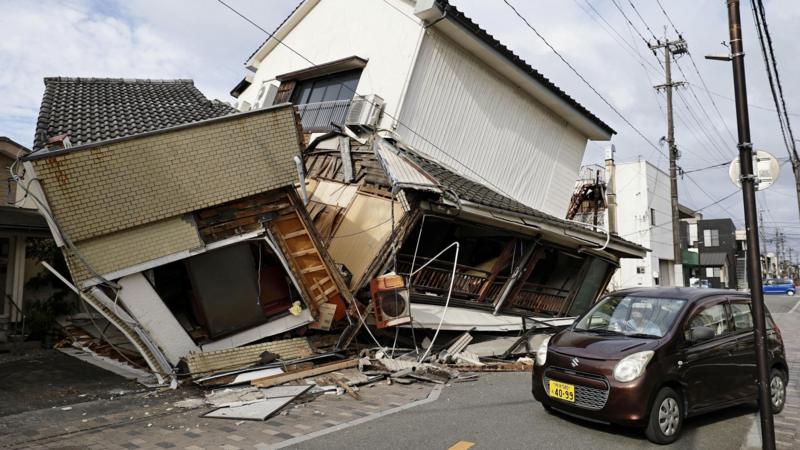
A powerful 6.8 magnitude earthquake hit Japan's Kyushu island on Tuesday, killing at least 13 people. Rescue teams are working quickly to find others trapped under rubble as thousands of people have had to leave their homes.
Key Facts
The earthquake measured 6.8 in magnitude.
It occurred on Kyushu island in Japan.
At least 13 people died because of the quake.
Many people are still missing after the disaster.
Thousands of residents have been forced to evacuate their homes.
Rescue workers are trying to save those trapped under debris.
Officials expect the death toll to rise.
The event happened recently, with ongoing rescue efforts.
Read the Original
Want the full story? Tap a source to open the original
article.
A strong earthquake with a magnitude of 6.8 struck Kumamoto prefecture in Japan, causing at least 13 deaths and damage to buildings, including a shopping mall and historic sites. Rescue teams are working to find people trapped and restore services, while aftershocks continue to worry residents.
Key Facts
The earthquake hit Kumamoto, a region with previous quakes, but this one was stronger than recent ones.
At least 13 people have died, including three in a large shopping mall where some are still trapped.
Authorities deployed 4,600 personnel to help with rescue and recovery efforts.
Tens of thousands of people lost power and water after the earthquake.
Historic sites such as Kumamoto Castle and Yatsushiro Shrine were damaged or destroyed.
Many residents reported heavy property damage and fear of more aftershocks.
Emergency teams are urgently working through the night to monitor and respond to the damage.
Officials warned the public to stay alert for possible additional earthquakes following this event.
Read the Original
Want the full story? Tap a source to open the original
article.
The Grassmayr Bell Foundry in Innsbruck, Austria, has been making bells since 1599 and now uses modern technology like 3D printing and computer simulations to improve its traditional casting process. Despite challenges like fewer new churches and rising costs, the family-run business continues to produce large bronze bells for customers in several European countries.
Key Facts
Grassmayr Bell Foundry was founded in 1599 and is one of the last traditional bell makers in Europe.
The company is still family-owned and run by brothers Johannes and Peter Grassmayr.
Modern tools have reduced polishing and cleaning time from 30% of production to just 10%.
They use 3D printing, laser scanning, and computer apps to design and test bells before casting.
Casting a single bell takes 3 to 4 months; forming molds for large bells can take up to 6 months.
Molten bronze creates very high pressure (up to 125 metric tons) inside the mold, which is made from high-quality clay and reinforced with steel.
Demand for bells is changing due to fewer new churches being built and higher energy and labor costs.
The business has survived many historical challenges like wars, famines, and economic difficulties.
Read the Original
Want the full story? Tap a source to open the original
article.
Ukrainian President Volodymyr Zelenskyy continues to secure strong international support, including meetings with UK and US leaders and military aid. However, he faces domestic challenges in Ukraine, including ongoing protests after the dismissal of popular defense minister Mykhailo Fedorov, who was known for modernizing the military.
Key Facts
Zelenskyy met UK’s Andy Burnham, who confirmed the UK’s continuing support for Ukraine.
Zelenskyy had a positive meeting with President Donald Trump in Washington, D.C., after attending Senator Lindsey Graham’s funeral.
The US Senate advanced a broad bill imposing sanctions on Russia.
Zelenskyy has successfully secured hundreds of billions in military, financial, and humanitarian aid from multiple countries.
Ukraine faces daily protests following the dismissal of Defense Minister Mykhailo Fedorov.
Fedorov, 35, was known for modernizing Ukraine’s military, increasing troop pay, reforming contracts, and fighting corruption.
Fedorov used data-driven technology and coordinated with Elon Musk to disrupt Russian communications on the battlefield.
Fedorov’s approach contrasts with the older, more traditional military leadership style in Ukraine.
Read the Original
Want the full story? Tap a source to open the original
article.
Iran’s military fired multiple ballistic missiles at U.S. bases in the Middle East, but all were intercepted by U.S. forces. The attacks happened as President Donald Trump met with Israeli Prime Minister Benjamin Netanyahu at the White House.
Key Facts
Iran’s Islamic Revolutionary Guard Corps launched several ballistic missiles targeting U.S. forces in the Middle East.
All missiles were intercepted, and U.S. forces remain alert and prepared.
The attacks included missile interceptions over Jordan, where a U.S. airbase and command center were targeted.
Iran stated the attacks are a response to continued threats and actions by the U.S. against its interests.
The missile strikes occurred while President Trump met Israeli Prime Minister Netanyahu, who supports strong actions against Iran.
Iran’s attack is seen as a message to be included in talks about regional issues, such as alleged Iranian nuclear facility construction.
Oil prices rose sharply after the announcement of the missile attacks.
The Strait of Hormuz remains a point of tension, with Iran controlling shipping routes and rejecting joint management proposals from Oman.
Read the Original
Want the full story? Tap a source to open the original
article.
Former FBI Director James Comey filed motions to dismiss federal charges accusing him of threatening President Donald Trump by posting a photo with the numbers "86 47." Comey’s legal team alleges the government targeted him unfairly due to his criticism of the president and claims illegal surveillance and misleading information were involved in the investigation.
Key Facts
James Comey faces federal charges over a photo showing "86 47," which prosecutors say threatens President Trump.
Comey’s lawyers argue the charges are politically motivated and seek to dismiss them.
They accuse the Department of Justice of illegal electronic surveillance on Comey’s phone without a warrant.
Discussions among Secret Service agents show concern about tracking Comey’s phone location after his Instagram post.
Comey’s lawyers requested a hearing to examine if the government lied or misled judges when getting search warrants.
The warrant affidavits allegedly omitted facts and falsely suggested Comey’s lawyer and wife obstructed the investigation.
A witness cited in the warrant showed bias against Comey and misunderstood the meaning of "86 47" initially.
FBI searches found no clear connection between Comey's work and the term "86," including in past cases Comey prosecuted.
Read the Original
Want the full story? Tap a source to open the original
article.
Jordan’s military said it intercepted and destroyed five missiles launched from Iran early on Wednesday. The U.S. military reported it also shot down Iranian missiles targeting American forces and coordinated with Saudi Arabia to attack militia sites in Iraq linked to Iran.
Key Facts
Jordan’s air defenses intercepted five missiles launched from Iran.
The Jordanian military did not report any casualties from the missile attack.
The U.S. military knocked down a missile barrage launched by Iran targeting American forces.
The U.S. Central Command said all Iranian missiles against U.S. forces were intercepted.
The U.S. worked with Saudi Arabia to strike sites in Iraq used by Tehran-backed militias.
These attacks ended a brief pause in fighting in the region.
The missiles were connected to ongoing tensions involving Iran and its allied groups in Iraq.
Read the Original
Want the full story? Tap a source to open the original
article.
A small number of families have returned to a village in southern Lebanon called Zawtar al-Gharbieh after an agreement between Israel and Lebanon. This deal involves Israel pulling back from some areas in exchange for the disarmament of Hezbollah, a militant group backed by Iran. Many homes in the village are damaged or destroyed, and Hezbollah opposes the agreement and ongoing talks between Israel and Lebanon.
Key Facts
Mahasen Faqih and her husband recently returned to their damaged home in Zawtar al-Gharbieh, southern Lebanon.
The village is part of a U.S.-brokered “pilot zones” deal where Israel agreed to withdraw in exchange for Hezbollah’s disarmament.
About 15 families have returned so far, out of roughly 500 homes in the village.
Nearly half the homes in the village have been destroyed, with many others damaged.
Hezbollah strongly opposes the deal and the talks between Israel and Lebanon.
The latest Israel-Hezbollah war started on March 2, 2026, after Hezbollah fired rockets into Israel.
Israel invaded southern Lebanon and occupied several villages along the border during the conflict.
Israeli forces are supposed to withdraw from certain areas, but some zones had little or no Israeli troops present before the agreement.
Read the Original
Want the full story? Tap a source to open the original
article.
A small group of Israeli settlers has been crossing into southern Syria to try to claim land for new Jewish settlements. These settlers, called the Pioneers of Bashan, want to establish homes in Syrian territory near the Golan Heights, a region Israel has controlled since 1967. The Israeli military is trying to stop these incursions while the group claims historical and security reasons for their actions.
Key Facts
The Israeli military found Jewish settlers crossing into southern Syria and stopped before attacking because they were not militants.
The settlers belong to a group called the Pioneers of Bashan, named after a biblical region that includes parts of modern Syria.
The group aims to set up Jewish settlements in southwestern Syria, around Quneitra, Daraa, and Sweida provinces.
Southern Syria includes a "buffer zone" that Israel declared in December 2024 after conflict in Syria.
The Golan Heights were captured by Israel from Syria in the 1967 war and later annexed, though most of the world does not recognize this.
The settlers argue their presence could help protect the Golan Heights and support the Druze minority after violent clashes in the area last year.
The Israeli military regularly tries to stop these settlers from entering Syria.
The broader Israeli settlement movement has strong support from Israel’s far-right government.
Read the Original
Want the full story? Tap a source to open the original
article.
China’s coastguard and civilian ships have increased patrols east of Taiwan, an area they have not frequently entered before. This move appears to be part of China's efforts to surround Taiwan and assert control over waters it claims, raising concerns about a possible strategy to isolate Taiwan from trade and outside help.
Key Facts
China’s Maritime Safety Administration and coastguard conducted several patrols and law enforcement operations east of Taiwan in June and July.
These patrols mark the first time China has frequently operated east of Taiwan rather than just in the Taiwan Strait.
Taiwan’s government reported that Chinese patrols included asking commercial ships about their origins and destinations.
There was an increase in Chinese maritime activity around Taiwan and nearby islands, from 30 sightings in May to 55 in June.
China claims Taiwan as part of its territory and extends this claim to Taiwan’s exclusive economic zone (EEZ), which reaches 200 nautical miles from its coast.
China’s actions respond partly to Japan and the Philippines discussing maritime boundaries, which China views as infringing on its claims.
Experts describe these moves as part of a "grey zone" strategy designed to pressure Taiwan without open conflict.
China says its patrols are legal actions to protect its territorial sovereignty and maintain regional maritime order.
Read the Original
Want the full story? Tap a source to open the original
article.
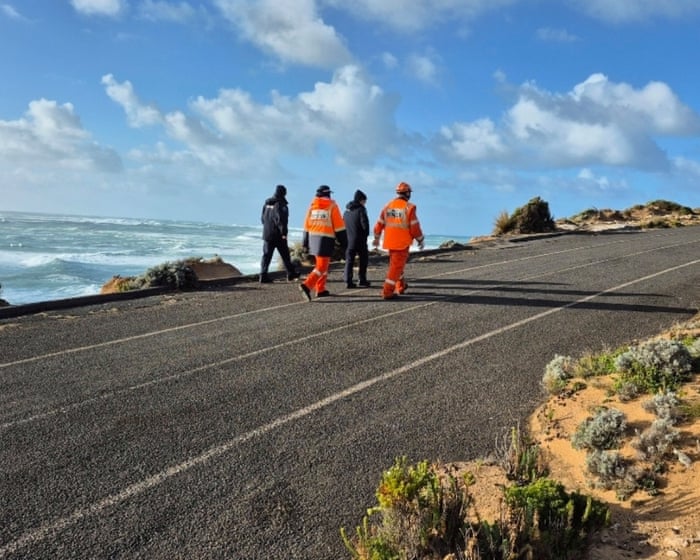
South Australian police are investigating the deaths of a mother and her toddler daughter as a murder-suicide after their bodies were found in the ocean near Port Macdonnell. A three-month-old baby boy, also missing, has not been found despite ongoing search efforts, and police have lost hope of finding him alive.
Key Facts
The bodies of Helena Wright, 36, and her 23-month-old daughter were found in the ocean west of Port Macdonnell.
Their vehicle was found abandoned with the engine running on Monday morning.
Helena Wright and her children had been missing since Monday.
Police are investigating the case as a murder-suicide based on current evidence.
Land and sea searches near Cape Northumberland have not located the missing three-month-old boy.
Search conditions were difficult due to weather, limiting water-based operations.
The South Australian premier expressed sorrow, highlighting the impact on the community.
The case is now with the coroner to determine cause and details of the deaths.
Read the Original
Want the full story? Tap a source to open the original
article.
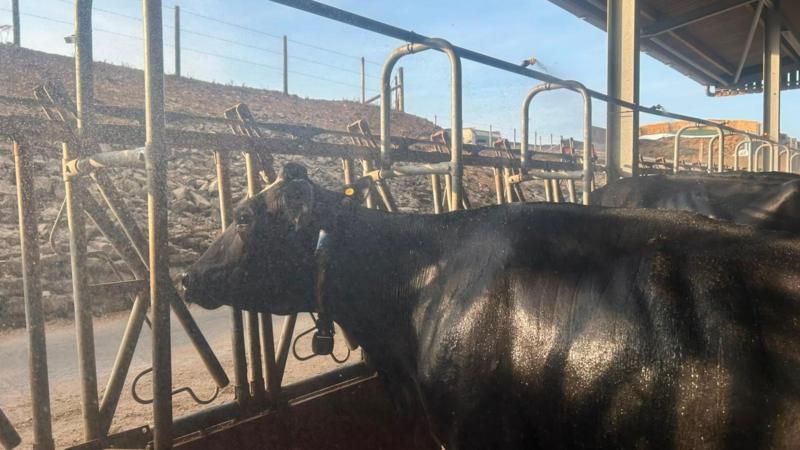
Dairy farmers in southwest England are using cooling systems like fans and sprinklers to help cows deal with hotter and drier summers. Heat and drought have lowered milk production by up to 20%, forcing farmers to spend thousands on equipment and use winter feed earlier than usual.
Key Facts
Hotter, drier summers are causing stress to dairy cows and reducing milk output by about 20%.
Farmers like Sarah Godwin have spent around £15,000 on ventilation and sprinkler systems to cool their cattle.
Large fans installed in milking parlours create airflow that helps keep cows comfortable.
Drought conditions are damaging grasslands, making pasture feed less nutritious and scarce.
Farmers are feeding cows winter stock earlier due to poor summer forage growth.
Climate scientists say prolonged dry spells are becoming a normal challenge, not just extreme events.
Some areas in southwest England are experiencing the worst drought in 50 years.
Farmers report that cows avoid the fields during the hottest parts of the day and stay in barns to stay cool.
Read the Original
Want the full story? Tap a source to open the original
article.
A 7.1-magnitude earthquake hit Japan’s Kyushu island, causing significant damage. The death toll has risen to 13, and rescuers are still working to save people trapped by the destruction.
Key Facts
The earthquake measured 7.1 on the magnitude scale.
It struck Kyushu, an island in Japan.
At least 13 people have died from the earthquake so far.
Rescue teams are still searching for survivors.
The quake caused major damage to buildings and infrastructure.
Japan’s Prime Minister has acknowledged ongoing rescue efforts.
Read the Original
Want the full story? Tap a source to open the original
article.
Beavers have been born in the wild at Glen Affric in the Scottish Highlands for the first time in over 400 years. These new baby beavers, called kits, appeared after several adult beavers were released in the area as part of a conservation project.
Key Facts
At least two beaver kits were born at Loch Beinn a Mheadhoin in Glen Affric.
Seven beavers were released in October and a family of four in February.
Beavers disappeared from Scotland over 400 years ago.
Beavers were first reintroduced to Scotland in 2009.
The project involves Trees for Life and Forestry and Land Scotland, managing Glen Affric.
The released beavers were moved under license from farmland in Tayside.
The beaver kits likely hatched in May or June and recently emerged from their lodge.
This reintroduction follows the Scottish government's National Beaver Strategy aimed at restoring beavers responsibly.
Read the Original
Want the full story? Tap a source to open the original
article.
An unauthorised car park near Stansted Airport has grown quickly despite being told to close by local authorities. Customers returning from holidays reported overcrowded transport, damaged cars, and long delays, while the business owners have appealed the closure and continue operating until a decision is made.
Key Facts
The car park is located at New Farm near Elsenham, Essex, and started operating in early 2025.
It was set up without permission, on land that had been agricultural, and can hold about 1,000 cars.
Uttlesford District Council issued an enforcement notice last summer to stop the unauthorised use.
The owners, including Aurangzaib Cheema of SC Parking Ltd, appealed to continue operations due to existing bookings.
The appeal process means the car park remains open until the Planning Inspectorate makes a decision, expected by 2027.
Customers reported their cars were damaged, moved without permission, or left unlocked while parked there.
Transport from the airport to the car park was overcrowded and caused long waits and discomfort.
The council is monitoring the situation until the appeal is resolved.
Read the Original
Want the full story? Tap a source to open the original
article.
A community group in Cambridge is collecting unpicked blackberries to provide free food to low-income families. They plan to give out recipe boxes with measured ingredients and instructions to help people use the blackberries.
Key Facts
The group is called Cambridge Sustainable Food.
They want to send blackberry recipe boxes to 50 households in Cambridge.
The recipe boxes include recipe cards and pre-measured ingredients.
The goal is to prevent blackberries from going to waste.
The boxes will be distributed through the Cambridge Food Hub.
Alex Vardill is a representative of the organization.
The project aims to help families who have less money to buy food.
Read the Original
Want the full story? Tap a source to open the original
article.