Neutral summaries of your favorite news sources — just the facts.
Your favorite news sources, one neutral feed — we distill their reporting into fact-first
summaries and always link to the original story. How it works
New research from First Street shows that tornadoes, hail, and strong winds cause more damage and pose a bigger risk to homeowners than hurricanes. Jeremy Porter, the chief economist at First Street, explained these findings on CBS News.
Key Facts
Severe convective storms include tornadoes, hail, and strong winds.
These storms cause more damage to homes than hurricanes, according to new research.
The research was conducted by the company First Street.
Jeremy Porter is the chief economist at First Street.
Porter discussed the research on the CBS News program "The Daily Report."
The study focuses on risks to homeowners from weather events.
Tornadoes are part of these severe storms that increase danger to homes.
The research challenges common views that hurricanes are the biggest threat to homeowners.
Read the Original
Want the full story? Tap a source to open the original
article.
The deadline has passed for President Donald Trump’s administration to ask the Supreme Court to reconsider its decision rejecting his birthright citizenship restrictions. No new request was filed, making it unlikely the court will change its 6-3 ruling against the president’s executive order.
Key Facts
President Trump issued an executive order to restrict birthright citizenship for children born in the U.S. to parents living illegally or temporarily.
The Supreme Court struck down this order in a 6-3 decision in June 2026.
Three justices supported Trump’s plan, and one justice agreed with the plan’s constitutionality but found it violated federal law.
Several lower courts had already blocked the order before it reached the Supreme Court.
President Trump announced he would seek a Supreme Court rehearing shortly after the ruling.
The 25-day deadline for submitting a rehearing petition passed with no new filing from the Trump administration.
The Supreme Court rarely agrees to rehear cases, having last done so in 1965.
A rehearing would require at least one justice to change their vote and a majority of the justices to agree.
Read the Original
Want the full story? Tap a source to open the original
article.
The U.S. Senate moved forward on a bill to impose new sanctions on Russia, targeting countries that keep buying Russian oil and gas. Ukrainian President Volodymyr Zelenskyy met with senators and President Donald Trump in Washington, urging more help as Ukraine makes progress in its war against Russia.
Key Facts
The Senate passed an 86-12 vote on a bill to sanction countries buying Russian exports.
The bill is named after Senator Lindsey Graham, who helped negotiate the sanctions before his recent death.
Zelenskyy met with senators and thanked them for support, saying Ukraine is winning the war but still needs help.
The sanctions aim to weaken Russia’s economy and pressure President Vladimir Putin to negotiate.
Senators from both parties support the bill and view it as crucial to helping Ukraine and defending Europe.
Zelenskyy also held a meeting with President Donald Trump to discuss further U.S. assistance.
Senator Richard Blumenthal said the sanctions deal was a major achievement and part of Senator Graham’s legacy.
Read the Original
Want the full story? Tap a source to open the original
article.
The conflict between Saudi Arabia and the Houthi fighters is getting more intense with recent attacks. CBS News provides details on the situation and explains its significance.
Key Facts
Saudi Arabia and the Houthi group are involved in a conflict.
Fighting between the two sides has recently increased.
The conflict includes attacks carried out by one or both sides.
CBS News reporter Courtney Kealy discusses what the escalation means.
The situation is ongoing and remains tense.
The conflict affects the security and stability of the region.
The report is available on the CBS News app and website.
Read the Original
Want the full story? Tap a source to open the original
article.
American Airlines paused all flights across the country due to a problem with its computer systems. The airline has now fixed the issue and flights are starting again.
Key Facts
American Airlines stopped all flights nationwide because of an IT (information technology) problem.
The outage affected the airline's computer systems.
The ground stop was temporary and has now been lifted.
Flights are resuming after the issue was resolved.
CBS News reported on the event with updates from their transportation correspondent.
Read the Original
Want the full story? Tap a source to open the original
article.
The Trump administration has banned the import of new advanced humanoid and four-legged robots from other countries, mainly China, citing national security concerns. The Federal Communications Commission (FCC) also banned certain power inverters used in data centers and solar panels to protect the US economy.
Key Facts
The ban targets advanced robots, such as humanoid and four-legged types.
Most of these robots are currently made in China.
The US and China are competing in robotics and artificial intelligence development.
The FCC banned power inverters that could threaten US economic security.
FCC chairman Brendan Carr said the ban helps protect critical supply chains in the US.
Chinese companies have rapidly created and sold humanoid robots for factories and homes.
US companies like Tesla and Boston Dynamics have not yet caught up in market availability of humanoid robots.
The Chinese embassy has been asked to comment on the ban.
Read the Original
Want the full story? Tap a source to open the original
article.
Iran launched several ballistic missiles at US forces in the Middle East, but all were intercepted by the US military. This attack ended a short pause in fighting as attempts were underway to negotiate a ceasefire between the two sides.
Key Facts
Iran's Islamic Revolutionary Guards Corps fired multiple ballistic missiles targeting a US base in Jordan.
The US Central Command said all missiles were successfully stopped before hitting their target.
Both sides had paused attacks over the weekend after nearly two weeks of ongoing strikes and missile attacks.
Iran attacked ships in the strategic Strait of Hormuz, where 20% of the world’s oil passes through.
Iran wants ships to use a route near its coast and plans to charge fees for passage.
Saudi Arabia shot down drones fired by Iran-backed militias, accusing Iraqi militias of involvement.
Iraqi officials denied involvement and promised to prevent attacks from their territory.
Iran-backed Houthis in Yemen claimed a blockade of Saudi shipping routes in the Red Sea.
Israeli Prime Minister Benjamin Netanyahu met President Trump in Washington for talks amid the tensions.
Read the Original
Want the full story? Tap a source to open the original
article.
Senator Lindsey Graham passed away on July 11 at the age of 71 due to heart disease. His funeral took place Tuesday at the National Cathedral in Washington, D.C.
Key Facts
Senator Lindsey Graham died on July 11.
Cause of death was an aortic dissection linked to heart disease.
He was 71 years old at the time of his death.
The funeral was held at the National Cathedral in Washington, D.C.
CBS News anchored a special report covering the funeral.
Read the Original
Want the full story? Tap a source to open the original
article.
House and Senate Republican leaders, including Majority Leader John Thune and Speaker Mike Johnson, plan to attend President Donald Trump’s midterm convention in Dallas in September. The event aims to unite Republicans behind Trump’s agenda ahead of the November elections, but some candidates face tough choices about joining due to his declining approval ratings.
Key Facts
The Republican midterm convention is scheduled for September 9-10 in Dallas, Texas.
Majority Leader John Thune and House Speaker Mike Johnson plan to attend and support President Trump’s agenda.
Some Republican candidates, like Sen. Dan Sullivan and Texas Attorney General Ken Paxton, are also attending.
Sen. Susan Collins, who represents a state Trump lost, will likely skip the convention and focus on campaigning locally.
The convention is unusual because it takes place in mid-September during a Senate recess.
Party committees are encouraging donors to attend, but details about the event’s programming are still limited.
The event aims to highlight Republican achievements like lower drug prices, lower taxes, and border security.
Senators and representatives see the convention as a chance to show unity despite some political disagreements within the party.
Read the Original
Want the full story? Tap a source to open the original
article.
The Senate voted 86-12 to advance a sanctions bill targeting Russia and Iran. The bill, originally led by Senator Lindsey Graham, would impose tariffs on countries buying Russian oil and renew sanctions on Iran.
Key Facts
86 senators voted to move forward with the Russia and Iran sanctions bill.
The vote followed a meeting with Ukrainian President Volodymyr Zelenskyy and a Senate memorial for Senator Lindsey Graham.
Senator Rand Paul was the only Republican to vote against the bill.
The bill aims to impose 100% secondary tariffs on countries buying Russian oil and gas.
It targets Russia’s “shadow fleet,” tankers used to bypass sanctions.
The sanctions on Iran would be renewed as part of the bill.
Senator Graham worked closely with the White House to get President Donald Trump’s support before his death.
Zelenskyy watched the vote live from the Senate chamber.
Read the Original
Want the full story? Tap a source to open the original
article.
Rep. Ro Khanna from California announced a new tour called the "New Economic Patriotism" to address wealth inequality in the United States. He compared his plan to the Marshall Plan, a major U.S. aid program after World War II, aiming to boost the economy and reduce income gaps.
Key Facts
Rep. Ro Khanna is a Democratic congressman from California.
He started a tour named the "New Economic Patriotism" in Pennsylvania, where he was born.
His goal is to fight wealth inequality in America.
He referenced the Marshall Plan as a model for economic recovery and investment.
The Marshall Plan was a U.S. program that helped rebuild Europe after World War II.
Khanna discussed these ideas on CBS News' program "The Takeout."
The focus is on improving economic fairness and opportunity across the country.
Read the Original
Want the full story? Tap a source to open the original
article.
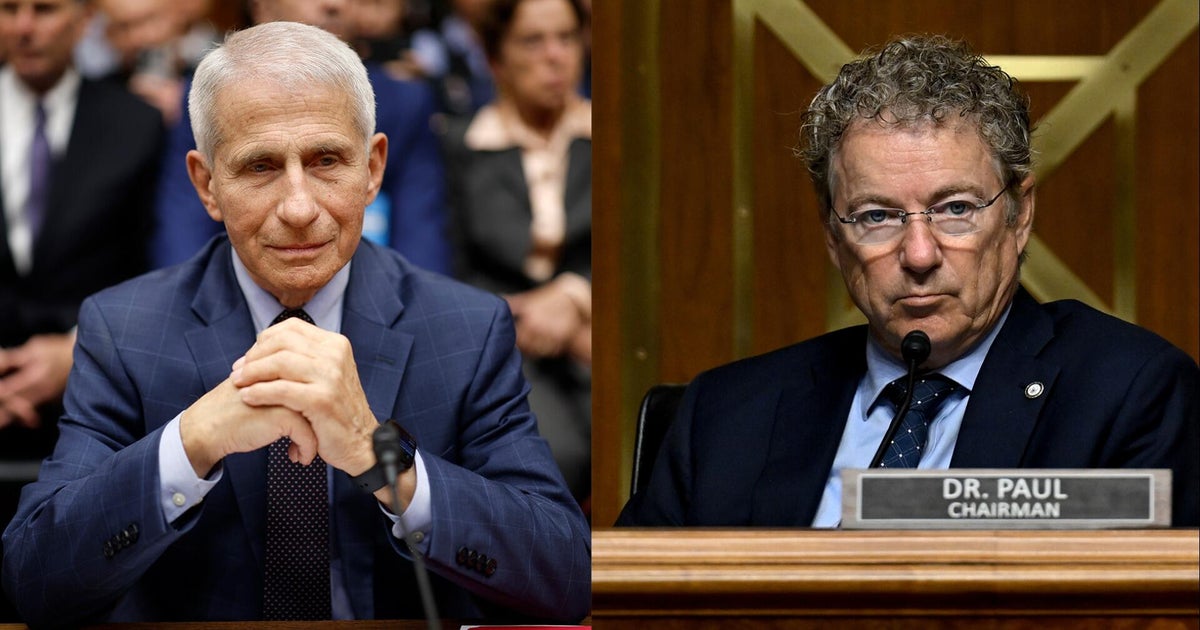
Senator Rand Paul has shared over a thousand pages of Dr. Anthony Fauci’s diary notes from the COVID-19 pandemic period. These notes were released before Dr. Fauci’s scheduled hearing in the Senate.
Key Facts
Senator Rand Paul is a Republican from Kentucky.
He released more than 1,000 pages of Dr. Fauci’s diary entries.
The diary entries cover the time of the COVID-19 pandemic.
The release happened just before Dr. Fauci’s Senate testimony.
Dr. Fauci is a public health expert involved in the U.S. response to COVID-19.
The Senate hearing is set to discuss topics related to the pandemic.
Read the Original
Want the full story? Tap a source to open the original
article.
Iran fired several ballistic missiles in what the US military called an attempted surprise attack on American forces in the Middle East. The US intercepted all the missiles, and the attack happened during a break in fighting meant to support peace talks between the two countries.
Key Facts
Iran launched multiple ballistic missiles targeting US forces in the Middle East.
The US military said the missile attack was an attempted surprise assault.
All missiles were successfully intercepted by US defenses.
The attack occurred at 17:45 EDT on Tuesday.
Iran has not yet made any public comment on the missile launch.
The missile strike happened during a pause in fighting aimed at encouraging negotiations.
President Donald Trump had recently said negotiations with Iran were "very friendly" and expressed hope for progress.
Control over the Strait of Hormuz remains a major issue in talks between the US and Iran.
Read the Original
Want the full story? Tap a source to open the original
article.
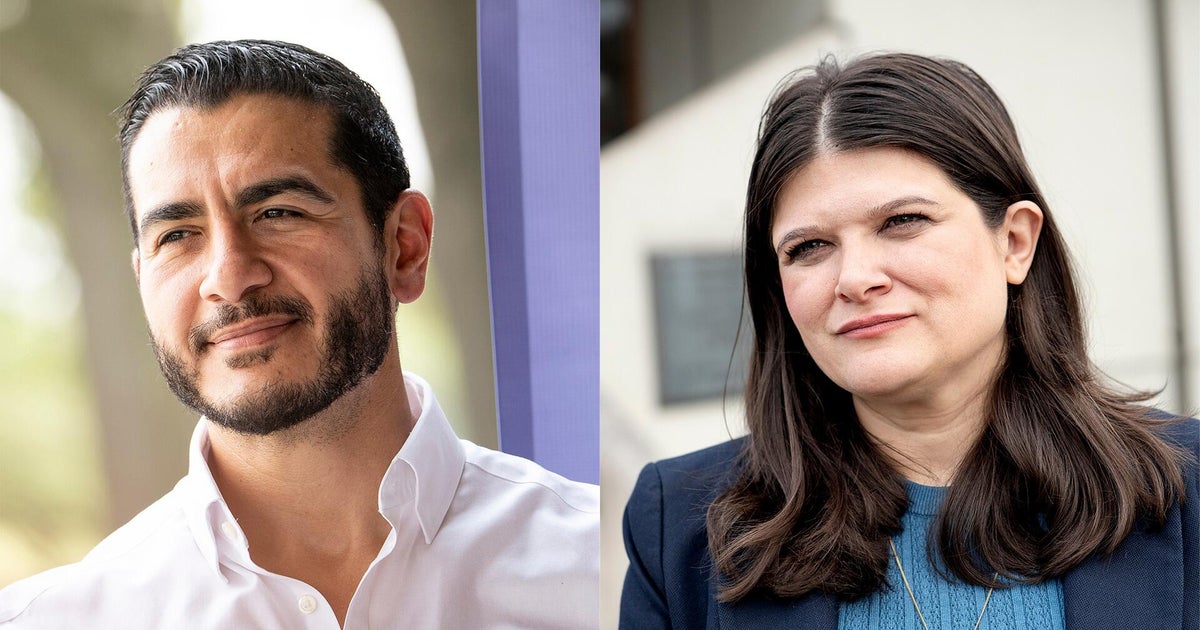
Michigan Senate candidate Abdul El-Sayed said he did not call his opponent, Rep. Haley Stevens, an "ogre." He spoke to clear up confusion after some people thought the comment was about her.
Key Facts
Abdul El-Sayed is running for the U.S. Senate seat in Michigan.
Rep. Haley Stevens is his opponent in the Democratic primary.
El-Sayed made a comment that some thought called Stevens an "ogre."
He publicly clarified that he did not say this about her.
CBS News covered the clarification in their report.
The clarification happened on a Monday.
Aaron Navarro from CBS News reported on the story.
The situation took place during the Michigan Senate race campaign.
Read the Original
Want the full story? Tap a source to open the original
article.
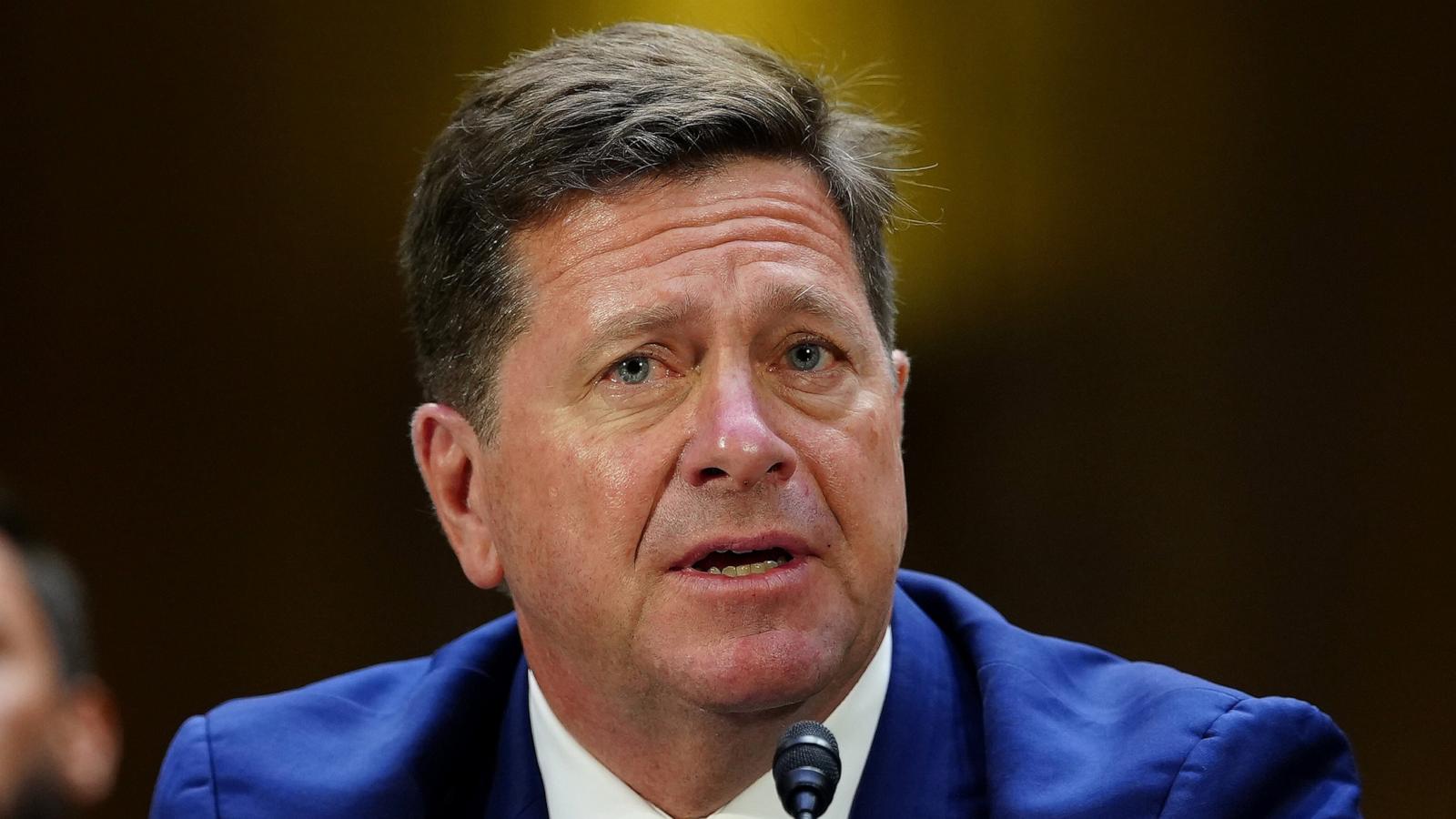
The Senate confirmed Jay Clayton as the new director of national intelligence by a 51-47 vote after a delay caused by political disagreements. His confirmation is important to help renew the Foreign Intelligence Surveillance Act (FISA), a key law for U.S. national security.
Key Facts
Jay Clayton, previously U.S. Attorney for the Southern District of New York, was confirmed as director of national intelligence.
The Senate vote was split along party lines, with 51 in favor and 47 against.
The confirmation ended a stalemate that had delayed renewing the Foreign Intelligence Surveillance Act (FISA).
FISA is an important legal tool used for foreign intelligence and counterterrorism surveillance.
Prior to Clayton, Tulsi Gabbard resigned as director, and Bill Pulte served as acting director despite having no intelligence background.
Democrats opposed FISA reauthorization due to concerns over the next director of national intelligence.
Clayton refused to say outright that Joe Biden won the 2020 election, saying Biden was certified as the winner.
President Donald Trump had delayed Clayton’s confirmation hearing until another nominee was confirmed.
Read the Original
Want the full story? Tap a source to open the original
article.
CBS’s news program “60 Minutes” has hired new correspondents and contributors for its 59th season, including Ross Douthat and Norah O’Donnell. This comes after a major management and staff shakeup led by new CBS News editor-in-chief Bari Weiss.
Key Facts
The new team includes Ross Douthat, a conservative columnist, and Norah O’Donnell, former “CBS Evening News” anchor.
Other new contributors are author Sebastian Junger, Trevor Phillips, and Gianna Toboni.
Current correspondents Lesley Stahl, Jon Wertheim, and Bill Whitaker remain on the show.
Executive producer Nick Bilton, with limited broadcast experience, replaced longtime producer Tanya Simon.
Several correspondents, including Sharyn Alfonsi, Cecilia Vega, and Scott Pelley, were dismissed or left recently.
Anderson Cooper also left the program voluntarily after 20 years.
The shakeup followed controversy involving an edited interview CBS aired about Kamala Harris that led to a lawsuit from President Donald Trump.
CBS News president Tom Cibrowski and editor-in-chief Bari Weiss expressed strong support for the new hires.
Read the Original
Want the full story? Tap a source to open the original
article.
The Pentagon created a new casualty category called “Overseas Operations” for U.S. soldiers killed or wounded in recent fighting with Iran, as the earlier military campaign named “Operation Epic Fury” has officially ended. Four soldiers killed and several wounded in the latest clashes are now recorded separately from the previous Iran war totals.
Key Facts
The Pentagon ended “Operation Epic Fury,” the military campaign against Iran.
Casualties from recent U.S.-Iran fighting are now listed under “Overseas Operations” in the Defense Casualty Analysis System.
Four U.S. soldiers were killed and dozens wounded in the latest exchange of attacks.
The total number of wounded U.S. troops related to the conflict now stands at 642.
The new casualty category separates recent deaths and injuries after the conclusion of Operation Epic Fury.
Some soldiers were killed by Iranian missile and drone strikes in Jordan and Iraq in July 2026.
The Pentagon denied removing casualty data was an attempt to hide the human cost, calling it a data issue that was fixed.
U.S. officials have not provided a formal date for the end of Operation Epic Fury.
Read the Original
Want the full story? Tap a source to open the original
article.
The Hollywood Foreign Press Association (HFPA), which founded the Golden Globe Awards, is suing Penske Media Corporation and others for fraud related to the 2023 acquisition of the awards show. The lawsuit claims Penske and its partners tricked the HFPA into selling the Globes by secretly pushing a boycott that lowered its value and misled the HFPA leadership.
Key Facts
The HFPA sued Penske Media and others in federal court in California over the Golden Globes acquisition.
The lawsuit alleges a secret plan to devalue the Globes and create a monopoly in entertainment media.
Penske Media’s owner, Jay Penske, is accused of working with Eldridge Industries and CEO Todd Boehly to pressure the HFPA.
Boehly and Eldridge allegedly hid Penske’s involvement in the deal from the HFPA board.
HFPA members say they were promised lifetime tickets and voting rights, but Penske set impossible conditions.
Penske owns major entertainment publications and awards shows, including Variety and the American Music Awards.
The lawsuit says the boycott against the Globes was secretly started by Boehly and Penske to lower its value.
The Golden Globes now air on CBS after the 2023 acquisition and restructuring.
Read the Original
Want the full story? Tap a source to open the original
article.
Young people in their 20s in the UK are having a harder time starting adult life than previous generations. Fewer young people own homes, more live with their parents, and employment rates have dropped, especially for young women.
Key Facts
Only 15% of 25-year-olds own their homes today, compared to 43% in the 1980s.
The number of 25-year-olds living with their parents has risen from 25% in the 1990s to 42% now.
Housing costs take up a bigger part of young people's income than before.
Bills and living expenses have risen fast, while wages for young people have mostly stayed the same or fallen.
Employment rates for 25-year-olds dropped from 77% to 71% for women and from 84% to 76% for men over the last decade.
Young people face more job competition and uncertainty, including challenges from new technologies like AI.
Many young adults express frustration about being judged harshly by older generations.
The situation affects parents too, who find it harder to have their own space and future plans.
Read the Original
Want the full story? Tap a source to open the original
article.