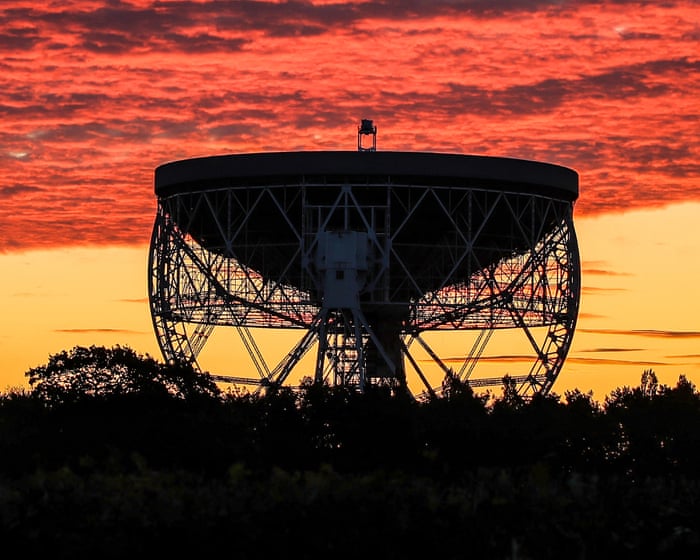
World-class Jodrell Bank is under threat and UK risks a physics brain drain
Summary
Jodrell Bank, a leading UK radio astronomy centre, faces closure due to planned funding cuts by the Science and Technology Facilities Council (STFC) in 2028. Other UK physics research facilities are also experiencing significant budget reductions, risking a loss of scientists and weakening the country's role in global physics research.Key Facts
- Jodrell Bank began radio astronomy research in 1945 and hosts the Lovell telescope, once the largest in the world.
- The STFC plans to stop funding the UK's national radio astronomy network, e-Merlin, in March 2028.
- UK participation in major international astronomy projects, such as the Rubin observatory and the Event Horizon Telescope, is being reduced.
- The STFC needs to save £162 million by 2030 but forecasts a much larger budget shortfall of £684 million for 2024-2028.
- Cuts also affect other physics facilities, including the Diamond synchrotron, Isis neutron source, Clara accelerator tests, and Boulby underground lab.
- Funding for the Large Hadron Collider experiment LHCb is ending early, risking loss of most planned data.
- Nearly 80% of early-career UK physicists are thinking about leaving the country due to funding problems.
- The UK risks losing top scientific talent, which could harm its scientific progress and economic growth.
Read the Full Article
This is a fact-based summary from The Actual News. Click below to read the complete story directly from the original source.

