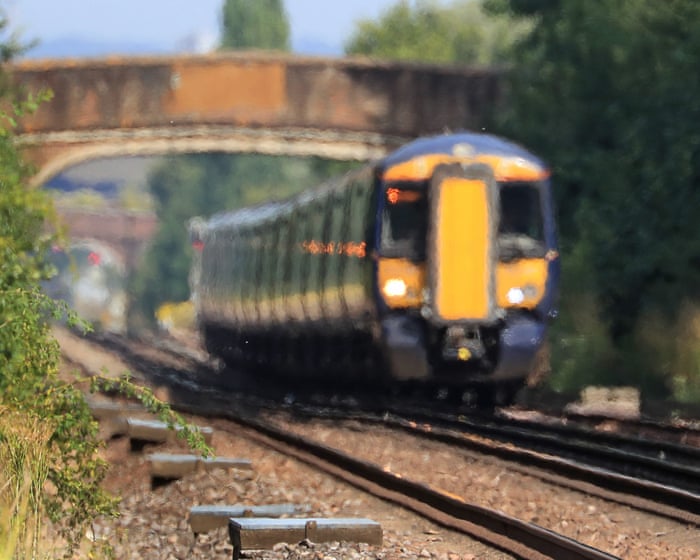
More rail services in England set to slow as heatwave shrinks soil
Summary
Drought and heat in southern England are causing the soil under railway tracks to shrink and move, leading to slower train speeds and timetable changes. Rail companies in the region, including South Western Railway and others in East England, are implementing these changes to keep train travel safe during the ongoing dry weather.Key Facts
- Drought conditions and heatwaves are shrinking the clay soil under railway embankments in southern England.
- Dry soil causes the ground supporting tracks to move, which can misalign the rails.
- To keep trains safe, rail companies are reducing speeds and changing train schedules.
- South Western Railway will soon announce speed and timetable changes, especially on the West of England line.
- Other companies like Great Northern, Greater Anglia, c2c, and the Elizabeth line are already making changes.
- Network Rail engineers use machines called tampers to lift tracks and add stone ballast to keep the tracks stable.
- Last year, around 62 miles of track were treated to fix soil shrinkage; this year, about 49,000 tonnes of ballast will be used.
- The problems come after low rainfall in spring followed by hot, dry weather and this is the UK’s fourth heatwave of the year.
Read the Full Article
This is a fact-based summary from The Actual News. Click below to read the complete story directly from the original source.