Map Shows Massive Fish-Killing 'Dead Zone' Missing Oxygen Near Gulf Coast
Summary
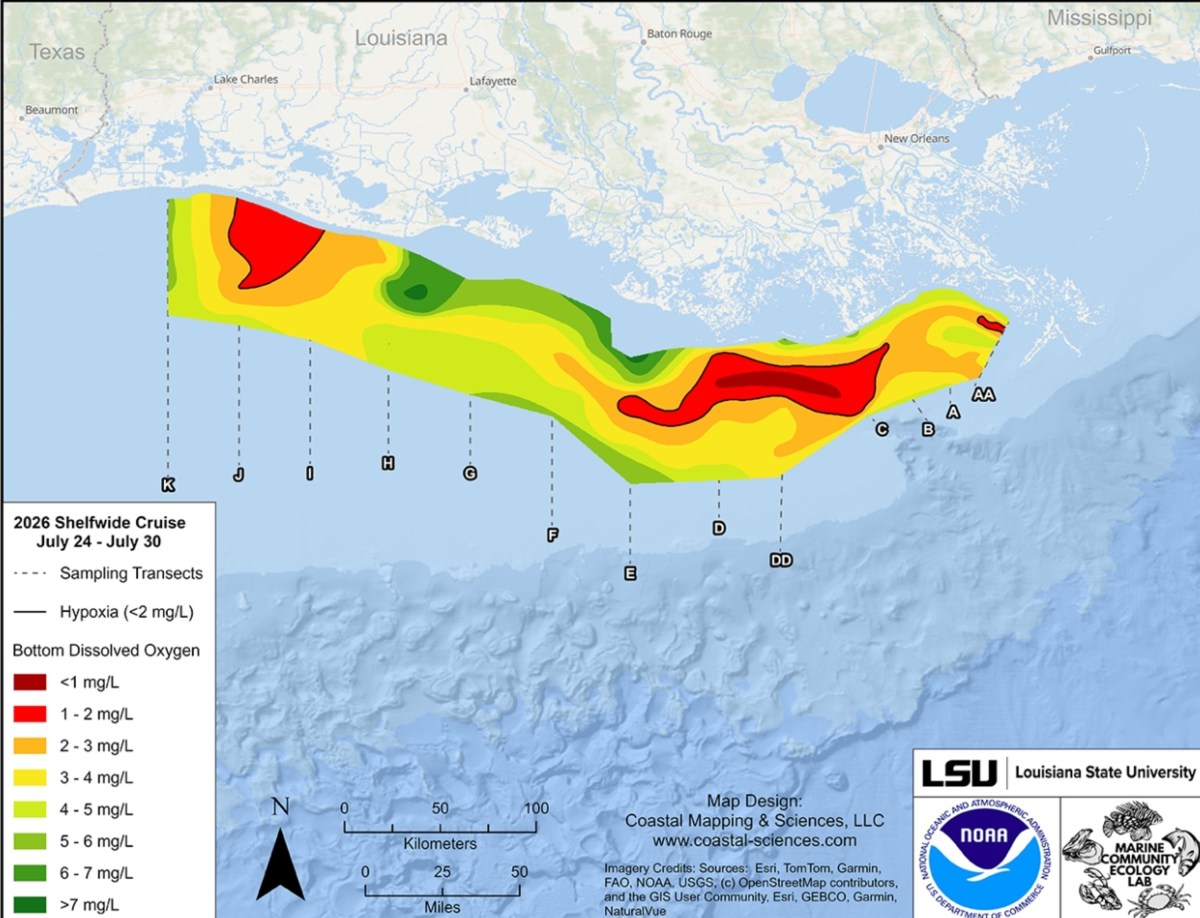
A large low-oxygen area called a "dead zone" formed in the Gulf of Mexico along the U.S. coast, covering about 1,332 square miles during a July survey. This is the second-smallest size recorded in 40 years, partly because a tropical storm disturbed conditions. The dead zone forms when excess nutrients cause algae to grow and die, using up oxygen needed by marine life.Key Facts
- The dead zone measured 1,332 square miles, similar in size to the state of Rhode Island.
- It appeared in the northern Gulf of Mexico near Louisiana.
- Nutrient-rich water from the Mississippi and Atchafalaya rivers fuels oxygen depletion.
- Low oxygen levels (2 milligrams per liter or less) make the area uninhabitable for many sea creatures.
- Dead zones result from excess nitrogen and phosphorus from farm runoff and wastewater, which cause large algae blooms.
- When algae die, bacteria break them down and consume oxygen, leading to hypoxic conditions.
- Bottom-dwelling animals like fish, shrimp, and shellfish are highly affected, while air-breathing mammals like dolphins can usually avoid the zones.
- These zones disrupt marine habitats, affecting fishing, coastal tourism, and the overall ecosystem.
Read the Full Article
This is a fact-based summary from The Actual News. Click below to read the complete story directly from the original source.