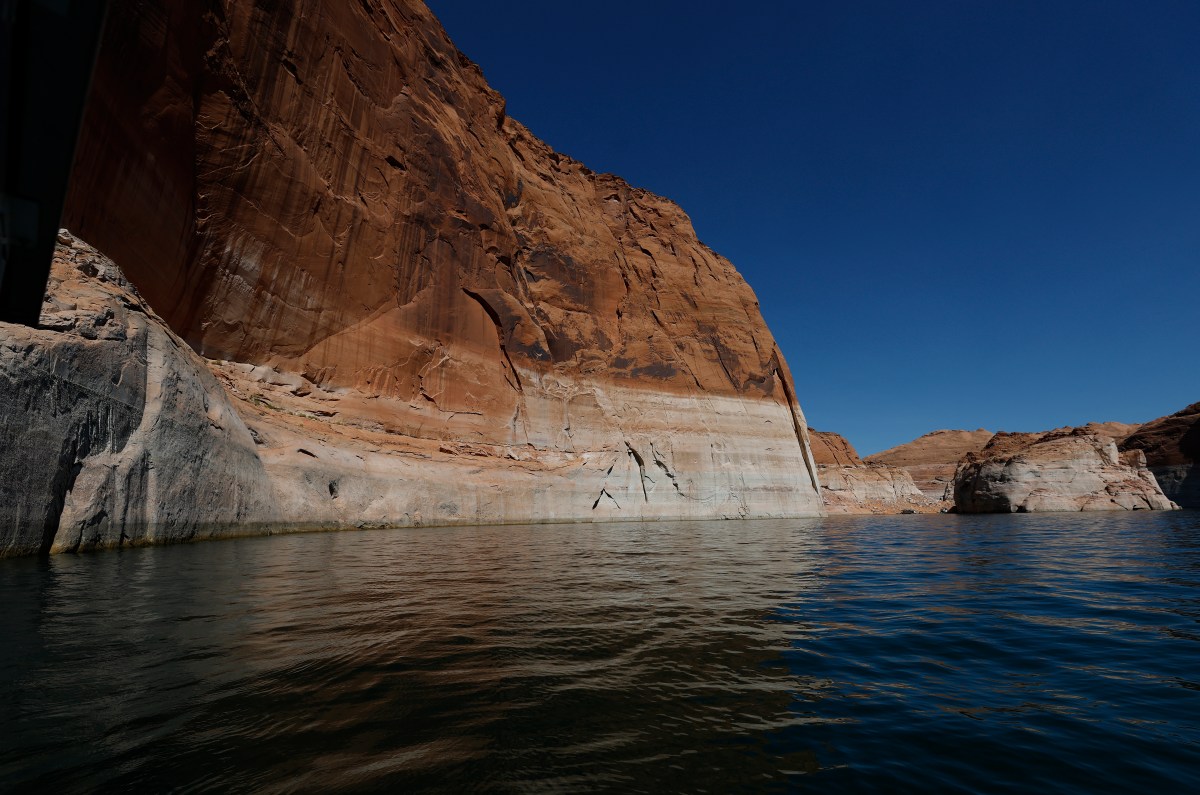
Lake Mead Hits Record Low: How Much Worse Will It Get?
Summary
Lake Mead, the largest reservoir in the U.S., has dropped to its lowest level since it was filled nearly 90 years ago. This decline is part of a larger water supply crisis affecting the Colorado River system, which serves several states and Mexico, due to drought, high demand, and low snowpack.Key Facts
- Lake Mead's water level fell to about 1,040.4 feet above sea level, breaking the previous record low set in July 2022.
- Lake Mead stores water from the Colorado River, which supports Arizona, California, Colorado, Nevada, New Mexico, Utah, Wyoming, and Mexico.
- About 70% of the river’s water is used for farming; 35 to 40 million people rely on it for drinking water.
- Drought, rising temperatures, and demand have reduced water inflow into reservoirs like Lake Powell and Lake Mead.
- Inflows into Lake Powell were only 12-17% of the normal average between April and July 2026.
- Lake Mead is projected to decline further, possibly ending 2026 below current record levels but still above the critical "dead pool" level where water cannot flow downstream.
- Combined water storage in Lakes Mead and Powell is at the lowest level since 1957, showing that the system’s water reserves are rapidly shrinking.
- Federal agencies are working to prevent the reservoirs from dropping too low to maintain water supply and electricity generation.
Read the Full Article
This is a fact-based summary from The Actual News. Click below to read the complete story directly from the original source.