Thursday briefing: 68 facts about the Bayeux tapestry as it goes on display
Summary
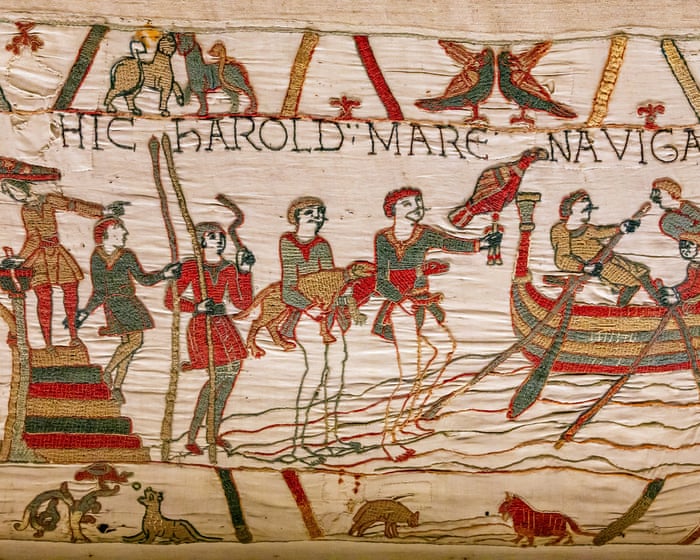
The Bayeux Tapestry exhibition has opened at the British Museum and quickly became very popular, breaking ticket sales records. The tapestry, which is an embroidered cloth nearly 68 meters long, tells the story of the 1066 Battle of Hastings and was likely made in England around 1077.Key Facts
- The Bayeux Tapestry is actually an embroidery, not a woven tapestry.
- It depicts events leading up to the Battle of Hastings where William the Conqueror defeated King Harold.
- Bishop Odo, William’s half-brother, is believed to have commissioned the embroidery for Bayeux Cathedral.
- The tapestry was probably created in England, near Canterbury, not in Bayeux as the name suggests.
- It is embroidered on linen with wool threads dyed using natural plants like woad and madder.
- The embroidery consists of nine panels sewn together to form one long story.
- Around 623 men, 190 horses, and 41 ships are featured on the tapestry, among other figures.
- Multiple women are thought to have stitched the tapestry over 2 to 4 years, although only three women appear on it.
Read the Full Article
This is a fact-based summary from The Actual News. Click below to read the complete story directly from the original source.