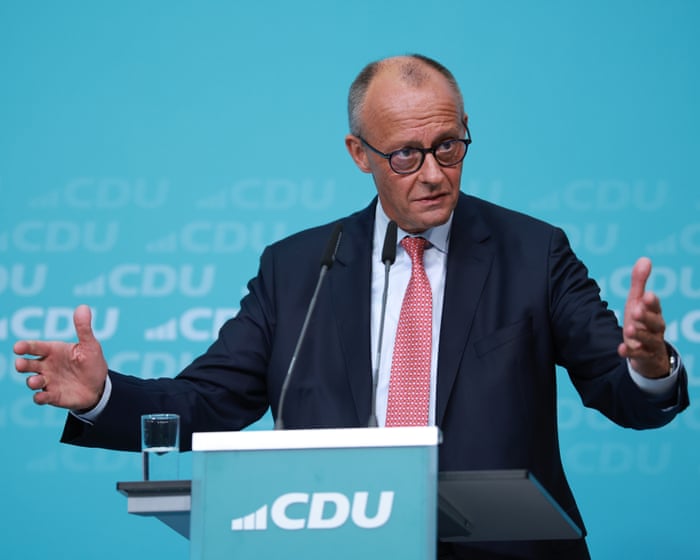
Future of German chancellor hangs in the balance as two states go to polls
Summary
Voters in two German states, Berlin and Mecklenburg-Western Pomerania, are casting their ballots in elections that could impact Chancellor Friedrich Merz’s political future. The far-right party AfD is expected to gain support, possibly weakening Merz’s conservative CDU party and raising questions about his leadership.Key Facts
- Two German states, Berlin and Mecklenburg-Western Pomerania, are holding elections with about 3.8 million voters combined.
- Chancellor Friedrich Merz has been in office for 16 months and faces criticism after failing to boost economic growth and reduce AfD’s support.
- The far-right AfD party, known for anti-immigration views and pro-Kremlin stance, recently achieved its best regional result in Saxony-Anhalt.
- AfD aims to increase its influence and possibly govern a state alone, which would be the first far-right state government in Germany since the Nazi era.
- Polls suggest AfD will gain votes but likely will not achieve a majority in these elections.
- In Berlin, the CDU is competing against the left-wing Die Linke and AfD, while housing costs and social issues are key campaign topics.
- Mecklenburg-Western Pomerania shows a close race between AfD and the Social Democrats, with CDU in danger of dropping below the 5% threshold needed for parliamentary seats.
- Chancellor Merz canceled a planned trip to the UN to focus on election results and has vowed to complete his four-year term despite low approval ratings.
Read the Full Article
This is a fact-based summary from The Actual News. Click below to read the complete story directly from the original source.