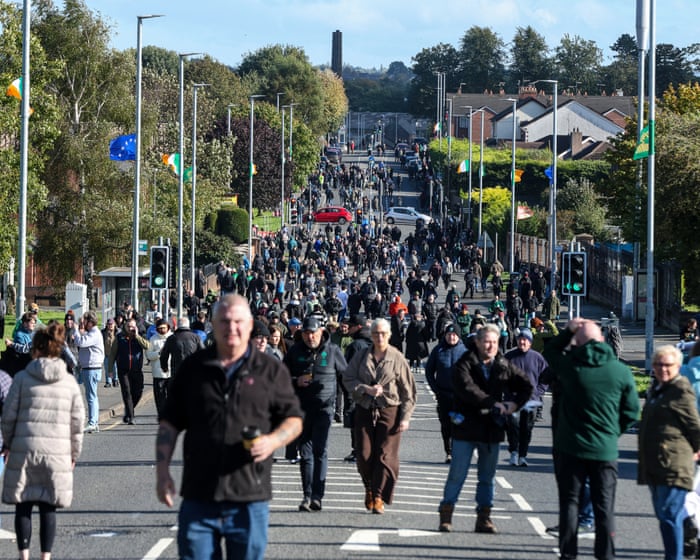
Drumcree standoff shows Northern Ireland’s troubled past still threatens its peace
Summary
Northern Ireland is facing tensions again over the annual Drumcree parade, a loyalist march through a mainly nationalist area that has caused conflict for decades. A recent court ruling allowed the parade to go ahead, but many locals and political leaders strongly oppose it, leading to protests and roadblocks.Key Facts
- The Drumcree parade is a loyalist march traditionally held on the Sunday before 12 July.
- The march goes through Garvaghy Road, a nationalist neighborhood that opposes it.
- In the 1990s, the Parades Commission was created to regulate such marches and has banned the Drumcree parade every year since 1998.
- A high court ruled to overturn the Commission’s ban this year, allowing the parade to proceed.
- This court decision was criticized by Irish leaders and triggered protests by residents.
- Police have prepared for possible violence by deploying armored vehicles in Portadown.
- Northern Ireland’s political and demographic landscape has changed, with no unionist majority and Sinn Féin’s Michelle O’Neill as First Minister.
- The ongoing dispute reflects wider tensions after Brexit and amid political uncertainty in Northern Ireland.
Read the Full Article
This is a fact-based summary from The Actual News. Click below to read the complete story directly from the original source.