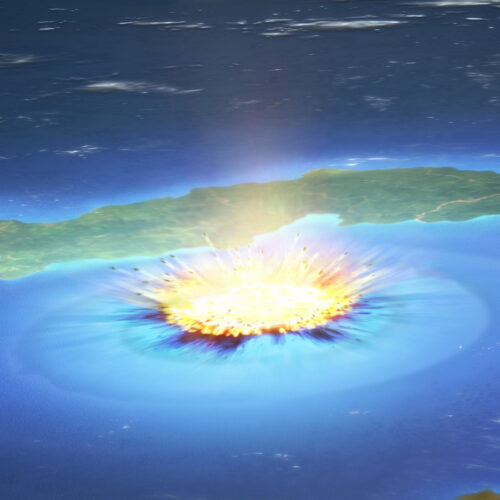
Dinosaur-killing impact crater might have been teeming with life
Summary
Around 66 million years ago, the Chicxulub asteroid hit the Earth near today’s Yucatan Peninsula. The impact created a hot underwater system that lasted at least 8 million years and may have supported microbial life during that time.Key Facts
- The asteroid impact caused tsunamis and heated debris that wiped out many species, including non-avian dinosaurs.
- The impact zone was drilled in 2016 to study rocks formed by the collision.
- The heat from the impact melted rock up to 35 km below the surface, creating a porous area where hot water flowed.
- This hot water formed a hydrothermal system on the ocean floor that lasted about 8 million years.
- Previously, scientists thought the hydrothermal system lasted only 2 million years.
- Such hydrothermal systems can provide heat and nutrients, conditions useful for microbial life.
- Few underwater impact craters with hydrothermal activity have evidence of microbial life.
- Researchers used potassium-argon dating to measure the age and history of rocks in the crater.
Read the Full Article
This is a fact-based summary from The Actual News. Click below to read the complete story directly from the original source.