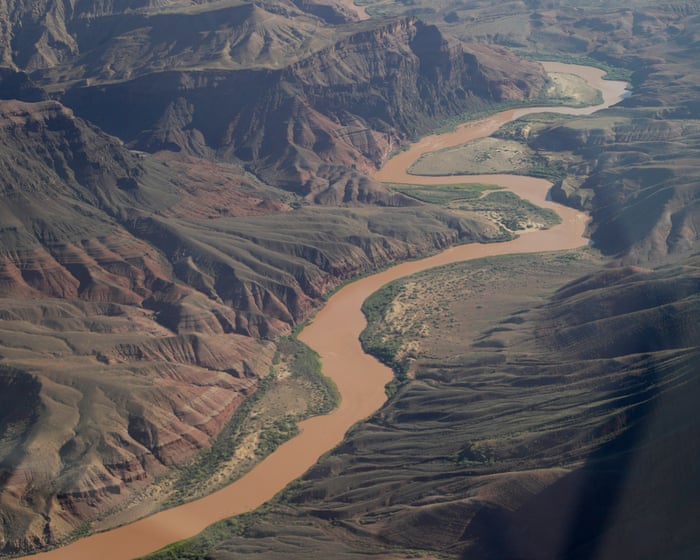
The Colorado River is shrinking. What happens next?
Summary
Lake Mead, the largest reservoir in the U.S. fed by the Colorado River, is at its lowest water level since it was filled almost 90 years ago. The drought and climate change have caused the river and reservoirs to lose a lot of water, affecting millions of people and leading cities like Las Vegas and Phoenix to adopt new water conservation and recycling methods.Key Facts
- Lake Mead is less than 27% full, the lowest level since it was created nearly 90 years ago.
- Las Vegas gets over 90% of its water from Lake Mead and has invested $1.3 billion in a new water intake system to handle lower water levels.
- The Colorado River supplies water to more than 40 million people across seven states and irrigates over 5 million acres of farmland.
- The river has lost 20% of its flow during a 26-year drought that began in 2000.
- Lake Mead and Lake Powell, the main reservoirs on the river, are at historic lows, reducing their ability to store water for dry years.
- Extreme heat and low snowfall in the Rockies reduce how much water flows into the river each year.
- Hot conditions cause more water to evaporate or be absorbed by land before reaching streams.
- Phoenix relies on the Colorado River for about 40% to nearly 100% of its water through a long canal system.
Read the Full Article
This is a fact-based summary from The Actual News. Click below to read the complete story directly from the original source.