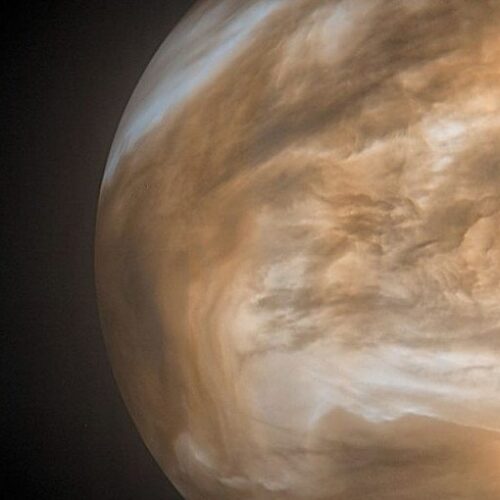
Venus' mysterious haze is actually cosmic dust
Summary
Scientists have discovered that the mysterious yellowish haze near the bottom of Venus' atmosphere is made of cosmic dust from meteorites burning up and mixing with sulfuric acid. This haze helps form clouds on Venus by acting as tiny particles around which the clouds can grow.Key Facts
- The yellow "lower haze" on Venus was first seen by space probes in the 1970s but remained unexplained for decades.
- Researchers at Tohoku University in Japan used a microphysical model to study Venus’ haze formation.
- The haze comes from cosmic dust left by meteorites burning up in Venus’ atmosphere, not from volcanic ash or surface dust.
- Meteorite particles act as condensation nuclei, meaning sulfuric acid droplets can form around them to create clouds.
- These droplets grow heavier and sink, eventually leaving the haze particles behind after sulfuric acid evaporates.
- Venus is the most volcanically active planet in the Solar System, but volcanic ash does not contribute to the haze.
- The discovery also helps explain why something in Venus’ atmosphere absorbs ultraviolet light.
- The process that forms Venus’ haze is similar to how clouds form on Earth, using tiny particles as centers for condensation.
Read the Full Article
This is a fact-based summary from The Actual News. Click below to read the complete story directly from the original source.