Research roundup: 6 cool science stories we almost missed
Summary
Scientists presented new interesting findings in physics and astronomy. These include a possible first look at dark matter particles using a detector in South Dakota, and evidence of a special connection called quantum entanglement between tiny particles called Z bosons at the Large Hadron Collider.Key Facts
- Dark matter may make up about 85% of all matter in the universe but has been very hard to detect directly.
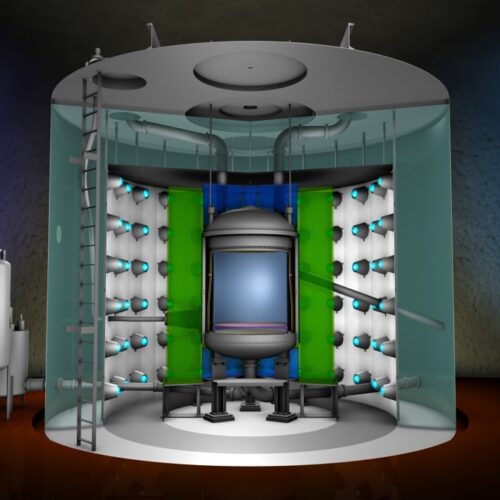
- The LUX-ZEPLIN detector in South Dakota saw a signal that could be caused by a dark matter particle called a WIMP, but this needs more confirmation.
- The signal seen had unusual features that do not match existing predictions, leading scientists to rethink their ideas about dark matter.
- The Large Hadron Collider’s ATLAS experiment found signs of quantum entanglement—a link between particles affecting each other instantly over distance—between pairs of Z bosons.
- Z bosons are particles that appear briefly when a Higgs boson breaks down and then quickly decay into electrons and muons.
- Scientists study the patterns of these decay particles to learn about the original Z bosons and their behavior.
- Quantum entanglement is important for future technologies like quantum computers and sensitive measuring devices.
- Other dark matter detectors, like XENONnT in Italy and PandaX in China, are also collecting data to confirm or refute these findings.
Read the Full Article
This is a fact-based summary from The Actual News. Click below to read the complete story directly from the original source.