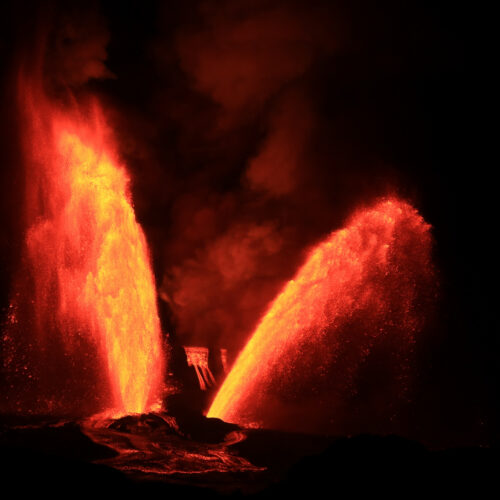
What's been driving Hawaii's lava fountains?
Summary
Scientists studied the recent lava fountains at Kilauea volcano in Hawaii to understand what causes the lava to shoot into the air. They found patterns that help predict eruptions and learned more about the gases involved, showing that water steam plays a bigger role than carbon dioxide in driving these lava fountains.Key Facts
- Kilauea volcano has had only three lava fountain episodes since 1823.
- Since 2018, the underground lava reservoir at Kilauea has been refilling, speeding up after 2019.
- In 2024, a series of eruptions sent lava fountains as high as 160 to over 400 meters.
- Researchers used 35 instruments around the volcano to monitor earthquakes, gas levels, ground movement, and thermal activity.
- The volcano’s summit tilts in similar ways before eruptions, helping predict when lava fountains will happen.
- No clear earthquake signals warn immediately before eruptions, but tilt measurements are reliable.
- Gas measurements showed low carbon dioxide but higher sulfur dioxide levels during eruptions.
- The data suggests that steam from water, not carbon dioxide gas foam, likely drives the lava fountains.
Read the Full Article
This is a fact-based summary from The Actual News. Click below to read the complete story directly from the original source.