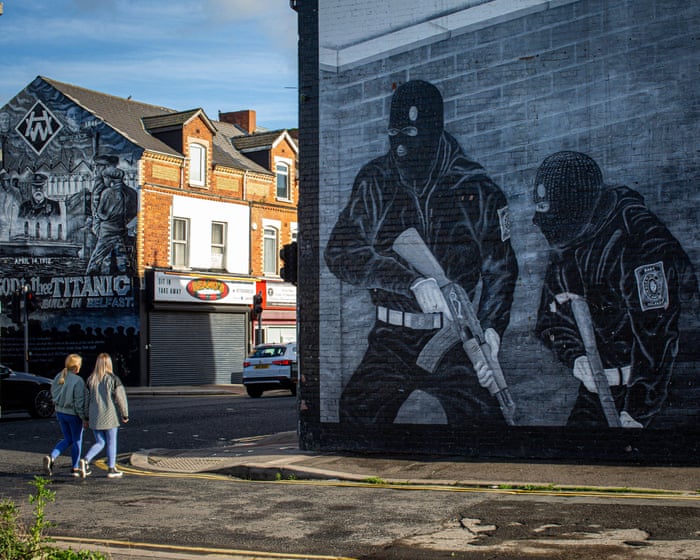
British and Irish governments ‘should negotiate paramilitary disbandment in Northern Ireland’
Summary
A report says the British and Irish governments should work together to help paramilitary groups in Northern Ireland stop their activities. The report finds a chance to create a formal plan for loyalist and republican groups to move away from criminal behavior, but it says these groups should not get money for their cooperation.Key Facts
- The report was made by a Dutch expert in conflict resolution, Fleur Ravensbergen, and commissioned by both British and Irish governments.
- Paramilitary groups in Northern Ireland were expected to disappear after the 1998 Good Friday Agreement but still exist, often involved in crime like drug dealing and extortion.
- There is some willingness among paramilitary groups to engage in a transition process, but many dislike the word “disbandment.”
- The report recommends a structured and time-limited transition plan with strong monitoring and law enforcement.
- Governments are reviewing the report and plan to discuss it further with political groups in Northern Ireland and Ireland’s government.
- Some politicians, like Northern Ireland’s justice minister Naomi Long, worry that talking with paramilitary groups could make them seem more legitimate.
- The report does not name specific paramilitary groups or people, as discussions were confidential.
- Local tensions, such as those around the Drumcree parade, could increase paramilitary recruitment.
Read the Full Article
This is a fact-based summary from The Actual News. Click below to read the complete story directly from the original source.