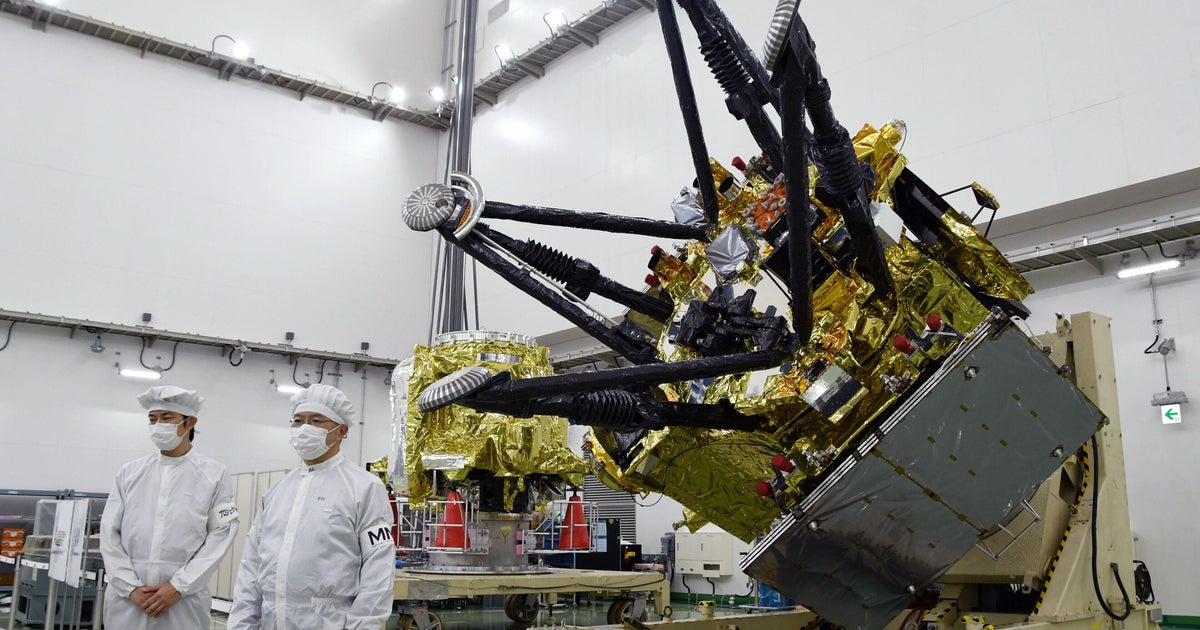
Japan launches ambitious robotic mission to Martian moon Phobos
Summary
Japan launched a $350 million space mission called Martian Moons Exploration (MMX) to study Mars’s two moons, Phobos and Deimos. The mission will send a rover to Phobos and collect soil samples to bring back to Earth by 2031, aiming to find out if these moons formed from a big impact or were captured asteroids.Key Facts
- The MMX mission launched from Japan’s Tanegashima Space Center using an H3 rocket with solid propellant boosters.
- MMX aims to study Mars’s moons Phobos (17 miles wide) and Deimos (less than half that size).
- Scientists want to learn if these moons are made from Mars debris caused by a huge collision or if they are captured asteroids.
- The spacecraft will arrive in Mars orbit around September 2027 and will travel in sync with Phobos.
- MMX will spend three years studying the moons, their environment, and collecting soil samples.
- A 55-pound rover supplied by German and French space agencies will land on Phobos in 2029 to explore the surface.
- The rover will move by bouncing and tumbling due to the very low gravity on Phobos and has cameras and instruments to study soil and minerals.
- The samples returned to Earth in 2031 will help determine the moons’ origin and their possible future use for astronauts.
Read the Full Article
This is a fact-based summary from The Actual News. Click below to read the complete story directly from the original source.