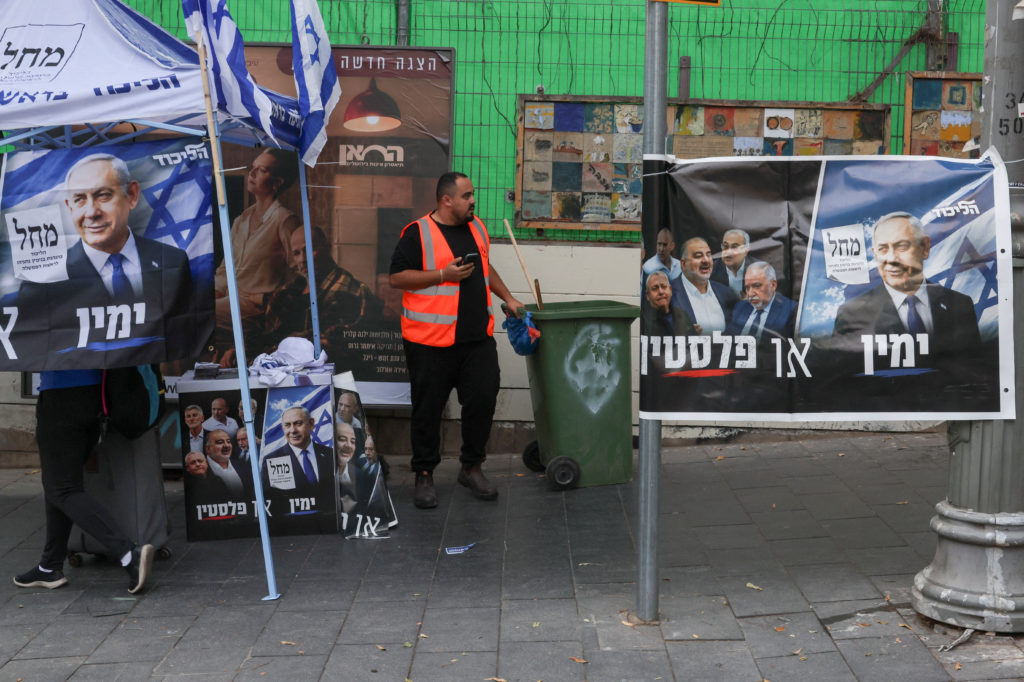
How can Israel break its election deadlock?
Summary
Israel’s October 27 election left no bloc with the 61 seats needed to form a government. Coalition talks are under way, but major leaders have ruled out working with Arab-led parties, and another election could follow if efforts to form a government fail.Key Facts
- Final results gave Prime Minister Benjamin Netanyahu’s bloc 53 seats in the 120-member Knesset.
- The opposition bloc led by Gadi Eisenkot won 48 seats.
- The United Arab List (Ra’am) and the Joint List won 19 seats combined.
- Voter turnout was 77.9 percent, and the final count included at least 500,000 double-envelope ballots from soldiers and diplomats.
- A governing coalition needs support from at least 61 Knesset members.
- If coalition efforts fail, President Isaac Herzog can ask a candidate to form a government, initially allowing about 28 days, with a possible extension.
- If the first candidate fails, Herzog can choose another; after that, a 21-day period allows 61 Knesset members to ask him to assign the task to a legislator.
- Israelis may have to vote again if all government-formation efforts fail.
Read the Full Article
This is a fact-based summary from The Actual News. Click below to read the complete story directly from the original source.