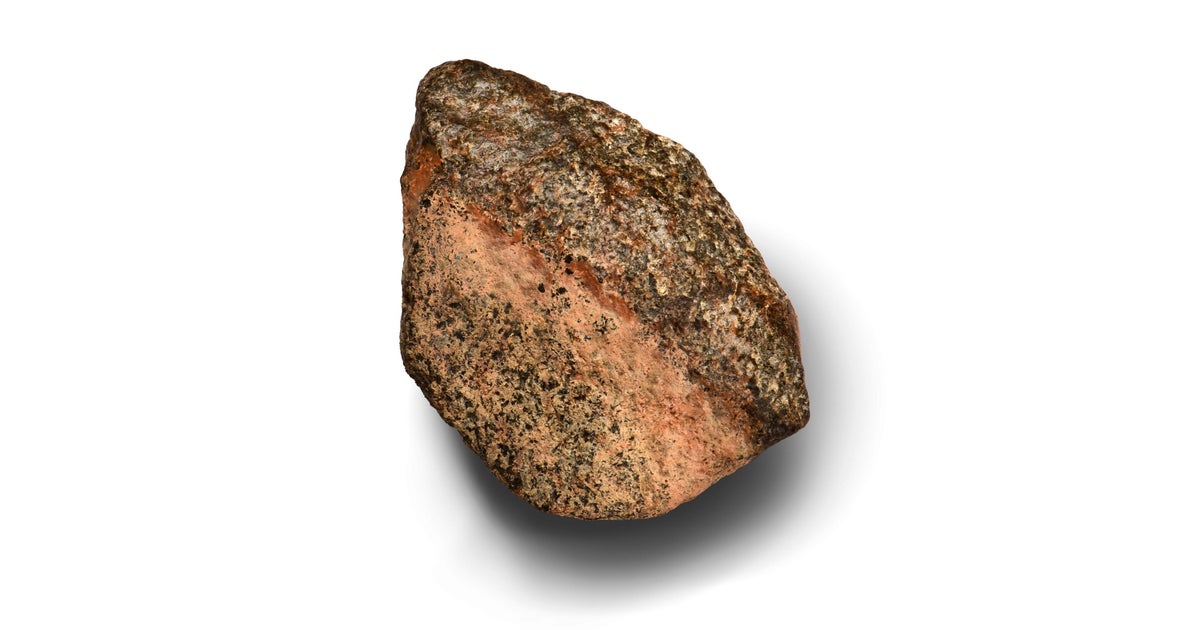
Meteorite found in the Sahara Desert turns out to be piece of Mars
Summary
NASA researchers identified Teghaza 001, a meteorite found in Mali’s Sahara Desert in 2022, as a roughly 4.1-billion-year-old piece of Mars. Its minerals and evidence of ancient water offer clues about how the planet’s crust formed and changed.Key Facts
- The nearly two-pound meteorite was named Teghaza 001 after the salt plain where it was found.
- Researchers used its chemical and mineral composition to identify it as Martian.
- NASA said it is among the three oldest Martian meteorites discovered on Earth.
- The rock contains volcanic minerals, including zircon crystals, that match observations of Mars’ southern highlands.
- An age-dating method analyzed individual mineral grains in a sample smaller than a fingernail.
- The analysis found that Martian water altered the rock about 4.1 billion years ago, though the rock itself may have formed earlier.
- Researchers said the findings suggest early Mars may have had a more active water cycle than previously thought.
Read the Full Article
This is a fact-based summary from The Actual News. Click below to read the complete story directly from the original source.


