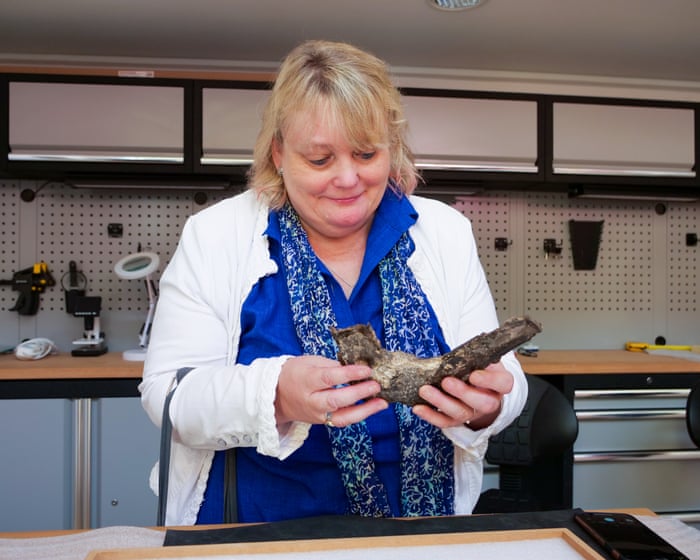
Fossilised red blood cells found in 115m-year-old dinosaur’s bone, say scientists
Summary
Researchers report finding structures resembling red blood cells and chemical traces of heme in a 115-million-year-old Aratasaurus fossil from northeastern Brazil. The interpretation remains disputed: one paleontologist questions whether the structures are blood cells, while the researchers say further analysis could help show what biological material fossils can preserve.Key Facts
- The Aratasaurus was a small meat-eating dinosaur that lived in what is now northeastern Brazil about 115 million years ago.
- Researchers examined hind leg bones from remains discovered in a mine in 2008 and held at the National Museum of Brazil.
- Electron microscope images showed small, round structures in channels where blood vessels once ran.
- Chemical tests detected heme and its breakdown products, along with traces of amino acids that make up collagen.
- The research team suggests the mineral hausmannite may have helped preserve the structures and chemical traces.
- The study was published in the Proceedings of the National Academy of Sciences.
- Paleontologist Mary Schweitzer questions whether the structures are red blood cells because they are concave rather than dome-shaped on both sides.
- The researchers said their findings do not suggest that large molecules such as proteins or DNA survive in ancient fossils.
Read the Full Article
This is a fact-based summary from The Actual News. Click below to read the complete story directly from the original source.