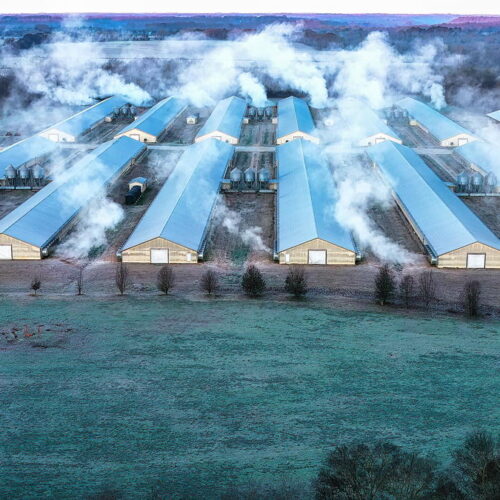
EPA throws in the towel on policing air pollution from factory farms
Summary
The EPA announced on October 30 that it would stop trying to develop methods to estimate air pollution from concentrated animal feeding operations (CAFOs), ending a 20-year effort tied to possible regulation under the Clean Air Act. The agency said data from its study are too old and limited to support reliable methods; critics say the decision leaves factory farms without effective federal accountability for air emissions.Key Facts
- CAFOs are large livestock facilities where waste can release pollutants from ventilation fans and liquid manure lagoons.
- The article lists fine particulate matter, ammonia, nitrogen oxides, sulfur dioxide and volatile organic compounds among emissions from livestock facilities.
- Under a 2005 agreement, participating CAFOs received protection from legal action while an industry-funded study sought to develop air-emissions measurement methods.
- The EPA did not produce the planned methods, and a 2017 report by its Office of Inspector General criticized delays.
- The EPA said changes to barns and manure systems, along with limited and outdated study data, prevent it from producing methods farms could rely on.
- The article says federal reporting requirements for factory-farm air pollutants under CERCLA and EPCRA were also reduced by the Trump administration and Congress.
- Food & Water Watch legal director Tarah Heinzen criticized the EPA’s decision, saying it would leave the agency without plans to hold factory farms accountable under the Clean Air Act.
Read the Full Article
This is a fact-based summary from The Actual News. Click below to read the complete story directly from the original source.


