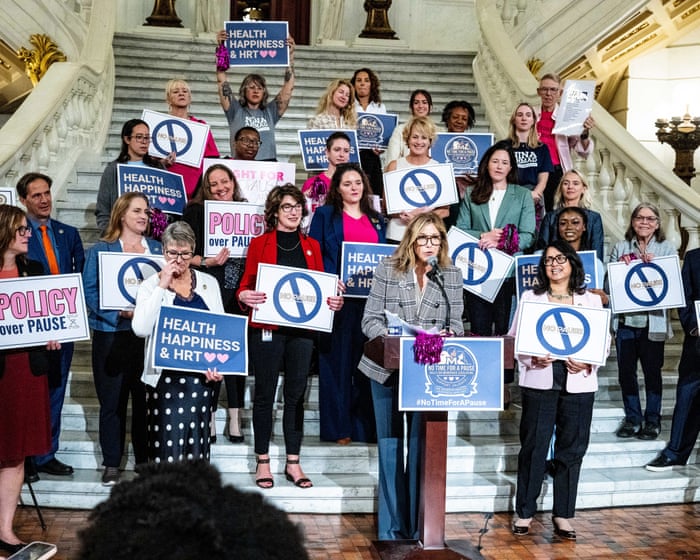
Menopause symptoms aren’t always taken seriously. These female lawmakers plan to change that
Summary
Pennsylvania state representative Melissa Shusterman introduced bills to expand menopause care, insurance coverage and public education after struggling to find help for her symptoms. Lawmakers in several states are also advancing measures on menopause treatment and workplace protections, while advocates say stigma and barriers to care remain widespread.Key Facts
- Shusterman announced a package of menopause-related bills at a Pennsylvania state capitol rally in September.
- The proposed Pennsylvania measures include requiring insurance coverage for menopausal care and improving public education.
- A federal study found that almost half of U.S. women ages 40 to 60 experienced menopausal symptoms last year.
- About 16% of women in that study used prescription medication for their symptoms.
- The share of women prescribed hormone therapy for menopausal symptoms fell from about 27% in 1999 to less than 2% in 2024, according to Jennifer Weiss-Wolf's book.
- The American College of Obstetricians and Gynecologists recommended hormone therapy as a first-line treatment for menopausal symptoms such as hot flashes, with exceptions for some medical histories.
- States including Rhode Island and Utah have passed measures to expand insurance coverage for hormone therapy and protect menopausal workers from discrimination.
Read the Full Article
This is a fact-based summary from The Actual News. Click below to read the complete story directly from the original source.


